Table of Contents >> Show >> Hide
- What a “Roma Two Handle Kitchen Tap” Usually Means
- Why Two Handles Still Win Hearts (and Not Just in Old Houses)
- Bridge, Two-Hole, Three-Hole: Making Sure It Fits Before You Fall in Love
- Specs That Matter More Than the Finish Name (Yes, Even “Unlacquered Brass”)
- Installation: What to Expect (and What to Avoid)
- Design Pairings: Making Roma Look Intentional (Not Randomly Vintage)
- Care, Cleaning, and the “Why Is It Dripping?” Moment
- Is the Roma Two Handle Kitchen Tap Worth It?
- Real-World Experiences With a Roma Two Handle Kitchen Tap (500+ Words)
- SEO Tags
Some kitchens have a vibe. Others have presence. A Roma two handle kitchen tap is the difference between “Yep, that’s a faucet” and “Who is she?” It’s the kind of classic, two-handle, bridge-style tap that looks like it belongs in a well-loved homewhether that home is a 1920s bungalow, a modern farmhouse, or your “I swear I’m done renovating” renovation.
In American English, we usually say kitchen faucetbut “tap” is common in product names, design sites, and high-end hardware catalogs. Either way, we’re talking about the same job description: deliver water, look good doing it, and avoid turning your cabinet into an indoor swimming pool.
What a “Roma Two Handle Kitchen Tap” Usually Means
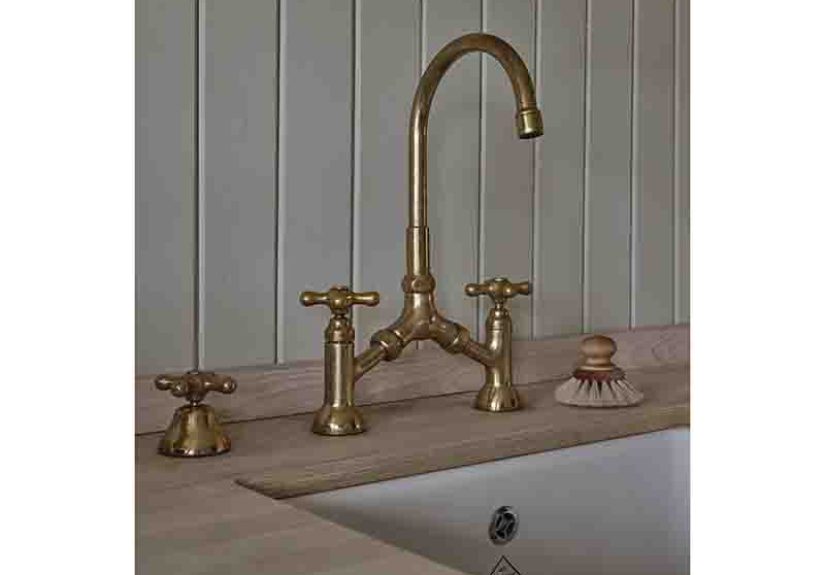
“Roma” can show up as a style name across multiple brands, but in design-forward U.S. listings it’s commonly associated with the Rubinetterie Stella ROMA linea traditional, two-handle, two-hole bridge tap known for its classic proportions and solid, old-world look.
A quick snapshot of the Roma style (using common published specs)
- Two handles: separate hot and cold controls, usually with a satisfying, tactile turn.
- Two-hole / bridge configuration: the spout “bridges” between hot and cold supplies for a symmetrical look.
- Limited swivel by design: examples list a 150° turning radiusnot a full spin, but enough for most sink setups.
- Reach matters: one listing notes a 170 mm spout projection (about 6.7 inches), which is a practical everyday reach.
- Countertop thickness considerations: thicker worktops (around 40 mm, roughly 1.6 inches) may require extension parts.
- Optional add-ons: some configurations offer a dedicated dishwasher shut-off control, sold separately.
Translation: it’s a “classic tap” with real-world practicalityjust packaged in a form that makes your sink area look like it has a stylist.
Why Two Handles Still Win Hearts (and Not Just in Old Houses)
Single-handle faucets are popular for good reason: one hand, quick temp adjustment, easy peasy. But two-handle taps are still around because they do certain things beautifullyand sometimes better.
Pros you’ll actually notice
- More precise temperature control: You can “dial in” warm water without overshooting into “why is my hand suddenly a lobster?” territory.
- Classic symmetry: Two handles visually frame the spout, which looks intentional in traditional, transitional, and even minimalist kitchens.
- Better fit for some layouts: If your sink or countertop is already drilled for two holes, a bridge tap can feel like the “right” solution instead of a compromise cover plate situation.
Cons to be honest about
- Slightly slower operation: if you’re constantly turning on/off with messy hands, two handles can be less convenient.
- More parts: more potential wear points over a very long life (still manageable with quality components).
- No built-in pull-down sprayer on many classic bridge designs (though you can sometimes add a separate side sprayer).
Bridge, Two-Hole, Three-Hole: Making Sure It Fits Before You Fall in Love
The fastest way to turn faucet shopping into a dramatic monologue is to ignore hole configuration. Before you buy anything called “Roma two handle kitchen tap,” do a five-minute reality check:
Step 1: Count your holes
- Two-hole: ideal for many bridge/two-handle installations.
- Three-hole: common when there’s a separate sprayer, soap dispenser, or accessory hole.
- One-hole: usually meant for single-handle faucets; you’d need a deck plate or a different faucet style.
Step 2: Measure the spacing (especially for bridge faucets)
Bridge faucets may come in fixed spreads (a set distance between hot and cold), or in some cases adjustable spacing. Adjustable spacing can be a lifesaver when you’re dealing with older sinks, custom drilling, or “the previous owner was feeling creative.”
Step 3: Check clearance behind the faucet
If you have a short backsplash, open window trim, or a tight corner, confirm the handle swing and the spout arc won’t smack into something every time you go for warm water.
Specs That Matter More Than the Finish Name (Yes, Even “Unlacquered Brass”)
Spout reach and swivel
A listed spout projection around 6.7 inches is a sweet spot for many sinks: long enough to reach the bowl comfortably, short enough to avoid splashing in shallow basins. A 150° swivel is also a deliberate choice: it covers a large working area without the “spin like a top” looseness some people dislike.
Flow rate and water efficiency
In the U.S., kitchen faucets are typically regulated around efficiency. Federal standards cap kitchen faucet flow at 2.2 gallons per minute (gpm) at 60 psi. Many models are sold with lower flow rates (often 1.5–1.8 gpm) to support water savings and meet local requirements.
Want to be a kitchen faucet detective? One practical way to estimate flow is to fully turn on the faucet and collect water for 10 seconds into a marked containerthen multiply by six to estimate gpm. It’s the least glamorous math you’ll do this year, but it can prevent regret if you’re expecting “fast pot fill” and your faucet is quietly practicing minimalism.
Standards and certifications (the stuff behind the pretty)
If you’re buying in the U.S., look for references to national plumbing supply fitting standards like ASME A112.18.1 / CSA B125.1. That’s a common baseline used across faucet categories.
For drinking-water contact components, independent certification can matter too. Organizations like NSF note that faucets and plumbing products intended for contact with drinking water should be tested and certified to NSF/ANSI 61. For “lead-free” claims, you may also see references to NSF/ANSI/CAN 372 compliance in certification listings.
Materials and finishes: what you’re really choosing
- Brass construction: common in premium faucets because it’s durable and stable. (Not all brass is created equalcertification matters for potable water parts.)
- Chrome: bright, classic, and easy to clean. Also excellent at hiding the fact that your kitchen is busy.
- Unlacquered brass: intentionally “alive.” It will patina and darken over time. If you want a faucet that ages like leather boots, this is your type.
- PVD and specialty finishes: often tougher against scratching and wear, but availability depends on the exact Roma configuration.
Installation: What to Expect (and What to Avoid)
Installing a two-handle bridge-style tap is usually within reach for a careful DIYer, but the under-sink reality can get cramped. The basics are consistent across reputable installation guidance:
The sane, safe sequence
- Shut off the hot and cold valves under the sink and open the faucet to relieve pressure.
- Disconnect supply lines and remove the old faucet hardware (a basin wrench is your best friend here).
- Clean the mounting surface so the new faucet sits flat and seals properly.
- Set the faucet and secure it evenly from belowdon’t crank one side down all the way first.
- Reconnect supply lines, then turn water back on slowly and check for leaks.
- Flush the lines and clean the aerator after initial run time. Some manufacturer instructions explicitly recommend flushing supply pipes to remove debris and running water briefly with the aerator removed to clear particles.
Common gotchas with Roma-style taps
- Thick countertops: If your worktop is around 1.6 inches thick, verify whether extension kits are required so the mounting hardware and supply connections reach properly.
- Hole spacing surprises: Older sinks don’t always match modern assumptionsmeasure twice, buy once.
- Hard water buildup: If your area has mineral-heavy water, plan on periodic aerator cleaning from the start.
If you’re not comfortable working around tight fittings, corroded valves, or ancient supply lines, calling a licensed plumber is not “giving up.” It’s “choosing peace.”
Design Pairings: Making Roma Look Intentional (Not Randomly Vintage)
The Roma two handle kitchen tap tends to read as classic, European, and tailoredso it shines when the rest of the kitchen supports that story. A few pairings that feel especially natural:
Classic + calm
- White or cream cabinetry, simple Shaker doors, and stone or quartz counters.
- A farmhouse or apron-front sink where the faucet becomes a focal point instead of an afterthought.
- Warm metals (brass) against cooler surfaces (marble, honed granite) for balanced contrast.
Modern + contrast
- Flat-front cabinetry with a single “heritage” moment at the sinkRoma becomes the jewelry.
- Matte black or darker finishes for a cleaner silhouette while keeping traditional geometry.
Pro tip: if you choose unlacquered brass, coordinate other metals thoughtfully. Otherwise, the faucet will age into a gorgeous patina while your cabinet pulls stay the same color foreverlike two friends who stopped texting in 2019.
Care, Cleaning, and the “Why Is It Dripping?” Moment
Daily care (easy)
Most faucet manufacturers recommend mild soap and warm water, followed by drying with a soft cloth. Avoid abrasive cleaners and harsh chemicals that can damage finishes over time.
Aerator maintenance (small part, big impact)
If your stream gets weirdsputtering, spraying sideways, or acting like it’s trying to write its name on the sinkthe aerator probably has mineral debris. Many installation guides suggest removing it and flushing hot/cold water briefly to clear out particles, then cleaning the aerator and reinstalling.
Drips and leaks: quick diagnosis
- Drip from spout when off: often a worn cartridge or valve component. Two-handle faucets can be straightforward to service, but use the correct replacement parts for your exact model.
- Leak at the base: may be a seal/O-ring issue or a mounting problem.
- Leak under the sink: check supply line connections and compression fittings firsttighten gently, don’t over-torque.
Is the Roma Two Handle Kitchen Tap Worth It?
Here’s the simplest decision framework that won’t make you scroll through 47 “best faucet” lists:
Choose a Roma-style two-handle tap if you want:
- A timeless, architectural look at the sink
- Separate hot/cold control with fine adjustment
- A faucet that complements traditional, transitional, or “quiet luxury” kitchens
- A bridge/two-hole configuration that matches your sink or countertop drilling
Consider another style if you need:
- A built-in pull-down sprayer for heavy daily rinsing
- One-handed operation (especially in a high-mess cooking household)
- Maximum swivel range for a large workstation sink setup
The Roma two handle kitchen tap is less about chasing features and more about choosing a faucet that feels permanentlike it belongs. If your kitchen is a place you actually live in (not just photograph), that kind of “quietly great” decision holds up.
Real-World Experiences With a Roma Two Handle Kitchen Tap (500+ Words)
Reading specs is useful, but living with a faucet is where the truth comes out. Here are the most common “day-to-day” experiences people report when they switch to a Roma-style two-handle tapespecially a classic bridge configuration. Think of this as the practical, slightly chatty version of a product manual.
1) The first week is an adjustment… then it becomes second nature. If you’re coming from a single-handle faucet, you’ll initially notice the two-step process: one hand for hot, one for cold, then micro-adjusting until the temperature feels right. At first, it can feel slowerespecially when your hands are covered in cookie dough or raw chicken and you’re trying to avoid touching anything that will later require a hazmat team. After a few days, most people develop a quick routine: crack cold open slightly, add hot until warm, and you’re done.
2) Temperature control feels “more exact,” especially for warm water tasks. Washing produce, hand-washing a few pans, or filling a bowl for soaking becomes easier to fine-tune. Instead of swinging the handle a millimeter too far and landing in “mini sauna” mode, you can balance hot and cold with more precision. If you’re someone who likes comfortably warm water for cleaning (but not scalding), this is one of the most noticeable advantages.
3) The faucet becomes part of the kitchen’s personality. A Roma-style bridge tap doesn’t disappear into the backgroundand people generally like that. It often turns into a subtle focal point that makes the whole sink area feel “finished.” In homes with classic materials (honed stone, ceramic tile, painted cabinetry), it looks like it was meant to be there. In more modern kitchens, it reads as a deliberate contrastlike adding a vintage watch to a modern outfit.
4) Unlacquered brass is a relationship, not a purchase. If you choose unlacquered brass, the finish changes. That’s the point. Some homeowners love watching it develop depth, warmth, and a lived-in patina. Others are surprised when it doesn’t stay shiny and uniform. The “experienced owner” mindset is to treat it like natural stone: it will age, it will have character, and it will look better when you stop trying to make it look brand new every hour.
5) Flow rate expectations matter more than people think. Many households assume “expensive faucet = firehose.” In reality, U.S. kitchens often run at efficient flow rates, and some faucets prioritize controlled, clean streams over maximum volume. If you fill stockpots frequently, you’ll be happiest if you check the rated flow rate ahead of time, or at least verify it once installed. The owners who are most satisfied usually match the faucet to their habits: heavy cooking households may prefer a model with a bit more speed (or a legal “boost” mode where applicable), while smaller households often prefer a quieter, controlled stream.
6) The “extras” are what make it feel truly custom. People who add a matching soap dispenser, side sprayer, or a dedicated dishwasher shut-off (when available for their configuration) tend to feel like the sink area is not just prettybut optimized. That’s the sweet spot: Roma style plus modern-day practicality. The faucet looks old-world, while the workflow feels current.
Bottom line: most real-world feedback on Roma-style two-handle taps boils down to thisif you value classic design and precise control, you’ll love it. If you want maximum one-hand convenience above all else, you may miss a single-handle pull-down. The best outcomes happen when homeowners choose Roma for the right reasons: timeless look, quality feel, and a sink setup that supports a bridge-style faucet without awkward workarounds.