Table of Contents >> Show >> Hide
- What exactly happened on Prime Day 2025?
- Why this “lowest price ever” deal mattered
- The Frame TV basics (for anyone new to the cult)
- Prime Day 2025 pricing: the headline deal and the real-world range
- Should you buy the 2024 Frame TV or the newer 2025 model?
- How to shop Frame TV deals without getting tricked by your own excitement
- Is The Frame actually a good TV, or is it just pretty?
- Practical size advice (because “bigger” is not always “better”)
- Setup tips to make it look like art (not “TV pretending to be art”)
- Will we see this price again, or was Prime Day 2025 a once-in-a-lifetime unicorn?
- Conclusion: the Prime Day 2025 Frame TV deal in one sentence
- Real-world experiences: living with a TV that thinks it’s a painting
Prime Day 2025 had plenty of “meh” deals (hello, 8% off a phone case), but one discount actually made people sit upright like they’d heard their name in a courtroom: the Samsung Frame TV dropped to a record-low price. The internet collectively agreed on two things: (1) TVs are still a giant black rectangle, and (2) it’s wildly satisfying when that rectangle cosplays as art.
If you’ve been side-eyeing Samsung The Frame for yearsloving the design, hating the premium pricePrime Day 2025 was the moment it finally behaved like a normal consumer product and went on a real sale. Not a “$50 off, wow, I’m shaking” sale. A “wait, is that a typo?” sale.
What exactly happened on Prime Day 2025?
During Prime Day 2025 (the big July event), multiple reputable deal trackers and commerce editors reported that select Frame TV sizes fell to the lowest prices they’d ever seenwith the loudest headline being the 55-inch 2024 Frame TV hitting $798. Under $800 for the TV that interior designers treat like a household deity is… not normal. That’s “tell your group chat” behavior.
It wasn’t just one lonely listing either. Depending on the size and whether the deal was “TV only” or bundled with a bezel, shoppers also saw meaningful markdowns across the lineup. In other words: Prime Day 2025 didn’t just discount The Frame. It tempted people. Relentlessly.
Why this “lowest price ever” deal mattered
Let’s be honest: the Frame TV’s biggest competitor isn’t another TV. It’s your ability to tolerate an ugly screen in your living room. The Frame exists because Samsung realized people will pay extra to avoid decorating around a black void.
So when Prime Day 2025 knocked the price down to record lows, it did two things at once:
- Made the Frame TV feel attainable (without requiring a “future me will pay that credit card bill” mindset).
- Changed the value equation: instead of “luxury décor TV,” it became “smart purchase that also looks fancy.”
The Frame TV basics (for anyone new to the cult)
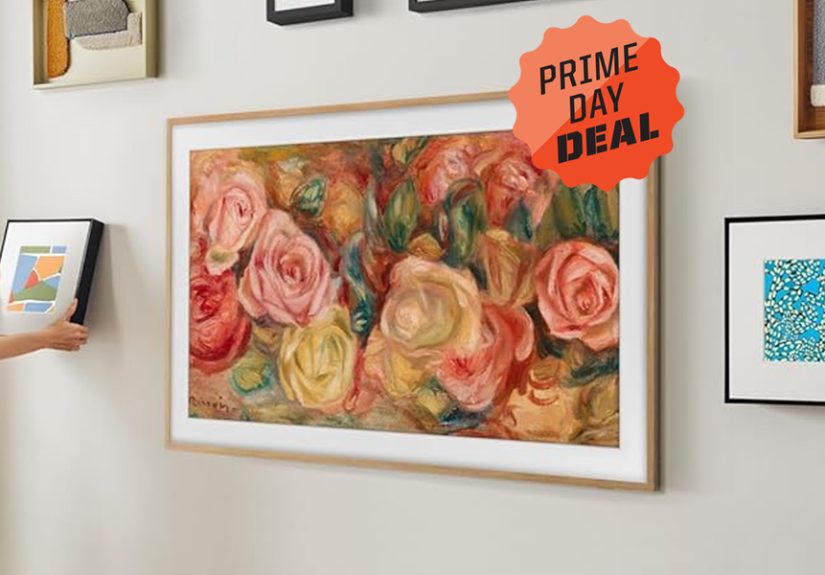
The Frame is a 4K QLED smart TV designed to look like framed artwork when it’s not playing Netflix. That’s the whole pitchand it nails it better than most “lifestyle” tech, which usually means “same gadget, in beige.”
Art Mode: the feature that turns your TV into wall décor
Art Mode displays artwork or personal photos when the TV is “off,” so your room stays warm and intentional instead of looking like a sports bar waiting to happen. Samsung’s ecosystem includes the Art Store, where you can access a rotating library of licensed art (often via subscription) or upload your own images for a more personal gallery vibe.
Matte display: why the art illusion works
The Frame’s secret sauce is the matte, anti-reflection-style screen finish that helps reduce glare and makes artwork look less like “a slideshow on a shiny panel.” In bright rooms, that matters. A lot. No one wants their “museum moment” interrupted by a perfect reflection of the kitchen trash can.
Custom bezels: the part many people forget to budget for
The bezel is the magnetic frame that snaps onto the TV and sells the illusion. Here’s the catch: on many listings, the bezel is not included unless explicitly stated. Prime Day 2025 had a mix of “TV only” deals and “includes bezel” bundles, so smart shoppers double-checked what they were actually buying before celebrating.
Prime Day 2025 pricing: the headline deal and the real-world range
The deal that made the most noise was the 55-inch 2024 Samsung Frame TV at $798. That price point mattered because 55 inches is the sweet spot for a lot of living roomsbig enough to feel cinematic, not so big that your wall starts negotiating for hazard pay.
But Prime Day 2025 wasn’t a one-size story. Deals varied based on:
- Model year (2024 vs. 2025 versions)
- Size (32 to 75 inches were commonly mentioned in deal coverage)
- Bundle status (TV-only vs. bezel bundles)
- Retailer (Amazon listings vs. Samsung’s own store promotions)
Some coverage also highlighted a 75-inch 2024 Frame TV dropping to around the mid-$1,500 range during the Prime Day window through Samsung’s sale eventsan eye-catching discount for a “statement piece” size that usually lives in the “maybe when I win something” budget category.
Should you buy the 2024 Frame TV or the newer 2025 model?
Prime Day 2025 made this question unavoidable, because the best prices often targeted the 2024 Frame TV. And honestly? That’s not a bad thing.
Why the 2024 model was the smarter Prime Day buy for most people
If you care about the Frame for its core promisematte look, Art Mode, clean wall mount aestheticthe 2024 version checks the boxes. Many deal editors specifically called out that you’re not “missing much” if your priority is the lifestyle experience rather than chasing every incremental update.
When it makes sense to pay more for the 2025 model
Go newer if you’re the kind of buyer who:
- Wants the latest processor/software refinements
- Is picky about newer feature additions (especially if you keep TVs for many years)
- Values a bundle that includes extras (like a bezel) without shopping around
Also worth noting: 2025 brought more attention to the “premium Frame” concept, including talk around Frame Pro variants in deal coverageleaning into higher-end panel tech and cleaner installation options for buyers who want the aesthetic and more performance.
How to shop Frame TV deals without getting tricked by your own excitement
Prime Day brain is real. You see a big discount and suddenly you’re convinced a 75-inch TV will “look cozy” in a studio apartment. Here’s how to shop The Frame like someone who remains in control of their life choices:
1) Confirm the model year and listing type
Many record-low callouts focused on the 2024 model. Listings may show the same product name (“The Frame”) while hiding meaningful differences in model year. Read the fine print like it owes you money.
2) Check whether a bezel is included
If you want the full Frame look, you’ll probably want a bezel. If the listing is “TV only,” factor that into your total cost. Prime Day sometimes offered bundles where a bezel was includedthose can be a better deal even if the base TV price looks slightly higher.
3) Budget for mounting (and cable sanity)
The Frame looks best wall-mounted. If you’re renting, or you hate drilling, plan accordingly. Also consider cable routing. The illusion breaks a little when your “gallery piece” has a spaghetti tail of HDMI cables dangling like it’s escaping.
4) Remember: Art Store access may require a subscription
You can still use your own photos and free art options, but if your dream is rotating famous paintings like a tiny museum curator, plan for the ongoing cost. The TV is the ticket; the gallery can be an add-on.
Is The Frame actually a good TV, or is it just pretty?
Here’s the pleasant surprise: The Frame doesn’t require you to sacrifice the basics. Deal coverage consistently highlighted that you still get a solid 4K QLED experience with modern smart TV features. Is it the absolute best picture-per-dollar compared to a performance-first TV at the same sale price? Not always. But that’s like comparing hiking boots to designer sneakers. One is optimized for a mountain; the other is optimized for being seen.
If your priorities include:
- Bright-room viewing
- A clean, décor-friendly wall setup
- A TV that disappears into your interior design
…then The Frame’s value proposition gets very real, very fastespecially at Prime Day 2025 pricing.
Practical size advice (because “bigger” is not always “better”)
Choosing a Frame TV size is half math, half home décor psychology.
32–43 inches: best for bedrooms, kitchens, small offices
These sizes work where you want ambiance and casual viewing. Art Mode shines in smaller rooms because the “it’s a picture” illusion is easier to sell from closer distances.
50–55 inches: the living-room sweet spot
This is where Prime Day 2025’s record-low buzz landed. A 55-inch Frame at a sub-$800 price feels like the sweet spot of “I’m being responsible” and “my home looks expensive now.”
65–75 inches: the statement wall
These sizes are for people who want their living room to say, “Yes, we host.” Big Frame TVs can look incredible, but measure your wall and viewing distance first. A huge “painting” is only elegant if it doesn’t overwhelm the room.
Setup tips to make it look like art (not “TV pretending to be art”)
If you buy The Frame, don’t stop at plugging it in. The magic is in the details:
- Mount it flush: The closer it sits to the wall, the more convincing the illusion.
- Pick art that fits your room: High-contrast pieces look great, but softer palettes often feel more “gallery.”
- Use the light sensor wisely: Tweak brightness so it looks like a print, not a glowing billboard.
- Curate rotations: Don’t cycle 400 images a day. That’s not art; that’s a screensaver having a panic attack.
- Choose a bezel that matches real frames nearby: Your wall will look intentional instead of “tech corner.”
Will we see this price again, or was Prime Day 2025 a once-in-a-lifetime unicorn?
Prime Day pricing is famous for two things: sudden drops and sudden “out of stock.” Prime Day 2025’s record-low Frame TV pricing was widely treated as rare, but deal history suggests that once a product hits a certain discount threshold, it can resurface during other major sales windows (like fall deal events or Black Friday).
Still, that doesn’t make Prime Day 2025 less special. The combination of an iconic lifestyle TV and a genuinely aggressive discount is what made the moment. It wasn’t just “a deal.” It was a deal on something people actually want, for reasons beyond specs.
Conclusion: the Prime Day 2025 Frame TV deal in one sentence
Prime Day 2025 turned the Samsung Frame TV from a “someday when I feel fancy” purchase into a “wait, this is financially rational” purchaseespecially with the record-low price points on popular sizes like the 55-inch.
Real-world experiences: living with a TV that thinks it’s a painting
Okay, so let’s talk about what happens after the dopamine hit of scoring a Prime Day deal wears offwhen the box is in your hallway, your weekend plans are canceled, and you’re negotiating with drywall like it’s a difficult coworker.
Experience #1: The unboxing is deceptively “premium calm.” The Frame doesn’t scream gamer-tech. It’s packaged like a design object, which is fitting because you’re basically installing a digital art exhibit that also happens to play football. The first time you lift it out, you’ll notice how the whole product is engineered around “flush.” It wants to hug your wall. It wants to be mistaken for a framed print. It wants you to stop calling it a TV, honestly.
Experience #2: Mounting is where you earn your aesthetic. If you’re wall-mounting (which you should, if possible), the most satisfying moment is stepping back and realizing there’s no chunky gap. It looks intentional. It looks like you planned your living room instead of letting it happen to you. The least satisfying moment is realizing your outlet is in exactly the wrong place, and now you’re researching cable management with the intensity of a detective solving a case.
Experience #3: The first “Is that a real painting?” comment is ridiculously rewarding. People will walk in, glance at your wall, and keep talkingthen double-take. That double-take is the Frame TV’s love language. And once you start curating the art to match seasons (cozy landscapes in fall, bright modern prints in summer), you’ll understand why people get weirdly attached to Art Mode. It’s not just decoration; it’s mood control.
Experience #4: You’ll become a bezel person. Before owning The Frame, you might have thought, “A bezel is a bezel.” After owning it, you’ll have opinions like, “This teak tone warms the space,” and you’ll say it with a straight face. Picking the bezel is like choosing the frame for a real piece of artit changes the whole vibe. And yes, you might rearrange other wall frames to match it. The Frame TV doesn’t just blend in; it quietly demands that everything else step up its game.
Experience #5: You’ll tweak settings more than you expected. The default Art Mode settings are usually good, but “convincing art” is a Goldilocks zone. Too bright and it looks like a TV. Too dim and it looks like a sad print in a hallway. Once you dial in brightness and tone to your room’s lighting, it starts to feel legitimately gallery-like. And if your room gets a lot of daylight, you’ll appreciate how much the matte finish helps keep the illusion intact.
Experience #6: It changes how you use your living room. This sounds dramatic, but it’s real: when a screen becomes art when idle, you stop treating the TV as the visual center of the universe. You might leave it “off” more often. You might play music with art displayed during dinner. You might even discover the radical concept of sitting in a room without a giant black rectangle dominating your peripheral vision.
So yesPrime Day 2025’s lowest-ever price wasn’t just about saving money. It was about buying a product that genuinely changes how a space feels. You’re not just upgrading a screen. You’re upgrading the vibe. And if your home has ever felt one “ugly TV moment” away from chaos, that’s worth celebrating.