Table of Contents >> Show >> Hide
- What Was Discovered on Dartmoor?
- So What Is the “Sacred Arc,” Exactly?
- Why Compare These Circles to Stonehenge?
- How Do You “Find” a Stone Circle in the 21st Century?
- What Might a “Sacred Arc” Have Been For?
- What These Discoveries Don’t Prove (Yet)
- The Bigger Context: Stonehenge Was Never Alone
- Why the “Sacred Arc” Idea Hooks People (Even the Skeptics)
- What Comes Next: The Research Questions to Watch
- of “Experience”: How to Feel the Sacred Arc Without Pretending You’re a Time Traveler
- Conclusion: Two Quiet Circles, One Loud Question
If you’ve ever looked at Stonehenge and thought, “Surely we’ve found all the important circles of rocks by now,” Dartmoor would like a word. Actually, it would like two words: two circles. Researchers working in England’s Dartmoor National Park have identified two previously unknown Neolithic stone circlesplus nearby ceremonial featuresthat may support a bold idea nicknamed the “sacred arc”.
The name sounds like a fantasy-book subplot (the kind where the map has dragons in the margins), but the claim is surprisingly specific: multiple stone circles across the Devon uplands may have been positioned to trace a sweeping curvepossibly even a complete ring around Dartmoor’s central high ground. In other words, these new finds don’t just add two dots to the map. They may help reveal the outline of a whole prehistoric design.
What Was Discovered on Dartmoor?
The headline is simple: two new stone circles, likely around 5,000 years old, were revealed in the Taw Marsh area near Belstone on Dartmoor. The details, however, are the part that makes archaeologists reach for their field notebooksand the rest of us reach for the popcorn.
1) The Metheral Stone Circle: An Oval With Big Implications
One of the newly documented structures is called the Metheral stone circle, named for a nearby hill. It isn’t a towering ring of monoliths like Stonehenge; it’s more like a low, weather-worn echo of the same idea. The surviving stones are up to about 40 inches (roughly a meter) tall, and many have toppled or are partly hidden by vegetation. Even so, the layout is readable: an oval-shaped arrangement measuring roughly 130 feet by 108 feet.
The circle’s footprint matters as much as the stones themselves. In landscapes like Dartmoor, where peat, plant cover, and centuries of change can erase obvious features, shape and placement are clues. An oval ring of stones is hard to dismiss as accidental geologyespecially when it begins to “line up” with other monuments nearby.
2) The Irishman’s Wall Circle: The “You Have to Know Where to Look” Site
The second discovery sits about a mile north of Metheral and has been dubbed the Irishman’s Wall circle. It’s more fragmentaryonly about six stones are visible. This is the kind of site you could walk past while confidently telling your friend, “Yep, nothing here,” as the archaeologist behind you quietly ages ten years.
Because the stones are subtle, researchers used geophysical survey methodsincluding resistivity and magnetic gradiometryto detect signs of disturbed ground that can indicate where stones once stood. In plain English: the landscape still remembers what your eyes can’t see.
3) Bonus Features: A Dolmen With a Modern Name (and a Long List of Questions)
In the same vicinity, the team also reported additional ceremonial elements, including a collapsed dolmen (a prehistoric structure formed by upright stones supporting a capstone). The dolmen was given the evocative name “Fallen Brother” as a tribute to local Dartmoor communities affected by the World Wars. A possible long cairn was also mentioned in connection with the fieldworkhinting that this wasn’t just a “two circles and done” situation, but part of a larger ritual landscape.
Crucially, samples were collected for dating and environmental analysis. That means the current story is excitingbut still mid-season. The lab results are the next plot twist.
So What Is the “Sacred Arc,” Exactly?
The “sacred arc” is a hypothesis that Dartmoor’s stone circles weren’t placed randomly or independently. Instead, some may form a deliberate curving arrangement across the moordescribed as a roughly 5-mile-long sweep involving eight Neolithic stone circles. The idea is that the monuments trace a near-perfect half-circle, and that the missing half of the pattern may have existed in prehistory (or may still be waiting to be found).
The researcher associated with the theory has been searching Dartmoor for decades and previously identified the Sittaford stone circle in 2007reported as the first such discovery in the area in more than a century. The newly described circles help extend the pattern and strengthen the argument that the “arc” might represent a meaningful boundary or ceremonial circuit.
Arc, Ring, or Something in Between?
One of the funniest things about the phrase “sacred arc” is that it may be underselling itself. Some reporting notes that the pattern may be closer to a ring than an arc a loop of monuments encircling Dartmoor’s central uplands. If that’s true, then the name is basically “Sacred Arc (But Also… the Rest of the Circle).” Archaeology is full of glamorous branding like this.
Why Compare These Circles to Stonehenge?
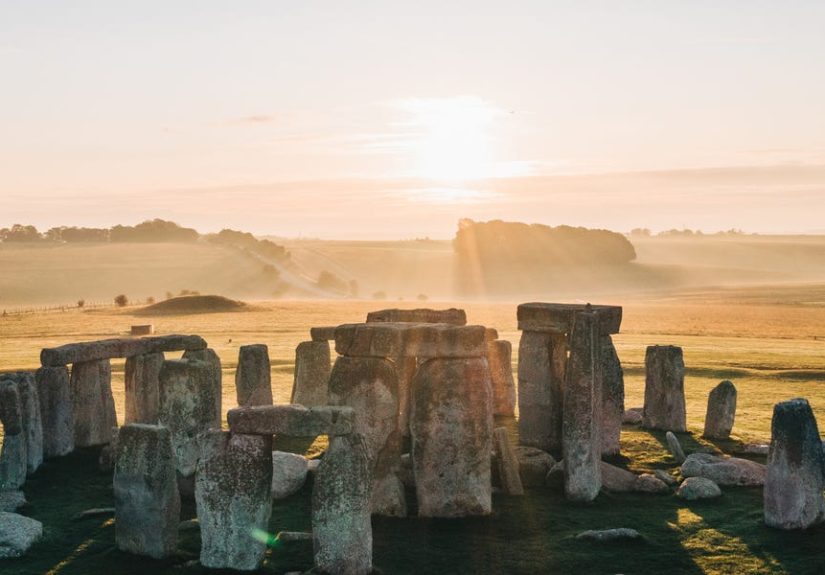
“Stonehenge-like” doesn’t mean these sites look identical to Stonehengebecause they don’t. Stonehenge is famous for its massive shaped sarsens, its lintels (the horizontal stones), and the long-distance transport of smaller bluestones. It’s also famous for being part of a much bigger ceremonial landscape.
But the comparison makes sense in three ways:
- Timing: The Dartmoor circles are estimated at about 5,000 years old, placing them broadly in the Neolithic world that also produced Stonehenge’s earlier phases.
- Concept: A circular monument is rarely “just decoration.” Across Neolithic Britain, circles can imply gathering, ritual, identity, and social coordination.
- Landscape Thinking: Stonehenge is now understood as part of a complex of monuments. The sacred-arc idea suggests Dartmoor may have had its own coordinated monumental layout.
Stonehenge’s Scale vs. Dartmoor’s Subtlety
Stonehenge was built in multiple stages over a long span (often summarized as beginning around 3000 BCE and continuing into later periods), and its stones include materials sourced from considerable distances. Dartmoor’s circlesat least the newly described onesappear smaller and more eroded. But small doesn’t mean unimportant. In prehistoric monument-building, significance often comes from placement, pattern, and participation, not just height.
In fact, one report notes that features near the Metheral site (including an external bank) could be suggestive of a henge-like formthe kind of circular earthwork monument that shows up in the broader Neolithic “toolkit,” including at early stages of sites like Stonehenge.
How Do You “Find” a Stone Circle in the 21st Century?
Archaeology isn’t always Indiana Jones running from boulders. Sometimes it’s more like: “Let’s walk slowly across a windy moor while a GPS beeps at us and the grass tries to hide history.”
Field Survey: The Art of Noticing What Everyone Else Missed
Dartmoor has been walked, grazed, and explored for centuriesyet new monuments can still be identified because many are subtle, degraded, or masked by vegetation. Researchers look for changes in ground texture, stone shapes that “repeat” in suspicious ways, and topographic positions that make sense for ceremonial markers.
Geophysics: Let the Ground Do the Talking
At Irishman’s Wall, geophysical tools helped detect past disturbance and potential stone positions. Resistivity can highlight differences in how soil holds moisture, and magnetic survey can reveal anomalies from past activity. It’s like turning the moor into a low-budget X-rayexcept the subject is 5,000 years old and refuses to hold still for the scan.
Targeted Excavation and Sampling
Excavation isn’t about digging everything. It’s about digging just enough to test hypotheses: confirming banks, pits, stone sockets, or associated featuresand collecting samples that can support dating and environmental reconstruction. Reported sampling at these sites could help clarify when the monuments were built and what Dartmoor’s environment looked like at the time.
What Might a “Sacred Arc” Have Been For?
Archaeology is at its best when it balances imagination with restraint. We can’t interview Neolithic builders. But we can look at patterns across time and place, and we can ask: what kinds of human problems do monuments solve?
A Ceremonial Boundary (AKA: “This Is Special Land”)
One interpretation is that an arc or ring of circles marked a boundary around Dartmoor’s high groundperhaps designating a zone for ritual gatherings, seasonal ceremonies, or shared identity. If the landscape once had more forest cover than it does today, elevated ground would have stood out even more as a natural focal point.
A Pilgrimage Route With Stations Along the Way
Another possibility: the circles formed a ceremonial circuit, with people moving between monuments during key times of year. Irishman’s Wall has been proposed as a possible entrance point into the sacred zonesuggesting movement through space mattered, not just the destination.
A Social “Megaproject” (Before There Were Clipboards)
Building stone monuments requires cooperation: planning, hauling, coordination, and shared purpose. Even modest stones become impressive when you remember they were moved without modern machinery. Monument-building may have helped communities negotiate alliances, identity, and cohesionespecially in times of change.
What These Discoveries Don’t Prove (Yet)
The most responsible way to enjoy an archaeology headline is with two thoughts at once: “This is exciting” and “We need more data.”
- Precise dating is pending: The circles are estimated to be Neolithic, but detailed dating and environmental results are still forthcoming.
- Alignments can be tricky: Humans are excellent at seeing patterns. Archaeologists must test whether the “arc” is statistically meaningful or partly coincidental.
- Landscapes change: Stones fall, peat grows, features erode, and later activity can rearrange or obscure monuments.
None of this weakens the discovery. It just keeps the story honest. If anything, it makes the research more interesting: the next phase isn’t a photoshootit’s analysis.
The Bigger Context: Stonehenge Was Never Alone
One reason this Dartmoor story resonates is that it fits a broader archaeological reality: Stonehenge wasn’t a solo act. It’s part of a wider tradition of monument-building across prehistoric Britain and beyond, with related sites, shared ideas, and overlapping timeframes.
Stonehenge itself is widely described as a multi-stage project spanning long periods, built in distinct phases and embedded in a broader monumental landscape. It’s also famous for logistical featslike transporting certain stones from far awaywhich implies travel networks and cultural connections.
That matters for Dartmoor because it nudges us away from the idea of isolated “mystery sites” and toward a more human picture: communities communicating, borrowing ideas, and marking landscapes with structures that mattered to themwhether for ceremony, identity, timekeeping, or all of the above.
Why the “Sacred Arc” Idea Hooks People (Even the Skeptics)
Partly, it’s because the phrase is irresistible. “Sacred arc” sounds like it should come with a soundtrack and a quest marker. But the deeper reason is that it matches how humans behave: we organize space.
We build boundaries around what we value. We create routes to places that feel meaningful. We turn geography into story. If the sacred-arc hypothesis continues to gain support, it suggests Neolithic people on Dartmoor weren’t just placing stonesthey were creating a designed ceremonial landscape.
And if future work shows the arc is less “perfect” than hoped? The discoveries still matter. Two newly documented circles and associated monuments still reshape the known distribution of ceremonial sites on Dartmoor. Either way, the moor just got more interesting.
What Comes Next: The Research Questions to Watch
1) Dating and Environmental Reconstruction
Samples collected from these sites could help establish when the circles were built, whether they were reused or modified later, and what Dartmoor’s environment looked like at the time. That last piece is huge: you interpret monuments differently in a dense forest than on open moorland.
2) Finding “Missing” Monuments
If the pattern truly points to a broader ring, researchers may look for additional circles or related features that complete the layout. Some may be hidden under vegetation or peat, or may survive only as subtle soil traces.
3) Understanding Function Without Overclaiming
Were these gathering places? Territorial markers? Ceremonial stations? A way to encode seasonal knowledge in the landscape? The best answers may combine multiple functionsbecause humans rarely do just one thing with an important place.
of “Experience”: How to Feel the Sacred Arc Without Pretending You’re a Time Traveler
Let’s be honest: the phrase “Stonehenge-like” can trick your brain into expecting towering dramasunrise beams, chanting winds, and a free souvenir rock (don’t do that). Dartmoor delivers a different kind of experience, and it might be the better one: the feeling that the landscape is still keeping secrets, and you’re walking through the margins of a very old map.
Imagine starting your day on the moor when the sky can’t decide whether it’s going to behave. The air is cool, and the ground looks soft until it suddenly isn’t. You’re following a track that feels practicaluntil you remember that “practical” routes often become ritual routes over centuries. As you approach the Taw Marsh area, the world opens up: long views, low vegetation, and that peculiar Dartmoor mix of beauty and “please don’t trip in front of history.”
At a site like Metheral, the experience isn’t about being overwhelmed by size. It’s about noticing. The stones are modest, weathered, sometimes half-swallowed by the ground. You catch yourself doing the ancient-human thing: tracing a circle that’s partly invisible, letting your mind connect the gaps. And that’s when it hitsprehistoric monument-building wasn’t always about spectacle. Sometimes it was about creating a place where a group could agree, “This matters,” and then returning to that agreement year after year.
If you’re the journaling type, this is peak territory for a small experiment: stand still for two minutes (a heroic act in modern life) and write down what the landscape is doing. Is the wind coming from the same direction every time you stop? Do you feel sheltered or exposed? Which features “pull” your attentionthe hill, the horizon, the dip of the valley? Those observations aren’t proof of anything, but they help you understand why people might anchor meaning in a specific shape on a specific patch of ground.
Then picture Irishman’s Wall: fewer stones, more mystery. This is the site that teaches humility. It’s easy to miss what you don’t expect to see. In a way, that’s the point. The ground can hold a memory that isn’t obvious from a distance. You walk, you pause, you look back, and suddenly the geometry becomes clearerlike a sentence that only makes sense once you read it twice.
Finally, the “sacred arc” idea invites a different kind of experience: not just visiting one monument, but thinking in routes. If these circles were part of a larger ceremonial pattern, the most faithful way to appreciate them is to stop treating them like isolated attractions. Instead, think like a Neolithic planner (minus the stress, plus better shoes): where does this lead? what does it enclose? who is meant to enter, and from where? You don’t need to cosplay as the past. You just need to let the landscape be bigger than a single photo.
Conclusion: Two Quiet Circles, One Loud Question
The discovery of the Metheral and Irishman’s Wall stone circles is exciting on its own: it expands what we know about Dartmoor’s Neolithic monuments and highlights how much can still be hidden in plain sight. But the real spark comes from what these circles might represent togethera coherent, deliberate monumental design that shaped how people moved through, understood, and valued the moor thousands of years ago.
If the “sacred arc” hypothesis holds up to continued survey, excavation, and dating, Dartmoor may join the shortlist of landscapes where prehistoric builders weren’t just constructing monumentsthey were composing geography. Either way, the lesson is wonderfully inconvenient for anyone who thinks the past is fully mapped: sometimes the biggest discoveries are still waiting in the wind, under the grass, looking unimpressed by our certainty.