Table of Contents >> Show >> Hide
- Quick Glossary: Meteor, Meteoroid, Meteorite (Yes, It’s Confusing)
- Why “Most Likely Spot” Is a Trick Question (But a Useful One)
- What Scientists Actually Found: A “Most-Likely Zone” Near the Equator
- What About “Normal” Space Rocks? For Most Impacts, the Map Looks Random
- So Where Are You Most Likely to Get Hit?
- Real-World Examples That Show How Wide the Range Is
- What Scientists and Agencies Do With This Information
- If You Ever See a Fireball: Practical, Boring, Useful Safety Tips
- Experiences Related to “The Most Likely Spot” (An Extra of Real-World Vibes)
- Conclusion: The “Most Likely Spot” Is a Zone, Not a Doom Dot
If you’ve ever looked up at a shooting star and thought, “Wow… what if that thing chose violence?” you’re not alone. The good news is that Earth gets peppered with space material constantlyand almost all of it burns up harmlessly. The even better news is that the odds of a meteorite bonking you are so tiny they’re basically the universe’s way of saying, “Relax.”
But scientists can still ask a fun (and surprisingly technical) question: If something from space does hit Earth, is there any place it’s more likely to land? A recent modeling study tackled a very specific version of that questionfocused on interstellar objects (space rocks that come from outside our solar system). Their results point to a “most-likely zone,” not a single unlucky zip code: low latitudes near the equator, with a slight tilt toward the Northern Hemisphere.
Before you cancel your equator vacation, though, there’s a twist: “most likely” depends on what you meanhit the planet, hit land, hit people, or hit your roof at 2 a.m. while you’re watching a cooking show. Let’s break it down without turning this into a physics final.
Quick Glossary: Meteor, Meteoroid, Meteorite (Yes, It’s Confusing)
Space has a branding problem, so here’s the simple version:
- Meteoroid: A small space rock (or metal) traveling through space.
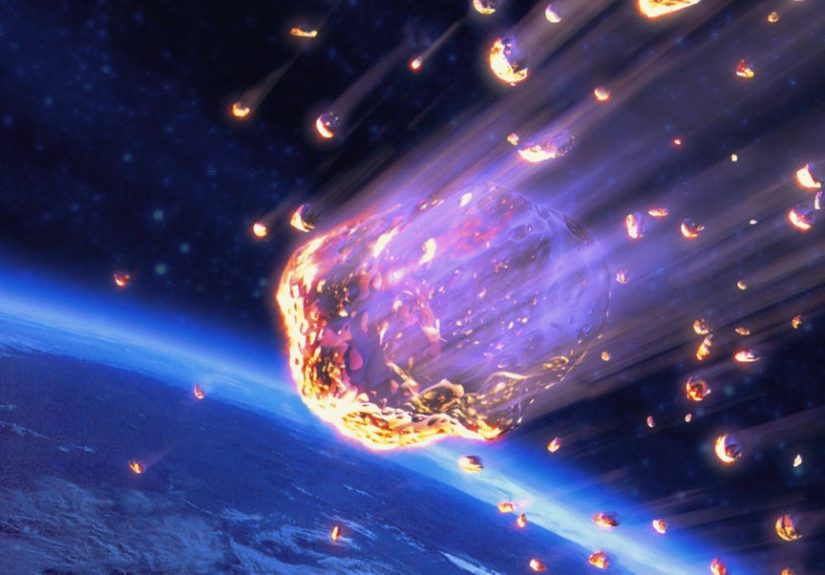
- Meteor: The bright streak you see when that meteoroid burns up in our atmosphere (the “shooting star”).
- Meteorite: The piece that survives and makes it to the ground.
When people say “meteor hit Earth,” they usually mean “a meteorite landed” or “a larger object exploded in the atmosphere.” And those are very different kinds of days.
Why “Most Likely Spot” Is a Trick Question (But a Useful One)
Earth is huge, and space is even huger. So if you ask, “Where is a random rock most likely to hit Earth?” the most honest answer is: wherever there’s more Earth.
By pure surface area, the ocean wins
Most of Earth’s surface is ocean, so if impacts were perfectly random across the whole globe, the ocean would take the majority of hits. That’s not a dramatic plot twistit’s just geometry with waves.
But scientists don’t only care about where rocks land
They care about risk: who or what could be affected, how often, and whether we can detect objects early enough to do something smart (like tracking, warning, or someday deflecting).
So you end up with multiple “most likely” questions:
- Most likely place for Earth to be struck at all (land + ocean)?
- Most likely place for a meteorite to land on land?
- Most likely place a person might be harmed (which depends on population)?
- Most likely place for a very specific type of object (like interstellar visitors)?
The headline you’re here for comes from that last category.
What Scientists Actually Found: A “Most-Likely Zone” Near the Equator
In late 2025, researchers modeled the expected impact locations, seasons, and approach directions for hypothetical Earth-impacting interstellar objects. Interstellar objects (ISOs) are rare visitors like ‘Oumuamua and 2I/Borisovobjects that pass through our solar system from elsewhere.
Their simulations suggest that, for this interstellar category, impacts are more likely at low latitudes close to the equator, with a slight preference for the Northern Hemisphere. They also found a seasonal pattern: impacts overall are more likely in Northern Hemisphere winter, while the fastest potential impacts are more likely in spring.
Apex, antapex, and the “windshield effect”
Here’s the vibe: Earth is moving through space as it orbits the Sun, and the solar system itself moves through the galaxy. That motion creates preferred “directions” in the sky, often described as the solar apex (where we’re headed) and the solar antapex (where we came from).
If you’ve ever ridden in a car through a swarm of bugs, you already understand the basic idea. The “front windshield” can encounter more stuff (or encounter it differently) than the rear window. In the study’s results, Earth’s position relative to these directions helps shape when and where hypothetical interstellar impactors would be more likely to collide with us.
So is there a single “most likely spot”?
Not really. The result is best pictured as a belt around Earth near the equator, with a gentle nudge toward the north side of that belt. It’s a probability patternnot a cosmic bullseye painted on one country.
Also important: the authors (and responsible science reporting) emphasize that this is modeling of hypothetical impactors. It doesn’t mean an interstellar meteor is scheduled to arrive on your birthday.
What About “Normal” Space Rocks? For Most Impacts, the Map Looks Random
Interstellar objects are the flashy celebrity guests of the solar system. The everyday “background noise” comes from ordinary meteoroids and small asteroids that originate within our solar system.
And for those, the large-scale pattern looks close to what you’d expect from randomness. NASA has released maps of bolide events detected by U.S. government sensors over a couple decades, and the distribution appears broadly global rather than clustering in one “most-likely” region.
Earth gets showered with space stuff every day
Scientists estimate that tens of tons of meteoritic material fall through Earth’s atmosphere dailymostly as tiny particles that vaporize and never reach the ground. In other words, Earth is basically wearing a constant, invisible “space glitter” cape. (Not the craft-store kind. The cooler, older-than-Earth kind.)
Actual meteorites that reach the ground are much rarerand hard to notice
Even when a meteorite does drop, it often lands in places that don’t file press releases: oceans, forests, empty deserts, or remote ice fields. That’s why “meteorite finds” are strongly influenced by where humans can spot themdry deserts and Antarctica are famous for preserving meteorites and making them easier to recognize against the landscape.
So the world’s best “meteorite hunting grounds” are not necessarily where meteorites fall mostthey’re where meteorites stay and are easiest to see.
So Where Are You Most Likely to Get Hit?
Let’s answer the question in the way most people secretly mean it: “Where is it most likely that a meteorite could affect humans?”
1) The ocean is the most likely landing zone overall
If you throw darts blindfolded at a globe, you’ll hit water most of the time. Same logic here. If impacts were evenly spread, the ocean would dominate the probability simply because it covers most of the surface.
2) For damage to people or property, population matters
A rock landing on an empty patch of ocean is scientifically interesting but not personally annoying. If you care about human consequences, you care about where people liveand most of the world’s population is in the Northern Hemisphere.
That’s one reason why even a “slight Northern Hemisphere preference” in a model can sound scarier than it is. More people + more infrastructure means more opportunities for a rare event to be noticed or cause damage.
3) Your personal risk is still tiny
Even colorful stories about meteorites hitting roofs are memorable precisely because they’re rare. Comparing odds can be sobering in a comforting way: your chances of being struck by lightning over a lifetime are far higher than being injured by a meteorite. Space rocks make headlines; lightning makes insurance paperwork.
Bottom line: the “most likely spot” is fascinating for science and planning, but it doesn’t mean anyone should live in fearespecially because the most common space material is microscopic and harmless.
Real-World Examples That Show How Wide the Range Is
To appreciate how “meteor events” span everything from pretty to disruptive, it helps to look at a few famous examples:
Chelyabinsk (2013): a dramatic airburst, not a crater apocalypse
A relatively small asteroid entered over Russia and exploded high in the atmosphere. The shock wave damaged buildings and caused many injuriesmostly from shattered glass. It was a wake-up call that you don’t need a dinosaur-killer to have a bad day.
Doorbell-camera meteorite strikes
In an age where everything is recorded (including your neighbor’s cat walking across your porch), rare meteorite strikes have occasionally been captured on video. These events are scientific gold because they can help confirm timing, direction, and what actually hit the ground.
A rock through a roof is still not a trend
Occasional reports of meteorite-related property damage get attention, but they remain outliers compared to the steady, invisible drizzle of micrometeoritic material that Earth receives constantly.
What Scientists and Agencies Do With This Information
Whether we’re talking interstellar visitors or homegrown asteroids, researchers aren’t just mapping probabilities for fun. The practical goal is planetary defensedetecting objects, refining orbits, estimating risk, and coordinating plans if something looks threatening.
Impact monitoring is a real thing (and it runs all the time)
NASA’s Center for Near-Earth Object Studies (CNEOS) maintains automated systems that continuously scan known asteroid orbits for possible future Earth impacts. Most “risk” objects get removed from concern lists as more observations shrink the uncertainty. That’s not flip-flopping; it’s the scientific process doing its job.
Hazards depend on size, speed, and where an impact happens
USGS research highlights that impacts can produce different cascading hazardsblast waves, thermal effects, tsunamis (if over water), and moredepending on the event. Fortunately, the truly catastrophic impacts are extremely rare on human time scales.
If You Ever See a Fireball: Practical, Boring, Useful Safety Tips
Most meteors are harmless streaks. But if you see a very bright fireball and a loud boom follows later, treat it like any other unusual event:
- Don’t rush to windows if you see a bright flash; shock waves can arrive after the light.
- Note the time and direction (roughly). Your memory is valuable to scientists even if your compass skills are… optimistic.
- Report sightings to reputable organizations that collect public observations (meteor societies and research groups often do).
- If you think you found a meteorite, avoid contaminating it unnecessarily and follow expert guidance for handling.
Experiences Related to “The Most Likely Spot” (An Extra of Real-World Vibes)
Talk about “the most likely spot on Earth to get hit by a meteor” and you’ll notice something funny: people immediately picture a smoking crater in their backyard, when most real-life “meteor experiences” are quieter, stranger, and more communal than that.
For many people, the first brush with the topic isn’t impact risk at allit’s meteor showers. Families spread blankets in a backyard, friends camp out with thermoses, and somebody inevitably says, “Waitwas that one?” every 45 seconds. Those nights are an experience of probability you can actually feel: you’re watching tiny bits of debris burn up overhead, a reminder that Earth is not sealed off from space. It’s more like a house with the windows openmost things that drift in are just dust motes, and occasionally you get a dramatic moth.
Then there are the folks who get into citizen science. People report fireballs, compare notes online, and learn that the same event can look completely different depending on where you stand. One person sees a green streak. Another hears a boom minutes later. Someone else just wonders why their dog is suddenly offended at the sky. This is where “most likely spot” conversations get interesting, because you start thinking in maps and patterns. You realize that observations cluster where people are awake, outdoors, and connectedso the “data” is partly about our behavior, not just the sky.
Meteorite hunting communities also develop their own rituals and caution. Most experienced searchers focus on places where meteorites are easiest to spot and preservedry deserts, open plains, and polar regionsbecause these environments reduce rust and camouflage. The experience is less “treasure hunt” and more “geology walk with an astrophysics twist.” People learn to tell a meteorite-like rock from a terrestrial lookalike, and they trade stories about false alarms that were actually industrial slag or a perfectly normal rock that just looked mysterious in dramatic lighting.
Sometimes the “experience” is closer to a public event: a bright daytime fireball, a sonic boom, a wave of social-media posts, and local news trying to decide if it was thunder, a transformer, or the universe dropping a bowling ball. In those moments, you see how planetary science meets everyday life. Schools ask questions. Museums get calls. Scientists explain that yes, rocks really do fall from the skyjust not often enough to justify wearing a helmet to the grocery store.
And finally, there’s the experience of perspective. Learning that one study’s “most likely zone” is a low-latitude belt near the equator doesn’t have to feel scary; it can feel like a deeper appreciation of how dynamic our planet is. Earth spins, orbits, and cruises through the galaxy like a traveler on a long road trip. The “risk map” is really a motion mapa picture of where Earth is, how it moves, and how even tiny probabilities can have structure. For most of us, the most practical takeaway isn’t fear. It’s wonder: we live on a planet that catches stardust daily, and once in a while, it hands us a rock older than Earth as a reminder that we’re part of a much bigger neighborhood.
Conclusion: The “Most Likely Spot” Is a Zone, Not a Doom Dot
Scientists can model where impacts are more probable under certain assumptions. For interstellar objects in particular, recent modeling points to low latitudes near the equator with a slight Northern Hemisphere preference, and a seasonal rhythm tied to Earth’s motion through space. For the much more common day-to-day meteoroid activity, the big picture looks broadly global, with most material burning up harmlessly and most meteorites landing where we’ll never notice them.
If you want a final, practical answer: the ocean is the most likely landing zone overall, but your personal risk remains extremely low. The sky is busybut it’s mostly busy doing harmless, sparkly things for your enjoyment.