Table of Contents >> Show >> Hide
- What Is the Easy 1950s Fridge-Cleaning Method?
- Why This Old-School Method Still Works
- What You Need
- How to Scrub Your Fridge Step by Step
- Modern Fridge-Cleaning Upgrades the 1950s Method Deserves
- Common Mistakes to Avoid
- How Often Should You Clean Your Fridge?
- Why This Method Is Perfect for Busy Households
- The Big Takeaway
- Real-Life Experiences with This Easy 1950s Cleaning Method
Some cleaning tricks never really go out of style. They just wait quietly in the corner until the internet rediscovers them and acts like Grandma invented Wi-Fi. One of those classics is the old-school fridge-cleaning method built around warm water, baking soda, a soft cloth, and a modest amount of elbow grease. No neon foam. No eye-watering chemical cloud. No dramatic soundtrack. Just a simple, practical way to make your refrigerator look less like a science fair project and more like a place where food should actually live.
If your fridge currently contains a sticky jam ring, a suspicious puddle under the produce drawer, and a half-used condiment bottle that may have seen three presidencies, this method is for you. It is easy, affordable, gentle on most refrigerator interiors, and surprisingly effective at cutting grime and neutralizing odors. Better yet, it pairs beautifully with modern food-safety habits, which means you get the nostalgic charm of a retro cleaning trick without pretending it is still 1956 and leftovers live forever.
Here is how to use this easy 1950s-style cleaning method to scrub your fridge properly, safely, and without turning a simple chore into an Olympic event.
What Is the Easy 1950s Fridge-Cleaning Method?
At its heart, this vintage-inspired method is wonderfully uncomplicated: mix baking soda with warm water, wipe down the inside of the refrigerator, scrub trouble spots with a soft sponge or cloth, and dry everything before putting food back. For tougher messes, make a thicker baking soda paste and let it sit for a few minutes before wiping it away.
It sounds almost too simple, which is probably why it has lasted for decades. Baking soda helps loosen grime and tame odors without leaving behind a heavy fragrance. Warm water helps dissolve sticky residue. A soft cloth or non-scratch sponge does the dirty work without roughing up plastic liners and shelves. It is less “lab experiment” and more “common sense in an apron.”
Why This Old-School Method Still Works
It cleans without making your fridge smell like a chemical factory
Your refrigerator stores food, not automotive parts. That is why many appliance-care guides still recommend gentle cleaners for the interior. A baking soda solution freshens surfaces without loading the space with a strong scent that can cling to butter, leftovers, or that innocent slice of cheesecake you were definitely saving for later.
It is tough on sticky messes but gentler on surfaces
The inside of a fridge is full of plastic bins, coated shelves, drawers, and rubber seals. Harsh abrasives can scratch those surfaces, and aggressive chemicals can leave behind residue you do not want hanging around your groceries. Baking soda mixed with warm water is mild enough for routine cleaning but still useful against dried spills, mystery drips, and the ketchup incident we do not discuss.
It helps with odors while you clean
This is one reason the method has such staying power. You are not just wiping away visible grime. You are also reducing the smells that build up from forgotten leftovers, leaky produce, or open containers. Cleaning and deodorizing at the same time is a nice little efficiency win, which is exactly the kind of thing people in the 1950s would have appreciated. They loved a tidy system.
What You Need
- Baking soda
- Warm water
- A bowl or spray bottle
- Soft microfiber cloths or clean dishcloths
- A non-scratch sponge
- An old toothbrush or small soft brush for corners and crevices
- Mild dish soap
- A cooler or insulated bag for perishable food, if needed
- Dry towels for finishing
A practical formula is about 2 tablespoons of baking soda per quart of warm water. If you are battling a stubborn stain, stir baking soda with a small amount of water until it forms a spreadable paste. That gives you more scrubbing power without moving into “remove the paint while you are at it” territory.
How to Scrub Your Fridge Step by Step
1. Empty the refrigerator
Start by taking everything out. Yes, everything. Cleaning around jars and takeout containers does not count as cleaning. It counts as aerobics. Group similar items together on the counter so you can restock more logically later. Put milk, eggs, meat, yogurt, and other perishables in a cooler if the process is going to take a while.
This is also the perfect moment to toss expired food, wilted produce, old leftovers, and condiments that have clearly entered the witness protection program. A deep clean works best when you are not carefully preserving garbage out of misplaced optimism.
2. Remove shelves, drawers, and bins
Take out any removable parts and set them on the counter. If glass shelves are very cold, let them come closer to room temperature before washing them with warm water. Sudden temperature shifts can crack glass, and that is a terrible plot twist for a cleaning day.
Wash these parts with warm water and a little mild dish soap. For lingering odors or light grime, you can also use the baking soda solution. Rinse well and dry thoroughly.
3. Wipe out crumbs and loose debris first
Before adding cleaner, remove loose bits of food, crumbs, and random leafy fragments from the shelves and drawers. This prevents you from turning dry debris into a sad little paste. A dry cloth, paper towel, or handheld vacuum can make this step easier.
4. Clean the interior with the baking soda solution
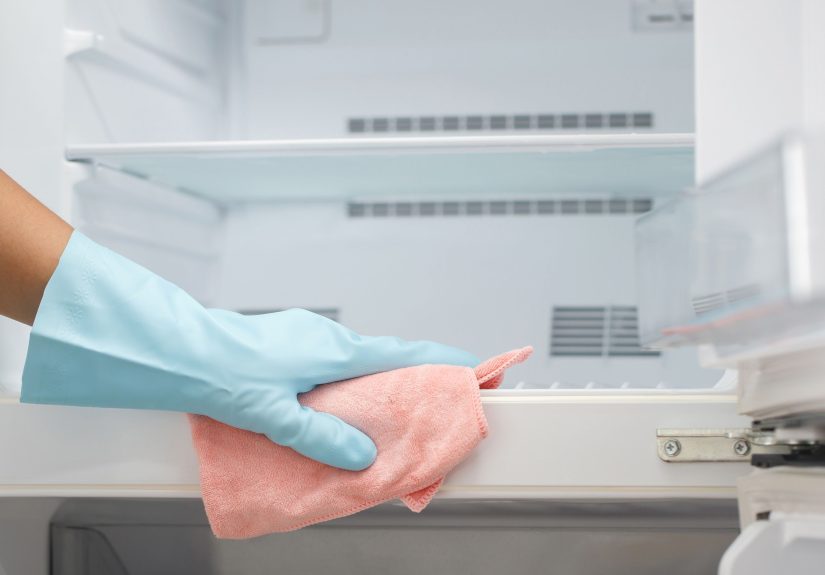
Dip a cloth or sponge into your baking soda mixture and wipe the fridge walls, ceiling, floor, shelves, and inside doors. Work from top to bottom so drips fall onto areas you have not cleaned yet. This is not revolutionary. It is just smart.
Pay special attention to the edges of shelves, the lip around drawers, and the spots where spills like to hide and harden. Those are the places where old fridge odors like to build their tiny kingdom.
5. Use a paste for stubborn grime
If you find dried syrup, sticky sauce, or a crusted mystery spot that looks like it survived a geological era, switch to a baking soda paste. Spread it over the mess, let it sit for several minutes, then gently scrub with a sponge or soft brush. An old toothbrush is excellent for tight corners, seams, and awkward little ledges.
Do not use steel wool or rough scrubbers. Your goal is a cleaner fridge, not one that looks like it lost a fight with a raccoon.
6. Clean the door gasket carefully
The rubber gasket around the door is one of the most overlooked parts of the refrigerator, which is unfortunate because it collects crumbs, moisture, and grime like it is getting paid for it. Wipe it with warm water and mild dish soap, then dry it thoroughly. If your gasket is in good shape, it helps the door seal properly and keeps the fridge running efficiently.
Be gentle here. Skip bleach and harsh cleaners on the gasket. This is maintenance, not punishment.
7. Dry everything completely
Once the interior is clean, wipe all surfaces with a dry towel or cloth. Moisture left behind can lead to new odors, streaks, or little pockets of dampness where grime returns faster. Dry shelves, bins, and drawers before putting them back too.
8. Restock with a little strategy
Before returning the food, wipe down sticky bottles and jars. There is no point cleaning your fridge beautifully and then reintroducing a mustard bottle with the personality of a glue stick. Group similar items together, place older items toward the front, and avoid overpacking. Cold air needs room to circulate if you want the refrigerator to do its job well.
Modern Fridge-Cleaning Upgrades the 1950s Method Deserves
The old method still works, but modern food-safety know-how makes it even better. First, check your refrigerator temperature. It should stay at 40 degrees Fahrenheit or below, and your freezer should be at 0 degrees Fahrenheit. If you do not use an appliance thermometer, this is your sign to become the kind of person who owns one.
Second, replace your open box or container of baking soda every few months if you use it for odor control. A box that has been sitting in the back of the fridge since last baseball season is not doing much besides occupying valuable real estate.
Third, remember that cleaning is not only about what you can see. Periodically vacuuming refrigerator coils, when accessible and recommended by your appliance manual, can help the appliance run better. Think of it as cardio for your fridge.
Common Mistakes to Avoid
Using harsh chemicals inside the fridge
The interior is a food-contact zone. Stick with gentle, non-abrasive cleaning methods unless your appliance manufacturer specifically recommends something else.
Putting cold glass directly into hot water
That shortcut can turn into broken glass and a very annoying cleanup. Let cold shelves warm up first.
Forgetting the gasket
If the door seal is grimy, the fridge can smell stale and work harder than necessary.
Restocking the fridge while shelves are still wet
Damp surfaces invite streaks and can make containers slide around. Dry first, then reload.
Keeping too much stuff
A packed fridge is harder to clean, harder to organize, and worse for air circulation. You do not need five almost-empty salad dressings living rent-free on the top shelf.
How Often Should You Clean Your Fridge?
A quick wipe of spills should happen immediately, because future you deserves at least one act of kindness. Beyond that, a light tidy-up every week or two and a deeper clean every month to every few months works well for most households. If you cook often, store lots of leftovers, or have a household that treats the refrigerator like a revolving door, you may need to deep-clean more often.
The good news is that once you start using the baking soda method regularly, the job gets easier. Fresh spills come up faster. Odors never get quite so dramatic. And you stop discovering prehistoric cheese in the deli drawer, which is always emotionally beneficial.
Why This Method Is Perfect for Busy Households
The best cleaning methods are not the flashiest ones. They are the ones people will actually use. That is where this retro approach shines. Baking soda is cheap, easy to store, and useful for more than one task. Warm water is, thankfully, not a luxury item. And the technique is simple enough that you can do a respectable fridge refresh without blocking off an entire Saturday or giving your kitchen the vibe of a hazmat scene.
It is also adaptable. Doing a quick midweek cleanup because a container of berries staged a collapse? Use the same method. Deep cleaning before the holidays? Still works. Moving into a new apartment and refusing to inherit somebody else’s mystery smells? Oh, it absolutely works then.
The Big Takeaway
Sometimes the smartest solution is the one that has been sitting in the pantry all along. The easy 1950s fridge-cleaning method is not fancy, but it is effective, affordable, and refreshingly practical. A little baking soda, warm water, and consistent upkeep can leave your refrigerator cleaner, fresher, and far less terrifying when you open the produce drawer.
So the next time your fridge starts looking sticky, smelling funky, or generally behaving like it has seen too much, skip the dramatic products and go old-school. Your groceries will thank you. Your nose will thank you. And your future self, reaching calmly into a clean fridge for coffee creamer at 6:30 in the morning, will definitely thank you.
Real-Life Experiences with This Easy 1950s Cleaning Method
One of the most common experiences people have with this method is pure disbelief at how well such a simple mixture works. Plenty of folks start the job convinced they need a specialty cleaner with a futuristic label and twelve warning symbols. Then they mix baking soda and warm water, wipe one shelf, and suddenly realize the “miracle product” was basically hanging out next to the flour the whole time. That moment feels a little annoying and a little magical, which is honestly the correct emotional mix for cleaning.
Another familiar experience is discovering that the smell people blame on “the whole fridge” is often coming from one very specific offender. Maybe it is a leaky container of leftovers. Maybe it is an onion in the drawer that gave up on life days ago. Maybe it is a condiment bottle with crust around the lid that could qualify as its own ecosystem. Once the fridge is emptied and cleaned section by section, the odor often disappears much faster than expected. That is a satisfying result because it feels less like masking the problem and more like actually solving it.
Many renters and first-time homeowners also swear by this method after moving into a new place. A secondhand or previously used refrigerator can look fine at first glance but still carry old smells, sticky residue, and the vague emotional energy of somebody else’s expired lunch. A careful scrub with baking soda solution, a clean rinse, and a full dry-out can make the appliance feel like yours again. It is a small domestic victory, but a real one.
Busy parents often describe a different kind of benefit: speed. Once they know the process, they can tackle a shelf, drawer, or spill in minutes without hauling out a big cleaning kit. That matters in real life. Most people are not deep-cleaning their fridge during a peaceful, sunlit montage while jazz plays in the background. They are doing it between soccer practice, laundry, work calls, and a child asking why yogurt comes in tubes. A method that is fast and reliable tends to survive in households that run on chaos and snack requests.
Then there is the “after the holidays” experience, which deserves its own category. Refrigerators that spent a week holding party trays, pie slices, leftover casseroles, relishes, beverages, and three types of cheese usually need a reset. The old baking soda method is especially useful then because it handles both crumbs and odor. People often say the biggest difference is not just cleanliness, but relief. The fridge stops feeling crowded and chaotic and starts feeling usable again.
And perhaps the most relatable experience of all is this: after one good deep clean, people become much better at maintenance. They start wiping jars before putting them back. They notice spills earlier. They throw out old leftovers faster. A clean fridge changes behavior because it makes disorder more obvious. It is harder to ignore a sticky mess when the rest of the shelves look bright and fresh. In that way, this easy 1950s cleaning method does more than clean a refrigerator. It quietly resets the habits around it.