Table of Contents >> Show >> Hide
- What self-catheterization is (and what it isn’t)
- Why males may need to self-catheterize
- Types of catheters used for male self-catheterization
- Before you start: training, supplies, and a “clean zone”
- How to do clean intermittent self-catheterization (male)
- How often should you catheterize?
- Safety and comfort: how to lower irritation and infection risk
- Common problems and “what now?” troubleshooting
- Living with CIC: confidence, privacy, and planning
- Real-life experiences: what people commonly notice (and what gets easier)
- Conclusion
If your bladder were a group chat, it would have exactly one job: send a message (“I’m full!”), then successfully deliver the follow-up (“All clear!”).
Self-catheterizationusually called clean intermittent catheterization (CIC)is one way to help when that follow-up message keeps getting stuck.
Important: This article is educational, not a substitute for hands-on training. If a clinician hasn’t taught you CIC, don’t “wing it.”
Your care team will pick the right catheter type and size and show you the safest technique for your body.
What self-catheterization is (and what it isn’t)
Male self-catheterization typically means intermittent catheterization: you insert a thin, flexible tube through the urethra to drain the bladder,
then remove it right away. The goal is simple: empty the bladder fully and safely.
It’s different from:
- Indwelling (Foley) catheter: stays in place continuously and drains into a bag.
- Suprapubic catheter: drains through an opening in the lower abdomen (placed by a clinician).
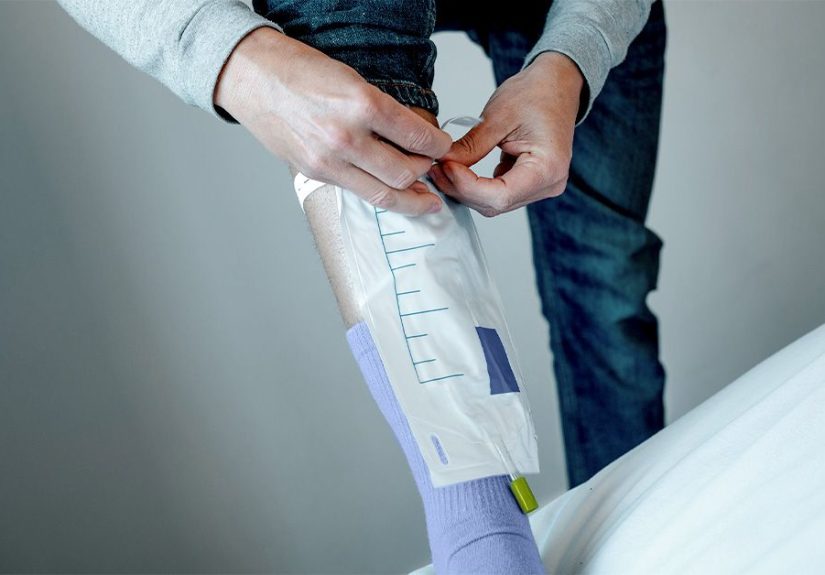
- External (condom) catheter: sits on the outside and collects urine; it does not drain urine from inside the bladder.
CIC is often chosen because it allows the bladder to fill and empty on a schedulemore like “normal plumbing”instead of leaving a tube in place around the clock.
Why males may need to self-catheterize
Self-catheterization isn’t a personality trait; it’s a tool for specific medical problems. Your clinician might recommend CIC if you have:
- Urinary retention (trouble emptying your bladder) from an enlarged prostate (BPH), prostate inflammation, or swelling after procedures.
- Post-surgery or post-anesthesia retention, when bladder signals temporarily don’t cooperate.
- Urethral strictures (narrowing that can block urine flow).
- Neurologic or nerve-related bladder issues (for example, spinal cord injury, multiple sclerosis, stroke, diabetes-related nerve damage, or other neurogenic bladder conditions).
- Medication side effects that make it harder to empty your bladder.
The “why” matters because it shapes your schedule, catheter choice, and safety plan. For example, someone using CIC after short-term surgery swelling may need it temporarily,
while someone with a long-term bladder-emptying dysfunction may use CIC for yearsand get very, very good at it.
Types of catheters used for male self-catheterization
Catheters look similar at first glance, but small design differences can make a big comfort difference. Here are common intermittent catheter types:
Straight (uncoated) intermittent catheters
These are basic, single-use tubes that usually require separate lubricant. They’re widely available and often cost less, but comfort depends heavily on
proper lubrication and gentle technique.
Hydrophilic or pre-lubricated catheters
These have a coating or built-in lubricant designed to reduce friction. Many people prefer them for comfort and convenienceespecially when you’re not in the mood to juggle
extra supplies in a tiny bathroom stall.
Coudé-tip catheters
A coudé (curved) tip is often used when navigating prostate enlargement or certain anatomy that makes a straight tip harder to pass.
Only use a coudé catheter if your clinician recommends it and teaches you proper orientation.
Closed-system catheters
These come with a collection bag attached and are designed to reduce contamination risk, especially outside the home or when clean water/space is limited.
They can be helpful for travel, work, school, and situations where “clean-ish” is the best available option.
Compact/travel-friendly options
Some intermittent catheters fold or telescope into smaller cases. If discretion matters (and for most humans, it does), ask your supplier or clinician about compact options.
Single-use vs. reusable: what to follow
Some people are instructed to use single-use catheters, while others may be taught a reuse routine depending on local practice, insurance, and product type.
The only correct answer is: follow your clinician’s instructions and the manufacturer’s directions.
Before you start: training, supplies, and a “clean zone”
A short checklist makes CIC smoother (and reduces infection risk). Your exact supplies may vary, but commonly include:
- Your prescribed catheter type and size
- Water-based lubricant (if your catheter isn’t pre-lubricated)
- Soap and water (or cleansing wipes as recommended)
- A clean towel or disposable paper towels
- A container (if not draining into a toilet) or a closed-system bag
- Hand sanitizer for backup (not a substitute for washing when washing is available)
Set up a “clean zone” where you place your supplies. The goal isn’t perfectionit’s avoiding obvious contamination (like setting your catheter on a wet sink edge
that’s seen more toothbrush drama than a reality TV reunion).
How to do clean intermittent self-catheterization (male)
Your care team may teach a specific method. The steps below describe a typical clean technique approach used at home. If your clinician instructed sterile
technique (more common in certain healthcare settings), follow that instead.
- Wash your hands well. Soap and water is the gold standard when available. Dry with a clean towel.
- Get into a stable position. Many men catheterize standing at the toilet; others prefer sitting. Choose what keeps your hands steady and relaxed.
- Clean the tip area. Clean the penis and the opening where urine comes out using soap and water or the cleansing method your clinician recommended.
If you have a foreskin, gently retract it to clean, and return it to its normal position afterward. - Prepare the catheter without contaminating it. Open the package carefully. Hold the catheter in a way that avoids touching the portion that will be inserted.
- Lubricate if needed. Use a water-based lubricant if your catheter isn’t pre-lubricated. More friction is not a “character-building” experienceuse enough to stay comfortable.
- Insert slowly and gently. Advance the catheter as instructed by your clinician. Never force it. If you feel resistance, pause, take a slow breath,
relax your pelvic muscles, and try again gently. For persistent resistance, stop and contact your care team. - Let the urine drain fully. Once urine flows, keep the catheter stable and allow drainage into the toilet, container, or bag. Try not to rushthis is bladder emptying, not a speedrun.
- Withdraw slowly when drainage stops. When urine stops flowing, remove the catheter slowly as taught. Some people notice a small additional trickle as the catheter is withdrawn.
- Dispose or clean as instructed. Many intermittent catheters are designed for single use. If you were taught reuse, follow your clinician’s exact cleaning/storage routine.
- Wash your hands again. Yes, again. Bacteria love loopholes.
Red-flag rule: If you have severe pain, can’t pass the catheter, see significant bleeding, develop fever, or feel very unwell, stop and seek medical care.
How often should you catheterize?
Frequency depends on your diagnosis, fluid intake, bladder capacity, and your clinician’s plan. Many people catheterize on a regular schedule throughout the day
(often several times daily) to prevent overfilling and reduce leftover urine.
Practical tip: your care team may ask you to track volumes at first (how much drains each time). That data helps fine-tune timing and can reduce issues like leakage,
urgency, or nighttime disruptions.
Safety and comfort: how to lower irritation and infection risk
CIC is widely used, but it still involves introducing a device into the urinary tract. The two big goals are: minimize germs and minimize friction.
Here’s how:
- Hand hygiene every time: before and after catheterization.
- Clean the area as instructed: soap and water or recommended wipes.
- Don’t “double-dip”: avoid touching the catheter portion that goes inside you, and don’t set it on unclean surfaces.
- Use the right lubricant/coating: friction can lead to irritation and tiny injuries, which can raise infection risk.
- Don’t force through resistance: forcing can cause injury. If this becomes a pattern, your catheter type or technique may need adjustment.
- Stay hydrated unless your clinician restricted fluids: consistent hydration can help keep urine less concentrated and easier to drain.
Signs of a possible UTI (when to call your clinician)
Symptoms vary, but contact your clinician if you develop fever, chills, burning, cloudy or foul-smelling urine, new lower abdominal discomfort, back/flank pain,
or you feel generally unwellespecially if symptoms are new for you.
Common problems and “what now?” troubleshooting
“It won’t go in” (resistance)
Mild resistance can happen at a normal muscular “tight spot.” The safest response is to pause, breathe, relax, and try gently again.
If resistance is persistent, painful, or sudden compared to your usual experience, stop and contact your care team. You may need a different catheter type
(for example, a coudé tip) or evaluation for swelling or narrowing.
“There’s a little blood”
A small amount of blood can occur, especially early on or after irritation. Still, blood isn’t something to ignorereport it if it’s more than a trace,
happens repeatedly, or comes with pain or fever.
“No urine comes out”
This might happen if your bladder isn’t full yet, you’re dehydrated, the catheter isn’t positioned as expected, or there’s a kink/blockage.
If you repeatedly get no drainage when you normally would, contact your clinician promptly.
Living with CIC: confidence, privacy, and planning
The physical technique is one part of the story. The other part is learning how to make it fit into real lifework, school, travel, sports, and “I just want to leave the house
without packing like I’m moving out.”
- Create a small kit: a few catheters, wipes, hand sanitizer, a discreet bag, and an extra pair of underwear (because life happens).
- Pick your “most reliable bathroom” options: if you’ll be out for hours, plan for clean-ish restrooms when possible.
- Practice at home first: confidence comes from repetition in a low-stress environment.
- Talk to your clinician about comfort upgrades: hydrophilic, closed-system, or compact options can be game-changers.
Real-life experiences: what people commonly notice (and what gets easier)
You asked for experiences, so let’s talk about what many men reportwithout pretending everyone has the exact same journey. The early days of male self-catheterization
often come with two simultaneous thoughts: “This is medically necessary,” and “I cannot believe this is my Tuesday now.”
The learning curve is real. Many people say the first week is mostly about coordination: how to open packaging without touching everything,
how to hold supplies in a small space, and how to stay calm when your brain insists on treating a new health routine like a pop quiz. It’s common to feel tense at first,
and tension can make insertion harder. What tends to help is treating it like a slow, repeatable routine: set up supplies the same way each time, breathe,
and don’t rush. People often describe a “click” moment where their hands learn what to do and the anxiety drops.
Comfort improves with the right match. A frequent experience is realizing that “a catheter” isn’t just a catheter. Some men report that switching to a
hydrophilic or pre-lubricated catheter reduces irritation a lot. Others find that a different tip style or a slightly different technique (as taught by their clinician)
makes the process smoother. The big takeaway is that discomfort is not a badge of honor; it’s feedback. If something consistently hurts, it’s worth a clinical check-in.
Embarrassment is commonand usually fades. Many men describe worrying about privacy, noise, or someone noticing supplies. Over time, most develop a practical mindset:
this is healthcare, not a scandal. Discreet travel catheters and small kits can reduce stress. Some people pick a consistent schedule so they’re not urgently searching for a restroom,
and they keep a backup set of supplies in a car, backpack, or locker. That planning often feels empoweringless “my bladder runs the show,” more “I have a system.”
Public bathrooms are a whole subplot. Real talk: many men say the biggest challenge isn’t the catheterization itself, it’s finding a space that feels clean enough.
That’s where closed-system catheters (with an attached bag) can feel like a superpower, because they reduce the need for extra containers or perfect setup conditions.
People often learn little strategieslike choosing a stall with a shelf, using a clean paper towel as a barrier, or timing catheterization before leaving home.
Body surprises can happen. Some men notice occasional discomfort, bladder spasms, or changes in sensation as they adjust. If you have a neurologic condition,
your clinician may have additional guidance for symptoms your body can produce under stress. Many people also report that when they’re dehydrated, everything feels harder:
urine is more concentrated, irritation is more likely, and the routine feels less forgiving. Hydration (when medically appropriate) is often described as the “boring tip that actually works.”
Finally, a common experience is the quiet confidence that shows up later: the routine becomes faster, cleaner, and less emotionally loud. Men frequently describe a shift from
“I can’t believe I have to do this” to “I know exactly what to do, and I can live my life.” And that’s the real pointCIC isn’t meant to shrink your world. It’s meant to
make your bladder a little less dramatic so you can focus on everything else.
Conclusion
Male self-catheterization (clean intermittent catheterization) is a practical way to empty the bladder when the body can’t do it reliably on its own.
The best outcomes come from the right catheter type, good hygiene, gentle technique, and a schedule tailored by a clinician. If you’re struggling with pain, resistance,
recurrent symptoms, or anxiety about the routine, you’re not failingyou’re getting data. Bring that data to your care team and let them help you optimize the process.