Table of Contents >> Show >> Hide
- Why This Story Hits So Hard (Even If You’ve Never Posted a “Vent”)
- The Friends Who “Force” Dating: What’s Really Going On?
- When “Unattractive” Is Actually a Thinking Trap (Not a Mirror Report)
- The Dating World: Not a Beauty Contest, More Like a Search Algorithm (With Feelings)
- How to Set Boundaries Without Turning Into a Villain in Your Friends’ Group Chat
- The “Shocking Update” That Usually Surprises Everyone
- Practical Confidence Builders That Aren’t Cringe (or Fake)
- Extra: 7 Real-World Experiences People Relate To (And What They Learned)
- Experience 1: “My friends treated my love life like a rescue mission.”
- Experience 2: “I thought one rejection meant I was unlovable.”
- Experience 3: “Dating apps made me feel like I was being graded.”
- Experience 4: “I realized I was lonely, not ‘undesirable.’”
- Experience 5: “Therapy didn’t ‘fix me’it helped me stop attacking myself.”
- Experience 6: “I stopped trying to date like a different person.”
- Experience 7: “My ‘unattractive’ label was really a fear of being seen.”
- Conclusion: The Real Shock Is Autonomy
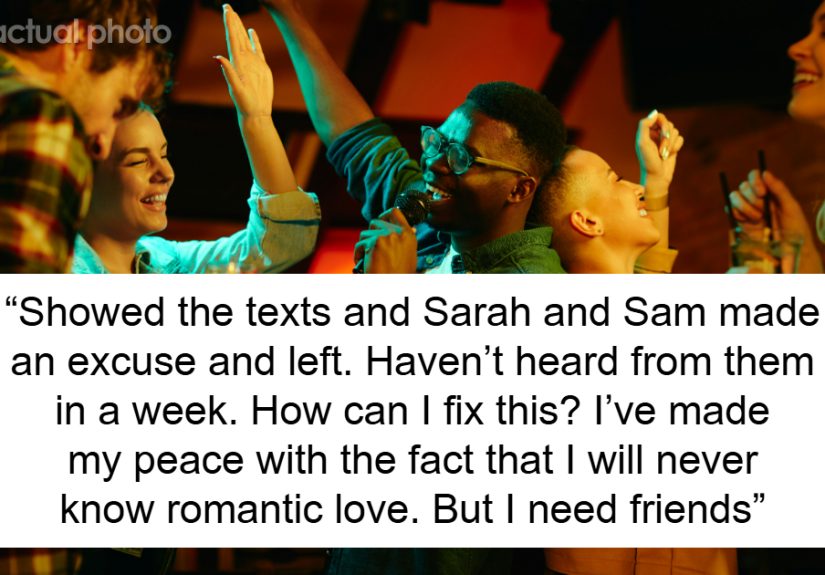
There’s a certain kind of story the internet loves: a guy posts, “I’m unattractive, my friends keep pushing me to date,
and I’m exhausted,” and the comment section immediately forms two campsTeam “Glow Up Now” and Team “Touch Grass, My Dude.”
Then comes the update, and suddenly everyone’s eating their words (or at least chewing thoughtfully).
If you’ve ever felt pressured to dateor labeled yourself as “unattractive” like it’s a permanent job titlethis article
is for you. We’re going to unpack the psychology behind self-perception, why friends push so hard, how dating culture
turns confidence into a subscription service, and what a “shocking update” usually reveals: the real plot twist isn’t a
makeover. It’s boundaries, self-respect, and a better story you tell yourself.
Why This Story Hits So Hard (Even If You’ve Never Posted a “Vent”)
Social pressure to date is weirdly intense. If you’re single, some people treat it like a broken appliance:
“Have you tried turning your personality off and on again?” Friends might mean well, but their “help” can slide into
pushing, teasing, or setting you up without consent. That’s not encouragementthat’s a social ambush.
Meanwhile, the label “unattractive” often isn’t a fact; it’s a conclusion drawn from selective evidence:
a couple rejections, some harsh self-talk, and a highlight reel of other people’s lives. When you repeat it long enough,
it becomes a filter over everythingphotos, conversations, even neutral facial expressions start to look like judgment.
This is why the “update” part matters. When people see someone shift from “I’m doomed” to “I’m choosing what I want,”
it challenges the idea that dating success is the only scoreboard for worth.
The Friends Who “Force” Dating: What’s Really Going On?
1) They confuse love with a group project
Some friend groups treat dating like a team sport: everyone gets a turn, everyone gets coached, and nobody is allowed to
sit out because “you’ll regret it.” Except dating isn’t intramural soccer. It’s personal, emotional, andthis is important
optional.
2) They’re uncomfortable with your discomfort
Watching someone struggle with confidence can make friends anxious. Their pushing can be less about you and more about
them trying to erase awkwardness. The logic becomes: “If you date, you’ll be happier, and then I won’t feel helpless.”
3) They believe a myth: “Confidence comes AFTER you date”
In reality, confidence usually comes from practice, competence, and self-trustthings you build in many areas of life.
Dating can be one arena for growth, sure, but it’s not the only one. And forcing it tends to backfire.
4) They’re doing ‘tough love’ with zero training
“Just put yourself out there” is the emotional equivalent of telling someone learning to swim, “Just become less wet.”
If your friends aren’t helping you feel safe, respected, and in control, the push isn’t loveit’s pressure.
When “Unattractive” Is Actually a Thinking Trap (Not a Mirror Report)
Self-image is influenced by experiences, comparisons, mood, and the way your brain edits memories.
That doesn’t mean appearance never matters in datinghumans have preferencesbut “I’m unattractive” is often a global,
permanent statement about a complex, changeable reality. It’s a conclusion that skips the trial.
Common mental shortcuts that make you feel “unattractive”
- All-or-nothing thinking: “If I’m not instantly wanted, I’m not wanted at all.”
- Mind-reading: “They didn’t text back fast, so I disgust them.”
- Filtering: You remember every rejection and forget every neutral or positive interaction.
- Comparing to highlights: You compare your behind-the-scenes to someone else’s curated feed.
A more accurate statement might be: “I feel unattractive lately” or “I’m scared of rejection” or “I don’t know where I
fit in the dating scene I’m looking at.” Those can be worked with. “I’m unattractive forever” can’tbecause it’s not a
plan; it’s a life sentence written in erasable ink.
The Dating World: Not a Beauty Contest, More Like a Search Algorithm (With Feelings)
Modern dating can amplify insecurity because it turns humans into profiles and vibe checks into swipe decisions.
Online dating is common in the U.S., especially among younger adults, and people report a mix of positive outcomes and
negative experiences like harassment or scams. But here’s the key: apps are not a universal judge of attractiveness.
They’re a specific environment with its own incentives.
What “forced dating” looks like in the app era
Friends might insist you download an app, pick your photos, and “just start swiping.” If you’re already anxious,
this can feel like being tossed on stage without rehearsal. You’re not failing at datingyou’re reacting normally to
high-speed social evaluation.
The hidden variable: context
People are often most “attractive” when they’re in their element: talking about something they care about, showing their
sense of humor, being kind without performing it, and appearing comfortable in their own skin. That doesn’t happen when
you’re pressured, rushed, or treated like a makeover before-and-after slideshow.
How to Set Boundaries Without Turning Into a Villain in Your Friends’ Group Chat
Boundaries are not ultimatums. They’re not “You must stop doing everything I dislike.” They’re “Here’s what I will and
won’t participate in.” That keeps your autonomy intact and keeps your friendships from becoming a reality TV audition.
Scripts you can steal (with pride)
- The calm boundary: “I appreciate you caring. I’m not dating right now. Please stop bringing it up.”
- The redirect: “I’m focusing on friendships and goals this season. If you want to support me, ask me about those.”
- The consent check: “Don’t set me up or give my number out. If I want an intro, I’ll ask.”
- The humor shield: “I’m not available for a forced-romance storyline. This is not a rom-com, and you are not the director.”
What good friends do next
Good friends may tease lightly, but they respect the boundary. Great friends ask what support actually helps: “Do you want
to meet people as friends first? Want us to go to a group event together? Want practice talking to strangers without it
being a date?” That’s support with training wheels, not a shove down a hill.
The “Shocking Update” That Usually Surprises Everyone
Viral update stories often shock people for one of three reasonsand none of them require becoming a different human.
They require becoming the driver of your own life.
Update Type A: He stops datingand gets happier
The plot twist: he wasn’t “behind,” he was misaligned. He focuses on friendships, health, hobbies, career, community,
and personal confidence. He learns that being single isn’t a defect; it’s a relationship status, not a diagnosis.
Update Type B: He dates, but on his terms
Instead of “being forced,” he sets a low-pressure goal: one coffee meetup a month, or attending social events where dating
is not the headline. He practices skills: conversation, self-compassion, and leaving situations that feel bad. Dating becomes
one part of lifenot a referendum on worth.
Update Type C: He realizes the real issue was anxiety, shame, or burnout
Sometimes “I’m unattractive” is the surface story, and the deeper story is social anxiety, harsh self-criticism, or
depression. Evidence-based approaches like cognitive behavioral strategies, gradual exposure, or acceptance-based skills
can help people re-enter social life without the constant inner heckler. The shocking part is not “he became hot.”
It’s “he became kinder to himselfand the world changed color.”
Practical Confidence Builders That Aren’t Cringe (or Fake)
1) Upgrade your inner narrator
If your self-talk sounds like a comment section from 2009, it’s time for moderation. Try this:
write down the harsh thought (“I’m unattractive”) and then rewrite it as a specific, testable statement
(“I feel insecure in photos; I can improve lighting, posture, and pick pictures that show my life”).
This isn’t lyingit’s moving from a global insult to a solvable problem.
2) Choose environments that match you
If bars drain you, stop treating them like your only option. Join spaces where conversation is the point:
volunteering, classes, hobby groups, sports leagues, book clubs, community events. You don’t need “more dates.”
You need more contexts where you feel like yourself.
3) Practice micro-social reps
Confidence grows through exposure to manageable challenges. Start tiny:
say hello to a cashier, ask a simple question at a store, make one friendly comment in a group setting.
The goal isn’t to be smooth; it’s to be present and survive the moment without self-attack.
4) Let “attractive” mean “safe to be around”
Kindness, reliability, curiosity, humor, and respect are wildly underrated “attractive traits” because they don’t show up
in a mirror selfiebut they show up everywhere else. When you build those traits, you’re not gaming dating.
You’re building character.
Extra: 7 Real-World Experiences People Relate To (And What They Learned)
To make this less theoretical, here are experiences that come up again and again when someone feels “unattractive,”
gets pushed by friends to date, and later posts an update that surprises people. These are not one person’s story;
they’re patternsbecause humans are wonderfully repetitive when stressed.
Experience 1: “My friends treated my love life like a rescue mission.”
People often describe feeling like a project: friends choosing outfits, rewriting bios, even deciding who they “should”
like. The lesson? Support without consent feels like control. The healthiest update is usually a boundary:
“Stop coaching me unless I ask.” Interestingly, once the pressure drops, social confidence often risesbecause you’re not
trying to perform gratitude for a plan you didn’t choose.
Experience 2: “I thought one rejection meant I was unlovable.”
A common shift happens when someone realizes rejection is not a global verdict. It’s data, sometimes messy data,
and often about timing, preferences, or compatibility. The update shocks people because the person stops catastrophizing.
They start saying, “That wasn’t my match,” instead of “That was proof I’m ugly.” It sounds simple, but it’s a major
cognitive upgrade.
Experience 3: “Dating apps made me feel like I was being graded.”
Many people report that swiping can feel like constant judgment. The turning point is when they treat apps as one tool,
not the universe. They use better photos that show real life (not a disguise), write a bio with actual personality,
and limit app time to protect mood. Sometimes the update is: “I deleted the apps for a while and started meeting people
through activities.” The shock isn’t romanceit’s peace.
Experience 4: “I realized I was lonely, not ‘undesirable.’”
Loneliness can masquerade as shame. When someone builds stronger friendships, routines, and community ties, the desperate
urgency to date often softens. Their update surprises everyone because the neediness narrative disappears:
“I’m okay either way.” Ironically, that calmness can make dating feel more natural later on.
Experience 5: “Therapy didn’t ‘fix me’it helped me stop attacking myself.”
People who try structured tools (like reframing thoughts, practicing gradual social exposure, or learning self-compassion)
often report a quiet transformation: fewer spirals, fewer assumptions, and more willingness to try. Their update shocks
readers because it’s not dramaticjust steady. They start dating, or they don’t, but either way they look more alive.
Experience 6: “I stopped trying to date like a different person.”
Some “forced dating” situations happen because friends push a style that doesn’t fit: loud venues, rapid-fire flirting,
high-pressure setups. The best updates often involve choosing a slower lane: daytime coffee, group hangouts, shared hobbies,
or simply talking to people without an agenda. That shift can make someone feel more confident because it aligns with who
they are.
Experience 7: “My ‘unattractive’ label was really a fear of being seen.”
This is the most relatable and the most misunderstood. If you fear being judged, it’s safer to decide you’re “unattractive”
and avoid the arena. The update shocks everyone when the person risks being visiblejoining a group, initiating a conversation,
letting friends know what support looks like. The plot twist is courage, not cosmetic perfection. It’s the moment they choose
self-respect over self-protection.
If you recognize yourself in any of these, take the pressure off the “dating outcome.” The goal is not to prove you’re
attractive to the internet. The goal is to build a life that feels like yoursand let relationships grow from that soil.