Table of Contents >> Show >> Hide
- What “September 2025” signals for independent agencies
- Issue spotlight: “Her Story” and the new Big “I” Chair
- Should you join an independent agency alliance?
- Bad data is preventing you from realizing AI’s potential
- The human side of leadership in the age of AI
- Declaration of Independents: Jill Roth and the case for advocacy
- A 30-day playbook inspired by September 2025
- FAQ: quick answers agencies ask after reading the issue
- Experiences: what the September 2025 themes feel like in real agency life
- Conclusion: what to take from September 2025
If you work in an independent insurance agency, you already know the job is basically a three-ring circus: carriers, clients, and “Can you explain why my premium went up?” (said with the emotional intensity of a courtroom drama). The September 2025 issue of IA Magazine lands right in the middle of that circus with a theme that feels painfully current: leadership in the age of AI, agency growth choices (like alliances), and the not-so-glamorous foundation under all of itclean, reliable data.
Think of this article as a guided tour of the issue’s biggest ideasplus a practical “what to do Monday morning” playbook. Because inspiration is great, but your CSR still needs the dec page today.
What “September 2025” signals for independent agencies
IA Magazine’s September 2025 highlights read like a checklist of the decisions agencies are making right now: Who’s leading the Big “I” into the next chapter? Should your agency join an alliance (or stay proudly solo)? Why does AI feel like it’s everywhereyet somehow it still can’t find the right policy PDF in your management system? And, most importantly, how do you lead real humans when technology keeps trying to replace the human parts?
The throughline is simple: the agencies that win won’t be the ones with the fanciest tools. They’ll be the ones with clear strategy, strong culture, trustworthy data, and leadership that keeps people (and clients) calm when the market gets spicy.
Issue spotlight: “Her Story” and the new Big “I” Chair
Angela Ripley’s leadership story (and why it matters)
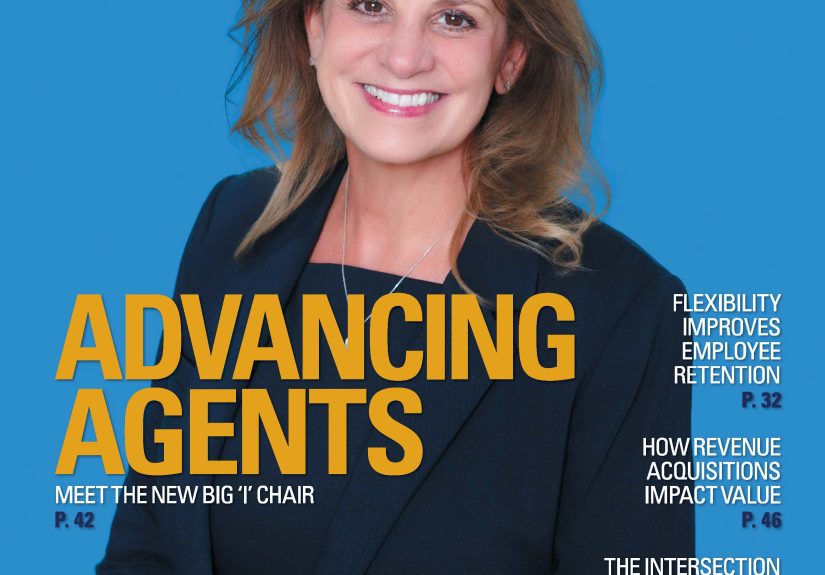
One of the headliners in the September issue is Angela Ripley, president of VW Brown Insurance in Columbia, Maryland, stepping into the role of Big “I” Chair. Her background checks a lot of boxes that feel familiar to agency leaders: deep agency roots, hands-on commercial experience, and growth through acquisitionsplus a strong emphasis on mentorship and inclusion.
A few specifics stand out because they’re agency-real, not brochure-real: two decades of agency leadership, eight acquisitions, and a focus on sustaining the independent agency system through innovation, education, and strategic growth. It’s also notable that she’s described as the second woman to serve as Big “I” Chair, following Louise “BeBe” Canter (2003)a reminder that leadership pipelines don’t “fix themselves.”
What agency leaders can borrow from this profile
- Growth is a system, not a vibe: Acquisitions (and integration) only work when your workflows, culture, and data can handle the extra volume.
- Balance the book on purpose: If your personal lines are getting hammered, or your commercial is tightening, you need a deliberate mixnot a “whatever comes in” strategy.
- Mentorship is a growth lever: Training, coaching, and leadership development aren’t perks. They’re retention tools and quality control for client experience.
In other words: the “future of the independent agency system” isn’t just a national association slogan. It’s what happens when your next producer, CSR, or ops lead decides whether your agency is a place worth staying.
Should you join an independent agency alliance?
The September issue tackles a question agencies ask in every market cycleespecially when appointments tighten: Should you join an independent agency alliance? (Also known as aggregators or clusters.) The core concept is straightforward: independent agencies band together to aggregate premium, negotiate compensation and benefits, and access additional carrier markets.
Why alliances are attractive
- Market access: More doors open when your premium volume walks in with friends.
- Income potential: Aggregated volume can improve profit-sharing eligibility and compensation structures.
- Vendor leverage: Alliances often bundle tools, services, and discounts agencies wouldn’t negotiate alone.
What you’re “paying” (even if it’s not only money)
Alliances usually come with sign-up fees, monthly costs, contract commitments, and sometimes exit fees. There can also be operational strings, such as required use of an agency management system (AMS)sometimes a specific one.
But the real make-or-break questions are more “agency DNA” than “fee schedule”: Who owns the expirations? Who owns the carrier code? What happens if you leave? And are there nonsolicitation or noncompete clauses that affect future flexibility?
A simple decision lens
If you want a quick gut-check, use this three-part lens:
- Strategy fit: Are you joining for growth (new markets, scale) or survival (appointments, hard market pressure)? Growth-driven choices tend to age better.
- Operational fit: Will the alliance improve workflowsor force changes you don’t have bandwidth to implement? (If your “data strategy” is currently “Janet remembers everything,” this matters.)
- Control tolerance: Are you comfortable with shared outcomes? Because if “a rising tide lifts all ships,” a messy tide can splash, too.
Bonus reality check: joining an alliance doesn’t replace leadership. It just changes which problems you’re solving. You may trade “we can’t get appointed” for “we need to align processes with a network.”
Bad data is preventing you from realizing AI’s potential
Here’s the most relatable moment from the September issue’s AI coverage: you try an AI assistant to compare two policy documents. It returns a beautiful summary in secondsthen you discover it compared the current policy to one that was canceled last year because the wrong document was attached or labeled.
Congratulations. You have discovered the ancient insurance truth: automation can’t fix chaos; it can only accelerate it.
Common “your data isn’t AI-ready” red flags
- Duplicate records (because “Bob Smith,” “Robert Smith,” and “B0b Smiht” are apparently three separate humans).
- Blank or misused fields (ZIP codes like “00000,” policy types filed under the wrong category).
- Outdated contact info (missed renewals and “Why didn’t you tell me?” calls).
- Inconsistent formatting (five phone-number styles in one system).
- Notes and documents attached to the wrong account (the silent killer of trust and E&O sleep).
The issue makes the stakes clear: bad data isn’t only annoyingit’s expensive. It creates rework, missed renewals, incorrect commissions, client churn, and potential errors & omissions exposure. And because AI learns from patterns, messy patterns produce messy outputs.
The “Data-First AI” checklist (5 steps you can actually do)
- Clean and structure data: Standardize contact formats, remove duplicates, validate key fields (policy numbers, effective dates, named insured).
- Review workflows: Find where data gets entered inconsistently or steps get skipped. Fixing one broken handoff can save hours every week.
- Establish governance: Naming conventions, field usage rules, document storage standards, and “one source of truth” decisions.
- Invest in training: Not everyone needs to be an AI wizard, but everyone needs to recognize “that looks off” and know what not to paste into public tools.
- Set realistic goals: Define success: faster turnaround, less manual entry, better cross-sell identification, fewer follow-up touches for routine service.
Why governance beats gadgets
A big takeaway from broader industry research: organizations often assume AI adoption is mainly a technology problem, but governance and risk management tend to be the real bottlenecks. This aligns with what agencies feel day-to-day: the tool may be impressive, but the process (and the data) decides whether it’s usable.
For agencies, this is also a compliance mindset. Even if you’re not building models, you’re using AI features embedded in vendor tools. Risk-based frameworks like the NIST AI Risk Management Framework emphasize governance, mapping context, measuring risk, and managing impactsideas that translate cleanly into “agency tech hygiene.”
The human side of leadership in the age of AI
September 2025 doesn’t treat AI like a shiny robot coworker. It treats AI like what it actually is in agencies: a tool that can save time and accidentally undermine trust if you let it replace the human parts of leadership.
1) Clarity through simplification
AI has made it effortless to generate more wordsemails, proposals, marketing copy, you name it. The counter-move is leadership that simplifies: one core message, clear priorities, plain language, fewer “initiative-of-the-week” whiplashes. If your team needs a decoder ring to understand the plan, the plan isn’t ready.
2) Credibility over polish
People are increasingly sensitive to “robot voice,” especially when the message is emotionalrecognition, change, feedback, conflict. Research on AI-labeled leadership communication suggests that when employees believe a message is AI-generated, they may rate it as less helpfuleven if it’s actually human-written. The lesson isn’t “never use AI.” It’s: don’t outsource sincerity.
Practical move: If you use AI to draft internal notes, edit it into your real voice, add specifics, andthis is keyinclude context only you would know. Your team can smell generic encouragement from three counties away.
3) Consistency in authenticity
Agency culture thrives on predictability (steady leadership, consistent expectations) and humanity (real reactions, empathy, flexibility). AI is great at consistency; humans are great at meaning. Your job is to pair them: standardize routine workflows so people can spend their judgment on clients, teammates, and complex coverage decisions.
Declaration of Independents: Jill Roth and the case for advocacy
The September issue’s “Declaration of Independents” profile featuring Jill Roth adds a different kind of leadership: advocacy and industry involvement. Her pathstarting on Capitol Hill, then bringing that legislative understanding into the agency world highlights something many agencies underestimate until it hurts: regulation and legislation aren’t background noise. They shape what carriers do, what coverage requires, and what clients can afford.
The practical takeaway isn’t “everyone needs to become a policy wonk.” It’s: someone in your organization needs to track the forces that shape your marketand translate them into actions (coverage changes, client communication, E&O prevention, sales positioning).
A 30-day playbook inspired by September 2025
If you want to turn this issue into measurable improvement, here’s a realistic month-long sprint:
Week 1: Data triage (pick one system, one pain point)
- Run a duplicate report (clients and policies).
- Pick the top 3 fields you will standardize (phone, email, named insured format, policy type, etc.).
- Create a one-page “how we enter data” cheat sheet.
Week 2: AI guardrails (simple and boring = effective)
- Decide what data can never be pasted into public AI tools (PII, policy documents, loss runs).
- Approve 2–3 safe internal use cases (drafting client-friendly explanations, summarizing non-sensitive meeting notes, brainstorming FAQs).
- Train the team on spotting hallucinations and verifying outputs.
Week 3: Alliance evaluation (if relevant)
- Create a “must-have” list: markets needed, vendor needs, growth goals.
- Write your nonnegotiables: ownership of expirations, carrier codes, exit terms.
- Compare the cost of joining vs. the cost of staying stuck.
Week 4: Leadership clarity
- Rewrite your agency priorities in plain English (three bullets, max).
- Hold one “listening session” focused on friction: where do we waste time, and why?
- Pick one process to simplify immediately (certificate processing, renewals workflow, remarketing cadence).
FAQ: quick answers agencies ask after reading the issue
Is AI “worth it” for a small or mid-sized independent agency?
Yesif you start with narrow, measurable use cases and clean data. Noif you expect AI to fix process chaos. Treat AI like a power tool: it’s incredible when you know where to cut, and terrifying when you don’t.
Will an alliance solve market access problems automatically?
It can improve access and leverage, but it won’t replace good submissions, underwriting relationships, and agency profitability. Think of it as adding horsepowernot replacing the steering wheel.
What’s the biggest “people risk” of AI in agencies?
Trust erosioninternally and externallywhen communication becomes generic, inaccurate, or overly automated. The fix is leadership that values credibility, verification, and human connection.
Experiences: what the September 2025 themes feel like in real agency life
Picture a Monday morning in September. The coffee is hot, the inbox is not, and someone has left a sticky note on the printer that simply says, “URGENT!!!” (No other details. No signature. Just vibes.)
In one agency, the team decides this is the week they finally “try AI.” A producer pastes text from a policy endorsement into a tool and asks, “Explain this like I’m a normal person.” The output is surprisingly goodclear, friendly, even a little charming. The producer feels unstoppable. Ten minutes later, the CSR walks in with the kind of face people make right before saying, “So… small problem.” The endorsement the producer used was for the wrong named insured, because the attachment in the management system was misfiled. Suddenly, the agency isn’t testing AI; the agency is testing everyone’s blood pressure.
That moment is exactly why the September 2025 issue hits home. AI can absolutely help agencies communicate better and work faster, but only after the “unsexy work” gets done: consistent naming conventions, clean client records, and document discipline. The most successful agencies don’t treat data cleanup like a punishment. They treat it like sharpening knives before service starts. (You can cook dinner with a dull knife, sure. It’s just messier, slower, and somebody eventually gets hurt.)
In another agency, the alliance conversation shows up during a carrier call. Appointments are tighter, underwriting is pickier, and the agency is tired of hearing “not at this time” from yet another market. The principal pulls up a spreadsheet: markets needed, revenue targets, profit-sharing goals, vendor costs, and the operational changes an alliance might require. The discussion gets wonderfully real, fast. Someone asks: “If we join, who owns the expirations?” Someone else asks: “If we leave, what happens to the codes?” Then the quietest person in the roomthe ops manager who has survived three management systems and a server migration asks the question that makes everyone pause: “Do we have the processes to handle growth if access suddenly improves?”
That’s the grown-up version of growth strategy. Not “Wouldn’t it be nice to have more markets?” but “Can we absorb volume without creating service fires?” The agencies that thrive tend to be honest about this. They know a new opportunity can become a new failure mode if workflows and training don’t keep up.
Then there’s leadershipthe sneakiest theme of all, because it shows up in tiny moments. A team lead uses AI to draft a renewal reminder email. It’s polished, professional, and… oddly empty. Another version gets sent later that day, written by a human who knows the client: “Hey, I saw your kid started collegecongrats. Quick heads-up: your umbrella renewal is coming up, and I want to make sure we keep the limits aligned now that you’ve got a new driver in the family.” Same purpose, totally different impact. The client replies within minutes.
That’s the human side of leadership in the age of AI: using tools to save time, while doubling down on the moments that build trust. It’s also why the Big “I” leadership and advocacy stories matter. When agency people get involvedlocally, statewide, nationallythey bring real-world friction into the rooms where decisions get shaped. They don’t just complain about the market; they help steer the system.
By the end of the month, the agencies that “got it right” don’t look like futuristic robot offices. They look like the same hardworking teamsjust with fewer duplicate records, clearer priorities, more confident communication, and a culture that says: “We use tech to support people, not replace them.” And honestly? That’s the kind of future most clients are willing to renew.
Conclusion: what to take from September 2025
The September 2025 IA Magazine issue isn’t a prediction about the future. It’s a snapshot of what’s already happening: AI is here, alliances are growing, leadership is being tested, and the agencies that stay strong will be the ones that invest in clean data, clear strategy, and human trust.
If you want a single sentence to tape to your monitor: Build your foundation firstthen let the tools make you faster. Not the other way around.