Table of Contents >> Show >> Hide
- What Is the Shoffice, Exactly?
- The Big Design Idea: A “Wood Shaving” You Can Work Inside
- Inside the Shoffice: Small Space, Big Intentionality
- How It’s Built: Lightweight Structure, Heavyweight Presence
- Why Shoffice Feels So Right in 2026: The Backyard Office Era
- Steal These Shoffice Ideas for a Backyard Office Shed in the U.S.
- Common Backyard Office Mistakes (and the Shoffice Antidote)
- Real-Life Shoffice Experiences: What It’s Like (About )
- Conclusion: A Small Pavilion With Big Boundary Energy
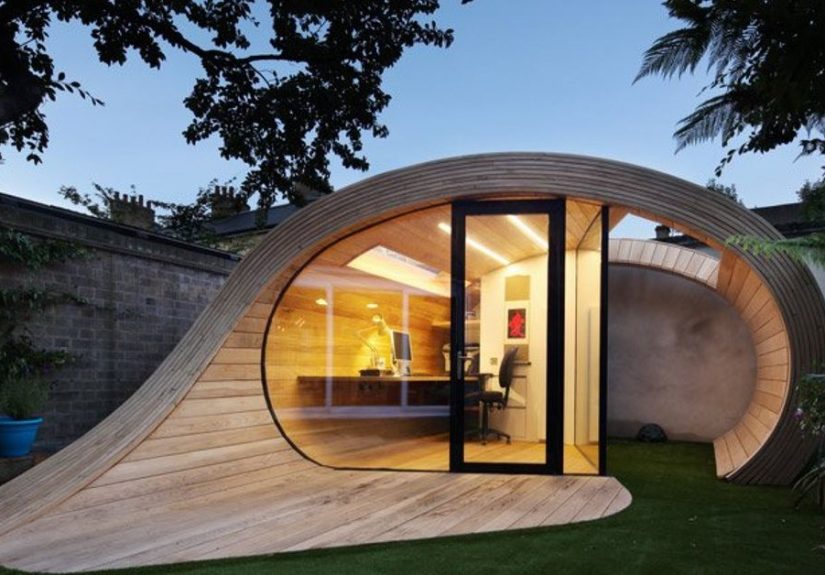
There are two kinds of backyard sheds in the world: the ones that bravely house rakes and forgotten paint cans, and the ones that quietly flex on your Zoom calls. The Shofficea mashup of “shed + office” by Platform 5 Architectsis firmly in the second category. It’s a small garden pavilion that manages to be playful, practical, and surprisingly sculptural, like a curled wood shaving that decided it deserved a desk, daylight, and a little architectural fame.
But this isn’t just a “pretty shed” story. Shoffice is a compact case study in how great design can solve a very modern problem: how do you separate work from home when work is… also home? The project does it with a smart program (storage + workspace), an unforgettable form (elliptical timber shell), and details that make daily use feel intentional rather than improvised.
What Is the Shoffice, Exactly?
Shoffice is a garden pavilion tucked behind a mid-century terraced house, combining two roles that usually fight each other for square footage: a small office and garden storage. Instead of looking like a mini houseor a tool shed wearing glassesit’s conceived as a single sculptural object that “flows” into the garden. Translation: it doesn’t just sit there; it lands.
- Program: Office + storage in one compact footprint
- Signature move: A glazed workspace nested inside a timber elliptical shell
- Daylight strategy: Rooflights + glass walls to keep the interior bright
- Bonus: The curling shell forms a small terrace in the lawn
The genius is that the project doesn’t pretend storage is glamorousyet it refuses to treat it as an afterthought. Shoffice gives the tools a home and gives the human a room that feels like it was designed on purpose.
The Big Design Idea: A “Wood Shaving” You Can Work Inside
Shoffice’s form is the thing you remember: an extruded, elliptical timber shell that curls over itself like a ribbon. That curve does multiple jobs at once:
1) It creates an identity (and a little drama)
Many backyard office sheds aim for “cute cabin” or “tiny modern box.” Shoffice goes another direction: it’s more like a piece of landscape furniturepart pavilion, part sculpture. That matters because a dedicated work space works best when it feels mentally separate. Your brain notices when you’ve walked into “a different place,” even if that place is 30 steps from your kitchen.
2) It solves the office/shed split without feeling split
The glazed office area nestles into the shell, while storage sits alongside it. Functionally, you get the everyday benefits (tools, bikes, garden gearwhatever the household needs) without sacrificing the calm, clean vibe you want for focused work. Emotionally, it feels like one continuous object rather than two boxes duct-taped together.
3) It becomes a terrace, not just a roof
The curl of the shell unfurls into a small terrace in the lawnan outdoor perch that’s basically the architectural version of saying, “Take a break. Go look at something green. Your spreadsheet will still be there.”
Inside the Shoffice: Small Space, Big Intentionality
If you’ve ever tried working at a dining table while someone reheats leftovers and your dog auditions for the role of “keyboard assistant,” you know the value of a real workspace. Shoffice’s interior is lined in oak and fitted with built-ins that make it feel tailored rather than temporary.
Built-in ergonomics (aka: not living on a laptop hunched over)
The interior includes a cantilevered desk and storage, which is a subtle but powerful move: built-ins reduce clutter. Less clutter means fewer visual distractions. Fewer distractions means you might finish the thing you said you’d finish yesterday. No judgment. Just math.
Light where you need it, not where you don’t
Two rooflightsone glazed above the desk and another open to the sky outside the officebring daylight deep into the space. That’s not just aesthetic. Daylight is performance. It helps a small room feel larger, reduces the cave effect, and makes video calls less “mysterious figure speaking from the shadows.”
How It’s Built: Lightweight Structure, Heavyweight Presence
Sculptural buildings can be deceptively technical, and Shoffice is no exception. Under the curving timber skin is a lightweight structure designed to keep the pavilion efficient and buildable in a tight residential context.
The shell is formed with steel ring beams, timber ribs, and a stressed plywood skin, sitting on minimal pad foundations. A large portion of the project was prefabricated to reduce the amount of material that had to travel through the house during constructionan underappreciated reality of backyard builds in dense neighborhoods: sometimes the hardest part is simply getting stuff to the site without turning your hallway into a lumber slide.
Construction collaborators helped shape the timber elliptical shell and interior, with the timber frame reinforced by curved channels and a cladding/finish package designed to look warm and continuous.
Why Shoffice Feels So Right in 2026: The Backyard Office Era
Shoffice was completed earlier than the work-from-home boom, but it reads like it predicted the future. In the U.S., the “backyard office shed” has become a genuine category: prefab studios, kit structures, shed conversions, and micro-pavilions are now common alternatives to moving or adding a costly home addition. Media and real estate guides often frame these spaces as an affordable path to privacy and productivityespecially when you need a door you can close and a boundary your brain can understand.
Shoffice’s biggest lesson isn’t “make it curvy.” It’s this: a small, separate workspace changes how you work. You commute a few steps, but you still commute. That transition matters.
Steal These Shoffice Ideas for a Backyard Office Shed in the U.S.
Shoffice is in London, but its best moves translate beautifully to American backyardswhether you’re converting an existing shed or planning a purpose-built office pod. Here’s how to borrow the DNA without needing an elliptical timber shell delivered by unicorns.
1) Start with program: office + “real life” storage
Most backyard office plans forget that your yard still needs to function. Shoffice doesn’t. If you’re designing a U.S. backyard office shed, ask:
- What must live here year-round (tools, bikes, seasonal items, garden gear)?
- What can live elsewhere if storage is tight?
- Can storage be acoustically separated from your workspace?
Even a slim storage bay can keep your office calm. The goal is not “more space.” It’s “less chaos.”
2) Respect permits and zoning (the least fun, most important chapter)
In the U.S., shed permits are famously local. Some jurisdictions follow rules where certain small accessory structures may be permit-exempt under specific conditions, while others require permits regardless of size. The moment you add electrical, HVAC, plumbing, or “habitable” intent, the requirements typically get stricter.
Practical approach: call your local building department early, and be ready with a simple site plan (property lines, setbacks, structure size, and location). If you’re planning power, work with a licensed electrician. Your future self will appreciate the lack of mystery buzzing sounds.
3) Make insulation, air, and sound your “hidden luxury”
A backyard office shed fails for predictable reasons: it’s too hot, too cold, too loud, or too damp. Shoffice’s charm comes from visible design, but comfort comes from invisible performance.
- Insulation: If you want year-round use, treat it like a tiny building, not a storage box.
- Moisture control: Plan for your climate zonevapor management matters.
- Acoustics: Add sound-dampening where you can (insulation helps here too).
- Ventilation: Operable windows or a simple ventilation plan keeps the space fresh.
4) Daylight like Shoffice: rooflight + glazing, but thoughtfully
Shoffice uses rooflights and glass to keep a small interior bright. In a U.S. build, you can copy the strategy with a few principles:
- Put your main daylight near the desk to reduce glare and eye strain.
- Balance glass with privacyconsider clerestory windows or angled glazing.
- Use shading (overhangs, trees, blinds) so summer sun doesn’t turn your office into a toaster.
5) Prefab where possible: faster, cleaner, often easier
Shoffice used prefabrication to reduce disruption. In the U.S., prefab backyard offices range from DIY kits to fully finished studio sheds. The advantage isn’t just speedit’s predictability. A controlled build environment can mean tighter tolerances, fewer weather delays, and less “why is the wall… wavy?” energy.
Common Backyard Office Mistakes (and the Shoffice Antidote)
Mistake: Treating it like a storage shed with a desk
Antidote: Design for daily workproper lighting, outlets, comfortable seating, and storage for work materials. Shoffice’s built-in desk and oak lining show what “purpose-built” looks like.
Mistake: Over-glazing without solving heat and privacy
Antidote: Use glazing strategically and pair it with shading and insulation. Shoffice’s glass is impactful, but the overall enclosure still reads as protective and contained.
Mistake: Ignoring the “walk there” experience
Antidote: The path matters. A few stepping stones, a small terrace, a covered thresholdthese turn a backyard office shed into a ritual. Shoffice literally forms a terrace, giving the workday a pause button.
Real-Life Shoffice Experiences: What It’s Like (About )
A shoffice-style space changes your day in ways that sound small until you live them. The first surprise is how much the transition matters. Walking out the back door and into a separate pavilioneven for 20 secondscreates a mental “start.” It’s the tiniest commute, but it flips your brain from home mode to work mode without needing a pep talk from your calendar.
People who work in backyard office sheds often describe the relief of closing a door and protecting their attention. That’s especially true for video calls. In the main house, calls tend to come with background negotiation: dogs, kids, roommates, appliances, doorbells, and the sudden urge for everyone to locate the loudest object they own. In a dedicated garden office, the environment is simpler. Your camera frame is consistent, your lighting is predictable, and your “office personality” doesn’t have to share the stage with a pile of laundry doing method acting as modern art.
Then there’s the sensory part. A timber-lined interior like Shoffice creates a warmth you don’t get from standard drywall. Wood surfaces make the space feel less like a cubicle and more like a small cabincalm, quiet, and grounded. Morning light through a rooflight can become a daily cue: you start earlier because the room feels inviting, not because you’re suddenly a productivity influencer. On rainy days, being outside-but-sheltered has its own kind of comfort. You can hear weather without being in it, which is oddly motivating. Your emails feel less dramatic when you can watch the garden do its thing.
The terrace element is another real-world perk. People underestimate how valuable a micro-break can be when it doesn’t require packing up your brain and moving through the house. Step outside, stand on the terrace, stretch, look at something that isn’t a screen, then go back in. It’s not a spa day. It’s a reset that takes two minutes, and it makes long work sessions feel less like a marathon and more like a series of manageable sprints.
Of course, a shoffice also exposes what you actually need to work well. If the space is too hot or too cold, you learn quickly. If the Wi-Fi is weak, your video calls become interpretive dance. If you didn’t plan enough outlets, you’ll find yourself choosing between charging your laptop and using a lamp like it’s 1887. The best experiences come when comfort systems (insulation, ventilation, heating/cooling) are treated as core design, not “we’ll figure it out later.”
The biggest, most consistent takeaway: a shoffice-style pavilion makes work feel contained. When you leave it at the end of the day, you’re not just shutting down a computeryou’re leaving a place. That boundary is the real luxury. The curve and the wood and the rooflights are wonderful, sure. But the real magic is the simple ability to walk back into your home and feel like you’ve actually come home.
Conclusion: A Small Pavilion With Big Boundary Energy
Shoffice by Platform 5 Architects proves that a compact backyard structure can be more than extra square footage. It can be a daily ritual, a productivity tool, a storage solution, and a sculptural moment in the landscapeall at once. The project’s lasting influence is the way it blends usefulness with delight: it handles practical needs while still giving you something to smile at when you glance out the window.
If you’re planning a backyard office shed in the U.S., the Shoffice lesson is clear: start with comfort and program, design for daylight and calm, and treat construction logistics as part of the design problem. The result doesn’t have to be an elliptical timber ribbon (though, admittedly, that’s a strong look). It just has to be a place you’ll actually want to show up tofive days a week, in every season.