Table of Contents >> Show >> Hide
- From Data Platform to AI Operating System
- The CMO and CRO Playbook: AI With Structure, Not Chaos
- How AI Changed Marketing at Snowflake
- How AI Changed Sales at Snowflake
- Why Snowflake’s AI Transformation Worked
- What CMOs and CROs Should Steal Immediately
- Experience-Based Lessons From the Field
- Conclusion
- SEO Metadata
There are two kinds of enterprise AI stories. The first kind is basically a fairy tale with a budget line: executives say “AI,” everybody nods, a few copilots appear, and six months later the company has exactly three things to show for it: a slide deck, a pilot project, and a very expensive sense of optimism. Then there is the second kind of story, which is much rarer and much more useful. That is the Snowflake version.
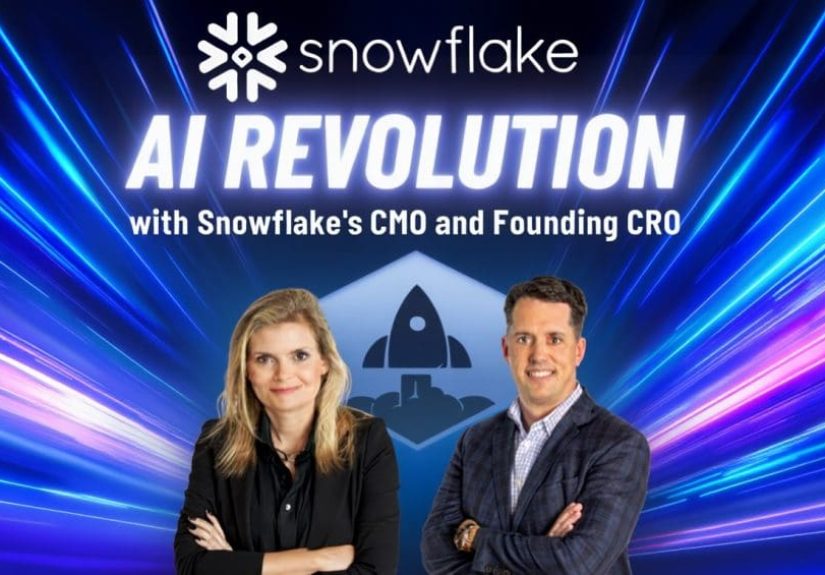
In public conversations led by Snowflake CMO Denise Persson and founding revenue leader Chris Degnan, the company’s AI transformation comes across less like a dramatic overnight reinvention and more like a disciplined operating model. The big idea was not “let’s sprinkle AI on everything and see what glows.” It was simpler, smarter, and more adult: unify the data, govern it tightly, pick the right workflows, measure ROI obsessively, and turn AI into a practical advantage for both marketing and sales.
That approach matters because Snowflake is no longer a scrappy upstart selling a clever data warehouse to a few early believers. It is a company operating at serious scale, with thousands of customers, hundreds of large accounts, a massive partner ecosystem, and a business now openly centered on the AI Data Cloud. When a company of that size says AI changed how it forecasts pipeline, scores leads, localizes content, equips sellers, protects data, and aligns revenue teams, marketers and CROs should probably stop scrolling and pay attention.
From Data Platform to AI Operating System
Snowflake’s AI story did not begin with a chatbot and a press release. It began with a long-standing belief that there is no real AI strategy without a data strategy. That sounds obvious now, but enterprise software has spent years pretending otherwise. Snowflake’s internal and external message has been consistent: AI becomes valuable when proprietary data is unified, governed, and usable inside the same environment where teams work.
That logic has shaped both the product and the go-to-market motion. Snowflake’s platform position evolved from a cloud data warehouse into a broader AI Data Cloud that supports analytics, applications, collaboration, and AI. The company’s documentation and product materials emphasize that AI functions, embeddings, classification, translation, extraction, and multimodal analysis can run inside Snowflake rather than forcing teams to throw sensitive data over the fence to some mystery box with a slick demo and a suspicious privacy policy. In enterprise terms, that is not a small detail. That is the whole ballgame.
This is also why Persson and Degnan’s comments resonate. They are not pitching AI as a shiny side project. They are describing how a data company used its own platform as “customer zero,” then applied the same governance-first design to real marketing and sales workflows. In other words, Snowflake did not just sell the ladder. It climbed it first.
The CMO and CRO Playbook: AI With Structure, Not Chaos
One of the most interesting parts of Snowflake’s approach is that it did not treat AI adoption like an all-you-can-eat buffet for every team at once. Persson has described how telling everybody to “go experiment with AI” creates duplication, confusion, and the corporate version of twenty people bringing the same potato salad to the party.
Instead, Snowflake built structure. Its marketing organization created an AI council made up of naturally curious team members from across functions. Rather than turning 450 marketers loose in a tool jungle, the council spent focused time testing platforms, identifying useful workflows, and sharing lessons with the broader organization during regular internal education sessions. This is a deceptively important move. AI adoption tends to fail when companies confuse access with strategy. Snowflake’s model says experimentation is good, but coordinated experimentation is much better.
The result was not theoretical. In the discussion around Snowflake’s AI transformation, roughly 90% of its 450-person marketing organization was described as using AI daily. That level of adoption did not happen because someone sent a motivational Slack message. It happened because leadership created a repeatable system for discovering, validating, securing, and scaling use cases.
How AI Changed Marketing at Snowflake
1. Campaign Management Got Smarter and Faster
One of the clearest examples from Snowflake’s public discussion is the company’s campaign agent. This internal AI tool gives teams real-time visibility into campaign ROI and helps optimize budget allocation across channels. That matters because traditional B2B marketing often discovers problems too late. By the time someone realizes pipeline is soft in a region or segment, the quarter is already halfway cooked and nobody likes the recipe.
Snowflake’s answer was to use AI for six-month pipeline forecasting and dynamic resource allocation. Instead of reacting to pipeline gaps with panic and extra meetings, teams can adjust earlier, shift spend more intelligently, and make territory planning feel less like weather forecasting with a dartboard.
2. Content and Localization Stopped Being Bottlenecks
Snowflake has publicly highlighted how AI accelerated script writing, interview prep, copy creation, and localization. Some tasks reportedly saw time savings of up to 90%. That is a staggering number, but it also makes sense. Enterprise marketing contains an enormous amount of high-frequency, repeatable language work: repackaging content, adapting messaging for regions, summarizing material, preparing spokespeople, and turning one core idea into twelve useful formats before lunch.
Generative AI is especially good at this kind of structured creative support when humans still direct the message, approve the final output, and apply brand judgment. It does not replace the marketer. It replaces the time drain that used to keep marketers from doing their best work. The machine writes the first draft; the human keeps it from sounding like a machine wrote the first draft.
3. Lead Scoring and Measurement Became More Precise
Snowflake’s broader marketing materials also point to AI and machine learning for attribution, measurement, and pipeline forecasting. This is where the company’s data-platform DNA becomes a competitive advantage. When customer, campaign, finance, and sales data live in one governed environment, AI can score leads more intelligently, connect activity to pipeline, and guide budget decisions with better context.
For CMOs, this is the difference between reporting and operating. Reporting tells you what happened. Operating tells you what to do next. Snowflake pushed toward the second.
How AI Changed Sales at Snowflake
1. Competitive Intelligence Became Instant
Sales teams everywhere know the pain of competitive enablement. Reps need the right talk track for the right rival in the right use case for the right industry at the exact moment a deal gets tense. In most companies, that answer lives in a maze of battlecards, PDFs, tribal knowledge, and one heroic enablement manager who has not slept since Q2.
Snowflake’s internal competitive intelligence agent changed that by generating tailored talking points for specific deal scenarios. A seller could input the competitor, use case, and customer type, then get a customized response immediately. That is not just productivity. That is response quality at scale. It shortens the gap between “I need an answer” and “I can move this deal forward.”
2. Knowledge Discovery Got Centralized
Snowflake’s official sales AI materials describe a Knowledge Assistant that pulls from sales enablement content, product documentation, and hundreds of customer stories. This matters because most revenue organizations do not have a knowledge problem. They have a finding-the-right-knowledge-before-the-call-ends problem.
By unifying internal sources, Snowflake reduced the scavenger hunt. Reps no longer had to remember whether the right answer lived in a docs page, a customer story, a slide deck, or a shared drive that looked abandoned but somehow still ruled everyone’s life. The assistant surfaces relevant information quickly so sellers can spend more time selling and less time playing hide-and-seek with content.
3. Sales Engineering Had to Level Up
One of the more revealing parts of Degnan’s commentary is that Snowflake did not assume technical roles were automatically ready for the AI era. The company pushed certification across its solutions engineering organization, including senior leaders, to ensure technical credibility remained strong. That is a big lesson for any revenue org trying to adopt AI in customer-facing roles.
AI can improve demos, shorten prep time, and support technical discovery, but only if the people using it know what good looks like. Otherwise, AI becomes a confident-sounding intern with admin access. Snowflake understood that enablement needed to rise alongside automation.
Why Snowflake’s AI Transformation Worked
Governance Was Treated as a Feature, Not a Brake
Persson has been blunt about security: enterprise teams cannot just adopt any application they find interesting. New tools must pass reviews and satisfy governance requirements before wide deployment. That slows things down in the short term, but it also prevents a bigger mess later. In practice, Snowflake treated governance as the foundation that made scale possible.
This stance also aligns with the company’s product strategy. Snowflake’s AI functions and partner model emphasize keeping data in place, governed and secure, while allowing customers to work with frontier models from providers such as Anthropic and OpenAI. The underlying philosophy is elegant: bring the model to the governed data, not the governed data to the wild west.
The Company Centralized Intelligence
Another major move was organizational. Snowflake consolidated previously siloed data and BI resources into a shared intelligence team under Chief Data Officer Anita Tasi. Rather than letting each function build disconnected reporting and AI stacks, the company moved toward a single source of truth with embedded support for sales and marketing.
This is one of those decisions that sounds boring until you realize boring is exactly what scale requires. Shared data definitions, common infrastructure, and cross-functional consistency are not flashy, but they are the reason AI outputs can be trusted across departments. The CFO, CMO, CRO, and RevOps teams cannot run different versions of reality and still expect AI to save the day.
ROI Became the Language of Adoption
Snowflake’s leaders repeatedly returned to the same question: is AI generating more money or saving more money? That framing is refreshingly unsentimental. It also explains why the company could point to concrete outcomes such as support hours saved, faster content production, better budget allocation, and improved forecasting.
Enterprise AI usually loses credibility when it is measured by applause instead of outcomes. Snowflake avoided that trap. AI was not a cool demo for executives. It was a business system for operating with greater speed, precision, and confidence.
What CMOs and CROs Should Steal Immediately
The first lesson is to build an AI operating model, not an AI suggestion box. Create a small, cross-functional group that owns discovery, testing, education, and rollout. Curiosity scales better when someone is actually in charge.
The second lesson is to start with workflows that are frequent, measurable, and annoying. Forecasting, content production, competitive intelligence, localization, lead scoring, and knowledge retrieval are ideal because the baseline pain is obvious and the payoff is easy to track.
The third lesson is to fix your data plumbing before buying your next shiny AI toy. If sales, marketing, and finance are operating from fragmented systems, AI will simply automate disagreement.
The fourth lesson is to insist on governance early. Privacy, trust, and access controls are not the fine print. They are the product requirement, especially in large enterprise environments.
The fifth lesson is cultural. Hire people who learn quickly, adapt often, and are curious enough to keep changing. Tools will change. Models will change. The people who thrive are the ones who can change with them without acting like every update is a personal attack.
Experience-Based Lessons From the Field
What makes Snowflake’s story especially useful is that it mirrors what many revenue teams discover during real AI rollouts. At first, there is a rush of excitement. Marketing wants better personalization. Sales wants faster prep. RevOps wants forecasting. Customer success wants summaries. Everyone imagines that AI will arrive like a magical new teammate who never sleeps and never asks for equity. Then reality walks into the room wearing security badges and change-management paperwork.
The first real experience most teams have is that AI exposes operational mess faster than it fixes it. If campaign naming is inconsistent, if content libraries are disorganized, if CRM hygiene is sloppy, or if reporting definitions change by department, AI will not politely ignore those issues. It will amplify them. That is why Snowflake’s emphasis on a centralized intelligence function and governed data is so important. In practice, companies do not scale AI by starting with prompts. They scale AI by starting with operational honesty.
The second experience is that adoption is emotional as much as technical. Marketers worry about quality. Sellers worry about credibility. Managers worry about risk. Some employees jump in immediately, while others quietly hope the whole thing blows over by next quarter. Snowflake’s AI council model is smart because it gives people a bridge between fear and fluency. A peer showing how AI helps with a real workflow is usually more persuasive than an executive declaring that “innovation is our future” for the fifteenth time.
The third experience is that the biggest wins are often less glamorous than expected. Everyone loves the idea of a moonshot AI agent. But in many organizations, the first undeniable value comes from faster summaries, better search, cleaner handoffs, more accurate routing, quicker localization, and sharper competitive prep. These are not headline-grabbing science-fiction moments. They are workflow upgrades. But enough workflow upgrades, stacked together, become a transformation.
The fourth experience is that trust determines scale. Teams may tolerate some rough edges in a pilot, but they will not adopt AI deeply if they suspect the outputs are unreliable or the data is unsafe. That is why Snowflake’s model of secure, governed AI inside the data environment matters so much. It lowers the anxiety tax. When people trust the system, they use it more. When they use it more, the system improves. That is the flywheel.
The final experience is that AI changes how leaders lead. CMOs and CROs can no longer just ask for more volume. They need to ask for better systems. They need to know which work should be automated, which judgment should remain human, and which metrics prove value. Snowflake’s transformation suggests that the new leadership skill is not simply being “pro-AI.” It is being clear enough, disciplined enough, and practical enough to turn AI into a repeatable revenue advantage.
Conclusion
Snowflake’s AI revolution is not compelling because it sounds futuristic. It is compelling because it sounds operational. Denise Persson and Chris Degnan describe a model in which AI improved marketing and sales not through hype, but through discipline: structured experimentation, governed data, centralized intelligence, measurable ROI, and tools built around real work.
That is the part many companies miss. AI does not transform revenue teams when it is treated like a side quest. It transforms them when it becomes infrastructure for better decisions, faster execution, and tighter alignment. Snowflake’s marketers got speed. Snowflake’s sellers got relevance. Leadership got better visibility. And the company turned AI into something far more valuable than a trend. It turned AI into leverage.
For any CMO, CRO, or RevOps leader trying to make AI useful instead of merely fashionable, that is the lesson worth stealing. Do not chase the loudest demo. Build the strongest system. The demos will take care of themselves.