Table of Contents >> Show >> Hide
- The Day a Pair of Glasses Became a Masterpiece
- Why We Keep Mistaking Random Objects for Art
- Other Times Everyday Objects Became “Art”
- What the Glasses Prank Says About Museums, Audiences, and Trust
- Bored Panda, Memes, and the Joy of Absurdity
- How to Visit a Modern Art Museum Without Accidentally Worshipping a Lost Object
- Experience Spotlight: Walking Through a Museum After the Glasses Prank ()
- Conclusion: Maybe the Glasses Were Art All Along
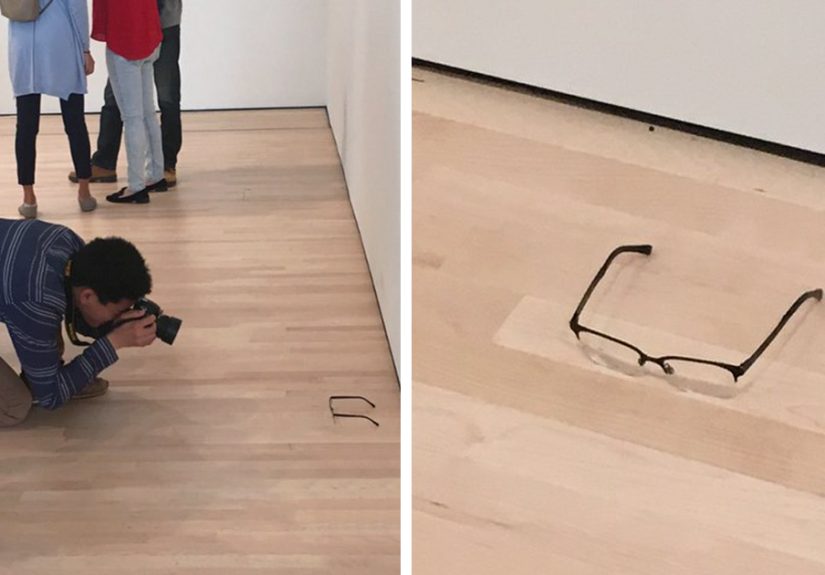
If you’ve ever walked through a modern art museum thinking, “I don’t get it, but I’m too scared to admit it,” congratulationsyou are exactly the target audience of one of the internet’s favorite museum pranks. In 2016, a pair of teens in San Francisco casually placed a pair of glasses on the floor of a gallery, stepped back, and watched as visitors gathered, stared, and snapped photos of the unsuspecting eyewear as if it were a profound commentary on the human condition.
Bored Panda turned the story into viral gold, and the photos shot around the world: people respectfully circling an ordinary pair of glasses, keeping a respectful distance as if an invisible velvet rope surrounded them. The prank was funny, of coursebut it also quietly exposed something deeper about how we look at museums, how we trust “official” spaces, and how badly most of us do not want to look like the one person in the room who “doesn’t get art.”
The Day a Pair of Glasses Became a Masterpiece
The teens, the tweet, and the prank heard ’round the world
The prank took place at the San Francisco Museum of Modern Art (SFMOMA), when teenager T.J. Khayatan and his friends wandered the galleries after finals. They were impressed by much of the collection, but some installationslike a stuffed animal on a blanketleft them wondering how people decide what counts as “museum-worthy.” Inspired by that curiosity (and a healthy amount of mischief), they set a simple pair of glasses on the hardwood floor near a blank wall and walked away to observe.
The experiment worked almost instantly. Visitors approached the glasses with reverence. Some stood with arms folded, heads tilted, apparently trying to decode the meaning of this minimalist “installation.” Others crouched down to photograph the piece from different angles, as if capturing an important work for Instagram or a future art history essay. When Khayatan tweeted the now-famous collage of pictures with the caption, “LMAO WE PUT GLASSES ON THE FLOOR AT AN ART GALLERY AND…”, the internet did the rest.
News outlets, humor blogs, and art critics all weighed in. Some joked that this proved modern art had gone too far. Others argued that the prank itself was a clever piece of performance art, worthy of the museum it mocked. In a perfectly on-brand move, SFMOMA’s official account responded by wondering whether they had “a new Marcel Duchamp” on their handsa nod to the artist who once turned a urinal into art simply by placing it in a gallery.
Why the prank worked so well
The glasses prank succeeded because it exploited a few powerful forces that operate in every museum:
- Context. Anything placed carefully in a pristine white room suddenly feels important.
- Authority. Visitors assume that if something is inside a respected museum, it must have valuemaybe we just haven’t studied enough to understand it.
- Fear of looking foolish. Nobody wants to be the one loudly saying, “Wait, is that it?” only to discover they’re criticizing a million-dollar artwork that was just on the cover of an art magazine.
The result? A pair of glasses that would normally slip under everyone’s radar suddenly became an object of analysis, interpretation, andlet’s be honestslightly panicked intellectual posturing.
Why We Keep Mistaking Random Objects for Art
The power of the “white cube”
Modern and contemporary museums are often designed as “white cubes”: clean, neutral rooms that strip away visual clutter so viewers can focus entirely on the art. The side effect is that anything placed in that contextglasses, a dropped receipt, a lone water bottlefeels suspiciously like an intentional statement.
Visitors know they’re in a space where everyday objects can become meaningful. Think of conceptual works where a simple chair, a pile of bricks, or even a light turning on and off is presented as art. When that’s your baseline, it’s easy to believe that a pair of glasses on a wooden floor might be a meditation on presence, vision, or the absence of the viewer. Your brain says, “This could be nothing… but it could also be a critique of capitalism.” So you stand there. Just in case.
Art history has trained us to expect the unexpected
Since the early 20th century, artists have intentionally blurred the line between “real life” and “art object.” Marcel Duchamp’s famous “readymades,” like his urinal-turned-sculpture, made the argument that context and intent are enough to transform ordinary stuff into art. Later conceptual artists pushed the idea even further, using found objects, performance, and everyday materials as their medium.
That history shapes how we walk through a gallery now. We know that the wildest, strangest, and most unassuming things might be the most talked-about pieces. When we see something oddlike glasses sitting alone on the floorour instinct isn’t “someone dropped those;” it’s “what is this trying to say?” The prank works precisely because it leans on that expectation and lets viewers supply the meaning themselves.
Other Times Everyday Objects Became “Art”
The glasses prank isn’t an isolated case; it’s part of a larger pattern of accidental (and not-so-accidental) “artworks” that fool the public and sometimes even the institution.
- The pineapple on a plinth. In Scotland, a student left a pineapple in a gallery at a university event. When he came back days later, it had been placed in a glass case as if it were part of the show. Once again, context transformed a grocery item into a conceptual statement about… something. Maybe tropical consumerism. Maybe nothing at all.
- Trash or treasure? There have been multiple cases where cleaners or volunteers have accidentally thrown away actual artworkslike carefully arranged beer bottles or dust-coated installationsbecause they looked like, well, garbage. These stories flip the glasses prank inside out: instead of treating an everyday object as precious, people assume a real artwork is disposable.
- Internet “mistaken for exhibit” moments. Online, people share photos of themselves standing near random objects in galleriesfire extinguishers, exit signs, unattended backpacksand jokingly caption them as deep and meaningful works of art. The trope even has a name in pop culture: “mistaken for exhibit.”
All of these examples highlight the same tension: we’re constantly negotiating the line between “this is meaningful” and “this is just stuff.” The glasses on the floor simply made that negotiation hilariously obvious.
What the Glasses Prank Says About Museums, Audiences, and Trust
On the surface, the story is slapstick: people reverently photographing a pair of dropped glasses. But there’s also something oddly generous about those visitors. They chose to assume meaning. They decided to believe that someone had taken the time to create an experience for them, and they tried to meet the work halfway.
That’s what we do in museums all the time. We walk in prepared to listen and willing to suspend disbelief. If a label says a plank of wood or a dusty mirror is an artwork, we accept it and search for insight. The glasses prank hijacked that trust and used it as the punchlinebut it also proved that audiences are more open-minded than we often give them credit for.
The museum’s playful response helped keep the tone light. Instead of scolding the teens, SFMOMA leaned into the joke, acknowledging that in a world shaped by Duchamp, memes, and conceptual installations, the boundary between art and life is permanently smudged. At that point, who’s to say the prank wasn’t art? It was staged, documented, shared, debated, and remembered. If nothing else, it’s one of the most famous “pieces” ever to come out of that gallery.
Bored Panda, Memes, and the Joy of Absurdity
Bored Panda specializes in stories that sit right at the intersection of “this is ridiculous” and “wow, that actually says something about us.” The glasses-on-the-floor saga was perfect fodder: visually simple, instantly understandable, and quietly philosophical. It became a meme not just because it was funny, but because everyone recognized a version of themselves in those visitors.
How many times have you nodded thoughtfully at an artwork you didn’t fully understand, just to avoid feeling out of your depth? How often have you looked around a museum, waited to see how other people reacted, and then calibrated your own reaction accordingly? The photos captured that social dance in a single frameand the internet did what it does best, turning a specific event into a universal joke.
Online, commenters spun their own interpretations. Some mocked “pretentious art people.” Others defended the visitors, arguing that their willingness to look closely at something ordinary was actually beautiful. Plenty joked that in 2025, a pair of glasses on the floor would probably sell for six figures at a trendy gallery, complete with a 3,000-word curatorial essay and a waiting list.
How to Visit a Modern Art Museum Without Accidentally Worshipping a Lost Object
So what can we take away from this storybesides the urge to place random objects on the floor and see what happens? Here are a few lighthearted tips for surviving your next museum trip:
- Check for labels… usually. If there’s a wall label or a floor marker, odds are it’s an artwork. If there isn’t, you might be staring at someone’s forgotten scarf. But then again, labels fall off. Proceed with humility and maybe a slight squint.
- Ask questions instead of faking it. Museum staff, guides, and docents love when visitors are curious. It’s okay to say, “Is this part of the exhibit?” That’s their joband they’ll probably appreciate your honesty.
- Own your confusion. Modern art is supposed to challenge you. If you don’t get it immediately, you’re in excellent company. Lean into the mystery instead of pretending you’re having a transcendent moment when you’re really just wondering if that’s a real banana.
- Remember that interpretation is part of the game. Even if the glasses weren’t “officially” art, the way people responded to them says something real about how we look, think, and project meaning. Your reaction matters, whether the object is framed, lit, and labeled or not.
Above all, let yourself enjoy the absurdity. Museums are serious institutions, but they’re also full of surprises, jokes, and human quirks. Sometimes the best thing you can do is laugh, think for a second, and then move on to the next room.
Experience Spotlight: Walking Through a Museum After the Glasses Prank ()
Imagine visiting a modern art museum after hearing about the infamous glasses incident. You walk through the doors and suddenly every object feels suspicious. That lonely water bottle by the benchart installation about hydration culture or just someone who got distracted by a Picasso? The abandoned tote bag near the wallcommentary on consumerism or a very stressed parent’s worst nightmare?
You start in the first gallery, determined to be a savvy visitor. You read every label, scan every wall for tiny plaques, and give anything on the floor a wide berth. A cable protector on the ground? Could be a minimalist sculpture about connectivity. A lone sneaker by a bench? Maybe it’s a participatory piece titled Departure. You find yourself overthinking everything, half amused, half terrified of becoming the next viral meme.
At some point, though, something shifts. You notice a group of visitors gathered around an installation of everyday objectsa table, a lamp, a tangle of wiresand you realize that the museum is intentionally playing with that blurred line between art and life. The glasses prank didn’t invent the confusion; it just made us newly aware of it. Artists have been staging that uncertainty for decades. The prank simply showed that the audience is game to play along.
As you move from room to room, you start to appreciate that willingness. You see people leaning in, reading, speculating, and sometimes just sitting quietly with something they don’t fully understand. You overhear whispered theories: “I think the empty space is the point,” or “It’s about surveillance,” or “No, it’s about climate change.” Nobody has the full answer, but everyone is working together to puzzle it out.
Then, imagine you turn a corner and spot it: a random object on the floor. No label. No rope. No spotlight. Just there. Your brain instantly lights up. Is this part of the show? A maintenance oversight? A secret experiment? You watch other people notice it in real timethe hesitation, the sideways glances, the quiet decision to either engage or ignore. Some people step around it without a second look. Others pause, tilt their heads, and snap photos “just in case.”
In that moment, you realize the real “art” might not be the object at all. It’s the choreography of human reactions: the trust, the doubt, the curiosity, the fear of embarrassment, and the impulse to share anything weird or interesting with the internet. The glasses prank didn’t just make fun of museum-goers; it revealed how beautifully open we can be when we walk into a space expecting to be surprised.
By the time you leave, you’re still not entirely sure what was art and what wasn’t. But you’re strangely okay with that. You’ve laughed, you’ve thought, you’ve watched other people think, and you’ve participated in a quiet, collective experiment. Maybe you didn’t encounter a pair of prankster-placed glasses that daybut you did walk through a world where anything could become meaningful if enough people decide to look closely at it. And that, in its own way, feels like the most modern artwork of all.
Conclusion: Maybe the Glasses Were Art All Along
“Someone Put Glasses On Museum Floor And Visitors Thought It Was Art” is a headline that sounds like a joke, but it sticks with us because it captures something real about how we live now. We navigate spaces full of images, objects, and opinions, constantly trying to guess which ones matter. Sometimes we get it hilariously wrong. Sometimes a prank becomes a performance. Sometimes the story lasts longer than the original artwork ever could.
Maybe the lesson isn’t that museum visitors are gullible. Maybe it’s that we’re eagereager to see meaning, eager to participate, eager to be part of something bigger than ourselves. If a random pair of glasses can spark that kind of curiosity, conversation, and laughter, then perhaps it’s not so far-fetched to say that, for one brief moment, they really were art.