Table of Contents >> Show >> Hide
- The Real-World Plot Twist: Qatar’s Luxury 747-8 “Gift”
- Why the Gift Freaked People Out
- How South Park Turned a Policy Headline Into a Hellish Metaphor
- The Jet Story in the Wider Culture Machine
- So… What Should We Watch For Next?
- The Takeaway: Why the Cartoon Works (Even When You Don’t Want It To)
- Everyday Experiences: When a Cartoon Becomes Your News Alert (Extra )
If you ever wonder why South Park still works after all these years, it’s because the show has a reliable superpower:
it takes a headline that already sounds like parody, then adds just enough ridiculousness to make you realize,
wait… this part is real.
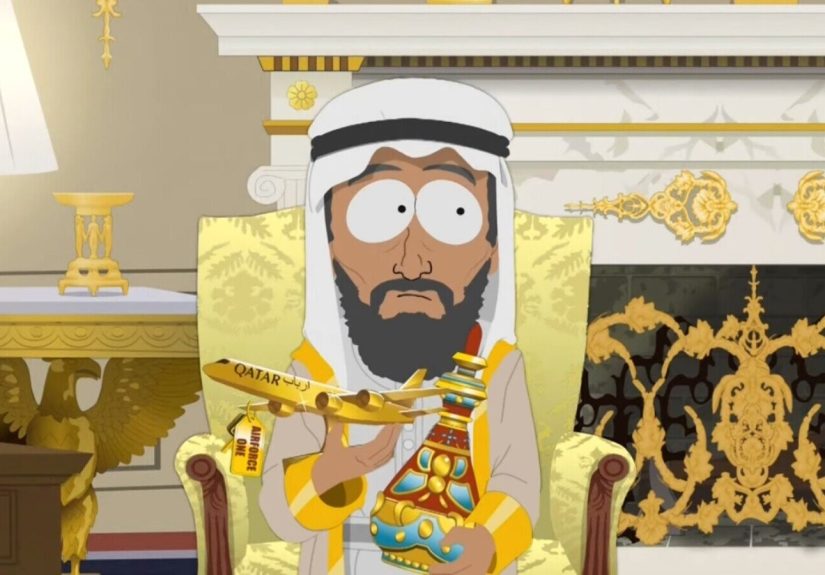
Case in point: the very real 2025 controversy over Qatar offering a luxury Boeing 747-8often reported as worth around
$400 millionfor use as a temporary Air Force One for President Donald Trump. It’s the kind of story that comes with built-in
debate questions (“Is this legal?” “Is it safe?” “Is it wise?”) and built-in comedy questions (“How many gold-plated cupholders is too many?”).
Then South Park shows up, points at that jet-shaped mess, and basically says: “Remember this? Don’t let it slide past you just because it’s
big, shiny, and moving at 500 miles per hour.” And because the show lives on exaggeration, it translates the whole affair into a blunt metaphor:
when you accept wildly lavish gifts from foreign powers, you’re not just taking a planeyou’re taking the baggage that comes with it.
In South Park language, that baggage may involve Satan.
The Real-World Plot Twist: Qatar’s Luxury 747-8 “Gift”
What was offeredand why it became a national argument
In May 2025, major outlets reported that Qatar’s ruling family had offered the United States a luxury Boeing 747-8 jet, described in coverage as
a potential temporary replacement for Air Force One while the long-delayed official replacements were still in progress. Trump publicly defended the idea,
framing it as a benefit to taxpayers and emphasizing that the aircraft would be a gift to the U.S. government rather than to him personally.
The story didn’t stay “airplane nerd” for long. It became “constitutional law,” “national security,” and “ethics seminar” overnightbecause it’s not every day
a foreign government is linked to a headline involving a gift that costs about as much as a fleet of private jets.
Air Force One is not just a planeit’s a flying fortress
Here’s the part that often gets lost in the meme-ification: “Air Force One” isn’t a specific aircraft model. It’s the radio call sign used when the president is
aboard an Air Force aircraft. The current Air Force One fleet is built around heavily modified Boeing 747s designed for secure communications, defensive systems,
and the ability to operate under extreme conditions.
That’s why turning a luxury 747-8 into something suitable for presidential transport isn’t like swapping rims on a car. It’s closer to turning a luxury hotel into a bunker
without ruining the plumbing. Even news coverage sympathetic to the “free plane” pitch repeatedly pointed out the obvious: retrofitting a gifted aircraft for presidential use
can be staggeringly expensive and time-consuming.
The “free jet” that still costs a fortune
Reuters reported the Air Force anticipated that retrofitting the Qatari jet to meet Air Force One requirements could cost
hundreds of millions of dollars. That alone changes the emotional math. A “gift” that triggers massive upgrades, security reviews, and long-term maintenance
isn’t the same as finding a $20 bill in your winter coat.
And the optics matter: even if the plane is given to the U.S. government, a gift of this magnitude creates questions about influence and expectations. In politics,
nothing is truly “no strings attached.” It’s more like “strings may be invisible until you try to move.”
Why the Gift Freaked People Out
The Emoluments Clause and the “can you even do that?” problem
The U.S. Constitution’s Foreign Emoluments Clause is designed to prevent federal officials from accepting gifts or benefits from foreign states without congressional consent.
In response to the jet reports, Congress.gov shows a House resolution urging compliance and transparency around the proposed gift.
Legal experts cited in major reporting noted that the analysis isn’t always simple, especially when a gift is structured as being to the government rather than directly to a person.
But the broader reason for the rule is clear: it’s meant to reduce foreign leverage over American officials. A $400 million aircraft is not exactly a “thank you” mug.
National security concerns: “Nice plane… who’s been inside it?”
Even if you set legal arguments aside, there’s a security reality: any aircraft intended to carry the U.S. president must be treated as a critical national security asset.
The concerns raised in coverage weren’t just partisan noise; they included practical questions about surveillance risks, secure communications, and the complexity of modifying a plane
not originally built to U.S. presidential specifications.
Think of it this way: if your job is to protect the president, you don’t start with “What a deal!” You start with “What could go wrong?” and then you make a list long enough to
require its own office printer.
The influence question: gifts create relationships (whether you want them to or not)
Qatar is a major U.S. partner in the region and plays a complicated diplomatic role that Americans regularly debate. That complexity is exactly why the jet story hit a nerve.
A lavish gift can be interpreted as generosity, diplomacy, strategy, or all of the aboveand critics argued that it risks normalizing a transactional approach to governance.
Late-night comedy seized on that theme immediately, because “a luxury jet from a foreign government” is basically a punchline that wrote itself, then hired a publicist.
How South Park Turned a Policy Headline Into a Hellish Metaphor
“Sermon on the ’Mount” and the show’s 2025 Trump-era swing
In July 2025, South Park returned with Season 27’s premiere episode, “Sermon on the ’Mount,” which multiple outlets described as a direct, aggressive satire of Trump’s second presidency.
The episode also takes shots at corporate media dynamics tied to Paramount, its parent company, and the broader ecosystem that shapes what Americans talk about each week.
This matters because the jet controversy wasn’t just a politics storyit was also a media story. It became the kind of headline that bounces between “breaking news,” “legal analysis,” and
“late-night monologue” so fast you can get whiplash from your own social feed.
Why the mega-jet gag sticks
South Park doesn’t argue in the style of a law review article. It argues in the style of a cartoon that knows you’re scrolling. So instead of a long lecture about ethics rules,
it spotlights the emotional truth: lavish gifts and political power are an ugly combination, and it’s easy for the public to get numb to them.
That’s where the show’s exaggeration functions like a highlighter. When the jet is framed as something that might “go inside Satan,” the joke is doing two things:
- It mocks the idea that a giant, flashy “gift” is harmlessbecause gifts that large are rarely just gifts.
- It turns corruption anxiety into a visual metaphorthe kind your brain remembers better than a thousand policy paragraphs.
You may not recall the exact timeline of Pentagon statements, congressional complaints, or legal memos. But you’ll remember the cartoon’s message:
this is not normal, and you shouldn’t let it become normal.
Satire as a “memory device” for complicated news
There’s a reason satire survives in the information age: it compresses complexity into a feeling. People don’t always remember the details of a Reuters update, an AP explainer,
or a congressional filing. But they remember a sharp comedic framing that makes them ask, “Waitdid that actually happen?”
That question is the start of media literacy. Not because comedy is always accurate (it isn’t), but because it can push you to verify and learn. And in the jet story,
the verification leads you to a real controversy: reported value, real security obstacles, real constitutional questions, and real political blowback.
The Jet Story in the Wider Culture Machine
Late-night, sketches, and why this became a pop-culture headline
The jet controversy didn’t stay confined to political reporting. Entertainment coverage and late-night commentary treated it as an emblem of something larger:
a presidency where spectacle and governance share the same stage, and sometimes the props cost $400 million.
Deadline covered an SNL cold open connected to the controversy, because the premise practically begged for it:
a president defending a foreign “gift” that looks like the most expensive “souvenir” in recorded history.
Corporate media subplots: Paramount, streaming, and the incentives to inflame
Part of what made South Park’s 2025 return feel loud was the show’s own corporate context: a massive streaming deal and the reality that big media companies are juggling
politics, entertainment, advertisers, and legal risk at the same time. Wired and other outlets framed the premiere as not only political satire but also an attack on corporate caution
and reputational math.
In other words, the jet story is about a planebut the South Park story is also about the runway: the system that decides which controversies get attention, which get softened,
and which get turned into background noise.
So… What Should We Watch For Next?
1) The real costs and timelines
The most grounded question isn’t “Is the plane fancy?” It’s “What will it cost to make it safe?” and “How long will that take?” Reported estimates around retrofitting costs and
security modifications make clear that “free” is not the same as “cheap.” If the official Air Force One replacement program remains delayed, pressure will keep building for workarounds,
and workarounds tend to get expensive.
2) Oversight and transparency
When a story touches constitutional constraints and foreign influence concerns, transparency is the only way to keep trust from collapsing. The existence of congressional actions and
public demands for documentation signals that the controversy won’t disappear just because news cycles move on.
3) The precedent
Even if you love or hate Trump, the bigger question is precedent: do we want future presidentsof any partynormalizing massive foreign gifts as routine?
Once one administration crosses a line, the next one can claim it’s just “how things are done now.”
The Takeaway: Why the Cartoon Works (Even When You Don’t Want It To)
The Qatar jet controversy is one of those stories where policy details matter and symbolism matters even more. It’s about legality, security, and ethicsbut it’s also about the
feeling that government can become a marketplace for influence.
South Park didn’t invent the headline. It just turned the volume up until people couldn’t pretend they didn’t hear it. And in a culture where outrage fatigue is basically a
second job, sometimes that’s what it takes.
Everyday Experiences: When a Cartoon Becomes Your News Alert (Extra )
One weird modern experience is realizing that, for a lot of people, political satire isn’t a side dishit’s the menu. You’ll see it play out in small, ordinary moments.
Someone in a group chat drops a clip from South Park with a caption like, “THIS is the timeline we’re living in,” and suddenly the conversation shifts from jokes to
“Wait, what’s the actual story with that Qatar jet?”
That’s not just comedy doing comedy. It’s comedy acting like a search engine with better punchlines. People who would never click a long policy explainer will still engage when a
cartoon makes the headline feel impossible to ignore. The experience is familiar: you laugh first, then you do the double-take, then you ask a friend, “Is that real?” and
five minutes later you’re reading about the Emoluments Clause like you have a final exam.
Another common experience is the “family dinner translation effect.” Politics can be tense in families because everyone arrives with preloaded opinions. But satire sometimes creates a
shared language that isn’t immediately hostile. Someone might say, “This whole jet situation feels like a South Park episode,” and suddenly people are arguing about the
conceptforeign gifts, national security, corruption opticswithout instantly collapsing into party slogans.
You also see this at school or work, where people avoid direct political confrontation but will talk about a viral cultural moment. A coworker mentions the jet story as a joke:
“So are we getting a new Air Force One or a new tourist attraction?” That opens a safer door to real questions: How expensive is retrofitting? What are the security standards?
Who signs off on accepting gifts? The experience is less “debate club” and more “shared confusion,” which can be surprisingly productive.
Then there’s the “outrage fatigue” experiencewhere people feel like every day has a new scandal and they can’t keep up. Satire can cut through that exhaustion by turning a topic into a
mental sticky note. You may forget the exact date a report was published, but you’ll remember the core absurdity: a foreign state linked to a jaw-dropping luxury aircraft offered for the
president’s use, with legal and security questions swirling around it. That remembered absurdity can be enough to make you pause the next time someone tries to wave it away as “no big deal.”
Finally, there’s the experience of realizing that satire can also oversimplify. Some viewers will walk away thinking the story is only about personal greed or only about foreign bribery,
when the reality includes bureaucracy, procurement delays, technical constraints, and the messy line between a gift to the government and a benefit to a leader. The healthiest version of the
“satire as news alert” experience is when the joke becomes a starting pointnot the whole conclusion. Laugh, wince, then look it up. That’s how you keep a cartoon from doing all your thinking
for you.