Table of Contents >> Show >> Hide
- What a sprained thumb actually is (and why it can feel dramatic)
- Common causes of a sprained thumb
- Symptoms: what you’ll notice (and what should worry you)
- How a sprained thumb is diagnosed
- Sprain grades (because not all sprains are created equal)
- First aid at home: the first 48 hours
- Treatment options: what “good care” looks like for each severity
- Recovery and rehab: how to get your thumb back without re-injuring it
- Sprained thumb recovery time: realistic timelines
- When to see a doctor (even if you’re tough)
- Prevention: how to avoid a repeat performance
- Quick FAQ
- Experiences related to sprained thumb (real-world patterns people commonly report)
- SEO tags (JSON)
Your thumb is basically the CEO of your hand. It approves every text, every door handle, every “I swear this jar
isn’t glued shut” moment. So when you sprain it, life gets weird fastlike trying to button jeans with a mitten.
The good news: most sprained thumbs heal well with the right protection, smart rehab, and a little patience.
The tricky part is knowing when it’s truly “just a sprain” versus a ligament tear that needs medical care.
What a sprained thumb actually is (and why it can feel dramatic)
A sprain means you’ve injured a ligamentstrong connective tissue that stabilizes joints by linking bone to bone.
In a thumb sprain, the most commonly involved ligament is the ulnar collateral ligament (UCL) at the
metacarpophalangeal (MCP) joint (the “big knuckle” where the thumb meets the hand). This is the ligament
that helps you pinch and gripthink turning keys, holding a pen, opening a snack you definitely didn’t need.
You’ll often hear thumb UCL sprains called skier’s thumb (a sudden injury, often from a fall with a pole)
or gamekeeper’s thumb (a more chronic, repetitive-stress injury). Same general ligament, different “how did
this happen to me?” backstory.
Important distinction: a sprain is not the same as a strain (muscle/tendon injury), and it’s not the same as a fracture
(broken bone) or dislocation (bones out of position). Unfortunately, your thumb doesn’t always announce which one it is
with a neat labelso we use symptoms, exam findings, and sometimes imaging to sort it out.
Common causes of a sprained thumb
Thumb sprains usually happen when the thumb is forced into an awkward positionoften bent backward or pulled away from the hand.
- Falls onto an outstretched hand (classic move: “I’ll catch myself!”)
- Skiing falls with a pole strap/handle involved (hence “skier’s thumb”)
- Ball sports (a “jammed thumb” from basketball, volleyball, baseball, or catching a fast pass)
- Contact sports (football, rugby, martial arts)
- Everyday mishaps (thumb caught in a door, awkward fall while carrying groceries)
- Repetitive stress with repeated stretching of the ligament over time (more “gamekeeper’s thumb” style)
Symptoms: what you’ll notice (and what should worry you)
Typical sprained thumb symptoms
A mild-to-moderate sprained thumb often comes with a predictable lineup:
- Pain and tenderness near the thumb’s base (often around the MCP joint)
- Swelling and sometimes bruising
- Stiffness and reduced range of motion
- Weaker pinch/grip (opening bags, turning keys, holding a mug feels oddly hard)
- Pain with pinching between thumb and index finger
Red flags: get medical care sooner rather than later
Some thumb injuries need prompt evaluationespecially if there’s a complete UCL tear or a fracture hiding in the chaos.
Consider urgent care or a clinician visit if you have:
- Major looseness/instability at the thumb joint (it feels wobbly or “shifts” side to side)
- Severe pain or rapidly worsening swelling
- Visible deformity, the thumb looks “off,” or you can’t move it normally
- Numbness/tingling or color changes (possible nerve/blood flow issue)
- An audible pop with immediate instability
- A firm lump near the inside of the thumb base after injury (can be seen with a complete UCL tear)
- Open wounds or concern for infection
- Kids/teens with significant thumb pain after injury (growth plate injuries can mimic sprains)
- No improvement in pain/swelling after 48–72 hours of smart home care
How a sprained thumb is diagnosed
Diagnosis starts with how it happened (“I fell with my ski pole,” “the ball hit my thumb sideways”), followed by an exam.
Clinicians check:
- Point tenderness (where it hurts most)
- Swelling and bruising
- Joint stability (gentle “stress testing” side-to-side, usually compared to the other thumb)
- Pinch strength and functional motion
Imaging is common because thumb injuries can include small fractures or “avulsion” injuries (a piece of bone pulled off
with the ligament). An X-ray helps rule out fractures. If a significant UCL tear is suspected or stability is unclear,
a clinician may use ultrasound or MRI to evaluate the ligament and look for complications such as tissue
being displaced in a way that prevents healing normally.
Sprain grades (because not all sprains are created equal)
Thumb sprains are often described by severity. This matters because treatment and recovery time change a lot depending on what grade you’ve got.
- Grade 1 (mild): ligament stretched, microscopic damage, joint remains stable.
- Grade 2 (moderate): partial tear, more swelling and pain, some looseness, reduced function.
- Grade 3 (severe): complete tear; joint can be unstable and pinch strength drops dramatically. Surgery is more likely.
First aid at home: the first 48 hours
For mild injuries (and while you’re arranging evaluation if you’re unsure), early care is about protecting the ligament and calming swelling.
A classic approach is RICE: rest, ice, compression, elevation.
1) Protect and rest
Avoid painful gripping and pinching. If you have a thumb spica splint, use it. If not, minimizing motion is still useful until you can get proper support.
Also: remove rings from that hand earlyswelling can turn jewelry into an unwanted “permanent accessory.”
2) Ice smart
Use a cold pack wrapped in cloth for about 15–20 minutes at a time, several times a day. Don’t put ice directly on skin.
3) Compression and elevation
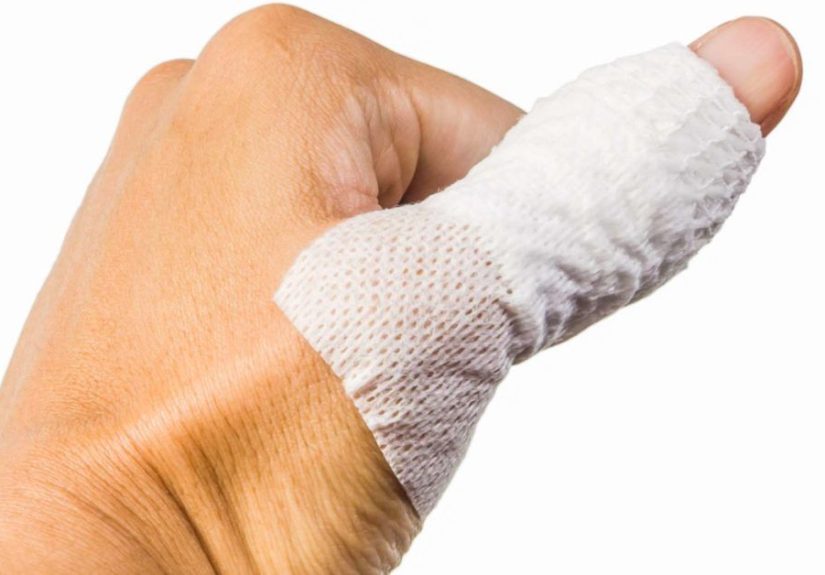
A snug (not tight) wrap can help swelling, but thumb injuries often do better with a splint than a wrap alone. Elevate your hand above heart level when possible.
4) Pain relief (carefully)
Over-the-counter pain relievers can help you function while healing begins. Follow label directions and avoid NSAIDs if a clinician has told you not to take them
(for example, certain stomach, kidney, or bleeding risks). When in doubt, ask a pharmacist or clinician.
Treatment options: what “good care” looks like for each severity
Grade 1 (mild): short protection + early gentle return
Many mild sprained thumbs improve with brief immobilization and activity modification. A splint may be used for comfort and protection, especially during activities
that stress the thumb. As pain and swelling improve, gentle movement is usually reintroduced so the thumb doesn’t become stiff.
Example: You jam your thumb catching a basketball. It’s sore and puffy, but not unstable. A thumb spica brace for a short period, ice, and avoiding heavy pinching
(opening tight jars, heavy lifting) can often get you back to normal without drama.
Grade 2 (moderate/partial tear): splinting or casting, usually weeksnot days
Partial tears commonly require a thumb spica cast or splint to keep the ligament from being re-stretched while it heals. Many clinical guidelines
describe immobilization around 4–6 weeks for stable UCL injuries, sometimes longer depending on symptoms and exam findings.
After the protection phase, hand therapy or guided rehab helps restore motion and strength. This is where you relearn normal pinch mechanics so your thumb doesn’t
stay weak or achy.
Grade 3 (severe/complete tear): evaluation is key, surgery is more likely
A complete UCL tear can leave the thumb MCP joint unstablemeaning the ligament can’t do its job as a stabilizing “seatbelt.” In these cases, surgery is often recommended
to restore stability, particularly if the ligament is displaced in a way that prevents it from healing back where it belongs.
After surgery, immobilization (cast or splint) can last several weeks, followed by structured rehabilitation. The goal isn’t just pain reliefit’s getting back reliable thumb function for daily life:
gripping, pinching, writing, sports, and work tasks.
Recovery and rehab: how to get your thumb back without re-injuring it
Ligaments heal best when they’re protected early and then progressively loaded later. Translation: you don’t want to “baby” it forever, but you also don’t want to treat it like it’s invincible on day three.
Phase 1: calm things down (days 1–7, sometimes longer)
- Protect with a splint/cast if recommended.
- Reduce swelling (ice, elevation).
- Avoid forceful pinch/grip.
- Keep other joints moving (fingers, wrist, elbow) to reduce stiffness.
Phase 2: restore motion (often after initial pain/swelling improves)
Under clinician or therapist guidance, you may begin gentle range-of-motion work like thumb flexion/extension and thumb-to-fingertip “opposition.”
The rule of thumb (yes, I went there): motion shouldn’t spike pain or swelling.
Phase 3: rebuild strength and coordination (weeks later)
Strength comes back with controlled work: light pinch exercises, putty work, rubber-band resistance, and functional tasks that mimic your real life (typing, tool use, sports grips).
Athletes often need sport-specific progression so they don’t return too early and re-sprain the joint.
What “normal healing” feels like
Even after the sharp pain fades, some people notice lingering stiffness or aching with heavy activity. That doesn’t automatically mean something is wrongit can be part of ligament healing and regaining strength.
What you want to see is a trend: less pain over time, better motion, and increasing ability to pinch without the thumb feeling unstable.
Sprained thumb recovery time: realistic timelines
Recovery depends on the grade of the sprain, your age, overall health, whether there’s a tear, and how consistently you protect and rehab the thumb.
These are typical ranges (not a promise carved in stone):
- Mild (Grade 1): often improves noticeably in 1–3 weeks, with continued gains after.
- Moderate (Grade 2): commonly needs 4–6 weeks of protection, plus rehab time for strength and confidence.
- Severe (Grade 3 / complete UCL tear): may require surgery; immobilization and rehab can take several weeks to a few months for full functional return.
A helpful mindset: pain may improve before stability does. If you return to heavy pinching the moment it feels “pretty okay,” you can undo progress fast.
When to see a doctor (even if you’re tough)
If your thumb feels unstable, if you can’t pinch normally, if pain is severe, or if you suspect a fractureget evaluated. Early treatment matters because missed complete UCL tears can lead to chronic instability,
weaker grip, and ongoing pain. If a clinician recommends a splint, cast, or referral to a hand specialist, it’s not overkillit’s joint mechanics.
Prevention: how to avoid a repeat performance
- Use protective gear when appropriate (sports taping/bracing, proper gloves, safe technique).
- Strengthen gradually after injurydon’t jump from “mostly fine” to “opening every jar in the neighborhood.”
- Warm up before sports with hand and wrist mobility, especially if you’ve had a prior sprain.
- Practice safer falls in sports like skiing/snowboarding where possible (instruction can reduce injury risk).
Quick FAQ
How do I know if it’s a sprain or a broken thumb?
You can’t always tell at home. Swelling, bruising, and pain happen with both. Severe tenderness on bone, deformity, inability to move the thumb, or pain that doesn’t improve are good reasons to get an X-ray.
Do I need a thumb spica splint?
For many thumb sprainsespecially suspected UCL injuriesa thumb spica splint is the go-to because it limits the motions that keep re-stressing the ligament. If symptoms are more than mild, a clinician should guide this.
Should I keep using my hand “to keep it loose”?
You want smart movement, not “let’s see if it can still do pull-ups.” Early protection prevents repeated stretching. Later, guided motion prevents stiffness. Timing matters.
Experiences related to sprained thumb (real-world patterns people commonly report)
People often describe a sprained thumb as one of those injuries that looks minoruntil you try to live your actual life with it. A frequent story goes like this:
someone takes a small fall, maybe while carrying something, and lands with the thumb bent awkwardly. At first it hurts, but adrenaline and stubbornness kick in.
A few hours later the thumb balloons, bruising shows up near the base, and suddenly the hand can’t do “simple” things like twist a doorknob or hold a water bottle without a jolt of pain.
Another common experience is the “jammed thumb” from sports. People often say they felt a quick stab of pain and kept playingthen later noticed their pinch felt weak,
like their thumb couldn’t clamp down reliably. That “I can’t pinch” feeling is what sends many folks to get checked, especially if the thumb feels loose side-to-side.
Some also report a strange sense of instability when gripping keys, pulling a zipper, or opening a bag of chipsbecause those are all pinch-heavy movements.
Daily inconvenience is a big theme. People mention that typing is doable but slower, and texting can be surprisingly annoying because the thumb does so much of the work.
Cooking is a classic trouble spot: chopping, opening containers, lifting pans, and wringing out sponges all demand thumb stability. Even personal care tasksbuttoning,
putting on jewelry, hair stylingcan feel like a mini obstacle course. Many learn quickly to use the other hand more, or to rely on the index and middle finger for tasks
the thumb normally dominates.
Sleep is another real-life factor. People often say the thumb throbs more at night, or they accidentally roll onto it and wake up instantly (the thumb is dramatic like that).
Wearing a brace at night, if recommended, can help prevent accidental bending and reduce that “why does it hurt more at 2 a.m.?” frustration.
During recovery, a common emotional pattern is impatience: the thumb feels better, so people test it with a “quick squeeze” or a heavy grip too soon.
That often leads to a flare-upmore soreness or swellingand the realization that ligament healing isn’t a fast-forward button. Those who do best tend to follow a steady progression:
protect early, then gradually reintroduce movement and strength. People who work with a hand therapist often mention that rehab feels surprisingly specifictiny exercises that
look easy but rebuild coordination and pinch mechanics in a way random squeezing doesn’t.
Finally, lots of people report that the last things to return are confidence and endurance. The thumb may move fine, but heavy tasks (long tool use, sports grips, extended typing)
can cause aching for a while. Many describe the “win” moment as the day they open a stubborn jar or carry groceries without thinking about their thumb at allbecause normal is when you forget it exists.