Table of Contents >> Show >> Hide
- Why This Danish Kitchen Feels So Good
- Materials That Do the Heavy Lifting
- Storage That Hides the Noise
- Lighting: The Mood Manager Nobody Should Ignore
- Furniture and Accessories: Where the Personality Slips In
- How to Steal This Look Without Relocating to Denmark
- The Real Luxury of a Calm Kitchen
- Living With the Look: The Experience of a Calm, Quality-Conscious Danish-Style Kitchen
- Conclusion
- SEO Metadata
Some kitchens want applause. This one does not. It does not shimmer under ten kinds of brass, it does not scream with trend-of-the-week tile, and it definitely does not behave like a reality-show contestant begging for a callback. Instead, this calm, quality-conscious kitchen in Denmark wins you over the old-fashioned way: with restraint, intelligence, and materials that seem likely to age with grace rather than demand a dramatic apology in three years.
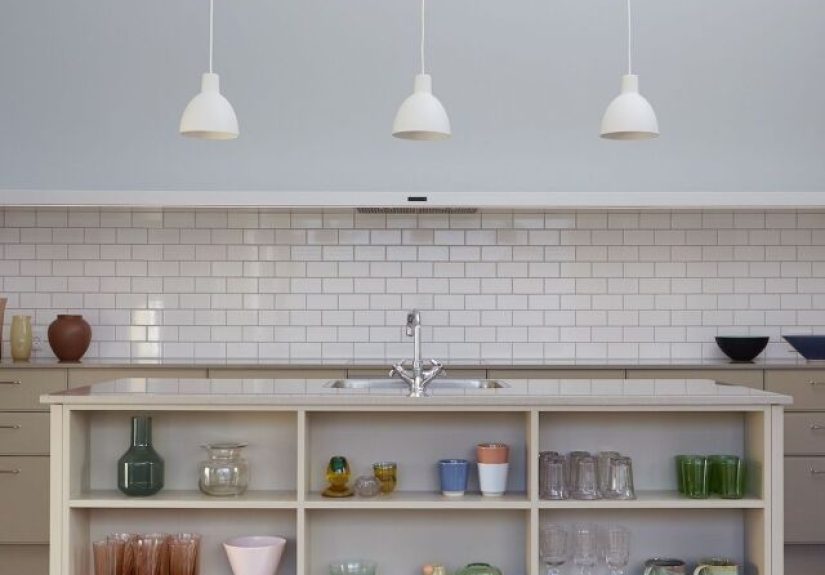
The look comes from a Danish home outside Copenhagen, where a single-story dream house was designed with a modern kitchen at its heart. The space features a Stillark kitchen in a limestone-toned wood finish, Coral Clay countertops, a pale pink subway tile backsplash, vintage-style lighting, warm wood furniture, and colorful glassware that keeps the room from slipping into beige boredom. In other words, it is Scandinavian design doing what it does best: making simplicity feel generous rather than bare.
That is also why this kitchen works so well as a web story. It is visual, yes, but it is also layered. The room is not just pretty; it is purposeful. Every finish seems chosen with the long game in mind. Every object feels considered. And every detail supports a larger idea that many American homeowners are chasing right now: a kitchen that feels calmer, functions better, and resists the exhausting pressure to be trendy on the internet every other Thursday.
Why This Danish Kitchen Feels So Good
The magic of this kitchen is not really magic at all. It is design discipline. Scandinavian kitchens are famous for clean lines, natural materials, minimal clutter, and a kind of lived-in warmth that keeps them from feeling clinical. This Danish version takes those ideas and gives them a little more softness. Instead of icy white and hard contrast everywhere, the palette leans toward limestone, pale pink, muted clay, wood, and gentle metallic notes. The result feels hushed, but not sleepy; refined, but not uptight.
That balance matters. A lot of minimalist kitchens make the mistake of confusing “less” with “nothing.” Suddenly the room looks like it is afraid of human life. This one does the opposite. It edits hard, but it still leaves room for pleasure: a vintage pendant that adds personality, a chair with design pedigree, colored glasses that catch the light, bowls that feel sculptural instead of purely practical. There is a pulse here. The room has standards, but it is not judging you for leaving a lemon on the counter.
Another reason the kitchen lands so well is that it feels genuinely Danish rather than “Scandi-adjacent.” There is an ease to it. The open connection to the dining area encourages gathering. The island provides storage without becoming a monument to excess. The finishes are tactile, soft, and useful. Even the colorful objects are controlled. Nothing is random. Nothing is shouting. It is a kitchen built for living, not just posing.
Materials That Do the Heavy Lifting
Wood, but make it quiet
The cabinetry is one of the strongest moves in the room. Limestone-colored wood gives the kitchen warmth without forcing it into rustic territory. It is pale, grounded, and low-drama, which is exactly the point. Natural wood has become a defining feature of Scandinavian and Japandi-inspired kitchens because it softens minimal lines and keeps sleek spaces from feeling emotionally unavailable. In this kitchen, the wood is not decorative frosting. It is the atmosphere.
For American homeowners, this is the first big lesson to steal: when the architecture is simple, materials need to carry the mood. Instead of relying on ornate cabinet fronts or aggressive hardware, choose finishes that feel good up close. Flat or simple-front cabinets in oak, ash, or a soft painted wood tone can deliver that effect beautifully. If your budget is not custom-Danish-house large, even a restrained mix of painted cabinets and wood accents can nod in the same direction.
Countertops with a little color sense
The Coral Clay countertop choice is especially smart. It gives the room a muted earthy note that feels more nuanced than standard bright white quartz. It still reads clean, but it also adds personality. This is the sort of move that makes a kitchen memorable without making it exhausting. The color is subtle enough to behave as a neutral, yet warm enough to keep the room from becoming one long sigh of gray.
If you are translating the look for your own home, think in terms of soft, mineral-inspired surfaces: warm white, sand, mushroom, pale clay, or light stone tones. The goal is not to create contrast for contrast’s sake. The goal is visual calm. A countertop should not look like it is trying to become a social media influencer.
Tile that whispers instead of performs
The pale pink subway tile backsplash is another reason the space feels so fresh. Subway tile is familiar, but the color shift changes everything. Pink, when it is dusty and restrained, reads almost like a skin-tone neutral. It warms the room, flatters the wood, and adds just enough surprise to keep the palette alive. This is how you do “interesting” without accidentally ending up in “why did I do that?” territory.
Quality-conscious kitchens often succeed because they avoid overcomplication. Here, the materials are modest in spirit but elevated in execution. That is a useful reminder that good design is rarely about adding more. It is about choosing better.
Storage That Hides the Noise
Calm is not just a color palette. Calm is what happens when the countertop is not buried under mail, charging cables, three oils, four mugs, a bread bag, and a mysterious appliance you only use in December. This Danish kitchen understands that deeply. The island offers ample storage for tableware, and the overall design supports visual clarity. That is what makes the room feel expensive, even if you do not know a pendant from a parsnip.
The American takeaway here is simple: integrated storage is not a luxury add-on; it is the infrastructure of peace. Pull-out drawers, internal organizers, concealed recycling, baking-sheet dividers, and cabinets that actually fit what you own are the unglamorous heroes of a quality-conscious kitchen. They do not photograph like marble. They also save your sanity on a Tuesday morning, which is arguably more impressive.
This is also why flat-panel or otherwise unfussy cabinetry works so well in calm kitchens. Smooth fronts create fewer visual interruptions. Hidden storage reduces countertop clutter. Negative space gives the eye somewhere to rest. When every item has a home, the room stops feeling like a workplace in crisis and starts feeling like part of the home again.
Lighting: The Mood Manager Nobody Should Ignore
Lighting is where many kitchens go wrong. People obsess over cabinet colors and then install lighting that could interrogate a suspect. This Danish kitchen avoids that trap. It pairs natural light with sculptural pendants and vintage fixtures that bring glow, shape, and a little history into the room. The look is soft, considered, and warm. In a minimalist kitchen, lighting does not just illuminate; it humanizes.
The combination matters. Scandinavian design has long prioritized daylight, but it also uses pendant lighting strategically to create intimacy and rhythm. Over an island or dining table, a pendant becomes functional jewelry. In this kitchen, the chrome Kontrast pendants and ring-shaped white fixture help define zones without crowding the space. They add interest while staying true to the room’s low-volume personality.
There is a practical lesson here, too. The best calm kitchens use layered lighting rather than one punishing overhead source. Think ambient light for general glow, task lighting where work happens, and accent lighting for atmosphere. Warmth matters. Diffused light matters. Shadows matter. A kitchen should help you wake up, cook, gather, and exhale. It should not make you feel like you are assembling medical equipment under fluorescent judgment.
Furniture and Accessories: Where the Personality Slips In
The furniture and accessories in this Danish kitchen are restrained, but they are not anonymous. An Alvar Aalto Chair 69 brings instant design credibility and organic shape. A simple stool in misty blue adds soft color. Rose, sepia, terracotta, and dusty-blue glassware and bowls introduce small moments of joy. Together, these pieces prove a crucial point: calm does not mean sterile.
In fact, this is where the room becomes truly lovable. Scandinavian interiors often work because they respect daily rituals. The glass on the table, the bowl on the island, the chair pulled out at an angle, the light catching a colored rim at breakfast; these details make a minimalist room feel inhabited. They keep the kitchen from becoming a showroom where everyone is afraid to breathe too confidently.
If you want to recreate the mood, do not over-style. One beautiful chair. A small cluster of tinted glasses. Ceramic bowls with sculptural form. A wooden table that looks even better after years of use. Choose objects with shape, texture, and staying power. Fewer pieces, better pieces. That is the whole philosophy in a nutshell.
How to Steal This Look Without Relocating to Denmark
1. Start with a restrained base
Use a palette of warm whites, mineral neutrals, pale woods, and muted earthy tones. If you want color, keep it dusty rather than sugary. Pale clay, faded pink, soft sage, and washed blue work beautifully.
2. Prioritize materials over ornament
Skip fuss. Let wood grain, stone texture, and matte finishes do the talking. Quality-conscious design is usually less about decoration and more about tactile integrity.
3. Invest in storage before styling
If your cabinets are chaotic, no amount of artisanal bowls will save the room. Solve the hidden systems first. Calm on the outside depends on logic on the inside.
4. Use lighting to soften the room
Choose one or two sculptural pendants, then support them with warm task and ambient lighting. Avoid cold, harsh bulbs unless your long-term dream is to feel mildly annoyed while making toast.
5. Add personality in controlled doses
A colored glass, a vintage chair, a beautiful stool, a handmade bowl: these are enough. Do not clutter the room trying to make it feel curated. The most convincing kitchens look assembled over time, not panic-bought in one weekend.
The Real Luxury of a Calm Kitchen
What makes this Danish kitchen so compelling is not that it is minimalist. It is that it is mindful. The room is proof that luxury does not have to be loud. Sometimes luxury is a soft countertop color that does not tire your eyes. Sometimes it is a drawer that opens exactly where you need it. Sometimes it is a pendant that casts flattering light over a simple dinner. And sometimes it is the radical thrill of standing in a kitchen that is not begging for your attention every second.
That is why this look has such staying power. It is not chasing novelty. It is building trust. Trust in materials. Trust in craft. Trust in the idea that a kitchen can be beautiful because it functions well, and function beautifully because it has been edited with care. A quality-conscious kitchen is not one that shows off how much you spent. It is one that shows you knew where to spend it.
Living With the Look: The Experience of a Calm, Quality-Conscious Danish-Style Kitchen
Now for the part glossy roundups often skip: what it actually feels like to live with a kitchen like this. And honestly, that is where the Danish approach becomes especially convincing. The visual appeal grabs you first, but the lived experience is what seals the deal. A calm kitchen changes your pace in small, almost sneaky ways. You enter the room and your shoulders drop a little. You notice the light before you notice the mess. You put the kettle on without immediately becoming distracted by six unrelated objects competing for attention on the counter. The room gives your brain less to process, which is a gift in a home where every other surface is trying to become a dumping ground.
Morning feels different in a kitchen like this. Pale wood and muted stone tones are kind to groggy eyes. Warm light bouncing off a soft backsplash is much nicer than a blast of shiny surfaces at 7:03 a.m. A colored glass on the table suddenly feels like a small event instead of just a cup. Toast, coffee, yogurt, whatever the menu is, it all seems a little more civilized. Not because the kitchen is precious, but because it is clear. The room quietly invites better habits. You wipe the counter because it is worth wiping. You put things back because there is a place to put them.
Then there is the cooking experience. In a quality-conscious kitchen, the tools are not fighting the room. The island makes sense. Storage makes sense. Lighting makes sense. You can chop vegetables without balancing them between clutter islands of unopened mail and an abandoned charger. You can reach for bowls and plates without opening three cabinets and a philosophical debate. That kind of ease does not sound glamorous, but it is exactly what turns a kitchen from a nice picture into a useful daily environment.
There is also an emotional effect to the materials themselves. Natural wood has a steadiness to it. Matte or softly textured surfaces feel more forgiving than glossy ones. Muted pink, clay, sand, and limestone tones are comforting in a way that high-contrast black-and-white kitchens often are not. They soften routines. Even cleanup feels slightly less annoying in a room that is not visually noisy. You are still doing dishes, sadly, but at least you are doing them in surroundings that are not actively insulting your nervous system.
And perhaps the best part of this style is that it leaves room for a life that looks human. A calm kitchen does not require emptiness. It just asks for intention. A loaf of bread on the table, a bowl of citrus on the counter, a stack of plates ready for dinner, a chair angled out after someone sat with tea for fifteen minutes longer than planned; these things look right at home here. The room is not frozen. It is ready. That is a very Danish kind of luxury: comfort without sloppiness, beauty without showboating, and practicality that never feels punishingly plain.
So yes, steal this look. But do not just copy the finishes. Copy the philosophy. Choose fewer things, and choose them well. Let light do some of the decorating. Use color quietly. Invest in hidden order. Buy the bowl you will still love in ten years. Pick the stool that can handle daily life. Build a kitchen that lets you cook, gather, and breathe. That is the real lesson from this Danish web story, and it is far more useful than chasing the next viral shade of cabinet paint.
Conclusion
Steal This Look: A Calm, Quality-Conscious Kitchen in Denmark Web Story is ultimately about more than copying a beautiful room. It is about understanding why the room works. The answer lies in disciplined simplicity, natural materials, integrated storage, soft lighting, and a few carefully chosen accents that bring warmth and personality. This is the kind of kitchen that proves calm can be luxurious, minimalism can be welcoming, and quality is always more convincing than excess. If you want a kitchen that feels timeless instead of timestamped, Denmark has handed you a very good blueprint.