Table of Contents >> Show >> Hide
- Why Steve Carell Deserves an Oscar-Level Legacy
- Dramatic Performances That Stun You Into Silence
- 1. Foxcatcher (2014): The Performance That Should Have Sealed It
- 2. The Big Short (2015): Anger, Grief, and Gallows Humor
- 3. Little Miss Sunshine (2006): Sad, Soft, and Subtly Brilliant
- 4. Beautiful Boy (2018): The Pain of a Parent Watching from the Sidelines
- 5. Battle of the Sexes (2017): Charm Weaponized
- Comedies with Real Emotional Stakes
- Voice Roles and Character Parts That Show His Range
- So Why Doesn’t He Have an Oscar Yet?
- Experiences and Reflections: What It’s Like to Watch These Performances
- Conclusion: An Oscar Waiting to Happen
Somewhere in Hollywood there is a parallel universe where Steve Carell already has at least one Oscar on his shelf,
probably wedged between a Dundie and a bobblehead of Gru. In our world, though, he has just a single Academy Award
nomination, which feels wildly out of sync with the range and depth of his work. When people think of Steve Carell
movies, they often picture him screaming about waxing in The 40-Year-Old Virgin or shouting “No, God, please
no!” as Michael Scott. But look a little closer and you’ll see an actor who has quietly built one of the most
impressive, emotionally layered film careers of his generation.
From unsettling dramatic turns to grounded indie gems and surprisingly moving comedies, Steve Carell’s performances
prove he deserves an Oscar as much as anyone in Hollywood. Let’s walk through the movies that make the case and
maybe leave you wondering how the Academy managed to miss so many opportunities.
Why Steve Carell Deserves an Oscar-Level Legacy
Before diving into individual films, it helps to understand what makes Steve Carell such an Oscar-worthy actor. He’s
not just funny, although he might be one of the best comedic actors of the 21st century. What sets him apart is how
he blends comedy and drama in a way that feels true to how people actually behave. Real life is rarely pure tragedy
or pure comedy. It’s awkward, bittersweet, and frequently hilarious at the worst possible moment. Carell knows that
instinctively, and he brings it into nearly every performance.
He also has a rare ability to disappear into characters while still feeling instantly relatable. Whether he’s playing
a suicidal scholar, a Wall Street truth-teller, or an eccentric billionaire with a deeply unsettling vibe, he makes
the people he portrays feel lived-in and strangely familiar. That combination shape-shifting range with emotional
honesty is exactly what “Oscar-worthy” is supposed to mean.
Dramatic Performances That Stun You Into Silence
1. Foxcatcher (2014): The Performance That Should Have Sealed It
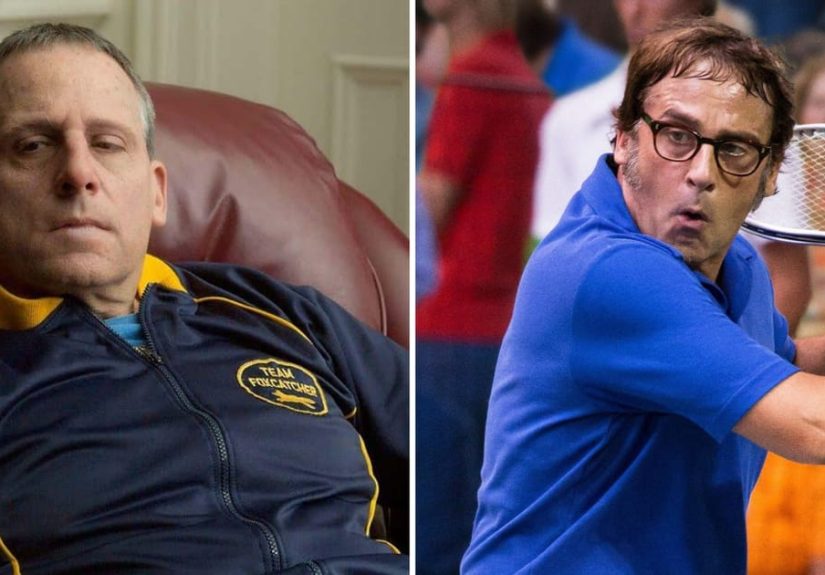
If you aren’t convinced Steve Carell is capable of chilling, unsettling drama, Foxcatcher will fix that in
about five minutes. Transforming into real-life millionaire John du Pont, Carell trades in his usual warmth for a
cold, unsettling stillness. The prosthetic nose gets a lot of attention, but it’s his body language and line delivery
that really do the work the halting speech, the stiff posture, the way he makes silence feel dangerous.
This is the role that finally earned him an Oscar nomination for Best Actor, and it’s not hard to see why. While the
film itself is austere and slow-burning, Carell’s performance is like a storm barely contained under a too-tight
suit. Every scene hints at a man rotting from the inside out. It’s the kind of transformation that usually has “Give
this person a statue” written all over it. The fact that he walked away without the win is Exhibit A in the case file
labeled “Academy Oversights.”
2. The Big Short (2015): Anger, Grief, and Gallows Humor
In The Big Short, Carell plays Mark Baum, a character based on real-life fund manager Steve Eisman. Baum is
furious, exhausted, and morally shredded by the financial crisis he sees coming. This is not a quirky side role where
Carell pops in to crack a few jokes and leaves. He’s the emotional engine of the movie.
Watch the scenes where Baum confronts the mortgage brokers in Florida or the smug rating agencies in New York. You
can see the character’s worldview fracturing in real time. Carell balances razor-sharp sarcasm with genuine horror,
and the result is heartbreakingly human. The movie itself is densely packed with exposition, but Baum keeps it
grounded. An Oscar nomination for this role would have made perfect sense instead, it became another “How did they
overlook him?” moment.
3. Little Miss Sunshine (2006): Sad, Soft, and Subtly Brilliant
Little Miss Sunshine is already a gem of an ensemble film, but Carell’s performance as Frank, a Proust
scholar recovering from a suicide attempt, gives it a beating heart. It’s one of his earliest chances to show that he
could do more than broad comedy, and he absolutely delivers.
Frank is quiet, wounded, and sardonic, but never reduced to a punchline. Carell plays him with a softness that makes
every small smile feel like a tiny victory. The scene where he gently explains to young Olive that it’s okay not to
win in a movie literally about a beauty pageant is the kind of emotionally honest moment that sticks with you for
years. The film itself won awards, but his contribution could easily have been singled out for Oscar attention in a
supporting category.
4. Beautiful Boy (2018): The Pain of a Parent Watching from the Sidelines
In Beautiful Boy, Carell plays David Sheff, a father desperate to save his son from addiction. There’s no
big comedic release valve here, no slapstick to soften the blow. It’s a quiet, heavy performance filled with the kind
of helplessness that feels almost too real to watch.
Carell captures the exhausting cycle of hope and disappointment that many families of people with substance use
disorders experience. One moment he’s clinging to optimism, the next he’s breaking under the weight of another
relapse. In less capable hands, the role could have too easily drifted into melodrama. Instead, Carell keeps it
grounded, restrained, and deeply human the exact kind of performance awards bodies love to call “transformative,”
when they’re actually paying attention.
5. Battle of the Sexes (2017): Charm Weaponized
Playing real-life tennis hustler Bobby Riggs in Battle of the Sexes, Carell walks a tightrope between
clownish showman and deeply insecure man clinging to relevance. The film centers on Riggs’s famous match with Billie
Jean King, and it would have been easy to make him a one-note chauvinist caricature.
Instead, Carell leans into the charm and absurdity of Riggs’s persona while letting you glimpse the fear underneath.
He’s loud and ridiculous, sure, but he’s also painfully aware that he’s aging in a world that’s starting to move on
without him. That tension gives the performance a surprising emotional weight and reminds you how good Carell is at
playing men who are both funny and quietly tragic.
Comedies with Real Emotional Stakes
6. The 40-Year-Old Virgin (2005): The Breakout That Showed His Heart
The 40-Year-Old Virgin could have been crude for crude’s sake. Instead, it turned into one of the most
oddly sweet R-rated comedies ever made largely because of Steve Carell. As Andy Stitzer, he takes a premise that
sounds like a bad stand-up bit and transforms it into a character study of a kind, anxious, genuinely decent person
trying to figure out intimacy and adulthood.
What’s striking, looking back, is how much empathy he brings to Andy. The jokes land, but they don’t punch down at
him. Carell made sure of that; he co-wrote the script and insisted the character be treated with respect. That mix of
hilarious awkwardness and emotional sincerity redefined modern studio comedy and proved a “dumb comedy” could hold
a performance as carefully calibrated as any prestige drama.
7. Dan in Real Life (2007) and Crazy, Stupid, Love (2011): Sad Dads Done Right
Carell seems to have a PhD in playing lovable, slightly lost middle-aged men, and nowhere is that clearer than in
Dan in Real Life and Crazy, Stupid, Love. In the former, he’s a widowed advice columnist who can
fix everyone’s problems but his own; in the latter, he’s a suburban dad whose life collapses when his wife asks for a
divorce and he tumbles headfirst into the dating world.
Both movies are romantic dramedies, but Carell treats the emotional stakes like they matter. He lets you see the
loneliness under the jokes, the grief under the self-deprecating humor. These aren’t showy roles designed to bait
awards voters, but they showcase exactly why he should always be in the conversation: he makes “ordinary guy” pain
feel specific, lived-in, and quietly devastating.
Voice Roles and Character Parts That Show His Range
Even when you can’t see his face, Steve Carell finds ways to sneak in complexity. His work as Gru in the
Despicable Me and Minions films is a masterclass in character voice acting. What starts as a goofy
supervillain shtick turns into a surprisingly tender arc about found family, fatherhood, and redemption.
More recently, he’s popped up in films like Wes Anderson’s Asteroid City and John Krasinski’s whimsical
fantasy IF, where he voices a big, fuzzy imaginary friend. These roles may not be traditional Oscar magnets,
but they show how versatile he is he can slip from dark psychological drama to offbeat indie to family-friendly
fantasy without ever feeling miscast.
So Why Doesn’t He Have an Oscar Yet?
Part of the answer is simple timing and competition. When Carell was nominated for Foxcatcher, he was up
against a brutal Best Actor lineup. Other years, his best work happened in movies that didn’t quite become awards
juggernauts, or in comedies the Academy tends to overlook.
There’s also a long-standing bias in awards culture: comedy, even when it’s emotionally rich, rarely gets the same
respect as drama. Actors who start in sketch comedy or sitcoms often have to work twice as hard to be taken seriously,
even when their filmography is packed with nuanced, layered performances. Carell has crossed that bridge audiences
and critics know how good he is but the Oscars haven’t entirely caught up.
The good news? He’s not done. With new projects constantly in the pipeline and a track record of surprising people,
it still feels like only a matter of time before the Academy gives him the recognition he’s earned. When he finally
gets that Oscar, it won’t feel like a sudden breakthrough. It’ll feel like Hollywood is finally acknowledging a
career that’s been award-worthy for years.
Experiences and Reflections: What It’s Like to Watch These Performances
If you’ve spent any real time with Steve Carell’s movies, you start to notice a pattern in how they land with you.
They’re the kind of films you put on expecting to laugh and end up oddly quiet during the credits, thinking about your
own life. That’s not an accident. Carell has a way of sneaking up on your emotions while you’re busy enjoying the
jokes.
Imagine revisiting The 40-Year-Old Virgin years after its release. At first, it’s nostalgia: mid-2000s
clothes, awkward tech, and Judd Apatow’s trademark chaos. But watch Andy closely and the experience shifts. You see
a man who isn’t actually “behind” in life; he’s just built a little protective bubble around himself because the
outside world feels too sharp. By the time he finally lets himself be vulnerable, the payoff feels less like a raunchy
comedy climax and more like watching a friend finally let their guard down.
Then there’s the experience of watching The Big Short in a crowded theater. The movie is dense, fast, and
furious, and Carell’s Mark Baum is basically your emotional guide through the chaos. You can feel the audience laugh
at his sarcasm, then go quiet in scenes where he realizes just how bad the system is not just financially, but
morally. It’s the kind of performance where you almost forget you’re watching “Steve Carell, funny guy from TV” and
instead see someone who looks like people you actually know: smart, angry, and trying to figure out what doing the
right thing even means.
Watching Little Miss Sunshine with a group is a completely different but equally revealing experience. People
usually arrive for the quirky road trip chaos and leave talking about the quiet moments the late-night conversations,
the sideways glances, the little expressions of love in a deeply messed-up family. Carell’s Frank is never the loudest
person on screen, but he often feels like the emotional anchor. When the pageant finally happens and the family
rallies around Olive, Frank’s presence quietly supportive, just slightly smiling is part of what makes the ending
feel so cathartic.
If you’ve ever watched Beautiful Boy or Foxcatcher alone late at night, the experience is more
intense. These are not casual background movies. They demand attention, and Carell rewards it with layer upon layer of
detail. In Beautiful Boy, you might catch a tiny hitch in his voice during a hopeful phone call or the way he
stares a little too long at an empty room. In Foxcatcher, you may find yourself leaning away from the screen
at certain moments, because his version of John du Pont radiates so much unease it feels like he might step out of the
frame.
Even his lighter films create memorable viewing experiences. Throw on Crazy, Stupid, Love during a weekend
movie night, and you’ll get the full spectrum: big laughs, surprising tenderness, and that legendary “Do you
seriously use the Dirty Dancing lift as a pickup move?” moment. Carell’s sad-sack sincerity plays perfectly
against Ryan Gosling’s exaggerated cool, and by the end of the film, it’s Carell’s emotional journey that sticks with
you most.
Over time, these experiences add up. You start to realize that a “Steve Carell movie” isn’t just one thing it’s a
shorthand for stories that blend humor and heartbreak in a way that feels uniquely human. Whether he’s voicing a
cartoon supervillain, brooding through a prestige drama, or fumbling through romance as a bewildered dad, he invites
you to see a little of yourself in each character.
That, ultimately, is the strongest argument for why Steve Carell deserves an Oscar as much as anyone in Hollywood.
The award would be nice, sure. But the real prize is the impact his performances already have on audiences the
laughs that turn into sighs, the awkward scenes that feel uncomfortably familiar, the characters who linger in your
mind long after the credits roll. The Academy can take its time catching up. Viewers already know: Steve Carell’s
body of work is absolutely Oscar-worthy.
Conclusion: An Oscar Waiting to Happen
When you line up Steve Carell’s filmography from Little Miss Sunshine and Foxcatcher to
The 40-Year-Old Virgin, The Big Short, Beautiful Boy, and beyond the narrative becomes
pretty clear. This isn’t a story about a comedian “trying” drama. It’s the story of a fully formed actor who has
quietly delivered Oscar-caliber work again and again across genres.
Whether or not the Academy ever hands him that gold statue, the movies are already there to make the case. For fans,
critics, and anyone who’s ever unexpectedly cried during a Steve Carell movie they thought would just be funny, the
verdict is simple: he deserves an Oscar as much as anyone working in Hollywood today.