Table of Contents >> Show >> Hide
- Why Stitch Is the Perfect Movie-Crasher
- The Official Blueprint: Disney Already Let Stitch “Invade” the Classics
- How to Make “Stitch Invades” Art Look Intentional (Not Accidental)
- Specific, Scene-Ready Examples: Stitch in 10 Disney Movies
- Beauty and the Beast: The ballroom moment… with a chandelier problem
- Aladdin: “A Whole New World,” but the third wheel has claws
- The Lion King: Presentation ceremony, unexpected substitute
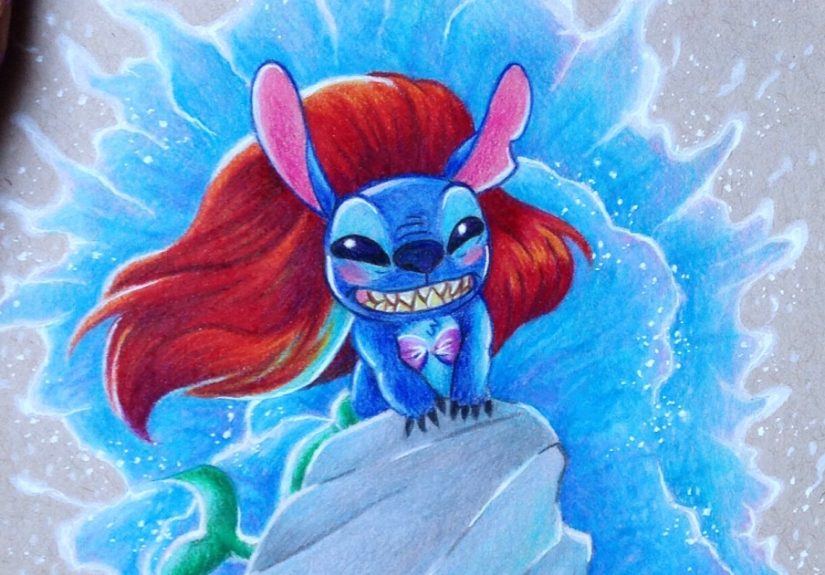
- The Little Mermaid: Underwater serenade, plus a “helpful” musician
- Cinderella: The glass slipper problem becomes a glass-slipper snack
- Frozen: “Let It Go,” but the ice palace has a new tenant
- Tangled: Lantern festival, featuring a suspiciously fluffy “lantern”
- Moana: The Heart of Te Fiti is not a chew toy (but he didn’t get the memo)
- Mulan: Training montage, featuring the world’s least cooperative recruit
- Sleeping Beauty: The spinning wheel is… extremely tempting
- Visual Comedy Tricks That Make These Mashups Pop
- Why This Concept Works So Well Online
- Practical Workflow: How I Build a Stitch-Invades Illustration
- Common Mistakes (And How to Dodge Them Like a Pro)
- Bonus: of “Experience” From the Stitch-Invasion Trenches
- Conclusion: Let the Chaos Be Crafted
If you’ve ever watched Lilo & Stitch and thought, “This tiny blue chaos gremlin could improve literally any movie,” congratulationsyou are exactly the kind of person my sketchbook is trying to impress.
This article is a behind-the-scenes guide to a very specific (and highly scientific) artistic mission: dropping Stitch into famous Disney scenes like he owns the place, then letting the composition do the comedy. We’ll talk story logic, visual style, and the “don’t ruin the vibe” rules that keep a crossover drawing from looking like a sticker got lost on your iPad.
Why Stitch Is the Perfect Movie-Crasher
Stitch works as a “guest star” because his personality is already built like a cartoon plot device: he’s impulsive, curious, strong enough to cause problems, and expressive enough to sell a joke without dialogue. In the original story, he arrives like a hurricane and slowly learns that family (ohana) isn’t something you breakit’s something you protect. That arc is the secret sauce for crossover art: he can start as a menace, but your drawing can still land warm.
Visually, Stitch is also a designer’s dream. He has a bold silhouette, readable face, and a saturated color scheme that pops against most Disney palettes. Translation: you can drop him into a ballroom, a jungle, a castle, or a ship at seaand he’ll still be recognizable from across the room (or across someone’s TikTok feed).
The Official Blueprint: Disney Already Let Stitch “Invade” the Classics
Here’s the fun part: the idea of “Stitch invades Disney movies” isn’t just fan imaginationit’s basically canon marketing history. Before the original film released, Disney ran teaser-style promos where Stitch interrupted iconic moments from other animated films. That campaign is the spiritual ancestor of this entire drawing series.
So when you draw Stitch photobombing a legendary scene, you’re not committing artistic heresyyou’re participating in a long tradition of Disney-approved mischief. The best mashups feel like they could’ve been one of those promos: playful, slightly destructive, and weirdly affectionate.
How to Make “Stitch Invades” Art Look Intentional (Not Accidental)
1) Choose a scene that’s iconic even in silhouette
The stronger the original composition, the funnier the interruption. Think big, readable staging: a dramatic reveal, a romantic pose, a ceremonial moment, or a musical “freeze-frame” that everyone recognizes in half a second. Stitch needs a stagedon’t drop him into visual clutter where he becomes “Where’s Walien?”
2) Match the movie’s visual language before you add the joke
Every Disney film has its own “rules”: lighting mood, shape design, background texture, and color rhythm. Your crossover looks ten times more convincing if you build the scene like that film first. Then, once everything feels authentic, Stitch becomes the punchlinebecause he clearly doesn’t belong, but the world does.
3) Give Stitch a clear objective (even if it’s a dumb one)
Comedy lands better when it’s motivated. Is he stealing a prop? Copying a dance move? Mistaking a magic artifact for a chew toy? Stitch works best when he’s not “random.” He’s mischievous, yesbut he’s also a problem-solver with the wrong solution.
4) Keep the heart in the frame
The secret to Lilo & Stitch is that it’s not just chaosit’s belonging. Even if your drawing is mostly a gag, include one small emotional detail: a character softening toward him, Stitch hesitating before breaking something, or a tiny “I want to be included” expression. That’s what makes people share it instead of just chuckle and scroll.
Specific, Scene-Ready Examples: Stitch in 10 Disney Movies
Beauty and the Beast: The ballroom moment… with a chandelier problem
Keep the famous waltz compositionwide, elegant, symmetricalthen add Stitch swinging from the chandelier like it’s gym class. The humor comes from contrast: refined romance below, absolute goblin energy above. Add a tiny trail of falling dust or a loose crystal to foreshadow the inevitable “crash landing.”
Aladdin: “A Whole New World,” but the third wheel has claws
Use the sweeping nighttime colors and soft cloud edges. Stitch can cling to the carpet tassel like a stressed-out suitcase, or sit between Aladdin and Jasmine with a smug “I help.” Bonus: make Abu look offendedas if the monkey is thinking, “Excuse you, I was the original agent of chaos here.”
The Lion King: Presentation ceremony, unexpected substitute
The composition is basically a sacred triangle: Rafiki, the lifted figure, the crowd below. Replace the lifted figure with Stitch and you instantly get comedy. To keep it readable, preserve the sunrise lighting and Pride Rock silhouettes. For extra spice, give Stitch a triumphant roar that’s clearly not matching the tone of the moment.
The Little Mermaid: Underwater serenade, plus a “helpful” musician
The romantic boat scene is soft and dreamy. Stitch can appear in the water wearing a leaf as a hat, playing a seashell like a horn, absolutely convinced he’s enhancing the vibe. Keep the warm lantern glow and gentle ripples so the scene still feels magical. The joke is that Stitch is tryinghe’s just… Stitch.
Cinderella: The glass slipper problem becomes a glass-slipper snack
Put Stitch near the staircase landing, staring at the slipper like it’s a rare artifact. He’s not malicioushe’s curious. Your key visual is the slipper gleam. Let it reflect in Stitch’s eyes, then add a tiny drool bubble. The comedy is anticipation: the audience knows what’s about to happen, and everyone in the scene is doomed.
Frozen: “Let It Go,” but the ice palace has a new tenant
Match the crisp, bright ice surfaces and cool atmospheric perspective. Stitch can “assist” by carving chaotic little claw marks into the perfect geometry. Or place him proudly wearing a tiny ice crown like he’s the new ruler of the palace. Keep the lighting clean and sharpFrozen visuals are about clarity, which makes Stitch’s mess funnier.
Tangled: Lantern festival, featuring a suspiciously fluffy “lantern”
Build the warm golden lantern glow first. Then add Stitch holding a lantern too close to his face, fascinated. His ears can catch the light like glowing sails. The humor is subtle: it’s beautiful… until you notice your boy is one second away from setting something on fire.
Moana: The Heart of Te Fiti is not a chew toy (but he didn’t get the memo)
Use the teal ocean palette and dramatic wave motion. Stitch can be perched on the canoe like an “expert navigator,” clutching the heart stone with the seriousness of a captain who absolutely stole the map. Add Maui giving him a side-eye like, “I have seen many things… and I do not like this one.”
Mulan: Training montage, featuring the world’s least cooperative recruit
The training pole is perfect for slapstick. Stitch can be halfway up, clinging like a koala with ambition. Keep the strong diagonals, dynamic poses, and bold shapes. Stitch’s contribution is pure determination he wants to win, he just doesn’t understand “discipline” as a concept.
Sleeping Beauty: The spinning wheel is… extremely tempting
Go for the classic storybook styling and decorative shapes. Stitch can poke the spinning wheel like it’s a fascinating Earth toy. The scene becomes funny because the audience knows it’s cursed, and Stitch does not care. Let the lighting shift slightly toward eerie to underline the “oops” energy without going full horror.
Visual Comedy Tricks That Make These Mashups Pop
Use “clean reading” first, punchline second
If viewers can’t recognize the original scene instantly, your joke is delayedand the internet is famously patient (that was sarcasm). Make the background and main pose unmistakable. Then place Stitch where he’s immediately readable: foreground, strong contrast, or cutting across a leading line.
Give Stitch a prop that belongs to the movie
Stitch holding a random object is fine. Stitch holding the object is better: the rose, the slipper, the trident, the magic lamp, the crown, the heart stone. Props act like captionsyou don’t need text when the object tells the story.
Let supporting characters react in-character
A great crossover isn’t just “Stitch does chaos.” It’s “Stitch does chaos and the cast responds exactly how they would.” Beast is offended. Sebastian is stressed. Mushu is competitive. Olaf is delighted. Reactions sell the joke more than the chaos itself.
Why This Concept Works So Well Online
Stitch is internet-friendly because he lives at the intersection of nostalgia and meme energy. He’s recognized instantly, and he’s emotionally safe: mischievous, not cruel. That makes him perfect for shareable mashups that feel playful rather than cynical.
It also helps that Stitch remains a massive Disney favoriteso much so that Disney celebrates “626 Day” (June 26) as a fan-forward moment, complete with official merch drops and themed fun. When a character is already culturally “eventized,” fan art gets a bigger runway.
Practical Workflow: How I Build a Stitch-Invades Illustration
Step 1: Thumbnail the original composition
I start with tiny thumbnailsno details, just shapes. If the thumbnail reads as “that movie scene” in two seconds, it passes the test. If not, I pick a more iconic moment. Your time is precious; don’t spend three hours rendering a background nobody recognizes.
Step 2: Lock the lighting and palette
Before Stitch appears, I treat the piece like a straight-up study of the film’s look. This is where you decide: watercolor softness? crisp CG glow? storybook flatness? Once the environment feels authentic, adding Stitch is easyand the joke lands harder.
Step 3: Design Stitch’s “intrusion” as a mini story
I plan a beginning, middle, and end in one frame: What did he do? What is he doing now? What is about to happen? A cracked chandelier, a slipping crown, a dangerously close candle flametiny visual foreshadowing makes the drawing feel alive.
Step 4: Add micro-details that reward rewatching
Little Easter eggs turn a fun drawing into a “zoom-in” drawing: a hidden bite mark, a tiny footprint trail, a suspiciously chewed corner of a royal banner, or a small character peeking from behind a prop in disbelief.
Common Mistakes (And How to Dodge Them Like a Pro)
Mistake: Stuffing too many jokes into one image
One strong gag beats five small ones. If every corner is screaming, the viewer doesn’t know where to look. Pick one main comedic action, then support it with subtle details.
Mistake: Ignoring scale and perspective
Stitch is small, but not “toy” small. If he’s suddenly the size of a teacup in one drawing and a full-grown bear in another, the viewer’s brain goes “wait… what?” and you lose momentum. Decide your scale relative to the cast and stay consistent.
Mistake: Making Stitch mean
He’s chaotic, not cruel. If he’s ruining someone’s life with malice, it stops feeling like Stitch. The best drawings show him making trouble while still being oddly lovablelike a toddler with access to a fireworks store.
Bonus: of “Experience” From the Stitch-Invasion Trenches
Artists who try a Stitch-invades series usually expect the hardest part to be drawing Stitchuntil they realize the real boss fight is consistency. You’ll finish one piece, feel unstoppable, and then immediately discover that the next movie has a totally different visual rulebook. One day you’re painting soft, tropical watercolor vibes; the next you’re dealing with glossy ice reflections or candlelit golds that make your color picker cry. The experience becomes half fan art, half masterclass in adapting style.
The funniest moment tends to happen early in the process: you place Stitch into the scene for the first time and suddenly the whole image “clicks.” It’s like adding a cymbal crash to a joke you didn’t realize needed percussion. But then comes the humbling partStitch has to feel like he belongs in that world’s lighting. If your shadows don’t match, he looks like a sticker. If your edges don’t match, he looks cut out. The experience teaches you patience: make the world believable, then let the chaos be the only unbelievable thing.
There’s also a surprising emotional rhythm to it. You start with the loud, obvious gagsStitch swinging from chandeliers, stealing crowns, photobombing dramatic reveals. But as you keep going, you naturally drift toward softer jokes: Stitch trying to mimic a dance step, Stitch holding a prop with genuine curiosity, Stitch being quietly proud of “helping.” Those drawings often get the best reactions, because they feel like the character’s heart is still intact. People don’t just want destructionthey want the sense that he’s learning, even in a different movie.
And yes, there’s always one drawing that breaks you. The one where you can’t decide whether Stitch should be in the foreground or hidden in the background. The one where your composition keeps collapsing. The one where the joke is funny in your head but somehow flat on the page. That’s part of the experience too: you learn to test ideas quickly with thumbnails, to kill weak jokes early, and to save your energy for the pieces that truly sing. Over time, your “Stitch invasion” stops being a gimmick and becomes a skill: visual storytelling in one frame, with comedy timing and character consistency baked in.
By the end of a series like this, you don’t just have a stack of fun images. You have a sharper eye for lighting, better instincts for staging, and a deeper understanding of why Disney scenes are iconic in the first place. Stitch may be the invader, but the real transformation happens in your craft. Which is a very wholesome outcome for something that started with, “What if Stitch stole the magic lamp?”
Conclusion: Let the Chaos Be Crafted
“Stitch invades various Disney movies” works when you treat it like a respectful remix: honor the original scene’s design, then let Stitch disrupt it in a way that feels perfectly in-character. The best crossover drawings aren’t randomthey’re staged, lit, and emotionally grounded, with one clear gag and a tiny spark of ohana somewhere in the frame.
If you’re building your own series, start with the most iconic scenes, keep your palettes honest, and remember: Stitch doesn’t just wreck thingshe also, occasionally, learns.