Table of Contents >> Show >> Hide
- Quick Snapshot (Spoiler-Light)
- What Is NYT Strands (and Why Does It Feel Like a Friendly Ambush)?
- Today’s Theme for September 2, 2025
- Hints for Strands #548 (Without Jumping Straight to the Answers)
- Spangram for September 2, 2025
- All Strands Answers for September 2, 2025 (Theme Words)
- How These Answers Fit the Theme (And Why Your Brain Might Miss Them at First)
- Step-by-Step Solve Strategy for This Puzzle
- Common Sticking Points (Yep, You’re Normal)
- Why This Puzzle Was So Satisfying
- 500+ Words of Strands “Experience” (The Human Side of the Grid)
- Conclusion
If you opened NYT Strands on Tuesday, September 2, 2025 and immediately thought, “Ah yes… shapes… or maybe this is about pottery… or possibly emotional growth?”congrats. You’re experiencing the Strands lifestyle: a cozy little word hunt that somehow turns into a detective novel the moment the theme gets cryptic.
Today’s puzzle (Strands #548) is a classic example of Strands being both kind and smug at the same time: once you see it, it feels obvious. Before you see it, it feels like the grid is laughing at you in diagonals.
Quick Snapshot (Spoiler-Light)
- Date: Tuesday, September 2, 2025
- Puzzle number: Strands #548
- Theme: “Things are starting to take shape”
- Category vibe: Math/geometry (the “I swear this will matter later” kind)
- Spangram direction hint: Mostly vertical
What Is NYT Strands (and Why Does It Feel Like a Friendly Ambush)?
Strands is a daily word-search-style game where you connect letters in a grid to form words that fit a theme. The twist is that you’re not given a neat word listjust a theme phrase that nudges you toward a category. Hidden inside the grid are several theme words plus one special long word (or phrase) called the spangram, which describes the unifying idea and stretches from one edge of the board to the opposite edge.
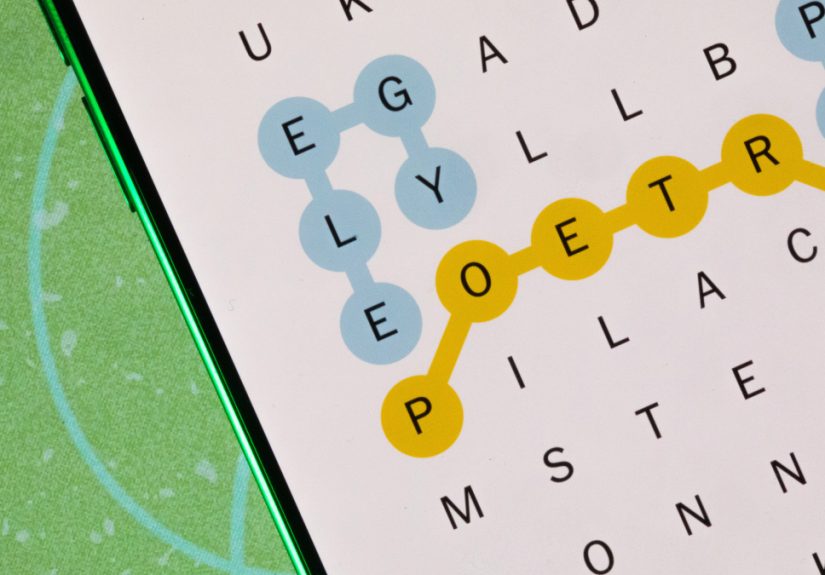
When you find theme words, they highlight on the board (typically in blue), and when you find the spangram, it highlights differently (commonly shown in yellow). You can also earn hints by finding non-theme wordsgenerally, every three non-theme finds will fill the hint meter enough to reveal the letter path of a theme word.
The result is a game that’s part vocabulary, part pattern recognition, and part “how did I not see that?” It’s also surprisingly satisfying because the grid is designed so the solution set fits together cleanlylike a little language puzzle box clicking shut.
Today’s Theme for September 2, 2025
Theme: “Things are starting to take shape.”
This theme is a wink and a nudge toward geometrythe branch of math that’s basically “shapes, space, and the reason rulers exist.” The puzzle words aren’t “triangle,” “square,” and “stop asking me to prove it,” but they live in the same neighborhood: foundational geometry concepts that show up in school, design, engineering, and anyone’s life the moment they try to assemble IKEA furniture without reading the instructions.
Hints for Strands #548 (Without Jumping Straight to the Answers)
Hint #1: Think “geometry class,” not “pottery class.”
The theme is about shapes, but more specifically about the language of shapes: basic terms you’d see on a worksheet that has exactly one too many diagrams and a smug little compass rose in the corner.
Hint #2: If you find one of these early, the rest tend to snowball
Words like LINE or POINT are short, common, and often easier to spot. Once you land one, your brain stops free-associating and starts actually solving.
Hint #3: Starting letters (tiny spoilers, big help)
Want a gentle nudge that still lets you feel like a genius? Here are the first two letters of each theme word (including the spangram):
- LI
- CI
- AN
- AR
- VO
- PL
- PO
- GE (spangram)
Hint #4: Spangram orientation
The spangram in this puzzle runs mostly vertically. If you’re scanning, try looking for a long path that feels like a phrase you’d see in a school schedule.
Spangram for September 2, 2025
Spangram: GEOMETRYCLASS
This one is wonderfully on-the-nose: the spangram names the “container” that holds the rest of the theme words. Once you spot GEOMETRYCLASS, everything else snaps into focus, because you’re no longer guessing “shapes-ish vibes.” You’re hunting for geometry vocabulary.
All Strands Answers for September 2, 2025 (Theme Words)
Warning: Full spoilers below.
- ANGLE
- AREA
- CIRCLE
- LINE
- PLANE
- POINT
- VOLUME
- GEOMETRYCLASS (Spangram)
How These Answers Fit the Theme (And Why Your Brain Might Miss Them at First)
Strands themes are often written like a clever headline, not a straightforward label. “Things are starting to take shape” could point to literally shapes, but the puzzle goes one step more academic: it points you toward the core concepts used to describe shapes in geometry.
The set includes:
- POINT and LINE the building blocks of geometric diagrams (aka “the start of every explanation you didn’t ask for”).
- ANGLE and CIRCLE common figures you can spot quickly once you’re in the right mindset.
- AREA and VOLUME measurement concepts that shift the puzzle from “shapes” to “math class.”
- PLANE the sneaky one that feels like it could be travel-related until geometry takes the wheel.
Step-by-Step Solve Strategy for This Puzzle
If you want to solve Strands puzzles like you’re auditioning for a puzzle columnist job (but, like, in comfy socks), here’s a reliable approachespecially for category-driven days like this one.
1) Translate the theme into a category
“Things are starting to take shape” isn’t telling you “find shapes.” It’s hinting that the answers share a concept-family. When the theme feels poetic, ask: What category would a teacher put on a quiz? For September 2, 2025, the answer is geometry.
2) Hunt the shortest, most common terms first
In a geometry-themed puzzle, short words like LINE and POINT are your best friends. They’re easy to form in a grid, and they confirm the category fast.
3) Use “concept pairs” to guide your eyes
Once you get one concept, your brain should start predicting neighbors: AREA might suggest VOLUME. POINT might suggest LINE. This is the moment the puzzle shifts from random searching to targeted hunting.
4) Save (or spend) hints strategically
Strands lets you earn hints by finding non-theme words (often any valid word of at least four letters), and after three of those, you can trigger a hint that highlights the letter path for a theme word. If you’re stuck early, use a hint to confirm the category. If you’re stuck late, use a hint to break a logjam.
5) Go spangram-first when the theme is abstract
On days when the theme could mean five different things, it’s often faster to locate the spangram first. Here, GEOMETRYCLASS is such a strong “category label” that once you have it, the remaining words feel less like guesses and more like checkboxes.
Common Sticking Points (Yep, You’re Normal)
PLANE is the trickster
“Plane” can mean an airplane, a woodworking tool, a surface, or even a philosophical concept if you’ve had a long day. In geometry, it’s a flat surface extending infinitelyso it fits perfectly, but it may not feel “shape-y” at first glance.
AREA vs. VOLUME: the dimension trap
Area is 2D, volume is 3D, and Strands happily uses both because “geometry class” covers the whole family. If you find one, don’t overthink the other. Let them both live here.
Why This Puzzle Was So Satisfying
The best Strands puzzles have a clean “aha” moment. September 2, 2025 delivers that because: (1) the spangram is a crystal-clear category label, and (2) the theme words are instantly recognizable once you’re in the right mindset. It’s a gentle difficulty curve: confusing for two minutes, then suddenly you’re on a roll and wondering why you ever doubted yourself.
500+ Words of Strands “Experience” (The Human Side of the Grid)
If you’ve played Strands for more than a few days, you know it isn’t just a puzzleit’s a tiny daily ritual that behaves like a mood ring. Some mornings you’re sharp, caffeinated, and unstoppable. Other days you stare at the grid like it owes you money. And “Things are starting to take shape” is the kind of theme that can land differently depending on what kind of brain you woke up with.
On a good day, this puzzle is pure satisfaction. You spot LINE early, then POINT, and suddenly you’re back in middle school mathexcept now you’re voluntarily there, which is both empowering and suspicious. The theme clicks, and everything becomes a scavenger hunt for familiar concepts. It’s the kind of solve where you start feeling like the grid is cooperating with you… which is when Strands sometimes tries to humble you with a word like PLANE. Not because it’s a hard word, but because your brain insists on picturing an airplane. (Your brain is trying its best. Unfortunately, it is also dramatic.)
On a tougher day, the experience is more like: “Okay, ‘starting to take shape’… so… pottery? sculpture? personal growth? the plot of a prestige TV drama?” And then you’ll find a bunch of random non-theme words by accident while you’re flailing, which fills the hint meter. That’s the funny magic of Strands: even your wrong turns can become progress. Three non-theme words later, you hit the hint button, and the game politely shows you the outline of a theme wordlike it’s saying, “Let’s not fight. Let’s learn.”
And that learning moment is a big part of why Strands has such a loyal fanbase. The puzzle isn’t just testing vocabularyit’s teaching you how to think in categories. When you solve a theme like this, you’re training your brain to group ideas: geometry terms, cooking tools, movie titles, whatever the day’s theme demands. Over time, you start developing your own habits: some players scan for long spangram paths first; others sweep the corners for short words; many do a quick pass for obvious category anchors (like AREA or CIRCLE) before committing.
There’s also a social side. Strands has “text your friend the theme without spoilers” energy. People swap gentle hints (“It’s school-related,” “Think math,” “Don’t be fooled by PLANE”) and compare how quickly the theme clicked. Some chase a “perfect” solve (no hints), while others treat hints as part of the funlike asking the puzzle for a nudge, not a bailout.
And if you missed this puzzle back in September 2025, you’re not alonelife happens. The good news is that Strands has leaned more into letting players revisit past puzzles, which turns the whole experience into a relaxing archive of themed mini-challenges. That means September 2, 2025 can be a “today” puzzle whenever you want it to beespecially if you’re in the mood for a clean, satisfying, back-to-school-flavored solve that doesn’t require you to remember the Pythagorean theorem (you’re safe… for now).
Conclusion
The Strands puzzle for Tuesday, September 2, 2025 is a crisp, category-driven grid built around one big idea: GEOMETRYCLASS. If you started out thinking “shapes???” and ended up cruising through ANGLE, CIRCLE, AREA, and VOLUME, you experienced the classic Strands arc: confusion, discovery, momentum, victory. And if you used a hint? That’s not cheatingthat’s strategic collaboration with a grid of letters that absolutely would not help you move apartments.