Table of Contents >> Show >> Hide
- Why Scar Cover-Up Tattoos Feel Different Than Regular Ink
- The Artist Behind the Viral “Delicate Transformations”
- What Makes a “Delicate” Scar Cover-Up Actually Work
- Before You Ink: Safety, Timing, and Smart Reality Checks
- Her 30 Best Transformations (And Why They Work)
- How Artists Build These Transformations (The Process That People Don’t See)
- What to Ask Before Booking a Scar Cover-Up Tattoo
- What the Experience Often Feels Like (From Consultation to “Wow”)
- Final Thoughts
A scar can be a “nothing to see here” line on the skinor it can feel like a neon sign that keeps flashing the moment you look in the mirror. Either way, it’s a record: surgery, an accident, a burn, a medical procedure, or a chapter you didn’t exactly order from the catalog. And while scars don’t need fixing (they’re not a moral failing), plenty of people want a choice about what they see when they glance down.
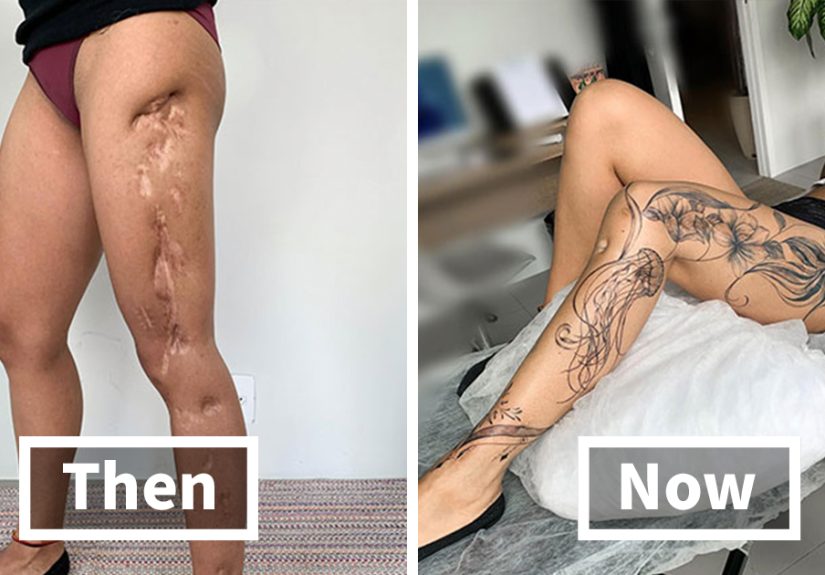
That’s where scar cover-up tattoosespecially delicate onesshow up like a quiet plot twist. Not the “let’s hide everything under a blackout sleeve” approach (which can be stunning, too), but designs that work with the scar’s shape: fine-line botanicals, soft shading, airy geometry, tiny creatures, and elegant flows that turn texture into part of the composition. Think of it as reframing, not erasing. Your scar doesn’t vanishit gets a co-star.
Why Scar Cover-Up Tattoos Feel Different Than Regular Ink
Tattooing over scar tissue isn’t just “tattooing, but on hard mode.” Scar tissue can be thicker, thinner, tighter, more sensitive, or less sensitive. It may take ink differently than unscarred skin, and the design has to account for that. The best scar-cover artists treat it like a collaboration: they’re not fighting your skinthey’re negotiating with it (politely, like adults).
Delicate scar cover-ups have a special kind of magic: they don’t rely on heavy saturation to do the work. Instead, they use placement, line direction, negative space, and soft shading to change what the eye notices first. It’s visual design 101, applied to real human stories.
The Artist Behind the Viral “Delicate Transformations”
One of the most widely shared names in this space is Raquel Sousa, a Brazilian tattoo artist known for turning scars into airy, intricate artwork. In interviews about her process, she’s described scar work as deeply emotionaland says her scar-focused journey accelerated around 2018, with specialized scar work becoming a central part of her practice by 2020. She also emphasizes a point many reputable artists repeat: fresh scars need time. In her view, scar tissue should be fully matured before it’s tattooed.
Her aesthetic leans delicate: botanical forms, fine-line details, and designs that flow along the scar instead of pretending it isn’t there. The results often look less like “cover-up camouflage” and more like a custom illustration that just happens to have an interesting texture underneath.
What Makes a “Delicate” Scar Cover-Up Actually Work
1) The design follows the scar’s direction
Straight scars love vines. Curved scars love branches. Jagged scars can become stems, feathers, ribbons, or lightning-like botanical shapes. When the design echoes the scar’s path, the eye reads the art as intentional movement instead of stopping at the scar line.
2) Fine-line doesn’t mean flimsy
“Delicate” isn’t code for “faint.” It’s about elegance and restraint. A skilled artist can create a crisp, readable design without piling on heavy colorkind of like how a good whisper can still win the argument.
3) Shading does the blending
Soft gradients, stippling, and controlled shadowing can reduce contrast between scar tissue and surrounding skin. It’s subtle, but it’s often the difference between “I see the scar first” and “I see the artwork first.”
4) The scar becomes a feature, not a flaw
Sometimes the best “cover-up” isn’t hiding at allit’s transformation. A raised line becomes the ridge of a leaf. A surgical curve becomes the arc of a moon. When a scar becomes part of the design language, it stops feeling like an interruption.
Before You Ink: Safety, Timing, and Smart Reality Checks
Because tattooing breaks the skin barrier, reputable health sources consistently warn about risks like infection, allergic reactions, and complicationsespecially if hygiene is poor or inks are contaminated. That’s why scar cover-ups should be done only by experienced, licensed professionals in studios that follow strict sanitation practices.
Also: if you’re prone to thick, raised scarring (like keloids), talk to a healthcare professional before any elective skin traumaincluding tattoos. Scar tissue can behave unpredictably, and “delicate” doesn’t mean “risk-free.”
Finally, the obvious-but-still-worth-saying: laws vary by location, and many places restrict tattooing for minors. If you’re under 18, don’t try to “DIY” the decision (or the tattoo). A good artist will follow the ruleseven when you insist you’re “basically an adult.”
Her 30 Best Transformations (And Why They Work)
Below are 30 scar-cover concepts inspired by the kinds of delicate transformations artists like Raquel Sousa are known for. Each example focuses on what the design accomplishes visuallybecause the artistry isn’t just the subject matter; it’s the strategy.
- Wildflower stem over a straight surgical line: The stem becomes the scar’s “spine,” and petals add soft distraction.
- Lavender sprigs with light dot shading: Repetition makes texture feel intentional and patterned.
- Fine-line rose with layered leaves: Leaves create depth so the eye reads dimension, not scar borders.
- Cherry blossoms drifting along a curve: Floating blossoms break up a long line into smaller visual moments.
- Olive branch with minimalist berries: Elegant geometry + organic curves = balanced camouflage without heaviness.
- Fern frond placed diagonally: Diagonal flow reduces the “straight-line spotlight” effect.
- Single peony with soft shading at the base: Gradient shading helps blend uneven scar coloration.
- Butterfly with open wings (fine-line): Symmetry draws attention to wingspan rather than the center texture.
- Hummingbird near a scar edge: A focal point near (not on) the scar shifts the viewer’s first glance.
- Constellation dots and thin star lines: Dotwork naturally disguises irregular texture with a “sparkle map.”
- Crescent moon with botanical fill: The moon arc mirrors curved scars beautifully.
- Minimalist mountain linework: Peaks and valleys echo uneven scar edges in a controlled, artistic way.
- Ocean wave linework: Rhythmic curves soften harsh scar angleslike visual white noise.
- Lotus with layered petals: Layering creates depth and lets the scar disappear into structure.
- Fine-line snake (elegant, not aggressive): A natural “S” curve turns long scars into a flowing path.
- Vine wrapping gently around the scar area: Encircling designs make the scar feel framed, not exposed.
- Daisy chain with tiny negative spaces: Negative space breaks up visual density and keeps it airy.
- Leafy wreath in partial arc: Great for circular or curved scarsmakes the shape look intentional.
- Minimal koi outline with soft shading: Flowing fins add movement that distracts from texture changes.
- Fine-line dragonfly with dotted wings: Dots and thin lines handle uneven skin better than bold blocks.
- Delicate lace motif: Lace patterns naturally “camouflage” with repetition and micro-details.
- Small bouquet cluster instead of one big flower: Multiple mini focal points keep the eye moving.
- Eucalyptus sprigs with light gray wash: Gray wash blends contrast without looking heavy or muddy.
- Sun-and-moon minimalist duo: Dual focal points balance attention across the area.
- Thin geometric frame with botanical breakouts: Structure + softness = a clean “designed” look.
- Feather that follows scar direction: Feathers hide texture with fine barbs and natural tapering.
- Minimal phoenix silhouette with line shading: Symbolic transformation theme, visually supported by upward flow.
- Herb garden trio (sage, rosemary, thyme): Slim shapes suit narrow scars and look intentional, not crowded.
- Abstract brushstroke style (subtle): Controlled “imperfection” can make scar texture feel like part of the medium.
- Floral mandala fragment: Partial symmetry lets the design fit scars without forcing perfect circles.
How Artists Build These Transformations (The Process That People Don’t See)
Consultation first, art second
Scar cover-ups usually start with a real assessment: scar age, texture, location, skin type, and how the area moves when you bend or stretch. Then comes the personal partwhat the client wants the tattoo to represent. Some want softness. Some want strength. Some just want to stop thinking about it every time they get dressed.
Designing with “movement” in mind
Skin isn’t a flat canvasit’s a living one. A flower that looks perfect standing still might warp when you twist. Experienced artists plan designs that look good in motion, with lines that flow along natural contours.
Choosing the right style for the scar
Delicate fine-line can be gorgeous, but not every scar is a fine-line candidate. Some textures may do better with gentle shading, dotwork, or designs that add enough structure to keep the tattoo readable over time. The goal is always the same: make the design look like it belongs there.
What to Ask Before Booking a Scar Cover-Up Tattoo
- Do you have a portfolio of healed scar cover-ups? Fresh photos are nice; healed results are the real résumé.
- How do you evaluate scar maturity? Many artists prefer fully healed, settled scars before tattooing.
- What style holds up best on my scar type? Fine-line, dotwork, and soft shading each behave differently.
- How many sessions might this take? Scar tissue can require a different plan than normal skin.
- What are your hygiene and licensing standards? A reputable studio will answer without getting defensive.
What the Experience Often Feels Like (From Consultation to “Wow”)
The most common surprise people report isn’t the painit’s the emotion. A scar cover-up appointment can feel like an art session and a milestone at the same time. You walk in thinking, “I’m getting a tattoo,” but you’re also quietly carrying a story you’ve been looking at for years. It’s not unusual for the first consultation to feel oddly practicalmeasurements, photos, questions about healing, a conversation about style. Then the artist asks something simple, like: “What do you want this to feel like when you see it?” And suddenly you’re talking about confidence, clothing, beach days, dating, gym mirrors, hospital memories, or just being tired of flinching at your own reflection.
Many clients describe a strange calm once the design clicks. It’s the moment you realize the tattoo isn’t “covering” you; it’s choosing you. The stencil goes on and, for the first time, the scar reads like a background texture instead of a headline. During the session, people often bounce between small talk and quiet focus. The artist’s concentration is intensescar tissue can demand slower pacing and extra attention. The client’s job, mostly, is to breathe and exist. Some people bring a friend. Some bring headphones. Some bring the kind of bravery that looks suspiciously like a nervous laugh. (If you ever hear someone say, “I’m totally fine,” while white-knuckling a stress ball, please treat it as a form of poetry.)
The “mirror moment” is the part people remember. It’s not always dramatic, but it’s often powerful. Sometimes it’s a grin. Sometimes it’s silence. Sometimes it’s a long exhale you didn’t know you were holding. People commonly say the tattoo doesn’t make them forget what happenedit just changes what they see first. Instead of a reminder they didn’t choose, there’s now a design they did. A vine that means growth. A constellation that marks survival. A botanical piece that turns a medical line into something alive. That shiftscar to story, mark to meaningis why these transformations hit so hard online.
Afterward, there’s a practical phase: healing, patience, and following professional aftercare guidance. But emotionally, many describe a lighter feeling in daily life. Getting dressed becomes less strategic. Photos feel less like negotiations with angles and lighting. The scar becomes less of a “topic.” And maybe the best part is that the tattoo doesn’t demand constant attention. It just quietly existslike a well-written line in a book you finally enjoy rereading.
Final Thoughts
Scar cover-up tattoos aren’t about hiding who you are. They’re about choice. Delicate designs, done by skilled professionals, can transform scars into artwork that feels personal, beautiful, and empoweringwithout shouting over your story. Whether your taste is botanical, geometric, celestial, or minimalist, the best transformations share one thing: they respect the skin’s history and still make room for something new.