Table of Contents >> Show >> Hide
- Quick snapshot: your first-48-hours tattoo aftercare routine
- Hour 0–4: right after the artist wraps you up
- The first wash: when, how, and why your sink becomes sacred
- Moisturize, but don’t marinate: ointment vs. lotion in the first 48 hours
- Protect your new tattoo like it’s a tiny open kitchen
- Second-skin bandages: when your tattoo is wrapped like futuristic leftovers
- Two nights, one tattoo: sleep and daily-life hacks for the first 48 hours
- Red flags: when to text your artist vs. call a clinician
- FAQ: the questions people always ask at 2 a.m.
- Conclusion: clean, calm, and protected wins the first 48 hours
- Extra: real-world experiences from the first 48 hours (the stuff nobody admits until it happens)
Congratsyou just paid someone to repeatedly poke you with tiny needles, and you liked it. (No judgment. Tattoos are awesome.)
Now comes the part that decides whether your new ink heals crisp and clean… or looks like it got into a bar fight with a cheese grater.
The first 48 hours are the “set the foundation” phase: your skin is an open wound, your immune system is clocking in, and bacteria is out there
doing what bacteria doesauditioning for chaos.
This guide breaks down exactly how to clean and protect a new tattoo in the first two days, what “normal” healing looks like,
what to avoid, and the red flags that mean it’s time to stop Googling and call a professional. Let’s keep your tattoo looking
like artnot a science experiment.
Quick snapshot: your first-48-hours tattoo aftercare routine
- Keep the bandage on as directed by your artist (hours for plastic wrap, longer for “second-skin” film).
- Wash hands first every time you touch the area (yes, every time).
- First wash: lukewarm water + gentle, fragrance-free liquid soap + fingertips only.
- Pat dry with a clean paper towel (no rubbing, no fuzzy bath towel confetti).
- Moisturize lightly (thin layerthink “glaze,” not “frosting”).
- Avoid soaking (no baths, pools, hot tubs, oceans). Shower = okay if gentle.
- Protect from friction (loose clothing, clean bedding, no scratching).
- Watch for red flags (spreading redness, pus, fever, severe pain, red streaks).
Hour 0–4: right after the artist wraps you up
Your tattoo is fresh, irritated skin with micro-wounds. The wrap/bandage is there to protect it from dirt, bacteria, and your own
extremely relatable urge to “just check it again.” Leave it on for the amount of time your artist tells you. That guidance varies
because different artists use different methods (classic wrap vs. medical-grade adhesive film).
Two common coverings you’ll see
- Plastic wrap / gauze wrap: often used short-term. It’s mainly a “get you home safely” shield.
-
Second-skin film (transparent adhesive bandage): designed to stay on longer and protect the tattoo while it weeps.
(More on this later.)
During these first hours, you may notice warmth, redness, and that “sunburn sting” feeling. Mild swelling is common tooespecially
on hands, feet, ankles, and areas that got worked hard. If you can, head home, wash your hands, and treat the tattoo like the
delicate new roommate it is: don’t smother it, don’t poke it, and definitely don’t introduce it to your dog’s favorite couch cushion.
The first wash: when, how, and why your sink becomes sacred
Your first wash removes residual ink, blood, and plasma (clear/yellowish fluid) that can dry into a crust. The goal is clean,
not scrubbed into next Tuesday. Over-cleaning and harsh products can irritate skin, slow healing, and invite more problems.
Step-by-step: how to clean a new tattoo safely
- Wash your hands with soap and water. Do not “quick rinse” and call it a day.
- Remove the bandage gently. If it sticks, let lukewarm water run over it to loosen it. No ripping like you’re starting a lawnmower.
- Use lukewarm water (not hot) and a gentle, fragrance-free liquid soap. Avoid heavily scented body washes.
- Clean with your fingertips only. No washcloths, loofahs, scrub gloves, or anything that exfoliates (aka sandpaper cosplay).
- Rinse thoroughly until the skin feels cleannot slippery with soap residue.
- Pat dry with a clean paper towel. If you prefer air drying, give it a few minutesjust don’t let it sit wet and shiny for ages.
- Wait 5–10 minutes for the surface to fully dry before applying any aftercare ointment/lotion.
How often should you wash in the first 48 hours?
Most aftercare instructions land around 1–3 gentle washes per day depending on your lifestyle (sweaty job, pets, gym habits, etc.)
and what your artist recommends. The sweet spot is “clean and calm,” not “I washed it every time I thought about it.”
What “normal” looks like in the first two days
- Light oozing of plasma/ink (especially after removing the wrap)
- Redness that’s localized to the tattoo
- Mild swelling and tenderness
- Warmth around the area
If those symptoms are gradually improving, you’re usually on track. If they’re rapidly worseningespecially after the first daytake it seriously.
(We’ll cover red flags soon.)
Moisturize, but don’t marinate: ointment vs. lotion in the first 48 hours
Think of moisturizing like seasoning food: enough makes everything better; too much ruins the meal. Your job is to keep the tattoo from drying
into a tight, cracking mess without suffocating it under a layer of goop.
The “thin layer” rule (a.k.a. the donut-glaze technique)
Apply a very thin layer of your artist-recommended aftercare ointment or balm after cleaning and drying. You want a light sheennot
a slippery, wet look. If it’s shiny enough to reflect your kitchen lights, you’ve probably applied too much.
When do you switch from ointment to lotion?
Many artists recommend ointment for the first couple of days, then a fragrance-free lotion as the tattoo starts to calm down.
The exact timing varies by skin type, placement, ink density, and whether you’re using second-skin film.
If your tattoo is still weeping a lot, heavy moisturizing can trap moisture and irritate the skinso keep it light and follow your artist’s plan.
Products to avoid (even if your cousin swears it “worked for him”)
- Fragranced lotions and heavily perfumed body butters (irritation risk)
- Harsh cleaners (alcohol-heavy products, abrasive scrubs)
- Hydrogen peroxide or iodine as a routine “cleanser” (can irritate healing skin)
- Triple-antibiotic ointments unless a clinician tells you to use them (they can cause irritation and aren’t standard tattoo aftercare)
- Makeup or occlusive cosmetics over fresh ink
Protect your new tattoo like it’s a tiny open kitchen
A fresh tattoo is basically a controlled wound. Your mission: keep it clean, keep it from getting rubbed raw, and keep it away from anything that belongs
in the category “probably not sterile.”
Clothing & friction: the silent saboteurs
Tight clothing can rub, trap sweat, and irritate the skin. In the first 48 hours, choose loose, breathable fabrics. If your tattoo is under a waistband,
bra strap, sock line, or work uniform seam, plan aheadbring an extra clean layer or adjust your outfit so the tattoo isn’t constantly chafing.
Showering, sweating, and the “no-soaking” rule
Showering is usually fine after the initial wrap periodjust keep the water gentle and don’t blast the tattoo with direct high-pressure spray.
What’s not fine in the first 48 hours (and honestly, for a while after) is submerging the tattoo: baths, pools, hot tubs, lakes, oceans.
Soaking can soften the skin, introduce bacteria, and interfere with healing.
If you accidentally get it wetter than intended, don’t panic. Gently wash, pat dry, and return to your normal aftercare routine.
The key is to avoid turning your new tattoo into a long-term aquarium exhibit.
Sun and sunscreen: don’t “protect” it the wrong way
Direct sun can irritate a fresh tattoo and later contribute to fading. In the first 48 hours, focus on keeping it covered with clean clothing
and staying out of direct sun. Avoid putting sunscreen on a fresh, open tattoo unless a healthcare professional specifically advises itwait until the surface
is healed enough that products won’t sting or irritate.
Pets, pillows, gym benches: the chaos trifecta
Pet hair and dander love sticking to fresh tattoos. Clean bedding matters. And shared gym equipment is basically a public meet-and-greet for microbes.
In the first 48 hours, avoid activities where your tattoo will press against questionable surfaces or get bathed in sweat.
Second-skin bandages: when your tattoo is wrapped like futuristic leftovers
Second-skin adhesive films can be great for protection because they create a barrier against friction and outside bacteria while the tattoo weeps.
But they come with rules. Some artists have you keep the first film on about a day, then replace it; others have different schedules.
Follow the specific instructions you were given (and if you weren’t given any, ask your artist).
Common second-skin do’s
- Keep it sealed. If it leaks badly or peels up enough that water can get underneath, it may need removal/replacement.
- Wash your hands before touching edges or changing the film.
- Watch for adhesive irritation. Itching is common, but a spreading rash or intense burning can signal a reaction.
When the film comes off, you’ll typically wash gently, pat dry, and switch into the normal wash-and-light-moisturize routine.
If you see a pocket of fluid under the film, that can be normal (plasma build-up)but if it’s painful, foul-smelling, or accompanied by worsening redness,
treat it as a red flag.
Two nights, one tattoo: sleep and daily-life hacks for the first 48 hours
- Use clean sheets (freshly washed is best). Tattoos can leak a bit; your bedding doesn’t need to become a memorial.
- Try not to sleep on the tattoo. Pressure and friction can irritate itand you might wake up stuck to your sheets. Fun for no one.
- Wear clean, loose sleep clothes that won’t rub the tattoo.
- If it’s on an arm/leg and swollen, elevate it slightly to help with puffiness.
- Hydrate and eat normallyyour body is repairing tissue and appreciates basic support.
Red flags: when to text your artist vs. call a clinician
Tattoo artists know what normal healing looks like. If something seems “off,” they’re often a good first contact for non-urgent concerns.
But artists are not a substitute for medical care. When infection signs show up, you want a healthcare professional involved.
Contact your artist (soon) if you notice
- Excessive dryness or cracking despite light moisturizing
- Unusual scabbing patterns that concern you
- Questions about bandage timing or product choices
Contact a healthcare professional urgently if you notice
- Fever, chills, or feeling generally ill
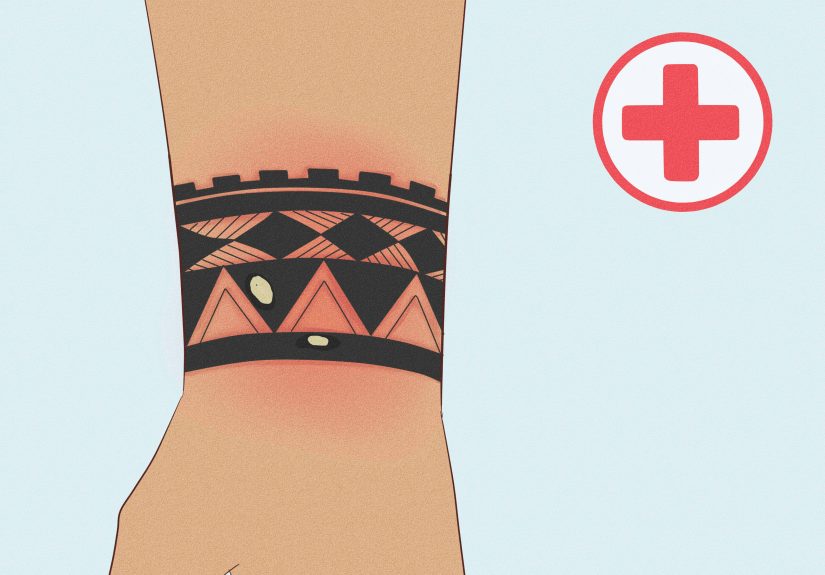
- Redness that spreads beyond the tattoo or rapidly worsens
- Increasing pain instead of gradual improvement
- Pus, foul odor, or significant warmth with worsening swelling
- Red streaks traveling away from the tattoo
- A rapidly changing rash or severe allergic-type reaction
Bottom line: mild redness and tenderness can be normal; a trend toward worse and wider symptoms is not. When in doubt, get checked.
Early treatment protects both your health and the quality of your tattoo.
FAQ: the questions people always ask at 2 a.m.
Can I work out in the first 48 hours?
Light movement is usually okay, but intense workouts can mean heavy sweating, friction, and contact with shared surfaces.
If your tattoo is in an area that stretches a lot (elbow ditch, ribs, knee) or gets rubbed by clothing, give it a break.
When you do return, keep the area clean and avoid equipment that presses directly on the tattoo.
Can I drink alcohol after getting a tattoo?
Moderate alcohol isn’t automatically a tattoo apocalypse, but heavy drinking can dehydrate you and make it easier to bump, scratch, or ignore aftercare.
In the first 48 hours, hydration and sleep are your friendstry not to sabotage them.
Why is ink coming off when I wash it?
A little ink residue mixed with plasma is common early on. You’re not “washing the tattoo away.”
The ink is in the dermis; what you’re seeing is surface residue from the tattoo process.
Should I keep it covered the whole time?
Some artists prefer short-term covering; others use second-skin film for longer protection. Follow your artist’s instructions.
If you must cover it for work or to prevent rubbing, use clean, non-stick materials and don’t trap a swamp of moisture underneath.
Conclusion: clean, calm, and protected wins the first 48 hours
The best tattoo aftercare in the first 48 hours is gloriously unsexy: wash gently, pat dry, moisturize lightly, and protect your tattoo
from friction, grime, and soaking. If your routine is simple and consistent, your tattoo usually rewards you by healing cleaner,
looking sharper, and causing fewer “is this normal?” spirals.
Follow your artist’s aftercare instructions, keep the area clean with fragrance-free soap, avoid soaking and sun, and take red flags seriously.
Your tattoo is an investmenttreat it like one.
Extra: real-world experiences from the first 48 hours (the stuff nobody admits until it happens)
Here’s what many people report feeling and dealing with in the first two daysplus how they handle it without accidentally turning their tattoo
into a cautionary tale.
1) The “adrenaline crash” is real. A lot of folks leave the shop feeling unstoppablethen a few hours later they’re tired, thirsty,
and mildly cranky, like they just ran a 5K they didn’t train for. That’s your body processing stress and starting repair work.
People who do best usually hydrate, eat something with protein, and take it easy the rest of the day.
2) The first wash feels weirdly intense. Even when you’re gentle, washing a fresh tattoo can sting. Many people describe it as
“washing a sunburn.” The trick is using lukewarm water, mild soap, and fingertips onlythen patting dry instead of rubbing.
If you’re bracing like you’re about to pull a tooth, you’re not alone.
3) “Is this leaking?!”yes, sometimes. In the first 24 hours, it’s common to see a thin film of plasma and ink on the surface.
People often panic the first time they see it on a paper towel. The calm response: gentle wash, pat dry, thin moisturizer.
The chaotic response: scrubbing like you’re trying to erase a mistake. Choose calm.
4) The sleep struggle. The first night is when many people discover they have a personal talent for rolling directly onto the tattoo.
Common hacks include sleeping with a clean towel under the area, wearing loose long sleeves/pants (if it doesn’t rub), and positioning pillows
to block accidental rolling. If the tattoo is on your side or back, it may be a two-night game of “creative sleeping positions.”
5) The “I want to check it every 12 seconds” phase. People love lifting the shirt, twisting the arm, and staring in mirrors like
they’re guarding a museum exhibit. The better habit is to check it during planned cleaning/moisturizing moments.
Touching it constantlyespecially with unwashed handsis one of the easiest ways to invite irritation or infection.
6) Worry about redness. Many people notice redness and mild swelling and immediately assume it’s infected.
But in the first 48 hours, localized redness and warmth can be normal. What tends to separate “normal healing” from “get help” is the trend:
normal irritation gradually improves; infection signs often worsen, spread, become more painful, or come with fever, pus, or streaking.
When someone feels unsure, the smartest move is usually to message the artist for a quick gut-checkand call a clinician if red flags show up.
7) The temptation to over-moisturize. A classic first-timer move is slathering on ointment like they’re icing a cake.
Then the tattoo feels wet, sticky, and angry. People who dial it back to a thin layer often notice the skin calms down.
“Moisturized” should feel comfortablenot slick.
If you recognize yourself in any of these, welcome to the club. The good news: the first 48 hours feel the most high-maintenance,
but a simple routine makes it manageable. Clean hands, gentle washing, light moisturizing, and basic protection do most of the heavy lifting.