Table of Contents >> Show >> Hide
- What Happened In The Viral Restaurant Crash Video
- Why The Video Hit Such A Nerve Online
- Storefront Crashes Are More Common Than Most Diners Think
- What The Footage Reveals About Modern Restaurant Risk
- Could This Kind Of Restaurant Crash Be Prevented?
- What Restaurant Owners And Diners Should Take Away
- Why Social Media Turned This Crash Into A Bigger Story
- The Human Experience Behind A Restaurant Vehicle Crash
- Final Thoughts
Most restaurant videos are built around the usual comfort-food formula: a table full of dishes, a quick first bite, maybe a cheerful verdict on the sliders, and then everyone goes home happy with leftovers. But the viral clip behind “Terrifying Footage Shows SUV Crashing Into Couple Eating Inside A Restaurant” ripped that script to pieces in seconds. One moment, two diners were filming a casual food review. The next, a vehicle came through the restaurant’s glass frontage and turned an ordinary meal into a national conversation about restaurant safety, storefront crashes, and how exposed many diners really are.
The video is shocking because it captures something people rarely think about until it is right in front of them: indoor dining can feel safe, but glass walls facing a parking lot are not the same thing as protection. That is the uncomfortable truth hiding beneath the headlines. This story is not just about a viral restaurant crash video. It is also about a bigger American pattern that rarely gets the same attention unless a camera happens to be rolling.
What Happened In The Viral Restaurant Crash Video
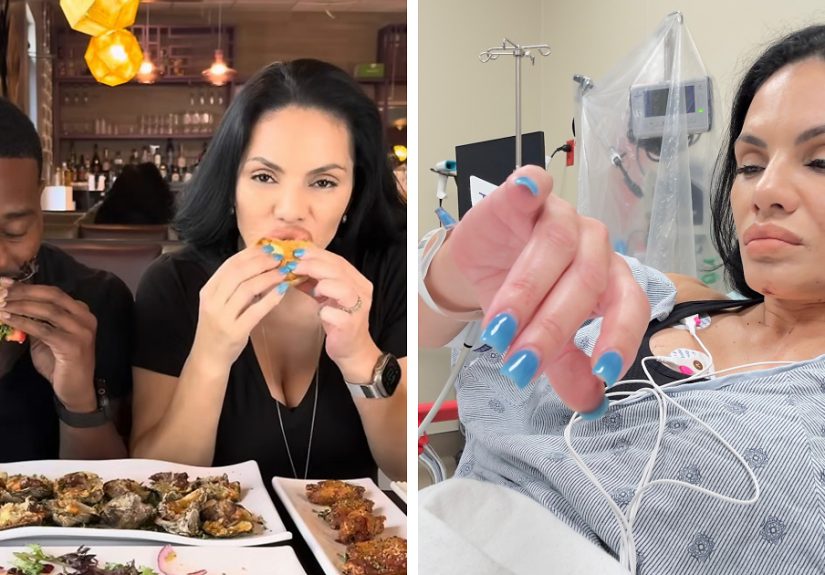
Reports about the incident say the crash happened at Cuvée Culinary Creations in Houston, where food creators Nina Santiago and Patrick Blackwood were filming a review while seated near the front window. As they began eating, an SUV came through the glass wall beside their booth, sending debris across the dining area and forcing a split-second escape. Both were later treated for injuries related to the shattered glass, and later posts made it clear they felt lucky to have walked away at all.
That detail matters. The story became viral because the footage preserved the exact moment when an everyday setting stopped being ordinary. There was no dramatic buildup, no warning siren, no cinematic cue telling viewers something bad was about to happen. It was lunch. Then it was chaos. That contrast is what made the video spread so quickly across news sites and social platforms.
Later coverage around the crash shifted from shock to accountability. Questions emerged about whether the storefront had adequate protection between the parking area and the dining room. A lawsuit filed afterward pushed that conversation even further, arguing that barriers might have reduced the risk or the damage. In other words, the story stopped being only about one frightening clip and became part of a much larger debate over how businesses are designed.
Why The Video Hit Such A Nerve Online
There is a reason this kind of footage lands harder than a routine traffic story. Americans understand roads as risky spaces. We expect danger on highways, at intersections, and during bad weather. But a restaurant booth? That is supposed to be one of the calmest places in modern life. You are deciding between fries or salad, not preparing for impact. That mental mismatch is exactly why the clip made people stop scrolling.
It also tapped into another modern reality: more meals are recorded now than ever before. Diners document birthdays, reviews, date nights, and tasting menus with phones balanced against cups, menus, and whatever else is handy. In this case, the camera did not create the danger, but it did create undeniable evidence. Without that footage, the event might have lived as just another local crash brief. With it, the public could see how little time separated normal life from disaster.
And yes, there is a darkly modern irony here. A video intended to capture food content ended up documenting a public safety failure instead. Nobody ordered that side dish.
Storefront Crashes Are More Common Than Most Diners Think
That is the larger story hiding behind the headline. Vehicle-into-building collisions are not freak events in the once-in-a-blue-moon sense. Safety researchers and crash analysts have been warning for years that storefront crashes happen with surprising frequency in the United States, especially in places where nose-in parking spaces point vehicles directly at glass façades, front doors, checkout counters, and dining areas.
Restaurants are especially vulnerable because they often combine three risky elements at once: large front windows, close parking, and seating positioned exactly where a low-speed vehicle intrusion would do the most harm. In many casual dining spots, the most attractive seats are also the most exposed ones. Window booths look great in daylight, photograph beautifully for social media, and put customers right in the path of a vehicle if something goes wrong outside.
That “something” is often not a high-speed criminal act or a Hollywood-style chase. It can be a pedal error, a parking mistake, a driver confusion event, or a misjudgment during a simple maneuver. That is one reason these crashes continue to happen in such ordinary places. They often begin in ordinary ways.
Why Parking Lots Matter More Than People Realize
When many people picture vehicle crashes, they imagine highways and major roads. But low-speed parking areas can be surprisingly dangerous in a different way. A driver who believes a vehicle is in park, reverse, or brake control may only need a second of confusion for a storefront to become the stopping point. That is why parking lots deserve more attention in conversations about restaurant design and public safety.
Once you notice the pattern, it becomes hard to unsee. Restaurants, coffee shops, bakeries, convenience stores, and strip-mall businesses frequently place customers behind a thin glass wall with a row of parking spaces directly outside. It is convenient for drivers, but convenience is not the same thing as protection.
The “It Could Have Been Anyone” Factor
This story also resonated because it felt random. The couple in the video was not doing anything reckless. They were seated, eating, filming, and minding their business. That randomness is part of what makes these incidents so unsettling. Viewers do not watch and think, “Well, I would never do that.” They watch and think, “I have absolutely done that.”
What The Footage Reveals About Modern Restaurant Risk
The Houston video is a brutal reminder that visibility is not the same thing as safety. Floor-to-ceiling glass gives restaurants openness, light, and curb appeal. It helps businesses look welcoming and modern. It also means the barrier between a dining room and a moving SUV can be thinner than most customers assume.
That does not mean every restaurant with big windows is dangerous or every parking lot is a disaster waiting to happen. It means risk is often built into familiar design choices so seamlessly that people stop noticing it. Businesses prioritize visibility. Developers prioritize efficient parking. Diners prioritize atmosphere. And safety features such as bollards, reinforced barriers, and setback space can become afterthoughts until a video forces everyone to look again.
The clip also showed something else: how quickly people inside a restaurant become part of an emergency response. Staff members go from serving food to helping the injured. Nearby diners shift from conversation to panic to assistance. Owners suddenly face medical, legal, emotional, and operational fallout all at once. The crash lasts seconds, but the consequences keep going long after the broken glass is swept up.
Could This Kind Of Restaurant Crash Be Prevented?
Not every crash can be prevented, but many storefront crashes are considered foreseeable enough that property owners and businesses can take practical steps to reduce the odds of a vehicle entering the building. That is why safety advocates keep returning to one word: barriers.
Physical protections matter because signs, paint, and wheel stops do not stop multi-thousand-pound vehicles with enough reliability to protect indoor diners. If a parking space points directly at a glass wall, the building itself is effectively acting as the final barrier. That is not a great plan.
Five Safety Measures That Matter
- Bollards or reinforced barriers: These can absorb or block the force of a low-speed intrusion before it reaches the storefront.
- Better parking layout: Angled or offset parking can reduce the direct path from a vehicle to a dining room.
- Safer seating placement: High-traffic window zones may look attractive, but they deserve risk review.
- Landscape buffers: Planters, raised curbs, and setback distance can create a protective gap.
- Routine safety audits: Businesses should inspect whether vehicle approach paths create obvious vulnerabilities.
None of this is glamorous. Nobody puts “excellent perimeter protection” in a restaurant caption under brunch photos. But these are the unflashy decisions that can keep a scary moment from becoming a catastrophic one.
What Restaurant Owners And Diners Should Take Away
For restaurant owners, the takeaway is not panic. It is prevention. If a dining room faces parking spaces, especially nose-in spaces, that layout deserves a serious second look. Owners may not control every part of a leased property, but they can still raise safety concerns, document risks, and push for physical protections. The cost of installing barriers may feel annoying until the alternative becomes national news.
For diners, the lesson is gentler. This is not a reason to live in fear or treat every lunch like a tactical operation. But it is reasonable to become more aware of environment, especially in storefront-facing seating areas. If a table is directly beside a full-height glass wall with parking inches away, that is at least worth noticing. Awareness is not paranoia. It is just seeing the room more clearly.
And honestly, Americans already do this in other settings. People scan emergency exits in theaters. They notice weather during road trips. They look for lifeguards at pools. Paying attention to restaurant layout is simply another form of ordinary situational awareness.
Why Social Media Turned This Crash Into A Bigger Story
Part of the reason this headline kept circulating is that it sits at the crossroads of several internet obsessions: viral video, influencer culture, shock footage, food content, and public accountability. The clip had all the ingredients of a story that travels fast online, but it also had something more important: it visualized a hidden infrastructure problem in a way statistics rarely can.
A chart about storefront crashes may inform people. A video from inside the booth changes how they feel. And feeling is usually what forces public attention. That is why footage like this often becomes a turning point in conversations about design, liability, and safety standards. Suddenly, a topic that sounded niche becomes impossible to ignore.
There is also a cultural layer here. Social media has trained people to think of restaurants as stages for content. But this video reversed that idea. Instead of people performing for the camera, the camera documented the vulnerability of the space itself. That shift is part of why the footage felt so unnerving: the restaurant was no longer a backdrop. It was the story.
The Human Experience Behind A Restaurant Vehicle Crash
Beyond the viral replay count, stories like this leave a long emotional wake. The most obvious experience is fear, but it is not the only one. Survivors often describe disorientation first. One second they are focused on food, conversation, or a camera lens. The next, their senses are overwhelmed by sound, motion, confusion, and instinct. Even without severe injury, the brain has trouble placing an event that violent inside a setting that felt so routine.
That mismatch can linger. People who go through incidents like this may become jumpy around traffic, uneasy near large windows, or hesitant to sit by storefront glass again. A slammed car door outside a café can suddenly sound much bigger than it did before. A parking lot that once seemed boring can start to feel like a hazard zone. Trauma does not always announce itself dramatically; sometimes it shows up as a quiet preference for the table in the back.
There is also the experience of the staff and owners, which often gets overlooked. Servers, cooks, hosts, and managers do not just witness the event. They become instant caretakers in the middle of it. They help people up, call 911, clear space, calm others down, and then somehow face the question of what happens next. Can the restaurant reopen? Is everyone okay? Who cleans up? Who pays? How do you ask a team to return to normal after normal just exploded through the wall?
Nearby diners carry their own version of the story. Many leave with the eerie realization that seat placement can become a matter of luck. The people one booth over, the family at the next table, the friend who stepped away to refill a drink, the child who happened to be in the restroom instead of the dining room for thirty seconds longer than expected; after a crash, these tiny timing differences take on huge emotional weight. That is often why witnesses replay the scene in their minds. They are not only remembering what happened. They are measuring how narrowly the outcome could have changed.
Families experience the event differently again. Sometimes they hear it through a phone call, a shaky message, or a video clip already moving around online. That creates its own strange pain. In older emergencies, news traveled slower. In a viral one, the public may see part of the worst moment almost immediately. Loved ones are left trying to piece together facts while the internet reacts in real time.
And then there is the experience many readers bring to the story without even realizing it: memory. Almost everyone has eaten by a big restaurant window, sat beside a storefront in a strip mall, or watched cars inch into parking spaces directly outside the table. That familiarity is why this topic sticks. It transforms a news item into a personal mental replay. People picture their own coffee run, their own date night, their own family dinner, and suddenly the story feels less like “their” scary moment and more like a warning hidden inside everyday American design.
That may be the deepest reason the video resonated so widely. It was not only terrifying. It was recognizable. It reminded people that danger does not always arrive where we expect it. Sometimes it shows up beside the appetizer basket, in the seat with the nice window view, on an afternoon that was supposed to be completely forgettable.
Final Thoughts
The headline “Terrifying Footage Shows SUV Crashing Into Couple Eating Inside A Restaurant” grabs attention because it sounds unbelievable. The harder truth is that it is believable precisely because storefront crashes keep happening across the United States. The Houston incident stood out because a camera captured the moment with awful clarity, but the broader lesson goes well beyond one viral clip.
Restaurants are built to feel open, warm, and inviting. That should not come at the expense of basic protection from vehicle intrusion. For diners, the story is a reminder that ordinary places still deserve thoughtful safety design. For property owners and city planners, it is another signal that glass frontage and nose-in parking can be a risky combination. And for everyone else, it is one of those unsettling modern news stories that changes how a familiar scene looks the next time you walk into it.
You can still enjoy the window seat. But after this footage, a lot of people will probably check what is parked outside first.