Table of Contents >> Show >> Hide
- Quick List: The 6 Best Bidet Attachments (BHG Test Winners)
- How BHG Tested Bidet Attachments
- The 6 Best Bidet Attachments, Tested by BHG
- What to Look for When Shopping for a Bidet Attachment
- Installation: What It Actually Looks Like (No Plumbing Degree Required)
- Cleaning and Maintenance: Keep It Fresh (So You Stay Fresh)
- FAQs: Your Questions, Answered (Yes, Even That One)
- Also Consider: Other Well-Reviewed Bidet Upgrades
- What It’s Like Living With a Bidet Attachment ( of Real-World Experience)
- Conclusion
If you’ve ever looked at a bidet attachment and thought, “Is this going to be life-changing… or just another gadget that lives in the junk drawer of my bathroom dreams?”
you’re not alone. The good news: bidet attachments (and bidet seat upgrades) are one of the rare home improvements that can be affordable, renter-friendly, and
surprisingly luxuriouslike turning your everyday toilet into a budget spa that specializes in one very specific body part.
Better Homes & Gardens (BHG) tested dozens of options at home over months, judging each model on setup, ease of use, and cleaning performance. The result is a short list of
winners that cover the most common “bidet personalities”: the first-timer, the bargain hunter, the cold-water minimalist, the warm-water devotee, the handheld sprayer fan,
and the “I want the heated-seat, blow-dry experience and I’m not ashamed” splurger.
Quick List: The 6 Best Bidet Attachments (BHG Test Winners)
- Best Overall: Omigo Element+ Bidet Attachment
- Best Budget: Bio Bidet by Bemis Essential Bidet Attachment
- Best Splurge: Toto C100 Washlet Electronic Bidet Seat
- Best for Cold Water: Tushy Classic 3.0
- Best for Hot Water: Fanny Hotshot Bidet
- Best Handheld: Brondell CleanSpa Luxury Handheld Bidet
Note: In real-world “bidet shopping,” the terms get blurry. Some “attachments” slide under your existing seat, while some “upgrades” replace the whole seat (but still
retrofit onto your existing toilet). BHG’s winners include both styles because the best choice depends on your bathroom layout, budget, and how fancy you want your throne.
How BHG Tested Bidet Attachments
Testing a bidet isn’t like testing a throw pillow. (Thank you for attending this obvious statement.) BHG evaluated bidet attachments at home over months, focusing on three things:
- Ease of setup: How quickly it installs, what tools are needed, and whether it plays nicely with typical toilets.
- Ease of use: Controls, adjustability, comfort, and how intuitive it feels for first-time users.
- Effectiveness: Cleaning performance, consistency of spray, and whether the design stays hygienic and functional over time.
BHG also incorporated practical guidance from plumbing prosbecause even the best spray pattern won’t matter if your bathroom layout makes installation a circus.
The 6 Best Bidet Attachments, Tested by BHG
Best Overall: Omigo Element+ Bidet Attachment
The Omigo Element+ earned top marks for doing what most people actually want: a strong, refreshing clean without a complicated learning curve. It’s a non-electric bidet attachment
with two clearly labeled knobsone for temperature control and one for spray pressureplus a dual-nozzle system for front and rear washing.
The standout is how easy it feels from day one. In BHG’s testing, installation was quick (around the “why was I scared of this?” zone), the controls were intuitive, and the
coverage was excellent without needing to scoot around like you’re parallel parking on porcelain.
- Why you’ll love it: Dual nozzles, simple controls, adjustable spray strength, strong overall cleaning performance.
- Keep in mind: Warm water requires routing a line to your sinkgreat if your toilet sits near the vanity, annoying if it’s across the room.
Best for: Most householdsespecially anyone who wants “reliably great” without going full space-shuttle cockpit.
Best Budget: Bio Bidet by Bemis Essential Bidet Attachment
If you want the bidet life without the bidet price, this pick is for you. BHG found the Bio Bidet by Bemis Essential surprisingly effective for a lower-cost model. It’s non-electric,
straightforward, and offers both rear and front wash options with an easy-to-turn control knob.
The big advantage: you don’t need an outlet nearby, so it’s ideal for bathrooms where adding electricity would be… optimistic. Over time, BHG noted it stayed simple and effective,
though minor hardware issues (like a small leak that’s often fixable with a washer replacement) can happen in the budget category.
- Why you’ll love it: Affordable, non-electric, easy operation, thorough clean for the price.
- Keep in mind: It only installs on one side of the toilet, which may not suit every bathroom layout or user preference.
Best for: First-time buyers, renters, and anyone who wants maximum cleanliness per dollar.
Best Splurge: Toto C100 Washlet Electronic Bidet Seat
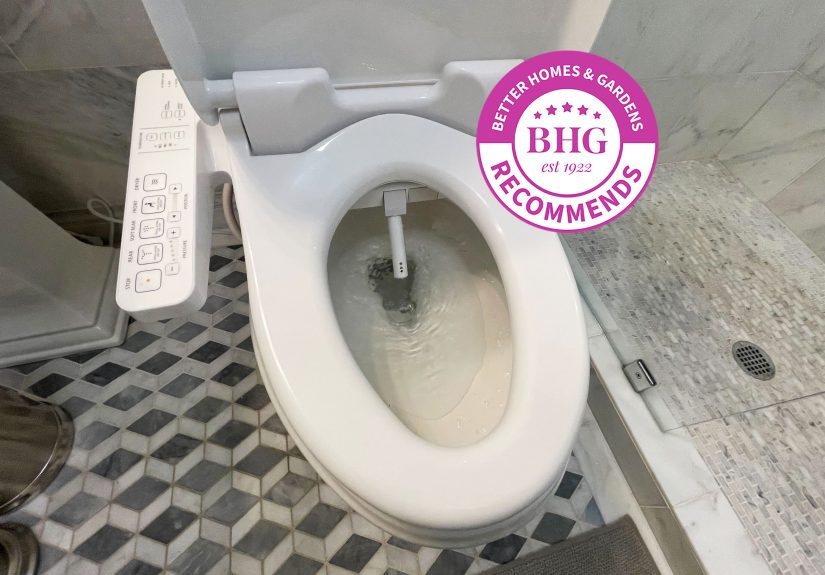
If you’ve ever thought, “I want my toilet to treat me the way a luxury hotel treats a billionaire,” meet the Toto C100 Washlet. This is an electronic bidet seat (not just a thin
attachment), and it’s packed with features: heated seat, oscillating sprays, adjustable settings, and a built-in dryer.
BHG found installation more involved than basic attachments because you’re mounting a new seat and connecting to power, but still doable for many DIYers. In daily use, the big perks
are comfort and customization. The dryer helps, though it’s not instant magicif you’re in a hurry, you may still want a small amount of toilet paper for drying.
- Why you’ll love it: Heated seat, oscillating spray, adjustable pressure, dryer function, button controls.
- Keep in mind: Bulkier and designed to fit best with Toto toilets; it may look larger on other brands.
Best for: People who want premium comfort, warm seat bliss, and “never going back” energy.
Best for Cold Water: Tushy Classic 3.0
The Tushy Classic 3.0 is a favorite style of bidet attachment for a reason: it keeps things simple, looks sleek, and feels friendly for first-time users. It’s non-electric and
cold-water only, with straightforward controls for water pressure and a basic spray-angle adjustment.
In BHG’s testing, installation was fast, operation was intuitive, and the clean beat toilet paper alone. The tradeoff: the spray-angle adjustment is limited, so you may need minor
seat-shifting to dial in coverage. If you’re brand new and want a clean, minimalist upgrade, this is a very approachable entry point.
- Why you’ll love it: Beginner-friendly, simple controls, easy install, sleek design.
- Keep in mind: Limited spray angleexpect a short “getting the aim right” learning period.
Best for: Bidet newbies, minimalists, and anyone who doesn’t mind a cold-water rinse.
Best for Hot Water: Fanny Hotshot Bidet
Want warm water without committing to an electric bidet seat? The Fanny Hotshot is designed to connect to your sink’s hot water line so you can adjust temperature at the control.
In BHG’s testing, it delivered powerful pressure, reliable cleaning, and the kind of comfort that makes cold-water-only models feel… character-building.
The big catch is logistics: warm water requires a bathroom layout where routing a line to the sink is feasible. If your toilet and sink are far apart (or separated by architecture
that refuses to cooperate), this might not be your match. But if your layout works, warm water can feel like the difference between “quick rinse” and “ahh, civilization.”
- Why you’ll love it: Warm water option, strong pressure, adjustable direction, easy controls.
- Keep in mind: Requires sink connection; not ideal for bathrooms where the sink is far from the toilet.
Best for: People who hate cold sprays, households in colder climates, and comfort-first shoppers.
Best Handheld: Brondell CleanSpa Luxury Handheld Bidet
A handheld bidet sprayer is like giving your toilet a flexible showerheaduseful, versatile, and especially popular with families who want multi-purpose cleaning power. The Brondell
CleanSpa Luxury Handheld Bidet stood out in BHG’s testing for strong, consistent pressure and a sturdy feel.
Handheld sprayers can be great for targeted cleaning, postpartum care, rinsing cloth diapers, or cleaning the toilet bowl itself. The flip side is that handheld use can be messier
until you get the hang of it (and yes, you will get the hang of itafter one or two “oops” moments that make you laugh later).
- Why you’ll love it: Versatile, strong spray, useful for cleaning beyond personal washing.
- Keep in mind: Slight learning curve to avoid splash; requires a bit more technique than fixed nozzles.
Best for: Families, multi-taskers, and anyone who wants a sprayer that can do more than one job.
What to Look for When Shopping for a Bidet Attachment
1) Attachment vs. bidet seat
A classic bidet attachment is a slim unit that fits under your existing toilet seat. A bidet seat replaces the seat entirely and often adds features like heated water, heated seat,
and air drying. Attachments are usually cheaper and easier to uninstall when you move. Seats can feel more “built-in” and luxuriousbut require a nearby outlet for electric models.
2) Water temperature: cold, warm, or both
Cold-water-only models are the easiest: they connect directly to your toilet’s supply line. Warm-water models usually fall into two camps:
- Sink-line warm water: Non-electric models that run a hose to your sink’s hot water line (layout-dependent).
- Electric heating: Bidet seats with built-in heaters (requires an outlet and a bit more installation).
3) Nozzle design and hygiene features
Look for features that help keep the nozzle clean: retractable nozzles, nozzle guards, and self-cleaning modes. Dual nozzles (front and rear) can be more comfortable and inclusive,
especially for households with multiple users.
4) Adjustability: pressure, angle, and spray style
More adjustability usually means a more comfortable experience. Strong water pressure is greatuntil it’s not. Aim for a model with a wide pressure range so everyone can find a
setting that feels effective but gentle.
5) Toilet compatibility and fit
Most bidet attachments are designed for standard two-piece toilets. One-piece toilets (especially those with curved tanks) or skirted toilets can be trickier. Always check the
manufacturer’s compatibility notes before buying, and consider the space around your toilet if the control arm could hit a wall or vanity.
6) The “seat wobble” reality
Some slim attachments slightly raise the toilet seat, which can create wobble unless you use spacers or bumpers. It’s not a deal-breaker, but it’s worth planning for if you want a
stable, secure feel.
Installation: What It Actually Looks Like (No Plumbing Degree Required)
Most bidet attachment installs follow the same basic script. Here’s the simplified, real-life version (based on common guidance from home improvement experts and bidet reviewers):
- Turn off the water at the shutoff valve near the toilet.
- Flush the toilet to reduce pressure in the line.
- Disconnect the supply hose from the toilet tank.
- Install the T-adapter (usually included) between the tank and the supply line.
- Mount the attachment under the seat (you may loosen or remove the seat bolts).
- Reconnect hoses and tighten securely (snug, not “I am Hulk” tight).
- Turn water back on slowly and check for leaks.
- Test spray carefully the first timestart with low pressure unless you enjoy surprises.
Pro tip: If your toilet seat bolts are stubborn, many DIY guides recommend a little penetrating lubricant and patience before you resort to creative vocabulary.
Cleaning and Maintenance: Keep It Fresh (So You Stay Fresh)
Bidets are designed to improve hygiene, but they still need routine cleaninglike any bathroom fixture. A simple approach works well:
- Wipe the exterior weekly with a damp cloth and mild soap or gentle cleaner. Avoid harsh chemicals that could damage finishes.
- Clean the nozzle carefully using a damp microfiber cloth; a soft toothbrush can help with small crevices.
- Use self-cleaning modes regularly if your model includes them (it’s not a “forever clean” button, but it helps).
- For bidet seats: follow the manual for filter cleaning or replacement if applicable.
The goal is simple: light, consistent maintenance beats “panic-cleaning” when guests are already on the way.
FAQs: Your Questions, Answered (Yes, Even That One)
Do bidet attachments raise your water bill?
Typically, the increase is small. Many bidet attachments use a fraction of a gallon per use. In practice, the added water cost may be offset by using less toilet paperplus fewer
clogs can be a hidden money-saver.
Are bidets more hygienic than toilet paper?
Many medical and hygiene-focused sources note that water can be gentler on skin than repeated wipingespecially for people prone to irritation, hemorrhoids, or limited mobility.
That said, “more” hygienic depends on how you use it: moderate pressure, reasonable duration, and routine cleaning of the unit itself.
Is warm water necessary?
Not necessaryjust nicer for some people. Plenty of users adapt quickly to cold-water models, especially in warmer climates. If you strongly dislike cold water, a sink-connected warm
model or an electric bidet seat is worth considering.
Can renters install a bidet attachment?
Often, yes. Most attachments are non-permanent and can be removed when you move. Just keep the original parts and reinstall them later. If you’re cautious, check your lease or ask
your landlordespecially for electric bidet seats.
Any downsides?
Mostly practical ones: compatibility issues with certain toilet designs, the need for a nearby outlet for electric seats, and a learning curve to find your ideal pressure and aim.
Also, if you crank the pressure to “firehose,” don’t blame the bidet for the consequences.
Also Consider: Other Well-Reviewed Bidet Upgrades
BHG’s top six cover the biggest use cases, but other reputable reviewers highlight additional models that may fit specific needs:
- Luxe Bidet Neo 320 Plus: Frequently praised for strong performance, easier cleaning access, and warm-water capability (with a sink connection).
- Brondell ultra-slim attachments: Often recommended for tighter fits and a lower-profile look.
- Warm-water “spa” attachments: Great if your bathroom layout makes a sink hookup easy and you want a comfort upgrade without electricity.
Translation: if BHG’s winners are the “best overall answers,” these are the “best niche answers” when your bathroom setup or comfort preferences are very specific.
What It’s Like Living With a Bidet Attachment ( of Real-World Experience)
The first week with a bidet attachment is basically a sitcom montageminus the laugh track, plus a little cautious knob-turning. Day one, you install it, admire your work, and
immediately wonder if you’ve accidentally built a tiny pressure washer aimed at your dignity. The best advice is boring but effective: start low. Even models with “gentle” settings
can surprise you if your home water pressure runs strong.
Then you learn the rhythm. Bidet attachments aren’t complicated, but they are a new habit. You figure out how far forward or back to sit for your model’s spray angle, how long
you actually need (usually less time than you think), and which pressure setting feels like “clean” versus “auditioning for a water-park ride.” After a few days, the hesitation
disappears and the bidet becomes… normal. That’s the sneaky part: what starts as a novelty turns into a “why doesn’t every bathroom have this?” expectation.
In households with multiple users, personalization becomes the unspoken culture. One person loves a strong spray. Another insists the pressure should be “polite.” Someone becomes a
warm-water loyalist and suddenly cold water feels like medieval punishment. If you go the bidet seat route (like an electric Washlet style), the customization options can be
amazingheated seat levels, pressure levels, oscillation modesbut you may also discover that everyone’s preferred settings are different. This is how you end up with a bathroom
micro-drama called “WHO LEFT THE SEAT ON TROPICAL?”
The biggest day-to-day surprise is how quickly toilet paper use changes. Most people still keep some on hand for drying, but you stop burning through rolls at the same rate.
It’s less “paper towel for the whole operation” and more “a couple squares to finish.” That shift feels small until you’re restocking supplies and realize you’ve become the kind of
person who casually says, “We don’t go through much toilet paper anymore,” like you’re bragging about a hybrid car.
There’s also a cleanliness ripple effect. With a handheld sprayer, people often start using it for quick cleanuprinsing the bowl, helping with messy situations, even managing
practical tasks like cloth diaper rinses (depending on your household). With fixed attachments, you don’t get that flexibility, but you do get consistency: the bidet works the same
way every time, and once you know your settings, it’s effortless.
Maintenance becomes part of the routine too, but it’s rarely dramatic. A quick wipe-down, occasional nozzle cleaning, and using the self-clean function when available keeps things
fresh. And yes, you will eventually stop thinking about the mechanics altogether. The bidet becomes like a light switch: you expect it to work, you appreciate that it does, and you
only remember it’s “a device” when you travel and encounter a basic toilet and think, “Wow. We really used to live like this?”