Table of Contents >> Show >> Hide
- Our Editors’ Quick Picks
- How We Judged the Best Canister Vacuums
- The Best Canister Vacuums (Editor Picks)
- Best Overall Premium: Miele Complete C3 (Kona/Calima/Marin and similar)
- Best Overall Value: Miele Classic C1 (Turbo Team / Cat & Dog / Pure Suction)
- Best for Large Homes & Long Cleaning Sessions: SEBO Airbelt D4
- Best High-End Bagged Alternative: SEBO Airbelt K3 (and similar compact SEBO canisters)
- Best Bagless Canister: Miele Boost CX1 / Blizzard CX1
- Best for Pet Hair (Carpet + Upholstery): Kenmore 600 Series / “Pop-N-Go” Bagged Canisters
- Best Self-Righting “I Trip Over Everything” Pick: Dyson Big Ball Canister
- Best Budget Canister Vacuum: Eureka Mighty Mite
- Buying Guide: How to Choose the Right Canister Vacuum
- Maintenance Tips That Keep Canister Vacuums Performing Like New
- FAQ: Canister Vacuum Questions People Actually Ask
- Editors’ Experiences (An Extra of Real-World “What We Learned”)
- Conclusion
If you’ve ever tried to vacuum under a sofa with an upright that steers like a shopping cart with a bad wheel, you already understand the secret appeal of a canister vacuum: the cleaning head does the hard work while the “engine” politely follows behind like a well-trained suitcase.
Our editors dug through lab tests, long-term reviews, and real-home experiences to find canister vacuum cleaners that actually earn their closet space. The winners are the ones that clean hard floors without snowplowing crumbs, handle rugs without drama, and keep dust where it belongs (inside the vacuum, not in your sinuses).
Our Editors’ Quick Picks
- Best overall (premium): Miele Complete C3 (especially versions with a powered head)
- Best overall (value/power): Miele Classic C1 (Turbo Team or Cat & Dog depending on your floors)
- Best for large homes & long reach: SEBO Airbelt D4
- Best bagless canister: Miele Boost CX1 / Blizzard CX1 (pick the floorhead that matches your home)
- Best for pet hair on carpets: Kenmore 600 Series / “Pop-N-Go” style bagged canister
- Best budget you’ll actually use: Eureka Mighty Mite (simple, lightweight, surprisingly capable)
- Best self-righting “oops-proof” option: Dyson Big Ball canister
How We Judged the Best Canister Vacuums
Not every “best” list agrees on a single champion (because floors don’t agree on anything either). So we focused on repeatable criteria that show up across credible testing and expert reviews:
- Hard-floor pickup: fine dust, crumbs, and edge cleaning without scattering debris
- Carpet ability: whether it can actually lift grit from fibers (a powered head matters here)
- Filtration: sealed systems and HEPA options for allergy-friendly cleaning
- Maneuverability: how well it tracks around furniture, tight corners, and stairs
- Tools that matter: crevice tools, upholstery tools, dusting brushes, turbo tools, mini motorized brushes
- Ownership reality: bags/filters cost, maintenance, durability reputation, and parts availability
The Best Canister Vacuums (Editor Picks)
Best Overall Premium: Miele Complete C3 (Kona/Calima/Marin and similar)
If you want a canister vacuum that feels like it was designed by someone who hates dust as a hobby, the Miele Complete C3 line is the “buy once, cry once” pick. Multiple independent tests praise its combination of strong suction, thoughtful tools, and excellent dust containmentespecially the bagged models with sealed construction and HEPA filtration options.
Why editors like it: It’s a true multi-surface workhorse when configured correctly. On hard floors, pair it with a parquet-style brush for gentle, thorough pickup. If you have medium-to-high pile carpeting, choose a C3 configuration that includes a powered electro brush (not just a turbo tool) so the vacuum can actually agitate carpet fibers.
Best for: mixed flooring, allergy-conscious households, people who vacuum often and want less mess when emptying.
Heads-up: C3 naming is confusing across retailers; focus on the floorhead (powered vs. non-powered) and filtration.
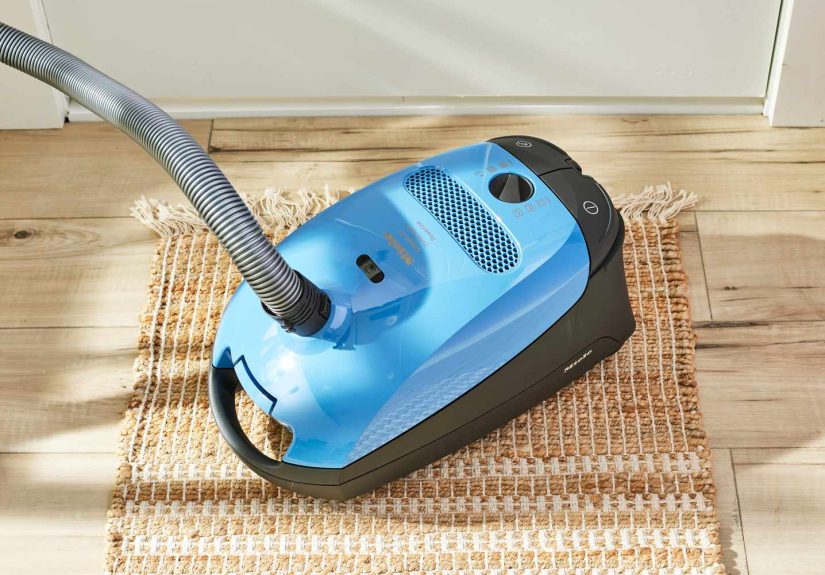
Best Overall Value: Miele Classic C1 (Turbo Team / Cat & Dog / Pure Suction)
The Miele Classic C1 is the “quietly competent” canister vacuum that keeps showing up in editor testing because it does the basics exceptionally well: strong suction, straightforward controls, and an efficient design that works in real homes.
Which C1 should you get?
- Pure Suction: best for mostly hard floors + low rugs (simple, lighter feel, fewer moving parts)
- Turbo Team: adds an air-driven turbo brush for low/medium rugs and light pet hair
- Cat & Dog: typically bundles a turbo tool and upgraded filtrationgreat if pets are your unofficial roommates
Best for: apartments, smaller homes, hardwood lovers, and shoppers who want premium feel without premium pricing.
Heads-up: Like most canisters, deep carpet cleaning depends heavily on having the right head.
Best for Large Homes & Long Cleaning Sessions: SEBO Airbelt D4
If your home has “zones” and at least one hallway long enough to echo your life choices, the SEBO Airbelt D4 is a smart fit. It’s widely praised for durability, high airflow, and a long operating rangemeaning fewer outlet changes and fewer “where did I last plug this in?” moments.
Why editors like it: It’s built like a piece of equipment, not a disposable gadget. The bagged design keeps dust contained, and SEBO’s reputation for serviceability is a big part of the appeal for shoppers who want a vacuum to last.
Best for: big homes, lots of rooms, higher traffic areas, and buyers who prioritize longevity.
Heads-up: It’s not the smallest canister; if storage is tight, consider a more compact SEBO or a Miele C1/C3.
Best High-End Bagged Alternative: SEBO Airbelt K3 (and similar compact SEBO canisters)
The SEBO K3 is a frequent “best bagged canister” recommendation because it blends strong suction with a more compact footprint than the D4. In many editor guides, it’s positioned as the premium option that handles multi-surface cleaning without feeling oversized.
Best for: shoppers who want premium build quality but don’t want the biggest canister in the lineup.
Heads-up: As with Miele, ensure you’re buying the floorhead package that matches your home (hard floors vs. carpet-heavy).
Best Bagless Canister: Miele Boost CX1 / Blizzard CX1
If you strongly prefer skipping bags, Miele’s bagless canisters are among the most consistently praised “premium bagless” choices particularly for hard floors and tidy, controlled dust handling compared with many cheaper bagless designs.
Why editors like it: Strong pickup, smart maneuverability, and hard-floor tools that avoid scratching delicate surfaces. Certain parquet-focused versions are especially good on hardwood and tile, where a soft brush + strong suction is a winning combo.
Best for: hard-floor homes, neat freaks who will actually rinse filters when prompted, and people who dislike buying bags.
Heads-up: Bagless ownership still has “costs”filters need cleaning/replacement, and emptying can create a dust cloud if you rush it.
Best for Pet Hair (Carpet + Upholstery): Kenmore 600 Series / “Pop-N-Go” Bagged Canisters
Kenmore’s bagged canisters keep popping up in lab roundups because they deliver a lot of cleaning ability for the moneyespecially for homes with pets. The most useful versions include a powered floor nozzle for carpets and a mini motorized tool for furniture, which is where pet hair likes to stage a takeover.
Why editors like it: Great tool set for the price, strong pickup on carpets, and a sealed bag system that’s friendlier for allergies than many budget bagless models.
Best for: pet owners, carpeted homes, shoppers who want maximum features per dollar.
Heads-up: Many Kenmore canisters are heavier and bulkier than premium European-style modelsperformance is strong, but storage and handling matter.
Best Self-Righting “I Trip Over Everything” Pick: Dyson Big Ball Canister
Dyson’s Big Ball canister is famous for a single, genuinely useful trick: it’s engineered to self-right if it tips over. If your vacuuming style is best described as “aggressive improvisation,” that feature alone can reduce daily annoyance.
Why editors like it: Strong suction, smooth transitions across surfaces, and fewer interruptions from a toppled canister.
Best for: mixed floors, busy households, and anyone who has ever yelled “WHY ARE YOU LIKE THIS?” at a vacuum.
Heads-up: Some people find it bulkier to maneuver than sleeker canisters, especially in tight spaces.
Best Budget Canister Vacuum: Eureka Mighty Mite
The Eureka Mighty Mite is the no-nonsense pick that editors recommend when the budget is tight but you still want a real vacuum (not a loud dust suggestion). It’s light, compact, and excellent for quick cleanups, stairs, and hard floors.
Why editors like it: It performs surprisingly well for its size, stores easily, and doesn’t pretend to be something it’s not.
Best for: small spaces, dorms, guest rooms, quick pickups, and “I need something that works today” shopping.
Heads-up: It’s not built for deep carpet cleaning and heavy pet hair without a rotating brush.
Buying Guide: How to Choose the Right Canister Vacuum
1) Bagged vs. Bagless: The Allergy vs. Convenience Debate
Here’s the most honest summary: bagged canister vacuums are usually cleaner to live with, especially if you have allergies. When you swap a sealed bag, dust stays contained. Bagless canisters save you from buying bags, but emptying the bin can release a little dust plume (or a big one, if you channel your inner confetti cannon).
- Choose bagged if: allergies/asthma matter, you want less mess, you prefer consistent suction as the bin fills
- Choose bagless if: you hate ongoing bag purchases, you don’t mind washing filters, you want to see what you picked up
2) The Floorhead Matters More Than the Brand Name
Two vacuums can share the same model family and behave completely differently depending on the head:
- Hard floors: parquet/soft brush heads are ideal for hardwood, tile, laminate, and vinyl
- Low rugs: turbo brushes (air-driven) can work well, especially for light pet hair
- Carpet-heavy homes: powered electro heads (motorized) are the real difference-maker for deep cleaning
3) Look for a Sealed System + HEPA If Dust Bugs You
HEPA filtration is great, but a sealed system is what keeps air from leaking around joints and panels. If allergies are a priority, a bagged, sealed canister with HEPA-grade filtration is typically the safest bet.
4) Range and Ergonomics: Your Back Gets a Vote
Canisters shine on stairs and under furniture, but the experience varies. A longer cord, smooth-rolling wheels, and a comfortable handle can be the difference between “quick cleanup” and “why am I sweating?”
Maintenance Tips That Keep Canister Vacuums Performing Like New
- Replace bags before they’re stuffed: suction stays stronger, motors run happier
- Wash or replace filters on schedule: especially on bagless models
- Check for clogs: wands and hoses can trap socks, Lego bricks, and the occasional mystery object
- Clean brushrolls/turbo tools: hair wrap is basically vacuum cholesterol
- Match tools to surfaces: hard-floor brush for hard floors, powered head for carpetsyour vacuum isn’t a mind reader
FAQ: Canister Vacuum Questions People Actually Ask
Are canister vacuums better than uprights?
“Better” depends on your floors. Canisters are often excellent on hard floors, stairs, and tight spaces. Uprights can be more convenient for wall-to-wall carpet. A canister with a powered head can compete with many uprights on carpetjust make sure you’re buying the right configuration.
Do I need a powered head?
If you have lots of carpet (especially medium or plush pile), yespowered heads are what help lift grit out of fibers. If you mostly have hard floors and a few rugs, a non-powered floorhead plus a turbo tool may be enough.
Is a “HEPA filter” enough for allergies?
HEPA helps, but a sealed system plus bagged design usually makes the biggest difference for keeping dust contained when you empty the vacuum.
Editors’ Experiences (An Extra of Real-World “What We Learned”)
After spending an embarrassing amount of time vacuuming on purpose (yes, that sentence is real), our editors noticed that the “best canister vacuum” isn’t always the one with the fanciest marketingit’s the one you’ll actually reach for when someone drops granola on the rug at 8:07 a.m.
First lesson: hard floors reveal everything. On tile and hardwood, a mediocre vacuum doesn’t just miss dustit often pushes it into little lines like it’s sketching abstract art. The best hard-floor heads (especially parquet-style brushes) glide and pull debris in without scattering it. Once you experience that “one pass and it’s gone” feeling, you start looking at brooms like they’re a weird historical artifact.
Second lesson: the wrong head can make a great vacuum feel terrible. We tested canisters that were clearly powerful, but when paired with the wrong floor tool, they felt like they were either skating on rugs or trying to eat them. When reviewers say, “Make sure it has a powered head,” it’s not snobberyit’s physics. Carpet fibers hold on to grit. A powered brush helps shake it loose so suction can do its job. Without that agitation, you can vacuum forever and still feel like the carpet is quietly judging you.
Third lesson: bags aren’t the villain. Bagged canister vacuums don’t get enough credit because buying bags feels like buying printer ink. But for many householdsespecially those with allergiesbags are the cleanest, least annoying way to empty a vacuum. Swap the bag, toss it, move on. Meanwhile, emptying a bagless bin can turn into a tiny dust storm if you’re not careful. One editor described it as “making coffee grounds airborne, which is an impressive trick for something that’s supposed to remove coffee grounds.”
Fourth lesson: pet hair is a tool test, not just a suction test. Pet hair clings to upholstery and tangles in brushes. The canisters that impressed us most either came with a genuinely useful mini motorized tool (for couches and stairs) or had turbo tools that didn’t instantly become a hair bracelet. Also: if your vacuum doesn’t have an easy-to-access brushroll, you’ll procrastinate cleaning it. And a neglected brushroll is basically a lint sculpture that occasionally makes noise.
Final lesson: the best vacuum is the one that fits your space. In a small apartment, a compact canister that stores easily can be a joy. In a bigger home, long reach and smooth wheels matter more than a sleek silhouette. We also learned that “quiet” is relativesome canisters are genuinely calmer sounding than uprights, but any vacuum can get loud when you crank suction to max and chase cereal pieces like they owe you money.
Bottom line: choose the right floorhead, prioritize filtration if allergies matter, and don’t underestimate convenience. A vacuum can be powerful, but if it’s annoying to use, it’ll spend its life in the closetright next to the treadmill you “definitely still use.”
Conclusion
The best canister vacuums are the ones that match your floors and your lifestyle: a premium bagged model for clean, contained dust handling; a long-reach workhorse for big homes; or a budget-friendly canister that makes quick cleanups painless. Start by choosing the right floorhead (powered for carpet-heavy homes, soft brush for hard floors), then decide whether bagged or bagless fits your tolerance for dust, maintenance, and ongoing costs.
Sources synthesized (no links in article by request): Consumer Reports, The New York Times Wirecutter, Good Housekeeping, Real Simple, Better Homes & Gardens, Popular Mechanics, Forbes Vetted, The Spruce, TechGearLab, Business Insider, Bob Vila, Reviewed, WIRED.