Table of Contents >> Show >> Hide
- Why Your Dishwasher Needs a Dedicated Cleaner
- What to Look For in the Best Dishwasher Cleaners
- The Best Dishwasher Cleaners (Inspired by Bob Vila & Pro Testing)
- 1. Best Overall: Affresh-Style Dishwasher Cleaner Tablets
- 2. Best Value: Bulk Descaling Tablets
- 3. Best Liquid Deep Cleaner: Heavy-Duty Cycle Boosters
- 4. Best In-Wash Option: Cleaner Pods Used with a Load
- 5. Best Disinfecting & Odor Control: Targeted Cleaner + Deodorizer
- 6. Best Eco-Friendly & Hard-Water Helper: Citrus & Mineral-Focused Formulas
- 7. Best for Stubborn Build-Up: Intensive Biofilm Cleaners
- How (and How Often) to Use Dishwasher Cleaners
- DIY Methods vs. Store-Bought Dishwasher Cleaners
- Real-World Experiences: What Actually Works in Everyday Kitchens
- Conclusion
If your “set it and forget it” dishwasher has started to smell like a science experiment
and leave glasses cloudy, it’s not mad at youit’s just dirty. The good news? A smart
dishwasher cleaner (the kind trusted by pros and tested by real households) can rescue
your machine in a single cycle. This guide distills picks inspired by
Bob Vila–style testing and leading U.S. cleaning experts into one clear,
practical playbook so you’re not doom-scrolling product pages at midnight.
Below, you’ll find what makes a great dishwasher cleaner, which products consistently
perform, how often to use them, and real-world lessons from people who actually run
their dishwashers more than once a week (hi, families and meal-preppers).
WHY YOUR DISHWASHER NEEDS A CLEANER
Why Your Dishwasher Needs a Dedicated Cleaner
Dishwashers are self-draining, not self-cleaning. Over time, hot water and detergent
bake grease, food particles, soap scum, and minerals into spray arms, filters, and
internal lines. That buildup:
- Makes dishes come out with spots, film, or “mysterious grit.”
- Creates odors (that warm, damp environment is a party invite for bacteria and mold).
- Forces the pump and heater to work harder, potentially shortening your machine’s life.
A quality dishwasher cleaner is engineered to dissolve this gunk where regular
detergents can’t reachunder the door gasket, in the sump, along spray arm holes
without wrecking stainless steel or rubber parts. Think of it as a tune-up in a pod.
WHAT TO LOOK FOR
What to Look For in the Best Dishwasher Cleaners
1. Effective (and Sensible) Ingredients
The best dishwasher cleaners rely on targeted chemistry, not random harshness. Look for:
- Citric acid: Excellent against limescale, mineral rings, and cloudy film.
- Surfactants & solvents: Break down grease and food residue in tight spaces.
- Enzymes: Help digest stuck-on food soils and biofilm in some formulas.
Many experts recommend skipping bleach-based cleaners for stainless-steel interiors and
delicate components unless the manufacturer specifically approves it. If your home uses
a septic system, look for products labeled “septic-safe” and avoid anything overly
caustic.
2. Form: Tablets, Pods, Liquids, or Powders?
-
Tablets & pods: The easiest choicepre-measured, drop-and-go, consistent
results. Ideal for busy households and regular monthly cleaning. -
Liquids: Great for intense deep-clean cycles. Many are single-use bottles
designed to blast away heavy buildup. -
Powders & gels: Offer dose control; helpful if you know your water
hardness and soil level.
3. Safety, Certifications & Eco Considerations
For an option that’s tough on grime but easier on your home and the environment, look
for:
- EPA Safer Choice certification where available.
- Biodegradable ingredients and low-residue formulas.
- Fragrance-free or naturally scented options if you’re sensitive to perfumes.
4. Scent & User Experience
Some cleaners leave a bright citrus or “fresh” scent; others focus on neutralizing
odors with minimal fragrance. Choose what fits your kitchen: subtle and clean is
usually better than “lemon nuclear.”
TOP PICKS (INSPIRED BY BOB VILA & LEADING LABS)
The Best Dishwasher Cleaners (Inspired by Bob Vila & Pro Testing)
Drawing on recommendations from Bob Vila–style reviews, U.S. cleaning labs, and
long-term user feedback, here are standout categories and examples that repeatedly
earn high marks. Use this as a decision map rather than a commercial.
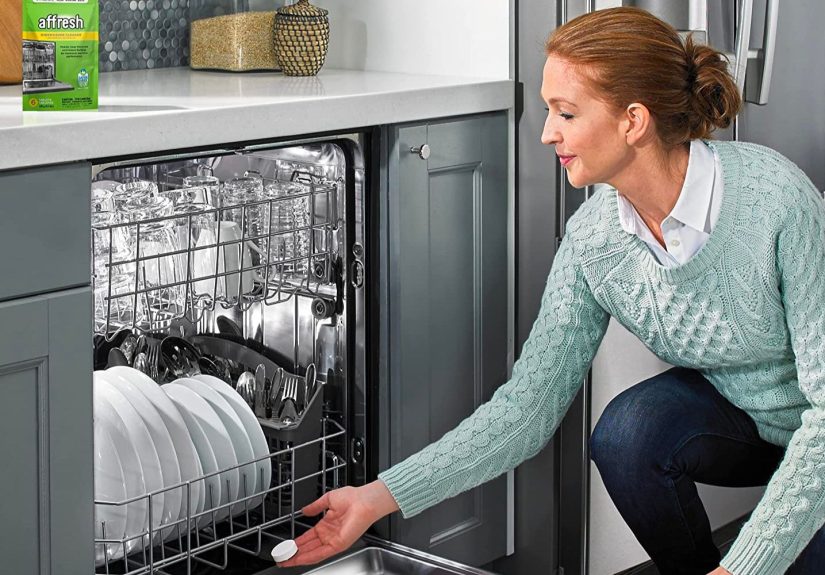
1. Best Overall: Affresh-Style Dishwasher Cleaner Tablets
Tablet cleaners in this category are popular for a reason: they’re simple, effective,
and designed specifically for modern machines. They typically:
- Use citric acid to target limescale and cloudy glassware.
- Work in both empty cycles and, in some formulas, with a load of dishes.
- Are often septic-safe and, in some cases, carry Safer Choice–type credentials.
Ideal for: busy households that want a once-a-month, no-drama solution.
2. Best Value: Bulk Descaling Tablets
Value-focused tablets (similar to those highlighted in budget-conscious picks) give
you a year’s worth of monthly cleans in one package. They’re especially helpful if:
- You live in a hard-water area.
- Your dishwasher runs daily and develops cloudy buildup quickly.
Expect strong descaling performance at a lower cost per cycle, with a familiar
lemon-fresh finish.
3. Best Liquid Deep Cleaner: Heavy-Duty Cycle Boosters
Single-use liquid cleaners (like the well-known “bottle upside down on the rack”
style) are engineered for periodic deep cleaning. They:
- Release at high heat to flush internal lines, spray arms, and the tub.
- Shine when you’re dealing with heavy grease, soap scum, or long-neglected machines.
Choose this when your dishwasher smells bad, leaves residue, or you’ve just moved
into a home with a questionable appliance history.
4. Best In-Wash Option: Cleaner Pods Used with a Load
In-wash cleaners run alongside your regular detergent to freshen the interior during a
normal cycle. They’re:
- Perfect for people who hate “wasting” an empty cycle.
- Good for maintenance between monthly deep cleans.
5. Best Disinfecting & Odor Control: Targeted Cleaner + Deodorizer
Some cleaners are formulated to reduce bacteria counts and neutralize stubborn odors
in the sump and filter area. Look for:
- Formulas specifically labeled for odor removal and sanitizing.
- Compatibility with your machine’s materials and any local wastewater limits.
6. Best Eco-Friendly & Hard-Water Helper: Citrus & Mineral-Focused Formulas
Eco-leaning products often use plant-based surfactants and natural acids. They’re a
smart pick if:
- You want fewer synthetic fragrances and dyes.
- You battle hard water and want strong descaling without overly harsh chemistry.
7. Best for Stubborn Build-Up: Intensive Biofilm Cleaners
When a standard cleaner isn’t cutting itthink slimy filter, chronic cloudiness, or
years of neglectspecialty biofilm removers step in. Use them quarterly or as
directed, then maintain monthly with a gentler product.
HOW TO USE & COMMON MISTAKES
How (and How Often) to Use Dishwasher Cleaners
Recommended Routine
- Every load: Scrape (don’t pre-rinse), load correctly, use quality detergent.
- Every 1–2 weeks: Rinse or wipe the filter; check for trapped food.
- Every 4 weeks: Run a cycle with a dedicated dishwasher cleaner.
- After heavy hosting, renovations, or smoky events: Do an extra deep clean.
Simple Application Rules
- Always follow the directions on the package (they’re written for real machines).
- Use the hottest cycle available for deep-clean products.
- Remove large debris from the drain area first so the cleaner can actually circulate.
Common Mistakes That Make Cleaners “Not Work”
- Ignoring the filter: If it’s clogged, no cleaner can save you.
- Overloading the racks: Blocks spray and leaves residue behind.
- Using the wrong product: Regular dish soap or random chemicals can foam,
overflow, or damage seals. - Cleaning too rarely: Waiting until the smell is “unforgettable” usually
means you’ll need multiple cycles.
DIY VS STORE-BOUGHT
DIY Methods vs. Store-Bought Dishwasher Cleaners
Can you toss in a bowl of white vinegar or sprinkle baking soda and call it a day?
Sometimes. Mild DIY methods can help with light odors or as a quick refresher:
- A cup of vinegar on the top rack during a hot empty cycle.
- A light baking soda sprinkle on the tub floor followed by a short hot cycle.
However, commercial cleaners are typically:
- Better calibrated for modern high-efficiency machines.
- More effective against heavy limescale, grease in hidden lines, and detergent film.
- Tested for material compatibility so you’re less likely to void warranties.
Use DIY hacks as a supplementnot as your only long-term strategyespecially if you
have hard water, run frequent loads, or already see visible buildup.
REAL-WORLD EXPERIENCE & PRO TIPS (≈500 WORDS)
Real-World Experiences: What Actually Works in Everyday Kitchens
Let’s step out of the lab and into real homes for a moment. Talk to people who have
stuck with a consistent routine and a solid cleaner, and a pattern appears:
performance issues usually vanish in 2–3 cycles, and dishwashers “age” more slowly.
Take a busy family of five running the dishwasher twice a day. Before using a
dedicated cleaner, they were dealing with cloudy glasses, funky smells, and the
occasional undissolved food welded to plates. Once they committed to a monthly tablet:
the smell disappeared, spray arms stopped clogging, and even the interior stainless
looked brighter. No complicated overhauljust one extra product on the calendar.
In a small apartment, a renter inherited a mid-range dishwasher that looked fine but
left a greasy film on everything. A single bottle-style deep cleaner pulled out years
of residue (the filter told a horror story), and a follow-up with maintenance tablets
each month kept things in line. The difference wasn’t subtleTupperware stopped
smelling musty, and clear glasses were actually clear.
Hard-water households share another lesson: if your water leaves white crust on your
faucet, it’s doing the same thing inside the dishwasher. Here, citrus-heavy or
hard-water-focused cleaners shine. Users who pair these cleaners with a good detergent
and occasional rinse aid see fewer mineral streaks, cleaner heating elements, and
better drying. Skip or delay those treatments, and your machine quietly builds a rock
garden in its pipes.
People also overestimate how “wasteful” an empty cleaning cycle is. A monthly cleaner
run uses far less water and energy than re-washing streaky dishes, hand-scrubbing
cloudy stemware, or replacing a choked-up appliance early. From a cost perspective,
a tablet or bottle every 4–6 weeks is one of the cheapest insurance policies you can
buy for a major kitchen appliance.
Another recurring real-world takeaway: most disappointments happen when the basics are
skipped. Even the best cleaner can’t compensate for a filter packed with pasta, a
spoon blocking the spray arm, or detergent that’s old and clumpy. Homeowners who see
the best results usually follow a simple system:
- Empty and rinse the filter regularly.
- Check spray arm holes for blockages.
- Use a high-quality detergent suited to their water.
- Run a trusted dishwasher cleaner on a schedule, not just in emergencies.
When you combine those small habits with one of the proven cleaners highlighted in
Bob Vila–style and expert-backed recommendations, you’re rewarded with quieter cycles,
less odor, fewer reruns, and appliances that last. That’s the real “secret”not a
miracle hack, just consistent, targeted care.
CONCLUSION + SEO META INFO
Conclusion
A clean dishwasher is the backbone of an efficient kitchen. Choosing the right
dishwasher cleanerwhether a top-rated tablet, a deep-clean liquid, or an
eco-conscious formulameans clearer glassware, fresher air when you open the door,
and a machine that keeps doing its job for years instead of quietly wearing out.
Treat your dishwasher like the hard-working appliance it is: a little monthly
maintenance goes a very long way.
sapo:
The secret to spotless dishes isn’t just your detergentit’s a clean dishwasher. Based on
Bob Vila–style testing and leading U.S. cleaning experts, this in-depth guide breaks down
the best dishwasher cleaners, who they’re for, how often to use them, and real-life tips
to banish odors, limescale, and residue for good. Read this before your next wash cycle.