Table of Contents >> Show >> Hide
- What Makes Fast Moving Zombies So Terrifying?
- The Essential Fast Zombie Starter Pack
- 1. 28 Days Later (2002): Rage in the Streets
- 2. Train to Busan (2016): Heartbreak at High Speed
- 3. Dawn of the Dead (2004): Mall of Mayhem
- 4. World War Z (2013): Blockbuster-Scale Swarms
- 5. [REC] (2007): Found Footage Frenzy
- 6. 28 Weeks Later (2007): No Safe Zones Left
- 7. Resident Evil (2002): Action-Horror Undead on the Run
- 8. Zombieland (2009): Cardio, Rule #1
- 9. The Crazies (2010): Infection in Small-Town America
- 10. Army of the Dead (2021): Heist Meets Hyperactive Horde
- How Fast Moving Zombie Movies Changed the Genre
- How to Build Your Own Fast Zombie Movie Marathon
- of Real-World Experience with Fast Moving Zombie Movies
- Final Thoughts: Why We Keep Running Toward Running Zombies
Slow, shambling zombies are creepy. But fast moving zombies? They’re the reason you double-check the locks before bed and mentally rehearse your escape route in the grocery store.
These sprinting, climbing, swarming nightmares turned the zombie genre from steady dread into full-blown cardio horror.
In this guide to the best fast moving zombie movies, we’ll look at the films that made “running zombies” a modern horror staple.
From bleak British outbreaks to heart-wrenching Korean train rides and blockbuster-scale global pandemics, these movies prove that when the undead pick up the pace, your pulse does too.
What Makes Fast Moving Zombies So Terrifying?
Classic zombie movies, inspired largely by George A. Romero’s work, typically featured slow, relentless hordesscary in a “wall of death” kind of way, but not exactly track stars.
That changed in the late 20th century when filmmakers started experimenting with zombies (or “infected”) that could run, leap, and coordinate attacks.
Modern “fast zombies” grew out of several influences: early experiments with more agile undead, infection-based storylines, and even video games like
Resident Evil and The House of the Dead, which popularized aggressive, quick-moving enemies.
Then movies such as 28 Days Later and the 2004 remake of Dawn of the Dead pushed the idea into mainstream horror,
trading shambling ghouls for sprinting, screaming bio-weapons that could run you down in seconds.
The result? A different flavor of fear. Fast moving zombie movies tap into:
- Adrenaline and panic – You don’t have time to think, only react.
- Contagion anxiety – One bite, one drop of blood, and you’re on the wrong side of the chase.
- Survival pressure – Characters must be smart and fast; bad decisions get punished immediately.
With that in mind, let’s sprint through the best fast moving zombie movies you should absolutely watchpreferably with the lights on.
The Essential Fast Zombie Starter Pack
These films show up again and again on lists of the best fast moving zombie movies and modern zombie classics, thanks to critics, fans, and horror communities.
1. 28 Days Later (2002): Rage in the Streets
Danny Boyle’s 28 Days Later is often credited with kicking off the 21st-century fast-zombie boom.
The “infected” aren’t technically undead, but their mindless, rage-fueled aggression hits all the right zombie notes while moving at terrifying speeds.
The film follows Jim, who wakes from a coma to find London abandoned and overrun by infected humans. The iconic empty-city sequences,
jittery digital cinematography, and relentless chases make it feel raw and uncomfortably plausible. This is a movie that asks,
“What if society collapsed in a month?” and then answers, “Worse than you think.”
If you’re new to fast zombies, this is the must-watch that redefined the genre for a new era.
2. Train to Busan (2016): Heartbreak at High Speed
South Korea’s Train to Busan combines breakneck action with emotional storytelling in a way very few horror movies manage.
Set almost entirely on a moving train during a sudden zombie outbreak, it traps characters in tight quarters with sprinting,
swarming infected passengersand nowhere to go.
The film hits all the big zombie-movie beatssacrifice, moral dilemmas, selfish survivorsbut does it with a sharp social edge and
unforgettable set pieces (ever tried outrunning zombies between train cars?). It’s regularly ranked among the best modern zombie movies
and is often a top pick in fan-voted lists of fast moving zombie films.
3. Dawn of the Dead (2004): Mall of Mayhem
Zack Snyder’s remake of Romero’s classic throws subtlety out the window and replaces slow-walking corpses with sprinting mall maniacs.
The opening suburban chaos alone is worth the watch: a quiet neighborhood turns into an all-out sprint for survival before the title even appears.
Once the survivors barricade themselves inside a shopping mall, the movie becomes a tense, darkly comic siege story.
The fast zombies outside constantly test the barricades, while the living inside slowly unravel. It’s loud, bloody, and surprisingly sharp about consumer culturejust like Romero, but with more cardio.
4. World War Z (2013): Blockbuster-Scale Swarms
If you’ve ever wanted to see zombies behave like a tidal wave, World War Z is your movie.
Loosely adapted from Max Brooks’ novel, the film follows Gerry Lane, a former UN investigator, racing from city to city to find a way to slow a global zombie pandemic.
The fast moving zombies here don’t just runthey pile, tower, and crash through obstacles in massive swarms.
The Jerusalem wall breach sequence is now iconic, showing the undead as a kind of horrifying natural disaster rather than isolated monsters.
It’s more action-thriller than pure horror, but its scale and imaginative set pieces make it essential in any fast-zombie marathon.
5. [REC] (2007): Found Footage Frenzy
Spanish horror film [REC] traps a TV reporter, her cameraman, and a group of residents inside a quarantined apartment building with infection-spreading, feral attackers.
Shot in claustrophobic found footage style, every charge down a hallway and sudden lunge toward the lens feels painfully immediate.
The “zombies” here are fast, vicious, and often seen in flashes of chaosexactly the way your brain imagines something sprinting at you in the dark.
It’s often cited as one of the best found-footage horror films and a standout in fast moving infection stories.
6. 28 Weeks Later (2007): No Safe Zones Left
28 Weeks Later expands the universe of the original film, exploring what happens when authorities attempt to repopulate Britain after the initial outbreak seems contained.
Spoiler: It is absolutely not contained.
The movie’s opening farmhouse chase is a masterclass in pure panic. Once the infection inevitably resurfaces in a supposedly secure zone,
the running, screaming infected tear through crowds and tight corridors with horrifying speed. It’s bleak, brutal, and a natural follow-up if you loved 28 Days Later.
7. Resident Evil (2002): Action-Horror Undead on the Run
Based on the iconic video game series, Resident Evil drops us into an underground lab complex where a viral outbreak unleashes fast, relentless infected humans and zombie dogs.
While it leans heavily into actionslow-motion kicks, gun-fu, and laser corridorsthe movie helped cement the image of agile,
aggressively attacking zombies in mainstream pop culture. It also kicked off a long-running franchise that kept piling on faster, weirder enemies.
8. Zombieland (2009): Cardio, Rule #1
Zombieland is the rare fast-zombie movie that lets you laugh while someone is being chased through a supermarket.
The undead here are quick and vicious, but the film balances the horror with sharp comedy, memorable survival “rules,”
and a cast that looks like they’re having the time of their lives between near-death experiences.
The movie’s obsession with “cardio” as a survival strategy is a running joke (pun fully intended) and a wink to the way fast zombies rewrote the rules of the genre.
9. The Crazies (2010): Infection in Small-Town America
A remake of George Romero’s 1973 film, The Crazies follows a small town where residents begin turning violently homicidal after a military plane crashes and contaminates the water supply.
While the infected here are technically alive, their behaviorrelentless, unpredictable, and fastscratches that fast-zombie itch.
The movie blends paranoia, government cover-ups, and tense set pieces (like an attack in a car wash) into a tight, underrated gem.
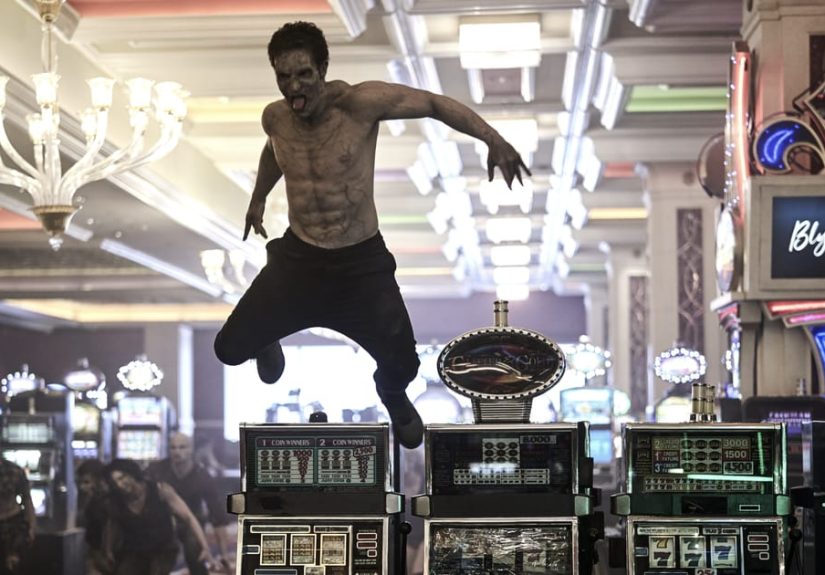
10. Army of the Dead (2021): Heist Meets Hyperactive Horde
Zack Snyder returns to sprinting undead with Army of the Dead, a wild Vegas heist movie set in a walled-off quarantine zone full of fast,
organized zombiesincluding some that seem disturbingly intelligent.
While more divisive among fans, it shows how far the fast-zombie concept has evolved: these aren’t just running corpses, but a kind of post-human society with its own hierarchy.
Add in neon-lit casinos and big action, and you’ve got a maximalist entry in the fast moving zombie canon.
How Fast Moving Zombie Movies Changed the Genre
The rise of fast zombies did more than just speed up chase scenesthey reshaped what zombie stories could do.
Critics and historians note that modern zombie films increasingly reflect social fears: pandemics, political collapse, climate crisis, and the fragility of everyday life.
Fast-moving undead amplify those anxieties:
- Speed as metaphor – Disaster doesn’t creep anymore; it hits overnight.
- Global scale – Films like World War Z turn outbreaks into international crises.
- Emotional stakes – Movies such as Train to Busan and 28 Days Later tie fast-paced horror to very human stories of guilt, sacrifice, and family.
At the same time, these movies opened the door to hybrid tonesaction-horror, horror-comedy, and even philosophical infection stories.
Once zombies started running, the genre stopped standing still.
How to Build Your Own Fast Zombie Movie Marathon
Want to design the perfect fast-zombie binge night? Think in phases:
-
Start with the foundations – Kick things off with 28 Days Later and Dawn of the Dead (2004)
to see how the modern running-zombie trend took shape. - Add emotional impact – Drop in Train to Busan or [REC] when you want your feelings destroyed along with civilization.
- Go big and loud – Slot in World War Z or Resident Evil for spectacle, set pieces, and “we’re doomed, but stylish” energy.
- End with something fun – Wrap up with Zombieland so you can sleep afterward without checking under the bed. (Probably.)
Pair all that with snacks that are definitely not brain-shaped (unless you’re very committed to the theme),
dim lighting, and a blanket you can hide under when the infected start sprinting at the camera.
of Real-World Experience with Fast Moving Zombie Movies
Watching fast moving zombie movies is its own kind of experiencepart horror, part stress test, part group sport.
Over time, fans develop very specific rituals and reactions that go way beyond “sit down and press play.”
First, there’s the pre-movie negotiation. No one wants to admit they’re the one who will scream first,
but everybody knows who it is. You’ll hear things like, “It’s just zombies, not ghosts,” from the same person who will
later leap three feet in the air when a fast infected smacks into a door. Someone always claims, “I don’t scare easily,”
and that’s the person who ends up clutching a pillow like a life preserver when the first sprinting horde shows up.
Then there’s the inevitable armchair survival analysis. As soon as characters appear on screen,
the group starts drafting them into categories: “lives,” “dies early,” “secretly a liability,” and “definitely sacrifices
themselves in a tragic but heroic way.” Fast zombie movies encourage this because the pace is so relentlessone bad
decision, one wrong turn, and that character is gone. Part of the fun is loudly insisting you would never go back
for the dropped backpack or the phone, even though you absolutely would.
The movies also change how you look at everyday spaces. After Train to Busan, a crowded commuter train feels less like
public transportation and more like a potential survival puzzle. You start mentally mapping which car you’d run to,
what you’d use as improvised armor, and which passengers look most likely to sprint at you if a bite breaks out.
After Dawn of the Dead, the mall becomes a “what-if” scenario: that sporting goods store suddenly looks like a
fortress, and you find yourself ranking stores by how defensible they’d be.
On a more serious note, fast zombie movies can be surprisingly cathartic. They externalize a lot of modern anxietiespandemics,
social collapse, the feeling that the world can change overnightand give them a shape you can yell at.
It’s easier to confront abstract fears about instability when they show up on screen as something you can, at least theoretically,
outrun, outthink, or outfight. You might walk away spooked, but you also walk away having rehearsed what it feels like to survive chaos,
even if it’s just in your living room.
There’s also a communal bonding effect. Few things unite people faster than shouting at a character who insists on
splitting up “just for a minute.” You laugh together, jump together, and then, during quiet moments, find yourself
oddly moved by scenes of sacrifice or kindness amid the panic. Movies like Train to Busan and 28 Days Later
stick with viewers not just because the zombies are fast, but because the stories slow down just enough to ask who we’d choose to be
when everything falls apart.
By the time the credits roll, you may be a little jumpy in dark hallways, a little suspicious of crowded elevators,
and a lot more appreciative of functioning public infrastructure. But you’ll also have had a strangely energizing experienceone part terror,
one part emotional workout, and one part “okay, but seriously, what’s our plan if the neighbors start sprinting at us tomorrow?”
Final Thoughts: Why We Keep Running Toward Running Zombies
The best fast moving zombie movies don’t just swap shambling corpses for sprinters; they transform the entire tone of the genre.
They’re louder, quicker, and more chaotic, but they also reflect a world where crises feel like they arrive overnight and spread at viral speed.
Whether you connect most with the bleak survivalism of 28 Days Later, the emotional punch of Train to Busan,
or the dark humor of Zombieland, these films prove that fast zombies aren’t a gimmickthey’re a powerful way to keep the undead terrifying, relevant, and weirdly fun.
Just remember: in fast zombie cinema, the most important survival rule is simplenever underestimate cardio.