Table of Contents >> Show >> Hide
World War II is one of the most-covered chapters in modern storytellingand somehow, it still manages to produce TV that feels fresh,
personal, and terrifyingly human. The best WW2 series don’t just move soldiers across a map like chess pieces. They turn history into faces:
a medic trying to stay steady, a pilot counting the minutes to daylight, a family clinging to normalcy while the world reshapes itself.
But here’s the fun part: fans don’t rank these shows the same way critics do. Viewers tend to reward rewatchability, emotional punch,
and characters you’d follow through a blizzard, a blackout, and a bad batch of powdered eggs. So this list leans into the people’s choice
spiritbig, beloved titles up top, plus a few “if you know, you know” favorites that fans keep recommending like contraband chocolate bars.
How This Fan Ranking Works (No Secret Codebook Required)
“Ranked by fans” can mean a lot of things, so here’s the plain-English version: this ranking is guided by large-scale viewer voting lists
and audience-driven metrics (like user ratings and audience scores). In other words, it’s less “what a panel decided” and more “what people
actually watch, rave about, and push on their friends with the intensity of a mission briefing.”
Because different platforms measure “fan love” differently, consider the order a best-fit snapshotnot a court verdict. If your favorite is
a few spots higher or lower than you’d place it, congratulations: you’re now eligible for the timeless WW2 tradition of spirited debate.
(Bring snacks. And maybe a spreadsheet.)
The Best World War 2 TV Series, Ranked By Fans
-
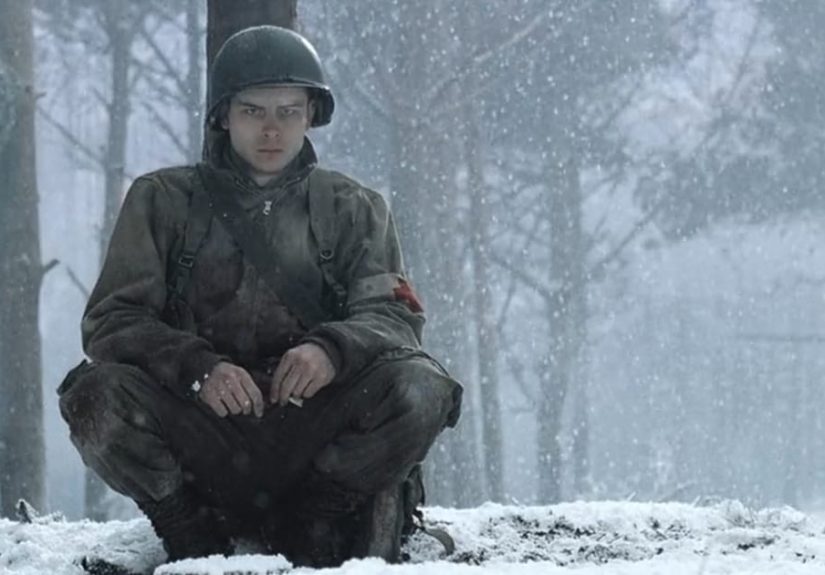
Band of Brothers (2001)
If WW2 TV had a Mount Rushmore, this series would be carved into it twiceonce for its scale and once for its heart. Following Easy Company,
it’s built around camaraderie, fear, leadership, and the small choices that somehow become history. Fans return to it because it balances
action with quiet humanity: the jokes, the exhaustion, the loyalty, and the moments where bravery looks suspiciously like “one more step.”- Why fans rank it #1: Deep character bonds, unmatched immersion, and endlessly rewatchable episodes.
- Best for: Viewers who want both adrenaline and emotional impactwithout feeling like they’re watching a textbook.
-
The Pacific (2010)
Think of this as the raw, blistering companion to Band of Brothersbut with its own personality and a different kind of intensity.
Fans love it because it doesn’t romanticize the Pacific Theater. It’s about survival, endurance, and the psychological cost of island warfare,
shown through multiple Marines whose experiences don’t neatly match.- Fan appeal: Emotionally heavy, visually meticulous, and unafraid to show how war changes people.
- Best for: Fans who want a series that feels personal, exhausting, and historically grounded.
-
Masters of the Air (2024)
Air war is often portrayed as sleek and heroicuntil you see the math behind it: long missions, brutal odds, and pressure that doesn’t let up.
Fans boosted this series quickly because it brings scale (planes, formations, targets) but keeps the emotional focus tight on the airmen and
their relationships. It’s also the rare WW2 show that makes you feel how “routine” can become terrifying.- Fan appeal: Big production, strong performances, and a fresh perspective for viewers who’ve “seen every Normandy story.”
- Best for: Anyone curious about bomber crews, aerial strategy, and the cost of flying into flakagain and again.
-
The War (2007)
This documentary-style series is a fan favorite for a simple reason: it makes history feel lived-in. Instead of racing from battle to battle,
it connects the war to communities, families, and the “ordinary” people who carried it. Fans praise it for its clarity, emotional honesty,
and its ability to make you pause after an episode and just… sit there for a minute.- Fan appeal: Thoughtful storytelling, powerful firsthand accounts, and a homefront lens that many dramas skip.
- Best for: Viewers who want context, not just combatplus the bigger “why it mattered” picture.
-
The World at War (1973–1974)
Old-school doesn’t mean outdated. This classic documentary series remains a fan staple because it’s comprehensive and serious-minded, the kind
of show that makes you understand the war as a global chain reaction rather than a single storyline. It’s the “deep dive” pickless binge,
more “one episode, then discuss like you’re in a seminar.”- Fan appeal: Wide scope, strong narration, and an approach that treats viewers like grown-ups.
- Best for: History lovers who want the full panoramic view of the conflict.
-
WWII in HD (2009)
Fans recommend this when they want something that hits fast and visually. By using archival footage and personal stories, it creates a sense of
immediacylike the past suddenly switched into high definition and remembered it still has feelings. It’s an accessible entry point for newer
viewers, but longtime history buffs also like it for how it personalizes massive events.- Fan appeal: Highly watchable, emotionally direct, and designed for modern attention spans (without dumbing things down).
- Best for: People who want a documentary feel but still crave narrative momentum.
-
Generation War (2013)
This miniseries is a fan lightning rodin the best way. Viewers gravitate to it because it puts friendships and moral compromises at the center,
showing how war pressures people into choices they never expected to make. Fans who love it talk about its character arcs and emotional
whiplash, and how it forces uncomfortable questions about complicity, survival, and denial.- Fan appeal: Big emotions, tough themes, and a perspective that sparks conversation long after the credits.
- Best for: Viewers who want character-driven drama and don’t mind wrestling with moral gray zones.
-
World on Fire (2019–)
Some WW2 series zoom in on one unit; this one pulls back and follows multiple characters across countries and circumstances. Fans enjoy it
because it’s a true ensemble: soldiers, civilians, resistance, romance, fear, and the awkward daily business of living through history.
It’s a reminder that the war wasn’t one storyit was millions, happening at once.- Fan appeal: Sweeping scale with intimate stakes, strong cast chemistry, and a “many lives, one war” structure.
- Best for: Viewers who like period drama with multiple interlocking storylines.
-
Rogue Heroes (SAS Rogue Heroes) (2022–2025)
This is the rowdy entry on the list: fast-paced, swaggering, and often darkly funnywhile still acknowledging the real cost of combat.
Fans love the energy, the style, and the origin-story appeal of watching a scrappy unit form through stubbornness, chaos, and audacity.
It’s a reminder that not every WW2 story is told in the same toneand that variety is a good thing.- Fan appeal: A bold, modern vibe; sharp dialogue; and a “how did this even work?” true-story flavor.
- Best for: People who want WW2 history with momentum, attitude, and a slightly rebellious streak.
-
Catch-22 (2019)
War stories aren’t always straightforward bravery-and-sacrifice narratives. Sometimes they’re about absurd systems, impossible rules,
and the sense that logic left the room without telling anyone. Fans like this miniseries because it captures the surreal comedy-horror
of bureaucracy while still delivering genuine tragedy and character pain underneath the satire.- Fan appeal: Smart adaptation energy, strong performances, and a tone that’s funny until it suddenly isn’t.
- Best for: Viewers who like their WW2 content sharp, cynical, and psychologically pointed.
-
The Winds of War (1983)
A classic miniseries that fans keep revisiting for its old-school epic storytellingbig cast, sweeping events, and a sense of “this is what
television used to do when it wanted to swing for the fences.” It’s more traditional in style than modern limited series, but that’s part of
its charm: it plays like a historical saga with momentum and emotional stakes.- Fan appeal: Grand scale, dramatic sweep, and a focus on how personal lives collide with global events.
- Best for: Fans who enjoy classic miniseries storytelling and multi-character historical drama.
-
Combat! (1962–1967)
This is the vintage “squad in the field” series that still earns fan respect decades later. Viewers who discover it often expect something dated
and are surprised by how tense, character-focused, and emotionally grounded it can be. Fans also like how it centers everyday soldiering:
leadership decisions, fatigue, moral dilemmas, and the constant effort to keep going.- Fan appeal: A foundational WW2 TV drama with strong performances and a no-nonsense tone.
- Best for: Viewers who want a classic wartime series and don’t mind a slower, episodic rhythm.
Honorable Mentions (AKA: “Don’t Sleep on These”)
-
Hogan’s Heroes (1965–1971)
A WW2 POW-camp sitcom feels like a strange pitch until you remember that comedy has always been a survival tool. Fans stick with it for its
comfort-watch qualities and its “outsmart the enemy” wish-fulfillment tone. -
Holocaust (1978)
A significant miniseries in TV history, often discussed for its impact and the conversations it sparked. It’s not a light watch, but fans who
seek historically themed drama often point to it as an important landmark. -
The Narrow Road to the Deep North (2025)
A newer fan-riser that’s already getting attention for its emotional intensity and POW-camp storyline. If you like intimate character studies
set against immense historical pressure, this one’s worth bookmarking.
What Fan-Favorite WW2 Series Do Better Than Movies
A great WW2 movie can be unforgettable, but TV has one unfair advantage: time. Time to show how relationships form, fracture, and reform under stress.
Time to let consequences land. Time to make you understand that “the war” wasn’t one dramatic momentit was years of strain, boredom, fear, loss,
and occasional, stubborn laughter.
Fan-ranked series also tend to nail a specific magic trick: they make history feel both enormous and local. One episode might deal with strategy and
logistics; the next might hinge on a letter, a meal, a rumor, or a single decision that changes a life. That’s why people rewatch these shows:
they’re not just about battles. They’re about the people trapped inside them.
Fan Experiences: How People Actually Watch (and Feel) These WW2 Series
“Best ranked by fans” isn’t just a listit’s a pattern of shared viewing habits. For a lot of people, the first encounter with a top WW2 series is
accidental: a recommendation from a parent, a clip on social media, or a friend saying, “Trust me, just watch episode one.” Then the binge begins,
and suddenly it’s 2 a.m. and you’re asking yourself why you’re emotionally attached to a group of people who have been eating rations and sleeping
in mud for three episodes straight.
Fans also tend to develop “entry points.” Some start with Band of Brothers because it’s the universal handshakeif you like that,
you’ve basically unlocked the genre. Others start with The Pacific and discover the war feels different depending on where it’s fought.
A lot of viewers who think they “don’t like documentaries” end up loving The War or WWII in HD because the storytelling is so
personal it stops feeling like homework and starts feeling like listening to someone’s life.
Another very real fan experience: the “pause and Google spiral.” A show mentions an operation, a unit, a place, or a dateand suddenly you’re
three tabs deep trying to understand what really happened. Fans love that these series can spark curiosity without lecturing. Even when dramatized,
the best ones push viewers to learn more, compare accounts, and appreciate how complicated the past actually was.
There’s also the “watch party paradox.” WW2 content can be intense, so people often watch alone… until they don’t. Plenty of fans report that
sharing the experiencewatching with family, discussing episodes with friends, or reading reactions onlinehelps process the heavier moments.
It turns viewing into conversation: about leadership, fear, propaganda, resilience, and what ordinary people do when the world stops being ordinary.
Finally, fans build personal “rewatch rituals.” Some revisit these shows every few years because they notice different things at different ages:
one time it’s the strategy, another time it’s the relationships, another time it’s the moral exhaustion. Great WW2 series hold up because they’re
layeredpart history, part character study, part warning, part tribute. And the most fan-loved titles earn their rank the old-fashioned way:
by staying with you after the screen goes dark.