Table of Contents >> Show >> Hide
- What “The Creative Act” Really Points To
- Creativity as a Way of Being (Not a Mood You Chase)
- The Creative ACT Framework
- What Science Says (And Why It Matches the Creative ACT)
- How to Practice “A Way of Being” on a Regular Tuesday
- Creative Blocks: What’s Actually Going On?
- Creativity Isn’t Only Art (It’s How You Solve Life)
- Conclusion: A Creative Life Is a Practiced Life
- Experiences Related to “The Creative ACT: A Way Of Being” (Extra )
Let’s get one thing straight: creativity isn’t a rare creature that only visits people who own berets or say things like “my muse is angry today.”
Creativity is more like your phone’s flashlightsometimes it’s off, sometimes it’s on, and sometimes you’re accidentally blinding yourself while looking for it.
The point is: it’s built in.
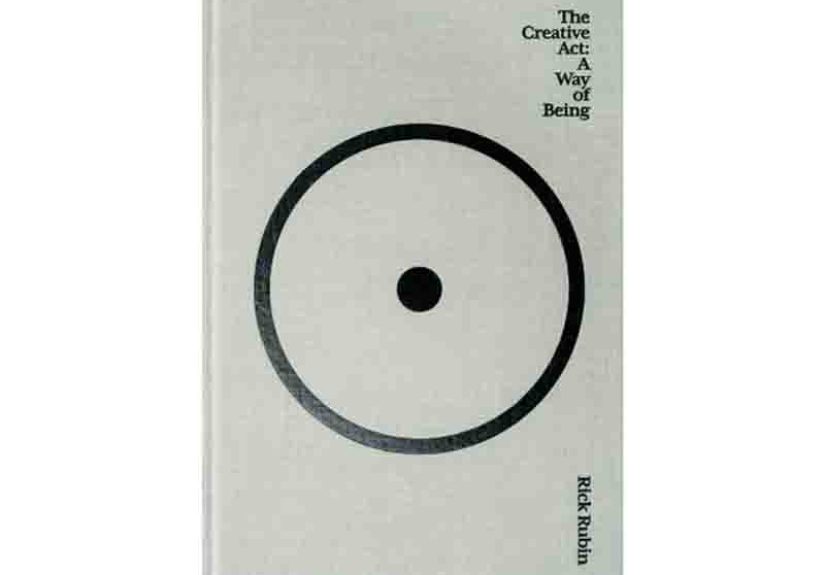
The Creative Act: A Way of Being (the bestselling book by legendary producer Rick Rubin) nudges us toward a refreshing idea:
the “real work” isn’t only what you makeit’s how you move through the world while you’re making it. Not as a productivity hack. Not as a “10-step system.”
More like a posture. A practice. A way of noticing.
In this article, we’ll explore what it means to treat creativity as a daily way of beingand we’ll translate that philosophy into a practical framework I call the
Creative ACT. It’s not about forcing inspiration on command (good luck with that). It’s about setting conditions where ideas can actually show up,
take off their shoes, and stay awhile.
What “The Creative Act” Really Points To
Rubin’s approach doesn’t read like a traditional “how-to” manual. It’s closer to a collection of short reflections and promptslittle mental doorways you can walk through
when you feel stuck, distracted, or convinced you’re “not the creative type.” The throughline is simple but powerful:
creativity is available when you’re paying attention.
That idea matters because most of us treat creativity like a performance. We wait for a big moment, a big mood, a big uninterrupted Saturday.
Meanwhile, creativity is tapping your shoulder on a random Tuesday, whispering, “Hey… did you notice that weird shadow on the wall?”
If you ignore it long enough, it shrugs and goes to hang out with someone else’s sketchbook.
Creativity as a Way of Being (Not a Mood You Chase)
If creativity is a way of being, then it’s less about “trying harder” and more about practicing certain states:
openness, curiosity, patience, and willingness to experiment. This is great news for anyone who has ever tried to “force” a good idea
and ended up stress-cleaning the refrigerator instead.
Why it feels slippery
Creativity can feel unpredictable because it often comes from two different gears working together:
spontaneous association (the mind wandering, connecting dots) and focused refinement (choosing, shaping, editing).
You can’t edit what you don’t generate, and you can’t generate much if you bully your brain into perfection before it’s even warmed up.
This matches what creativity research has been circling for years: ideation thrives when you alternate between
loosening your grip (explore) and tightening it (evaluate). Think of it as creative breathinginhale possibilities, exhale decisions.
The Creative ACT Framework
To make “a way of being” easier to live, let’s turn the philosophy into something you can actually practice when you’re busy, tired,
or trapped in a meeting that could have been an email. Here’s the Creative ACT:
- A Attention: Notice what’s here.
- C Curiosity: Ask what else could be true.
- T Trust: Let it be imperfect long enough to become real.
This isn’t a rigid formula. It’s a set of handles you can grab when your brain is spinning. Let’s break it down with examples.
A Attention: Build a Life That Notices
Attention is the most underrated creative toolbecause it’s not glamorous. Nobody posts a viral video titled
“Watch me quietly observe patterns for 12 minutes.” But attention is where everything begins.
- Attention to your environment: colors, sounds, shapes, small surprises.
- Attention to your reactions: what delights you, annoys you, or sticks in your head.
- Attention to patterns: repeated themes in what you read, watch, save, or talk about.
Practical move: keep an “idea capture” system that is so easy it’s almost embarrassing.
Notes app. Voice memo. A tiny notebook. The best system is the one you’ll use when you’re half-awake and holding a bagel.
Example: You’re writing a blog post and nothing feels fresh. Instead of staring at a blinking cursor like it owes you money,
take a five-minute “noticing walk.” Look for one unusual detail: a sign with weird wording, a pattern of cracks in the sidewalk,
an overheard sentence. You’re not hunting an ideayou’re tuning your receiver.
C Curiosity: Turn the Ordinary into Material
Curiosity is what happens when attention asks a follow-up question. It’s the difference between “I saw something”
and “I wonder why that hit me.”
Curiosity is also how you escape cliché. When you feel yourself reaching for the obvious, try these prompts:
- What’s the opposite? If the standard advice is “work harder,” what does “work softer” look like?
- What’s the hidden constraint? What am I assuming I can’t change?
- What’s the tiny experiment? What’s one low-stakes version I can try today?
Example: A designer gets stuck because every concept feels “already done.” Curiosity reframes the task:
“What if I’m not designing a logo… what if I’m designing a feeling?” Suddenly the work shifts from copying trends
to exploring textures, shapes, and emotional tone.
Curiosity also loves constraints. When you limit options on purposelike writing a paragraph without adjectives,
or brainstorming only “bad ideas” for 10 minutesyou often unlock surprising originality.
Constraints don’t shrink creativity; they give it something to push against.
T Trust: Let It Be Bad (So It Can Become Good)
Trust is the hardest part, because it requires you to tolerate the awkward phase: the rough draft, the messy sketch,
the demo version, the “this might be terrible” stage. Trust means you don’t demand masterpiece-level results
before the work has even taken its first steps.
Trust also means separating making from judging. If you try to do both at once,
you’ll end up with a lot of internal commentary and not much output.
Practical move: schedule two different modes.
- Mode 1: Generate (no editing, no polishing, no “is this good?”)
- Mode 2: Shape (edit, refine, organize, choose)
Example: A student wants to start a YouTube channel but freezes because they don’t have the “right” camera, brand, or style.
Trust says: record three short videos with whatever you have. Your style doesn’t appear before you beginit appears because you began.
What Science Says (And Why It Matches the Creative ACT)
You don’t need neuroscience to be creative, but it can be oddly comforting to learn your brain has a natural rhythm for this.
A few research-backed ideas line up neatly with Attention, Curiosity, and Trust:
Divergent thinking needs room
Many creativity studies measure “divergent thinking”your ability to generate multiple possible solutions.
That ability tends to grow when you allow playful exploration before you start narrowing down.
Translation: Curiosity first, judgment later.
Incubation is real (your brain keeps working offstage)
Ever had a great idea in the shower, on a walk, or while doing dishes?
That’s not magicit’s incubation. When you step away from focused effort, your mind can keep connecting ideas in the background.
That’s why Attention practices (like walking, quiet observation, or even gentle daydreaming) can be productive,
even though they don’t look “productive.”
Mindfulness supports creative flexibility
Mindfulness isn’t just for people who own fancy incense. Research suggests that mindful awareness can support creativity by improving attention regulation,
reducing rigid thinking, and helping people notice new connections. In Creative ACT terms:
mindfulness strengthens Attention, which feeds Curiosity.
Constraints can boost originality
Business and psychology research often finds that the right constraints can improve innovationbecause they force you to recombine what you already have
in new ways. A blank canvas can feel like infinity. A small box can feel like a puzzle. Curiosity loves puzzles.
How to Practice “A Way of Being” on a Regular Tuesday
Big creative breakthroughs are fun, but most creativity is built from small, repeatable behaviors.
Here are practical ways to live the Creative ACT without rearranging your entire personality.
1) Create a daily “signal” that tells your brain it’s time
Rituals don’t need to be dramatic. A specific playlist. A cup of tea. A certain chair.
The point isn’t superstitionit’s consistency. You’re training your brain to associate a simple cue with creative work.
2) Collect inputs on purpose (and curate them)
Your creative output is shaped by what you consume. If your inputs are all noise, your ideas will feel noisy.
If your inputs include strong writing, thoughtful art, or interesting conversations, your mind has better ingredients.
Curate like a chef: not everything belongs in the soup.
3) Make “tiny drafts” your default
A tiny draft is a low-pressure version of your idea:
a paragraph, a sketch, a voice memo outline, a rough chord progression, a 10-slide ugly deck.
Tiny drafts build Trust because they lower the cost of starting.
4) Use constraints intentionally
- Write for 12 minutesstop when the timer ends.
- Design using only two colors.
- Brainstorm 20 awful ideas first.
- Limit research to 30 minutes, then build something.
Constraints turn “I should create something amazing” into “I can try a specific experiment.” That shift is everything.
Creative Blocks: What’s Actually Going On?
A “creative block” often isn’t a lack of ideasit’s a traffic jam of expectations. Here are common causes and what the Creative ACT suggests instead:
Block: Perfectionism
Perfectionism is just fear wearing a tuxedo. Trust says: make the messy version first.
You can’t revise a blank page, but you can absolutely revise a questionable one.
Block: Overconsumption
If you’re constantly scrolling, you’re constantly reacting. Attention needs a little quiet to hear itself think.
Try a short “input fast”: 30 minutes of no feeds, no videos, no newsjust you and your work.
Block: Identity pressure
“What if I’m not good at this?” is a heavy question. Curiosity offers a lighter one:
“What happens if I treat this as practice instead of proof?”
Creativity Isn’t Only Art (It’s How You Solve Life)
One of the most freeing messages in The Creative Act is that creativity isn’t limited to galleries, studios, or stages.
Creativity shows up when you:
- solve a problem at work with a new approach,
- rethink a difficult conversation,
- design a better morning routine,
- cook dinner with what’s already in the fridge (a heroic art form).
The Creative ACT works here too. Attention notices what’s happening. Curiosity explores alternatives. Trust tries something imperfectand learns.
That’s not just “being creative.” That’s being alive with intention.
Conclusion: A Creative Life Is a Practiced Life
The big takeaway from The Creative Act: A Way of Being isn’t “follow these rules and become a genius.”
It’s simpler: show up with awareness. Notice more than you judge. Experiment more than you explain.
Let yourself make the awkward first version. Then shape it.
If you adopt the Creative ACTAttention, Curiosity, Trustyou don’t have to wait for creativity to strike.
You become the kind of person creativity can find easily. Like leaving the porch light on for ideas.
(They still might show up late. Ideas are notoriously bad at texting back.)
Experiences Related to “The Creative ACT: A Way Of Being” (Extra )
The philosophy sounds beautiful, but what does it look like in real lifeespecially when you’re busy, distracted, or convinced you’re “not creative”?
Below are a few true-to-life composite experiences (blended from common patterns many creators report) that show the Creative ACT in action.
1) The Writer Who Couldn’t Start (Until They Stopped Trying to Start)
A blogger sits down to write and immediately opens twelve tabs: headlines, competitor posts, research studies, and a totally unrelated article about
“the best air fryers of all time.” Two hours later, they’ve collected informationbut not clarity.
They feel blocked, but the real problem is overload.
Attention changes the moment they close the tabs and ask, “What do I actually want to say?”
Curiosity adds, “What would make this topic feel human instead of generic?”
Trust shows up as a simple move: they write an intentionally imperfect first paragraphjust to get the engine running.
Ten minutes later, the voice returns. The first draft isn’t great, but it exists, and existence is a powerful creative ingredient.
2) The Designer Who Found the Idea in a Parking Lot
Another person is stuck on a design concept. They’ve stared at mood boards so long the fonts are starting to blur into one giant
“modern-minimal-sans-serif cloud.” They go outside for a break and notice something small: the way late-afternoon light cuts across a car window,
creating a sharp diagonal highlight and a soft shadow.
That’s Attention. Curiosity asks, “What if the whole design system used light-and-shadow geometry as a theme?”
Trust says, “Sketch it quickly. Don’t overthink it.” A rough sketch becomes a direction, a direction becomes a draft,
and the draft becomes a final. The “break” wasn’t time wastedit was where the idea had room to land.
3) The Musician Who Feared the Empty Room
A musician wants to write but avoids the studio, because the silence feels like a test. They decide to change the rules:
they set a constraintmake a 30-second loop using only one instrument and one rhythm pattern.
That’s Curiosity using a puzzle instead of a blank void.
Trust shows up when they let the loop be simple. Then, once it exists, they can respond to it. Add texture. Remove a note.
Shift the tempo slightly. The fear fades because the work is no longer hypothetical. It’s real, and now it can be shaped.
4) The “Non-Creative” Person Who Solved a Family Problem Creatively
Someone insists they aren’t creativeyet they’re the one who calmly reworks a chaotic household routine.
They notice (Attention) that mornings fall apart at the same bottleneck. They wonder (Curiosity) what would happen if
lunches were assembled the night before and outfits were chosen in a two-minute “tomorrow prep.”
They try it (Trust), even though it feels awkward at first.
The result isn’t a museum-worthy masterpiece, but it’s absolutely creativity: taking what exists and making it work better.
This is the heart of a “way of being”creativity as a lived approach, not a label you earn.
In each experience, the pattern is the same: creativity becomes reliable when you practice the conditions that invite it.
Attention notices. Curiosity plays. Trust builds. And slowly, the creative life stops feeling like a lightning strike
and starts feeling like a skillful, human rhythm.