Table of Contents >> Show >> Hide
- How the Raptor Almost Became a Very Expensive Collector’s Item
- Why the U.S. Air Force Couldn’t Let the F-22 Die
- Modernization: The Real Comeback Arc
- Budget Drama: The Block 20 Soap Opera and Why Congress Keeps Getting Involved
- Real-World Proof: The Raptor Still Shows Up When It Matters
- So What Does “Clawed Back From the Brink” Actually Mean?
- The Next Decade: The F-22 as a Bridge to Whatever Comes Next
- Experience Notes: What It’s Like to Be Around the Raptor (Without Pretending I’m a Pilot)
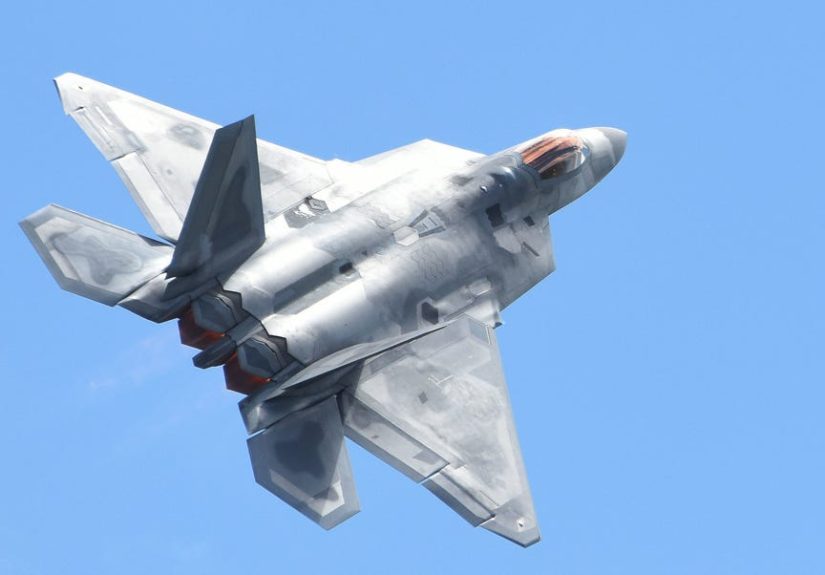
The F-22 Raptor is the kind of airplane that makes grown adults forget how language works. People see one
and immediately start communicating in a series of noises: “Whoa.” “No way.” “Is it real?” It’s a stealth
fighter with supercruise, thrust-vectoring, and the vibe of a shark that learned chess.
And yetdespite being an undisputed icon of American air dominancethe F-22 has spent much of its life
dodging budget axes, political side-eyes, and the cold, hard math of maintaining an ultra-advanced fleet
that stopped rolling off the production line years ago. For a while, it looked like the Raptor might end up
as the world’s most intimidating museum exhibit.
But the story didn’t end with a sad hangar lights-off montage. Over the last decade, the F-22 has quietly
staged one of the most interesting comebacks in modern military aviation: surviving retirement attempts,
winning modernization funding, and evolving into a digitally upgradable “bridge” fighter meant to hold the line
until the next generation arrives. In other words, it didn’t just avoid extinctionit learned new hunting tricks.
How the Raptor Almost Became a Very Expensive Collector’s Item
From “Build a Mountain of Them” to “Please Stop Building Them”
The F-22 began life as the answer to a Cold War question: how do you guarantee air superiority against
the best an adversary can throw at you? The early vision wasn’t small. Plans once aimed for a massive fleet,
because air dominance isn’t a luxury itemyou either have it, or you’re negotiating with physics and surface-to-air missiles.
Then the strategic weather changed. The Cold War ended, budgets tightened, and the U.S. spent years fighting
adversaries who weren’t exactly fielding advanced fighter formations. High-end air-to-air capability looked, to some,
like buying a fireproof safe when you’re mostly worried about your dog eating the mail.
The result was a production cap and a shutdown. In the end, only a limited number of Raptors were built,
and the line closedlocking the U.S. into a small, boutique fleet of the world’s best air-superiority fighter.
Boutique is fun for coffee. It’s stressful for supply chains.
The “Operational Reality” Phase: Maintenance, Mishaps, and Growing Pains
Keeping the F-22 flying has never been simple. Stealth coatings, specialized materials, unique avionics, and a
limited production run create a sustainment environment where every part feels like it was handcrafted by a wizard
who moved away and won’t answer emails.
The program also faced periods of intense scrutiny over pilot safety and onboard life-support concerns in the early 2010s.
Those episodes didn’t define the jet, but they did shape public perceptionand gave critics a convenient “see?” whenever
the retirement conversation came up.
Why the U.S. Air Force Couldn’t Let the F-22 Die
The Raptor’s “Unfair Advantage” Is Still Real
Fifth-generation fighter is a broad label, but the F-22’s reputation rests on a specific, brutally practical niche:
it’s built to win the air-to-air fight first, then keep winning long enough for everyone else to do their jobs.
Stealth reduces how easily it’s detected and engaged, supercruise helps it control time and geometry, and sensor fusion
helps pilots make fast decisions without juggling a dozen separate mental dashboards.
In plain English: it gets into the best position before the other guy realizes the game has started.
The F-35 Is Not a “Replacement,” It’s a Teammate
A common misconception is that the F-35 “replaced” the F-22. The better way to think about it is as a partnership:
the F-35 is a multirole stealth aircraft designed for a wide portfoliostrike, ISR, electronic effects, and networked sensing
while the F-22 is optimized for air dominance. They overlap, but they aren’t interchangeable.
In an era of peer competition, that distinction matters. The Raptor is the fighter you want controlling the sky in the nastiest
opening days of a high-threat conflictwhen adversary fighters, integrated air defenses, and electronic warfare are all trying to
make your air plan evaporate.
The Small-Fleet Problem: When Every Tail Number Feels Personal
The Air Force has to balance capability with capacity, and the F-22 is the definition of “small but mighty.”
A smaller fleet means fewer jets to rotate through training, testing, deployments, and maintenanceand less flexibility when
something unexpected happens (like, say, a sudden global need to project credible air dominance).
That limited inventory is the heartbeat of the modern F-22 debate: it’s too valuable to lose, but too scarce to treat casually.
Modernization: The Real Comeback Arc
The F-22’s survival isn’t just politicalit’s technical. The jet has been steadily upgraded in ways that directly address the
“aging but elite” problem: improve weapons, improve networking, improve software agility, and extend airframe viability.
The mission hasn’t changed. The tools have.
New Teeth: Missiles, Weapons Management, and Combat Effectiveness
Modern air combat isn’t a nostalgia contest. Sensors improve, countermeasures evolve, and the kill chain gets faster.
For the F-22, modernization has included integrating newer air-to-air missiles and enhancing weapons employment logic
so the jet remains lethal against contemporary threatsnot just the ones it was originally designed to outclass.
Those upgrades sound obvious“yes, please keep the world’s best fighter compatible with the newest missiles”but in the real world
they involve certification, software work, flight testing, and sustained funding. The miracle isn’t that it happens. It’s that it happens
without slipping into a decade-long schedule vortex.
Networking: Teaching a Stealth Introvert to Share Information
Early on, the F-22’s stealth-era communications approach was…let’s call it “selective.” The aircraft had powerful internal networking,
but broader force-level data sharing is where modern combat is heading: shooters, sensors, and battle managers exchanging targeting-quality
information quickly and securely across domains.
The Raptor’s modernization roadmap has pushed hard on interoperabilityupdating cryptographic architecture, advancing identification systems,
and evolving Link 16 integration so the F-22 can participate more fully in the joint force’s real-time picture. The goal is simple:
keep stealth advantages while reducing “special snowflake” isolation in the larger tactical network.
RACR: Faster Updates, Less Waiting for the Next Ice Age
One of the most important shifts is philosophical: moving toward a model where capabilities are delivered more frequently through an agile
pipeline rather than appearing in rare, massive upgrade blocks. Under the Raptor Agile Capability Release approach, the emphasis is on
faster software-driven improvements that can be fielded in a predictable rhythm.
This matters because threats don’t wait for your next program milestone. When competitors iterate quicklynew sensors, new jammers,
new tacticsyou need the ability to respond without treating every upgrade like a moon landing.
Budget Drama: The Block 20 Soap Opera and Why Congress Keeps Getting Involved
If you want a case study in how tactical aviation decisions get complicated fast, look at the debate around older F-22s used heavily for
training and test roles. The Air Force has repeatedly tried to retire (“divest”) some early jets to free money for future priorities.
Congress has repeatedly pushed back, arguing the fleet is already too small and that training capacity and readiness will suffer if the Air Force
has to use frontline combat-coded aircraft for schoolhouse work.
The argument isn’t just about the jets themselves. It’s about what happens downstream: pilot production, test capacity, and the wear-and-tear
shifted onto aircraft you’d rather keep fresh for contingency operations. In a small fleet, “remove a few aircraft” can ripple like a dropped bowling ball.
This tug-of-war is part of the F-22’s “near death” story in modern form: not a dramatic cancellation, but a persistent, year-after-year fight over whether
the Raptor should be preserved, pruned, or transformed.
Real-World Proof: The Raptor Still Shows Up When It Matters
Combat Operations: From “Uncle Sam’s Deterrent” to Actual Missions
The F-22 has flown real-world operational missions in the Middle East, including operations against ISIS-era targets, where it demonstrated that a jet
built for air superiority can still contribute meaningfully to broader campaign demands when needed. That flexibility matters: high-end capability doesn’t
have to be one-dimensional to be worth protecting.
Homeland Defense: Yes, the Balloon Was Real
In 2023, the F-22 found itself at the center of a very modern headline: an Air Force Raptor shot down a Chinese high-altitude surveillance balloon off the
South Carolina coast using an AIM-9X. The engagement detailsaltitude, coordination, and debris risk managementwere a reminder that air defense isn’t
just an overseas concept. Sometimes it’s right over your own coastline.
It was an oddly perfect metaphor for the jet’s career: built for the most serious fights, and still getting called when something unusualand politically sensitive
needs to be handled cleanly.
Indo-Pacific Deterrence: Rotations, Presence, and “We’re Here” Messaging
In the Indo-Pacific, the presence of advanced fighters is part capability, part signal. Rotational deployments and exercises demonstrate readiness, reassure allies,
and complicate adversary planning. The Raptor’s combination of survivability and air dominance makes it uniquely persuasive in that role.
The point isn’t to posture. The point is to reduce the odds anyone tries something foolish by making the cost calculation ugly from the start.
So What Does “Clawed Back From the Brink” Actually Mean?
The F-22 didn’t come back by magically restarting production or pretending it’s not aging. It clawed back by doing three practical things:
staying relevant, staying funded, and staying useful.
- Staying relevant: upgrades that keep weapons, sensors, and networking aligned with modern threats.
- Staying funded: proving the jet is still the sharp edge of air superiority, not a nostalgia project.
- Staying useful: showing up in real-world operations and deterrence missions where capability isn’t theoretical.
It’s not invincible. Sustainment is hard. The fleet is small. And every year brings new budget pressures and shiny next-generation programs that want the same dollars.
But the Raptor’s comeback is a reminder that “aging” isn’t the same as “obsolete”especially when you keep feeding the aircraft the upgrades it needs to stay mean.
The Next Decade: The F-22 as a Bridge to Whatever Comes Next
The Air Force’s future air dominance vision includes next-generation crewed aircraft, uncrewed teammates, and a far more networked approach to sensing and firing.
Until those systems arrive in meaningful numbers, the F-22 remains the jet you rely on to control airspace in the toughest environments.
That makes modernization not optional but essential. A “bridge” only works if it can carry weight. And the F-22 has been reinforceddigitally and structurally
specifically so it can keep carrying that weight well into the future.
Experience Notes: What It’s Like to Be Around the Raptor (Without Pretending I’m a Pilot)
Let’s talk “experience,” because the F-22 has a weird effect on humans. Not in a sci-fi mind-control waymore like the way a thunderstorm makes you
stop scrolling and look up. People who work around the Raptor, watch it at air shows, or support it on the maintenance side often describe the same
pattern: the jet feels less like a machine and more like a living system with moods, needs, and a very specific standard for how it wants to be treated.
Start with the sound. Enthusiasts love to debate engine notes like wine critics arguing about oak barrels, but the F-22’s audio footprint is its own category.
When it’s configured for a demonstration and the pilot leans into the maneuvers, the jet doesn’t just “get loud.” It reshapes the atmosphere. People who’ve
stood near a runway during a departure describe the moment as a physical sensationchest pressure, vibration in the bones, and a kind of involuntary grin
that makes you look like you just got away with something.
Then there’s the visual “experience,” which is where the Raptor becomes a magic trick. The jet is famously agile, and thrust vectoring lets it point the nose
in ways that look like the laws of motion were temporarily relaxed. Observers at air shows often mention the same reaction: your brain expects a fast jet to
fly like an arrow, but the F-22 sometimes moves like a gymnastfast, controlled, and a little smug about it.
On the ground, the experience shifts from awe to respect for the people who keep it operational. Maintainers and low-observable specialists operate in a world
of inspections, coatings care, and procedures that exist because stealth is not a single featureit’s a collection of details that can be degraded by tiny problems.
The “experience” here is less glamorous and more exacting: long checklists, careful handling, and a steady pressure to keep a small fleet healthy. In interviews and
official program updates, the theme that comes through is persistencefinding ways to improve processes, refurbish components, and extend the usable life of jets that
can’t simply be replaced by buying more.
Another experience that gets talked aboutespecially by those following the program closelyis the emotional whiplash of the budget cycle. One year the Raptor is
framed as essential; another year it’s described as expensive; then an upgrade package appears and suddenly it’s “absolutely critical” again. For observers, it can feel
like watching a heavyweight champion train for a title fight while someone keeps trying to sell the gym equipment.
And finally, there’s the “experience” of seeing the F-22 in today’s strategic context. When Raptors show up in rotational deployments, large force exercises, or high-visibility
air defense events, it lands differently than a routine movement of aircraft. People notice. Allies notice. Competitors notice. The jet’s presence carries a message that doesn’t
require a press release: the U.S. is still investing in the ability to control the air in the hardest scenarios.
Taken together, these experiences explain why the F-22’s comeback resonates. It’s not just that the plane is impressive. It’s that the plane represents a promise: that air
superiority will be protected, updated, and treated as a strategic necessitynot a discretionary line item. The Raptor’s “brink of death” era may have been driven by budgets,
politics, and logistics. Its clawback has been powered by something simpler: the reality that, when the stakes are highest, you want the best hunter in the skyand you want
it networked, modernized, and ready.