Table of Contents >> Show >> Hide
- A Cookbook With Big “New Nation” Energy
- So What Exactly Was “Pompkin Spice” in 1796?
- Why These Spices Were a Big Deal in the 1790s
- From “Pompkin Pudding” to Pumpkin Pie as We Know It
- What Was in the First “Pompkin Spice” BlueprintAnd What’s in the Jar Now?
- The Forgotten Flavor Hero: Molasses
- The Checkerboard Crust: Because Extra Has Always Been a Thing
- How to Talk About This at a Party Without Sounding Like a Food History Robot
- Extra: of “Pompkin Spice” Experiences (A Kitchen Time Machine)
- Conclusion
Every fall, pumpkin spice shows up like that one friend who “just happened to be in the neighborhood” and then
moves into your pantry. It’s in coffee, cookies, candles (please don’t eat those), andsomehowdog treats.
But the flavor combo we call pumpkin spice didn’t start as a latte-sidekick. It started as a very practical idea:
how do you make a New World squash taste cozy?
The surprise twist is that one of the earliest printed “pumpkin spice” blueprints doesn’t say “pumpkin” at all.
It says “pompkin”and it shows up in an American cookbook printed in 1796.[1]
If you’ve ever wondered how far back our fall-spice obsession goes, the answer is: far enough that the spelling had a personality.
A Cookbook With Big “New Nation” Energy
In 1796, the United States was still figuring out what it wanted to bepolitically, culturally, and yes, at the dinner table.
That’s where American Cookery comes in. Often described as the first cookbook written by an American and published in the United States,
it was printed in Hartford, Connecticut, and credited to Amelia Simmons, who described herself as “an American orphan.”[1][2]
Unlike earlier cookbooks used in America (many of them imported or modeled on British texts),
American Cookery leaned into ingredients that felt local and familiarcorn, cranberries, turkey, squash, and more.[3][4]
It wasn’t just recipes; it was a statement: “We can cook like ourselves now.”
And here’s the key detail for our story: in its pudding section, Simmons included recipes for “pompkin” preparations that read like early pumpkin pie filling
dairy + eggs + sweetener + spicesbaked in a crust.[5]
In other words, the book didn’t just feed people. It helped define what “American comfort food” could be.
So What Exactly Was “Pompkin Spice” in 1796?
Modern pumpkin pie spice is usually a pre-mixed blend (often cinnamon-forward) that you shake into batters, lattes, and anything else that sits still long enough.
But in 1796, the “blend” was baked directly into the recipeno jar required, no branding, no seasonal merch display.
Simmons offered two “pompkin” recipes that matter here because they contain the DNA of today’s pumpkin spice profile.[2]
They feature warm spices still strongly associated with fallespecially ginger, nutmeg, mace, and allspice.[2][6]
The Spices, the Sweeteners, and the Plot Twist
Here’s what stands out when you compare Simmons’s “pompkin” recipes to what many Americans think of as “pumpkin spice” today:
- Ginger shows up loudly. In one version, it’s paired with allspice; in another, it’s alongside nutmeg and mace.[2]
- Nutmeg and mace appear as classic “warming” flavors. Nutmeg is familiar; mace is its floral, slightly peppery cousinlike nutmeg’s fancy hat.[2]
- Molasses appears as a sweetener in one recipe. That adds a darker, caramel-like depthless “cupcake,” more “historic hearth.”[6]
- Cinnamon isn’t the headline. Today, cinnamon often leads; Simmons’s spice choices lean into ginger, nutmeg, mace, and allspice as defining notes.[2]
If you want a simple way to understand the difference, think of Simmons’s version as “pumpkin spice’s great-great-grandparent”:
same family, different haircut.
Why These Spices Were a Big Deal in the 1790s
It’s easy to forget that “warm spices” were once a luxury. In the late 18th century, spices like nutmeg and mace were tied to global trade routes and supply chains.
They weren’t rare in educated households, but they still signaled access, planning, and a stocked kitchen.[4]
That context makes Simmons’s “pompkin” recipes especially interesting. Pumpkin (or squash) was localgrown and cooked in American homes.
The spices were the imported sparkle. Put them together and you get something that feels both practical and celebratory:
a farm ingredient made “special” by a pinch of the wider world.
There’s also a cultural angle: a brand-new country was forming its own identity, and food is one of the fastest ways people say,
“This is us.” American Cookery has been discussed as a document of culinary independencestill influenced by European traditions,
but increasingly tuned to American ingredients and tastes.[7]
From “Pompkin Pudding” to Pumpkin Pie as We Know It
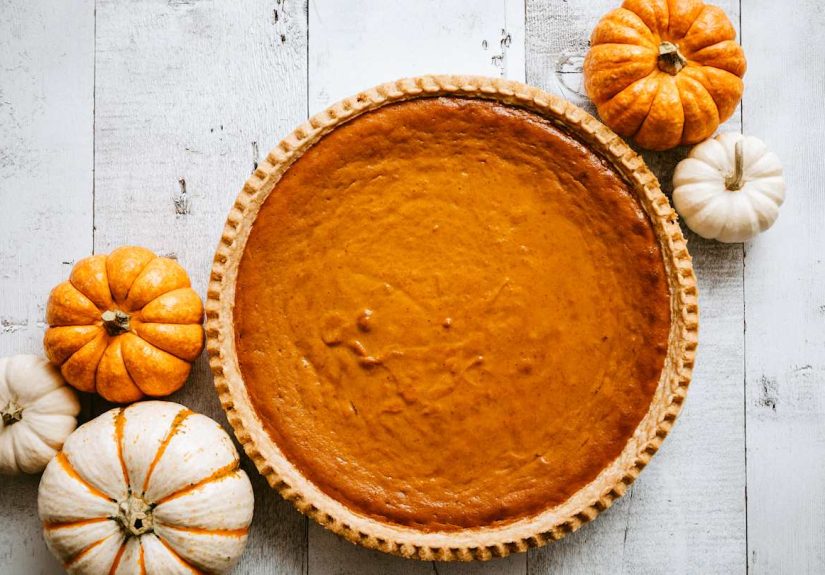
The texture Simmons describespumpkin/squash combined with dairy and eggs, sweetened, spiced, and baked in a crustlines up with what many Americans now call pumpkin pie,
even if the technique and ratios evolved over time.[5]
Food history is rarely one straight line, though. Regional preferences mattered. Seasonal availability mattered.
And technology eventually mattered a lot.
1929: When Canned Pumpkin Changed the Game
One of the biggest shifts was convenience. By the early 20th century, canned pumpkin meant home bakers could skip the roasting, straining,
and “please let this squash cooperate” step. Libby’s pumpkin pie recipe famously appeared on its can in 1929,
helping standardize what many families expected pumpkin pie to taste like.[8][9]
That kind of standardization shapes flavor memory. When millions of people use similar recipes year after year,
the “correct” taste of pumpkin pie becomes a shared national reference point.
1934: When “Pumpkin Pie Spice” Became a Product
Then came the real branding moment: pre-mixed pumpkin pie spice.
McCormick notes its Pumpkin Pie Spice has been an original product since 1934.[10]
In other words: the spice blend became something you could buy as one item instead of assembling from multiple jars.
That’s when “pumpkin spice” starts looking less like a set of recipe decisions and more like a recognizable category
something you can label, market, and keep on the shelf until the first leaf turns orange.
What Was in the First “Pompkin Spice” BlueprintAnd What’s in the Jar Now?
Simmons’s recipes point to a core set of spices that still define “pumpkin spice” today: ginger, nutmeg (and/or mace), and sometimes allspice.[2][6]
Modern commercial blends often emphasize cinnamon alongside ginger, nutmeg, and allspiceMcCormick’s current blend lists those four spices.[10]
So while your pantry jar may look modern, the flavor logic is old:
sweet squash + dairy richness + warm spices = autumn comfort.
A Practical “1796-Inspired” Spice Mix You Can Actually Use
If you want the spirit of the 1796 profile without pretending you’ve got a colonial hearth and a dough spur, aim for this:
- Ginger as the lead (bright warmth)
- Nutmeg for round sweetness
- Mace for a slightly floral edge (optional but fun)
- Allspice for that “baked-in cozy” note
Keep amounts modestespecially with nutmeg. In historical recipes, “to taste” often meant “use what you have and don’t get reckless.”
That advice ages well.
The Forgotten Flavor Hero: Molasses
One of the most charming differences between Simmons’s “pompkin” and many modern pumpkin pies is the use of molasses in one version.[2]
Molasses brings a darker sweetnessless bright sugar, more bass note. If cinnamon is a sweater, molasses is a leather jacket.
That matters because it shifts the whole profile. Instead of “sweet spice dessert,” you get something closer to “old-fashioned baked custard with deep caramel warmth.”
It’s pumpkin pie with a little historical gravitas.
The Checkerboard Crust: Because Extra Has Always Been a Thing
It’s comforting to know that even in the 1790s, people cared about presentation. Period adaptations of Simmons’s pie often recreate the decorative top crust
sometimes described as cross-hatched or checkerboardan early reminder that food has always been part flavor, part flex.[5]
Today, we do latte art. Then, they did pastry art. Different tools, same human urge: “Look what I made.”
How to Talk About This at a Party Without Sounding Like a Food History Robot
If you want to drop this fact into conversation (maybe at Thanksgiving, maybe in line for a PSL), here’s the friendly version:
- “Pumpkin spice” isn’t new. A recognizable warm-spice combo shows up in an American cookbook printed in 1796.[1][2]
- They spelled it “pompkin.” Which is objectively fun to say out loud.
- The key spices were ginger, nutmeg/mace, and allspice. The same flavor family we still chase today.[2][6]
- Commercial “pumpkin pie spice” arrived much later. McCormick dates its Pumpkin Pie Spice to 1934.[10]
Congratulations: you can now be the person who brings both dessert and trivia. That’s a powerful combo.
Extra: of “Pompkin Spice” Experiences (A Kitchen Time Machine)
There’s a particular kind of joy in realizing a modern flavor trend has an ancestor with candlelight vibes.
If you want the full “pompkin spice” experience, it starts long before the oven preheatsit starts with curiosity.
Picture yourself opening a scan of an 18th-century cookbook and spotting that spelling: pompkin.
Suddenly the flavor feels less like a marketing campaign and more like a message in a bottle from someone who had to cook without
a grocery-store spice aisle (or a recipe comment section that begins with, “I didn’t have pumpkin so I used tuna”).
The next experience is sensory and surprisingly emotional: measuring spices that are usually background characters.
Mace doesn’t get invited to every party anymore, but when you open the jar, it smells like nutmeg’s brighter, slightly mysterious sibling.
Ginger smells sharp and clean, like it’s ready to argue with cold weather on your behalf. Allspice arrives with that familiar “holiday” scent
that somehow feels like both dessert and nostalgia at the same time.
Then comes the “history meets real life” moment: you taste how different sweeteners steer the whole ship.
Try the molasses route and the pie suddenly feels deeperlike it’s wearing dark colors and listening to serious music.
Use regular sugar and it becomes lighter, more like the modern pies many of us grew up with. Either way, you learn the same lesson:
pumpkin isn’t the loudest ingredient in pumpkin pie. The spice is.
If you go all-in and attempt a decorative top crustcrosshatching, checkerboarding, anything that looks like it took longer than your patience budget
you’ll have a very human experience: the pastry will not respect your confidence. That’s part of the charm.
You’ll start with “I am an artist,” drift into “why is dough doing this,” and finish at “it’s rustic.” And honestly?
“Rustic” is historically accurate.
The best experience is the sharing part. When you bring a 1796-inspired pie to friends or family, people don’t just eat itthey react to it.
Someone will notice the ginger first. Someone else will ask why it tastes “warmer” or “less cinnamon-y.”
And then you get to tell the story: this isn’t a new trend; it’s a remix of an old idea.
That story changes the bite. It makes the dessert feel connectedto early American kitchens, to trade routes that stocked spice tins,
to the simple desire to turn a humble squash into something special. And for a moment, pumpkin spice stops being a punchline and becomes what it probably
always was: a cozy little tradition, just with better PR now.
Conclusion
The next time “pumpkin spice season” rolls around, you can smile knowing it’s not just a modern obsessionit’s a long-running American habit.
Back in 1796, Amelia Simmons was already pairing “pompkin” with warm spices like ginger, nutmeg (and mace), and allspice,
creating a flavor profile that still feels like fall today.[1][2]
The names, ingredients, and conveniences evolvedcanned pumpkin, pre-mixed spice jars, coffeehouse famebut the core idea stayed the same:
make something earthy taste festive, fragrant, and worth gathering around.