Table of Contents >> Show >> Hide
- A Quick Refresher: What Actually Happened to Little Albert?
- Why Psychologists Cared So Much About This Study
- The Big Ethical Problems (And Why They Make Us Cringe Today)
- The Mystery of Who Little Albert Really Was
- From Little Albert to Modern Ethics: How the Rules Changed
- What the Little Albert Experiment Still Teaches Us
- Modern Experiences and Reflections on Little Albert
- Conclusion: A Tiny Subject with a Huge Ethical Legacy
Imagine walking into a lab and finding an 11-month-old baby sitting on a table, happily playing with a white rat.
Now imagine a researcher sneaking up behind him and smashing a steel bar with a hammer every time he reaches for the rat.
That, in a nutshell, is the infamous Little Albert experiment – a classic in psychology textbooks and a horror story in research ethics.
Conducted in 1920 by behaviorist John B. Watson and his graduate student Rosalie Rayner at Johns Hopkins University,
the study was designed to show that human emotions like fear could be classically conditioned.
It worked – but at a significant cost to the baby involved and to psychology’s reputation.
Today, the Little Albert experiment is less a “great study” and more a cautionary tale about
ethical issues and controversies in psychological research.
A Quick Refresher: What Actually Happened to Little Albert?
The participant, known as “Albert B.” or simply “Little Albert,” was a baby around nine months old when Watson and Rayner first observed him.
They chose him because he appeared unusually calm and emotionally stable for his age.
During baseline testing, they exposed him to a variety of stimuli: a white rat, rabbit, dog, monkey, masks, cotton, wool, even burning newspapers.
Albert showed curiosity but no fear.
The real experiment began when Albert was about 11 months old. Here’s the basic setup:
- Albert sat on a mattress on a table in a lab room.
- A white laboratory rat was placed near him, and he reached for it without fear.
- Each time he touched the rat, Watson and Rayner struck a steel bar with a hammer behind his head.
- The loud sound startled Albert, who responded by crying and showing fear.
After several pairings of rat + loud noise, something changed. When the rat was presented alone,
Albert began to cry, crawl away, and show clear signs of distress.
The rat had gone from a neutral stimulus to a conditioned stimulus,
triggering a learned fear response.
Watson and Rayner then tested stimulus generalization.
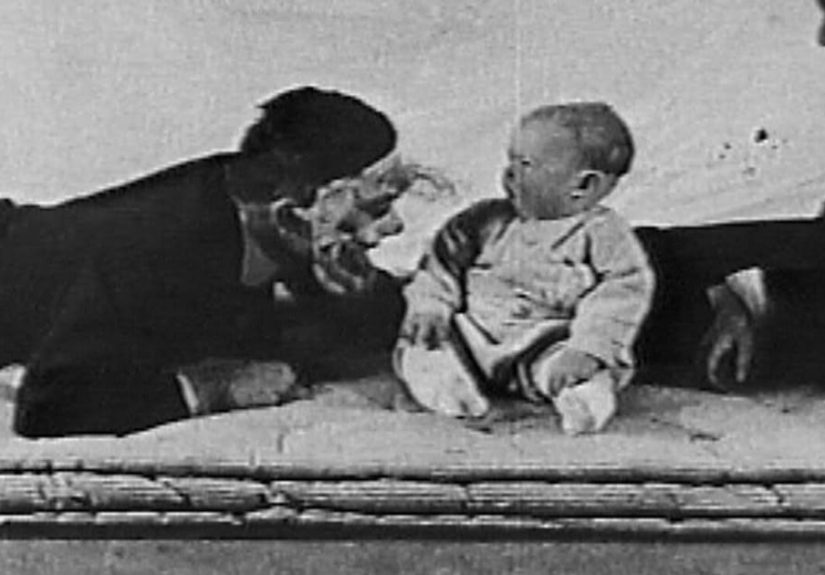
They showed Albert other furry objects – a rabbit, a dog, a fur coat, even a Santa Claus mask with a white beard.
In many cases, he reacted with fear and withdrawal. They concluded that fear could be conditioned and generalized
from one object to others that looked similar.
Why Psychologists Cared So Much About This Study
In the early 20th century, behaviorism was on the rise. Behaviorists believed that psychology should focus on
observable behavior, not unmeasurable inner thoughts. The Little Albert experiment seemed to prove that:
- Emotional responses like fear could be learned, not just inborn.
- Classical conditioning principles demonstrated with animals (like Pavlov’s dogs) applied to humans too.
- Environment and experience played a huge role in shaping behavior.
These findings influenced everything from therapy techniques to advertising strategies.
Watson himself went on to work in advertising, applying conditioning principles to sell products.
So yes, Little Albert may be part of the reason modern commercials are so good at tugging your emotions.
But while the experiment looked “elegant” from a behaviorist perspective, from an ethical standpoint it’s a mess.
Let’s unpack why.
The Big Ethical Problems (And Why They Make Us Cringe Today)
Lack of Informed Consent and Real Choice
Today, informed consent is non-negotiable. Participants (or their parents/guardians) must be told:
- What the study is about in understandable language.
- What procedures will be used and what risks are involved.
- That they can say no or withdraw at any time, without penalty.
In the Little Albert experiment, we don’t have solid evidence that Albert’s mother understood the full nature of the study.
Historical accounts suggest she may have been a hospital worker or wet nurse whose ability to refuse was limited.
That power imbalance alone would make any modern ethics board extremely nervous.
Using a Highly Vulnerable Participant
Albert was an infant – a member of one of the most vulnerable populations in research.
Babies cannot understand, cannot consent, and cannot verbally express distress beyond crying.
Modern ethical guidelines require extra protections for children and infants.
You don’t deliberately create strong negative emotions in them unless the potential benefit to the child is very clear and the risk is minimal.
In this case, the direct benefit to Albert was zero. The whole purpose was to prove a theoretical point:
“Can fear be conditioned?” There was no medical treatment, no diagnosis, and no obvious personal gain for the child.
Deliberately Causing Fear and Distress
Let’s be blunt: the experiment was designed to scare a baby on purpose.
Watson and Rayner repeatedly startled Albert with a loud, frightening noise while he was close to the rat.
His crying, distress, and attempts to escape weren’t unfortunate side effects – they were the data.
Modern ethical standards emphasize beneficence (do good) and
nonmaleficence (do no harm). Researchers must minimize discomfort and avoid unnecessary suffering.
Repeatedly frightening an infant to the point of tears for no direct benefit to that child wouldn’t just be rejected by an ethics board;
it would likely be reported as a serious violation.
No Deconditioning or Follow-Up Care
One of the most troubling parts of the story is what didn’t happen afterward.
Watson talked about the possibility of deconditioning Albert’s fear – basically, helping him unlearn his phobia.
But there’s no evidence that this was ever done.
Albert left the hospital while still showing clear signs of fear toward furry objects.
Whether that fear faded naturally or persisted into his later life is unknown, but the fact remains:
researchers created a problem and then failed to clean it up.
Current ethical rules would require a clear plan to minimize lasting harm, especially in a child.
Privacy, Anonymity, and the “Famous Baby” Problem
We often treat “Little Albert” as a character in a psychology story, but he was a real child with a real life.
The experiment was filmed and widely described, and while Watson used a pseudonym,
later researchers have spent decades trying to uncover Albert’s true identity.
Modern privacy standards emphasize keeping participants’ information confidential and avoiding unnecessary exposure.
Instead, Albert became one of the most famous research subjects in history – without his knowledge or consent.
The Mystery of Who Little Albert Really Was
For years, no one knew what happened to Little Albert after the experiment.
In 2010, a major investigation suggested that Albert was actually a child named Douglas Merritte,
who tragically died around age six and may have had neurological problems from birth.
If true, that would mean the “healthy, normal infant” Watson claimed to study was actually seriously ill,
raising concerns about scientific accuracy and exploitation of a disabled child.
Later work challenged that conclusion and proposed another candidate: William “Albert” Barger.
This boy lived a long life and reportedly had a mild dislike of animals, but no clear debilitating phobias.
The debate over Albert’s identity shows how messy the historical record really is and how little care
was taken to document or protect the child’s long-term wellbeing.
Either way, the search for “the real Little Albert” has added another ethical layer:
decades later, researchers and journalists are still trying to piece together the life of a person
whose early distress became public property.
From Little Albert to Modern Ethics: How the Rules Changed
The Little Albert experiment didn’t immediately cause a revolution in ethics,
but it is now used as a prime example of what not to do.
Over time, a series of high-profile unethical studies in medicine and psychology
led to major reforms in how human subjects are protected.
In the United States, key developments included:
- The Belmont Report (1979), which set out core principles: respect for persons, beneficence, and justice.
- The establishment of Institutional Review Boards (IRBs) to review and approve research involving humans.
- The American Psychological Association’s Ethics Code, which lays out detailed standards for research with human participants.
Under these standards, the Little Albert study would never pass:
- Risks clearly outweighed benefits for the child.
- There was no meaningful informed consent process for a vulnerable infant.
- There was no plan to treat or reverse the harm caused.
- The study design relied on causing emotional trauma as its main outcome.
Today, even studies that involve mild stress are scrutinized carefully.
If children are involved, the bar is even higher.
Researchers must justify why children are necessary, show that the risk is minimal,
and often obtain assent from the child in addition to parental consent when the child is old enough to understand.
What the Little Albert Experiment Still Teaches Us
Despite its serious flaws, the Little Albert experiment continues to appear in psychology courses,
ethics trainings, and clinical discussions. Why?
- It’s a vivid illustration of classical conditioning of fear.
- It shows how easily scientific curiosity can overshadow compassion if there are no guardrails.
- It reminds us that every data point is a person, not just a number in a table.
The story also connects to modern therapies. After hearing Watson’s lectures,
psychologist Mary Cover Jones developed techniques to decondition fear in a boy named Peter,
helping him gradually overcome his fear of rabbits through controlled exposure paired with positive experiences.
Her work is seen as an ancestor of modern exposure therapy and behavior therapy used to treat phobias today.
In other words, for every troubling chapter like Little Albert, there’s a counter-chapter where psychologists learn from past mistakes
and build more humane, evidence-based ways to help people.
Modern Experiences and Reflections on Little Albert
If you sit in on an introductory psychology course today, there’s a good chance you’ll see the Little Albert film at some point.
The reactions in the classroom say a lot about how our ethical expectations have evolved.
Some students start out fascinated. They’ve read about conditioning and want to see “how it really looks.”
But when the film shows a confused baby, flinching and crying as the rat appears,
there’s usually a quiet shift in the room. A few people frown. Someone mutters, “This is awful.”
The lesson lands on two levels: one about learning theory, and another about the limits of what we should do in the name of science.
Many professors now use Little Albert as a gateway into a broader conversation about research ethics.
They might ask students:
- “How would this study be redesigned to meet today’s ethical standards?”
- “What protections would an IRB demand before approving anything similar?”
- “What’s the difference between interesting results and acceptable methods?”
Those discussions can get surprisingly personal. Students sometimes bring up their own childhood fears –
of dogs, of the dark, of doctors’ offices – and reflect on how powerful early experiences can be.
The connection to Little Albert becomes less abstract: this wasn’t just a hypothetical infant;
this was someone whose early emotional learning may have been shaped in a lab for the sake of a publication.
Clinicians and therapists also encounter the legacy of Little Albert in a more indirect way.
When they explain exposure therapy to clients dealing with phobias or anxiety,
they often describe how the brain learns to associate certain cues with danger.
Many will mention that older studies used fear conditioning in ways that would now be considered unacceptable,
and emphasize that modern therapy flips the script:
instead of creating fear, it focuses on reducing it in safe, controlled, consent-based settings.
Research ethics committees (IRBs) frequently reference classic cases like Little Albert when training new members.
In workshops, participants are given short summaries of the experiment and asked to identify red flags:
- No clear benefit to the child.
- Significant emotional harm and distress.
- Lack of informed consent and ability to withdraw.
- No plan for debriefing or deconditioning.
These exercises aren’t just academic. They shape how reviewers evaluate real proposals that land on their desks.
If a modern researcher suggests inducing even mild discomfort in children,
reviewers immediately ask: “Is this necessary? Is there a less harmful alternative?
How will you support and follow up with these kids?”
You could say that Little Albert sits silently in the back of every meeting,
reminding the group what happens when curiosity outruns conscience.
Even outside of academia, the story resonates. Parents who hear the outline of the experiment tend to respond viscerally:
“They did what to a baby?” That gut reaction is important.
It shows how everyday moral intuitions now line up much more closely with formal ethical codes.
You don’t need a PhD in psychology to know that repeatedly terrifying an infant for research is wrong.
Ultimately, modern experiences with the Little Albert experiment tend to land in the same place:
it’s useful to know what happened, and it’s vital that we never repeat it.
The study gives us a striking demonstration of learned fear – and an even stronger example of why
every research design should start with a simple question:
“If this were my child, friend, or family member, would I still think this was okay?”
Conclusion: A Tiny Subject with a Huge Ethical Legacy
The Little Albert experiment will probably never disappear from psychology.
It’s too vivid, too memorable, and too useful for teaching both conditioning and ethics.
But the way we talk about it has changed.
Albert is no longer just “the baby who proved fear can be learned.”
He’s also a symbol of what happens when scientific ambition ignores human vulnerability.
In the end, the most important lesson may not be that fear can be conditioned,
but that science must be guided by empathy, consent, and respect for the people whose lives intersect with our research.
The real progress comes not from repeating what Watson did,
but from ensuring that no future “Little Albert” ever has to sit on a lab table and learn fear the hard way.