Table of Contents >> Show >> Hide
- What’s the “Horny Snowman” Scene, Exactly?
- Why the Jim Henson Company Was the Secret Weapon
- How the Snowman Was Built (And Why That Matters On Screen)
- Practical vs. CGI: Why “Real” Still Wins in a Spoof
- The Joke’s Structure: Romance Montage Meets Horror Parody
- Why This Scene Became the One Everyone Talks About
- What the Snowman Says About Modern Comedy Filmmaking
- Conclusion
- Bonus: of “Snowman Scene” Experiences (Viewer + Maker Edition)
Every era gets the comedy it deserves. The ’80s gave us shoulder pads, synth-pop, and the original Naked Gun filmsmasterclasses in deadpan chaos.
The 2025 revival asked a simple, reasonable question: What if a romance montage got possessed… and then got weird?
The answer is the movie’s now-infamous “enchanted snowman” sequencepart love story, part horror parody, and part “how did this make it past three meetings and a legal team?”
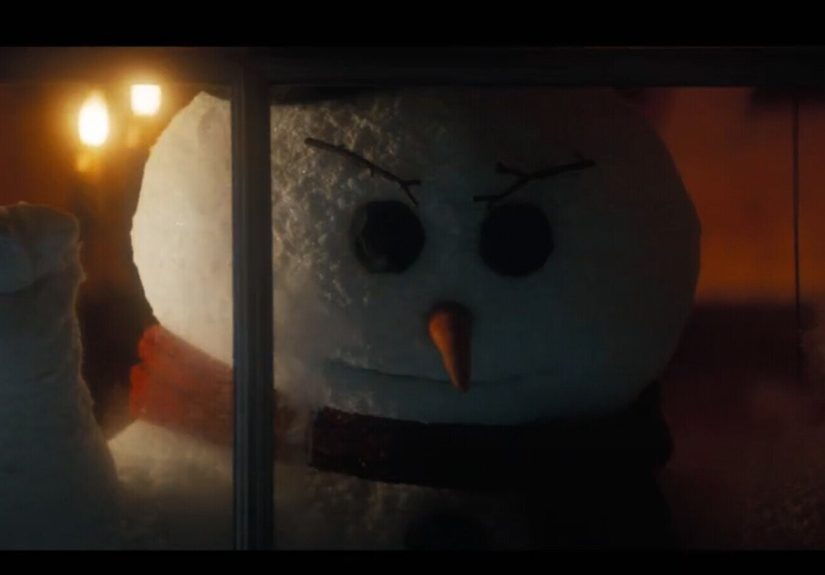
Here’s the best part (besides the snowman’s aggressively judgmental eyebrows): this isn’t a purely digital gag.
The snowman was brought to life by the Jim Henson Companyspecifically, the legendary Creature Shop that has been building “impossible” characters for decades.
In a moment when so many comedies default to pixels, The Naked Gun chose felt, foam, mechanics, and performance.
And that choice is exactly why the scene lands like a snowball to the facein the best way.
What’s the “Horny Snowman” Scene, Exactly?
Midway through The Naked Gun (2025), Frank Drebin Jr. and Beth Davenport escape to a snowy cabin for a classic movie montage: cozy vibes, romantic beats,
and the kind of wholesome bonding that usually ends with hot cocoa and a tasteful fade-out.
Then the film yanks the steering wheel and reveals Beth has… a spell book.
A snowman gets magically animated, the montage turns boldly adult (without going explicit), and the whole thing swerves into a gleeful horror-movie spoof.
It’s a ridiculous tonal tightrope: romantic sincerity, raunchy shock, and slasher-style absurditystitched together with the franchise’s signature straight-faced commitment.
The scene was controversial even among people who made the movie. Early reads reportedly split the room:
some saw instant comedy gold; others saw a future “What were we thinking?” retrospective.
But test audiences later treated it like a highlight reel moment.
Why the Jim Henson Company Was the Secret Weapon
If you want a creature to feel alivenot just “rendered”you hire artists who understand performance, not just visuals.
The Creature Shop is built on that philosophy: a character isn’t merely fabricated; it’s engineered to be acted.
Their work blends design, mechanics, materials, and puppeteering into one coordinated illusion.
That matters for comedy. In a spoof, the joke often depends on physical timing:
a pause that’s half a beat too long, a blink that feels offended, a turn that says, “I heard you… and I’m judging you.”
A practical character can do those micro-moments in-camera, with the cast reacting to something that’s truly there.
Comedy loves realitybecause reality makes the nonsense feel even more nonsense.
Not a “Muppet,” but definitely Muppet-adjacent magic
People use “Muppet” as shorthand for anything involving puppetry, but the Creature Shop’s lane is broader:
animatronics, creature suits, performance tech, and characters that can share a frame with human actors and still hold your attention.
The snowman isn’t trying to be cute. It’s trying to be presentlike an uninvited guest who somehow becomes the center of the room.
That’s a very Henson-style trick: give the unreal enough personality that it feels inevitable.
How the Snowman Was Built (And Why That Matters On Screen)
Reports about the sequence point to an approach that’s refreshingly old-school: a large, wearable costume with performance-driven features,
including expressive facial elements (the eyebrows became a small obsession for viewers, which tells you everything about how readable the performance is).
The film didn’t need the snowman to look “photoreal.” It needed him to look emotionally realbecause the joke is that everyone commits to the bit.
Director Akiva Schaffer has described resisting a more expensive digital route at one point,
arguing for something simpler and funnier: a practical character you could shoot like a mascot costume, but operated with professional puppetry finesse.
That decision isn’t just a budget footnoteit’s the difference between a gag that feels “inserted” and one that feels like a living complication.
The practical-effects advantage: actors don’t have to imagine the punchline
Comedy performances sharpen when the cast has a real scene partnereven if that partner is a snowy menace with main-character energy.
A practical build gives the camera actual textures, real shadows, and natural limitations.
Weirdly, limitations are often the funniest part.
When a character can’t do everything, every movement becomes a choicelike physical comedy with built-in rules.
Practical vs. CGI: Why “Real” Still Wins in a Spoof
There’s a time and place for CGI, and it’s usually when you need a city to explode or a dragon to do backflips.
But a spoof thrives on the audience sensing the mechanics of the joke.
When the snowman is clearly “a thing” with weight and presence, the ridiculousness becomes more believableand therefore funnier.
Also, practical creatures invite a special kind of laughter:
the laugh that says, “Someone built this with their hands, and that’s incredible,”
followed immediately by, “And they built it for this.”
That mix of craftsmanship and stupidity is the DNA of great parody.
The Joke’s Structure: Romance Montage Meets Horror Parody
The scene plays like a cinematic mash-up:
start with a classic couple’s getaway montage (soft lighting, cozy activities, “we’re falling in love” rhythm),
then inject a magical twist (spell book), then push it into a risqué left turn (the snowman becomes an unexpected participant),
and finally yank it into horror territory (sudden menace).
That’s not random. It’s a smart parody engine:
- Step 1: Establish a recognizable movie language (the romance montage).
- Step 2: Escalate beyond what the audience expects (magic + adult absurdity).
- Step 3: Switch genres midstream (horror beats inside a love scene).
- Step 4: Let the characters play it straight so the audience can lose it.
Spoofs work best when they understand the thing they’re mocking.
The new film’s snowman sequence is also a love letter to the franchise’s roots: the original movies were never just “random jokes.”
They were genre grammarspoken fluently, then intentionally misused.
Why This Scene Became the One Everyone Talks About
In a world of endlessly shareable moments, the snowman montage is engineered for conversation:
it’s surprising, slightly scandalous, and structurally clever.
But the deeper reason it sticks is that it feels made.
You can sense the human choiceswriting, staging, building, puppeteeringstacked on top of each other.
The Creature Shop’s involvement turns the scene from “wild idea” into “wild reality.”
The snowman isn’t just a gag; he’s a character with attitude.
And once a ridiculous character has attitude, audiences will follow them anywhereyes, even into a cabin montage that goes fully off the rails.
What the Snowman Says About Modern Comedy Filmmaking
Legacy sequels often play it safe: recycle the old hits, wink at the camera, call it nostalgia, roll credits.
The Naked Gun (2025) clearly respects the original tonebut the snowman is a statement that the new team isn’t here to cosplay the past.
It’s a swing that risks confusing some viewers in order to delight others.
That’s what comedies used to do more often: commit to a premise so hard it becomes undeniable.
And practically speaking, this is a win for the craft side of filmmaking.
Practical effects don’t just belong in fantasy or sci-fi.
In comedy, they can deliver something rare: a joke that looks expensive, feels tactile, and still plays like a scrappy, inspired prank.
Conclusion
The enchanted snowman scene works because it’s more than a shock gag.
It’s a carefully built collision of genresromance, magic, raunch, horrorperformed with total sincerity and anchored by a practical character
created by the Jim Henson Company’s Creature Shop.
When a spoof commits to a physical, performable creature, it gives the audience something to believe inand then uses that belief to do something absurd.
In other words: the snowman isn’t the joke. The snowman is the delivery system.
And thanks to Henson-level craftsmanship, that delivery lands exactly where it aimsright in the audience’s “I can’t believe I’m laughing at this” reflex.
(SEO tags are included in JSON at the very end, as requested.)
Bonus: of “Snowman Scene” Experiences (Viewer + Maker Edition)
If you’ve watched the snowman sequence with other people, you already know it has a special social power:
it turns a room into a live focus group, except everyone is giggling and pointing like they’ve just discovered a new species.
The first experience is always the samepure whiplash. You think you’re settling into a familiar rom-com montage rhythm,
and then the film calmly opens a trapdoor labeled “spell book” and drops you into nonsense. That moment is a tiny roller coaster.
You feel your brain trying to file the scene under “romance,” then “fantasy,” then “adult joke,” and finally “waitare we in a horror movie now?”
The laughter that comes out isn’t just “that’s funny.” It’s “I’m laughing because I’m confused, and I’m confused because it’s funny.”
Rewatching is a different experience. The first time, you’re reacting to the audacity.
The second time, you start noticing the craft: how the snowman’s expression sells the mood shifts,
how the timing of the movements nudges the scene from sweet to unsettling, and how the actors treat the creature like a real scene partner.
It’s the kind of moment where you catch yourself thinking, “Oh, this wasn’t accidental.”
Comedy is often dismissed as effortless, but this kind of sequence feels choreographed like a dancejust a dance with a deranged snowman.
The third experience is the internet rabbit hole. People don’t just want to laugh; they want to understand how.
That’s when you end up reading interviews, watching behind-the-scenes clips, and learning why practical builds matter.
You realize the scene isn’t only memorable because it’s outrageousit’s memorable because it’s tangible.
There’s a peculiar delight in knowing real artists spent real hours building something that exists primarily to make you spit out your drink.
The “making-of” knowledge retroactively upgrades the joke, like finding out your favorite dumb prank required aerospace engineering.
And if you’re the hands-on type, this scene can spark a maker’s itch.
Not “I will build a movie-grade animatronic snowman,” unless you have a workshop, a team, and extremely patient neighbors.
More like: you start noticing what makes a character readable.
You experiment with simple DIY puppetry ideaspaper eyebrows on a snowman decoration, a hinged mouth on a craft-store mask,
or even stop-motion on your phone where tiny expression changes create personality.
The experience becomes a mini-lesson in performance: the smallest movement can become the biggest joke if it’s timed well.
Ultimately, the snowman scene experience is a reminder of why people still love practical effects.
It’s not nostalgia. It’s connection.
When you can feel the “realness” of a charactereven a ridiculous oneyou react more honestly.
And that’s the sneaky genius of the sequence: it uses genuine craft to earn genuine audience buy-in…
then spends that buy-in on the dumbest, bravest possible punchline.