Table of Contents >> Show >> Hide
- Why bringing back classic Star Trek villains matters
- The Gorn are no longer campy lizards in rubber suits
- The Klingons are back, and they still know how to ruin everyone’s day
- Legacy villains are becoming a storytelling strategy, not a gimmick
- What major villains do for Pike’s Enterprise
- Could this approach shape the future of Star Trek?
- Final thoughts: the villains are back, but the mission is still hope
- Fan experience: what it feels like when Star Trek brings old villains back in a new way
For a franchise built on diplomacy, discovery, and the occasional eyebrow raise from Spock, Star Trek has always known the value of a great villain. Not every enemy has to be a mustache-twirling chaos goblin in space boots, but the best Star Trek antagonists do something unforgettable: they force the crew to confront fear, pride, prejudice, or the uncomfortable possibility that the universe does not care how polished your Federation speech sounds.
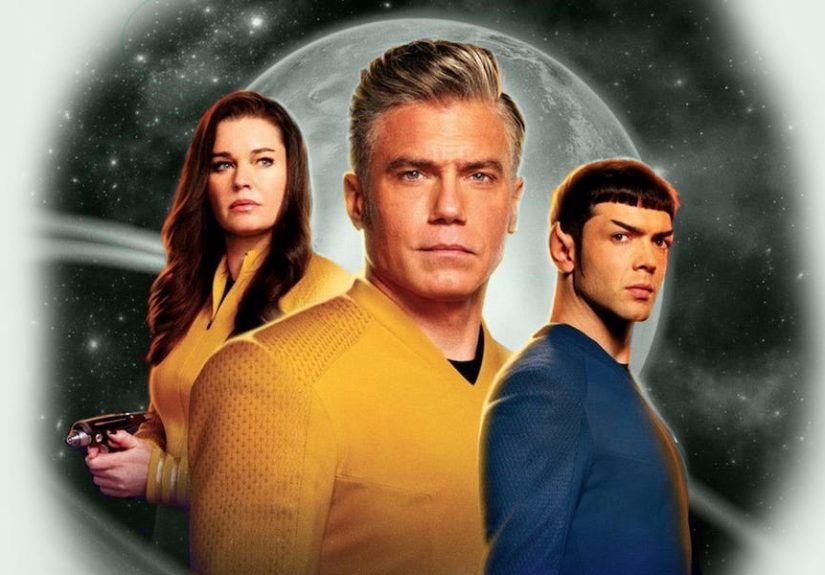
That is exactly why the newest wave of Star Trek storytelling feels so interesting right now. Star Trek: Strange New Worlds is not just revisiting old franchise furniture for nostalgia points. It is reintroducing major villains in ways that feel sharper, stranger, darker, andmost importantlymore relevant to modern audiences. The result is a series that honors classic canon while refusing to trap it in amber like a museum exhibit with better lighting.
If old-school Trek sometimes treated villains as neat weekly obstacles, Strange New Worlds treats them like pressure systems. They shape character arcs. They alter tone. They drag trauma into the room and refuse to leave politely. And yes, sometimes they also make the audience say, “Well, that escalated quickly,” which is the sci-fi equivalent of a standing ovation.
Why bringing back classic Star Trek villains matters
Legacy villains can be dangerous business. Bring them back too softly, and they feel like fan-service wallpaper. Bring them back too aggressively, and they bulldoze the optimistic heart of the franchise. Strange New Worlds finds a smarter middle path. Instead of simply repeating what made those enemies iconic in the 1960s or 1990s, it asks a better question: what would these threats look like if the show had today’s tools, today’s pacing, and today’s emotional appetite?
That creative approach matters because Star Trek has always worked best when its villains are not random monsters of the week. The Romulans made paranoia political. The Borg made assimilation terrifying. Khan made vengeance operatic. The Klingons, at their best, exposed the razor-thin line between honor and brutality. A major villain in Star Trek is rarely just a bad guy. They are a stress test for the franchise’s values.
In that sense, the newest Star Trek is doing something clever. It is reviving major antagonists not as dusty collectibles, but as active storytelling engines. These enemies are not here to wave to longtime fans from behind the glass. They are here to break thingsships, assumptions, and occasionally the audience’s emotional stability.
The Gorn are no longer campy lizards in rubber suits
The clearest example is the Gorn. For decades, many casual viewers mostly remembered them as the alien Captain Kirk fought in “Arena,” a classic episode whose reputation is beloved, iconic, and just a little bit delightfully silly. That fight is part of Star Trek history. It is also not exactly nightmare fuel in the modern age.
Strange New Worlds changes that fast. The series reimagines the Gorn as a recurring threat with real horror credentials. These are no longer one-note reptilian bruisers waiting for a dramatic music cue. They are fast, predatory, tactically dangerous, and framed with the kind of creature-feature dread that makes the Enterprise feel less like a floating utopia and more like the last clean hallway in a haunted hospital.
This update works for two reasons. First, it raises the stakes. A villain species must feel genuinely dangerous if the audience is going to believe the crew is under pressure. Second, it gives the show tonal flexibility. The Gorn let Strange New Worlds flirt with body horror, survival thriller beats, and war-story intensity without losing its larger sense of mission. In other words, the Gorn are not just scarier now. They are more useful dramatically.
Even better, the show ties the Gorn threat directly to character history. La’an Noonien-Singh’s trauma is not abstract. The Gorn are part of the reason she is who she is. Ortegas, M’Benga, and Batel are also pulled into the fallout. When a villain is woven into the emotional architecture of the crew, every appearance lands harder. It is not “Oh look, the bad lizards are back.” It is “Oh no, this scar never healed.”
The Gorn make Strange New Worlds feel fresh and classic at the same time
What is impressive is that the show manages to modernize the Gorn without erasing the underlying Trek idea that understanding the Other still matters. Even when the series leans into horror, it does not entirely surrender its philosophical DNA. The Gorn are terrifying, yes, but they are also part of a broader conversation about fear, myth, territorial conflict, and the limits of Federation certainty.
That balance is difficult. Plenty of legacy franchises revive old villains by simply making them louder, grimmer, or more explosive. Strange New Worlds mostly avoids that trap. Its version of the Gorn feels modern, but not generic. They are not just “space monsters with better rendering.” They are a reminder that even in a franchise famous for negotiation, some threats arrive like a panic attack with teeth.
The Klingons are back, and they still know how to ruin everyone’s day
If the Gorn represent the show’s horror side, the Klingons represent its moral complexity. Strange New Worlds has made a point of bringing Klingon conflict back into the foreground, and that is a smart move. Klingons are among Star Trek’s most durable enemies precisely because they are never just enemies. They are warriors, rivals, uneasy allies, political symbols, and walking arguments about honor, empire, and memory.
Season 2 uses that history well. Rather than treating the Klingons as cartoon heavies, the series ties them to the emotional wreckage of war. Through M’Benga and Chapel in particular, the Klingon presence becomes a gateway to stories about trauma, survival, and the stories soldiers tell themselves in order to keep functioning. That is heavier material than a simple border dispute, and the show benefits from taking it seriously.
One reason the Klingons remain essential is that they let Star Trek explore conflict without flattening everyone into easy heroes and villains. A war leaves ghosts on both sides. Diplomacy after violence is never clean. Reintroducing Klingons means reintroducing that messiness, and Strange New Worlds has enough confidence to sit in that discomfort instead of rushing to tidy it up.
And yet, because this is still Star Trek, the show never forgets entertainment. It can give audiences espionage, battlefield scars, ideological tension, and then pivot into a moment that reminds you Klingons are also one of the franchise’s most flavorful recurring forces. They do not just enter a story; they stomp into it wearing the emotional equivalent of a battle drum.
Legacy villains are becoming a storytelling strategy, not a gimmick
The smartest thing about the newest Star Trek is that villain reintroduction is not being treated like a one-time publicity trick. It increasingly looks like part of the show’s core design. The series keeps threading classic antagonistic energies into new forms, whether through the Gorn, renewed Klingon tension, or other legacy figures who blur the line between mischief and menace.
That matters because Strange New Worlds is a prequel with a ticking clock. Audiences already know the broad contours of where the franchise eventually goes. So the show needs new suspense mechanisms. Reframed villains solve part of that problem. You may know some characters survive. You may know roughly where the Enterprise ends up. But you do not know how these reimagined enemies will reshape the emotional path getting there.
This is especially useful in a franchise era where viewers expect both serialized momentum and standalone adventure. Villains provide connective tissue. A recurring threat can give the season structure, while individual episodes still get room to try different genres. That is one of Strange New Worlds’ secret weapons: it can serve a space battle, a romance, a murder mystery, a moral dilemma, and a nasty alien crisis without feeling like it has lost the map.
Trelane, tricksters, and the art of reintroducing chaos
Another intriguing angle is the show’s interest in legacy troublemakers who are not straightforward conquerors. A reintroduced figure like Trelane adds a different flavor of villainyless military threat, more cosmic disruption. That kind of character matters because Star Trek has always understood that danger is not limited to warships and empires. Sometimes the real threat is a being with godlike power, a warped sense of fun, and the emotional maturity of a rich child at a dinner party.
Those kinds of antagonists are especially valuable in a show like Strange New Worlds, which loves tonal experimentation. A trickster villain can destabilize reality, genre, and character relationships all at once. The franchise does not need every adversary to be another cube-shaped apocalypse. Sometimes a smirk and a snap of cosmic fingers will do just fine.
What major villains do for Pike’s Enterprise
Captain Pike’s crew is one of the strongest ensembles in modern franchise television, and a big reason is that each major villain reveals a different fracture line. The Gorn expose fear and survival instinct. The Klingons stir unresolved wartime pain. Trickster figures like Trelane poke at ego, desire, and identity. These antagonists are not interchangeable. They are tailored stressors.
That structure helps the show avoid a common prequel problem: overreliance on familiar lore without emotional urgency. Yes, viewers love seeing younger versions of famous characters. Yes, continuity can be fun. But continuity alone does not create drama. Villains do. They force the crew to choose between instinct and principle, vengeance and restraint, certainty and humility.
Pike’s version of the Enterprise is particularly well-suited for this because it still feels like a crew becoming itself. Kirk’s era has not fully arrived. The mythology is familiar, but the emotional identities are still in motion. Reintroducing major villains during that formative phase gives the show a compelling question: what kinds of enemies help forge the people we thought we already knew?
Could this approach shape the future of Star Trek?
Very possibly. As Strange New Worlds moves toward its announced final run, it is becoming clearer that the series may leave behind more than a stack of fan-favorite episodes. It may leave a blueprint. That blueprint says legacy storytelling works best when nostalgia is treated as raw material, not the finished product.
Future Star Trek series can learn from that. Reintroducing classic villains is not automatically exciting. It becomes exciting when the show asks what those villains mean now. What fresh anxiety do they embody? What emotional terrain do they open? What new perspective can the characters bring to an old conflict?
If the franchise keeps asking those questions, it can keep mining its history without becoming trapped by it. That is the sweet spot. Fans get the thrill of recognition, newer viewers get stories that work on their own terms, and everyone gets to watch a starship crew make impossible decisions while looking unfairly composed under pressure.
Final thoughts: the villains are back, but the mission is still hope
The headline may be that the newest Star Trek will reintroduce major villains, but the more interesting story is why it is doing so. Strange New Worlds is using familiar enemies to sharpen its characters, deepen its themes, and widen its tonal range. The Gorn are scarier. The Klingons are more emotionally loaded. Trickster threats bring mythic weirdness back into the mix. None of that feels accidental.
The show understands something fundamental: optimism is only compelling when it is tested. A utopian future means very little if nothing ever pushes against it. Great Star Trek villains do not merely endanger the ship. They challenge the franchise’s faith in reason, empathy, and moral courage.
That is why this creative strategy works. The villains are back, but not as nostalgia props. They return as meaningful obstacles in a story still committed to exploration, humanity, and the stubborn belief that even in a dangerous galaxy, decency is worth defending. That has always been the real mission of Star Trek. The phasers are just accessories.
Fan experience: what it feels like when Star Trek brings old villains back in a new way
There is a very specific thrill that comes from watching Star Trek reintroduce a major villain correctly. It feels like hearing a familiar song played with a sharper arrangement. You know the melody, but the tone hits differently. Longtime fans do not just experience recognition; they experience re-evaluation. A species or character they once filed away as “classic” suddenly feels dangerous, complicated, or emotionally raw all over again.
That is part of the fun of watching Strange New Worlds. The series gives viewers two pleasures at once. First, there is the immediate excitement of seeing a legacy enemy return. Then comes the second wave, which is more satisfying: realizing the writers actually had a plan beyond “Hey, remember this guy?” When the Gorn show up as a full-on nightmare instead of a campy callback, the audience gets to feel surprise inside familiarity. That is a rare trick, and it is catnip for science-fiction fans.
There is also an emotional dimension to these returns. For many viewers, classic Star Trek villains are tied to childhood memories, reruns, family marathons, convention chatter, or that one friend who insists the best captain debate is a sacred constitutional right. Seeing those villains updated can feel a bit like revisiting your old neighborhood and finding that the same streets are still there, but now the houses have stories you never noticed before.
On a weekly viewing level, major villain arcs also make the show more communal. Fans speculate more. They compare canon. They debate whether a reinvention is brilliant, blasphemous, or brilliantly blasphemous. They swap theories about timelines, future crew arrivals, and whether a legacy threat is being used as metaphor, misdirection, or both. In other words, the reintroduction of a big villain does what the best franchise storytelling always does: it gets people talking, not just watching.
And maybe that is the biggest experience of all. A strong villain return reminds fans why Star Trek remains durable. The franchise is not alive because it repeats itself perfectly. It stays alive because it keeps finding new ways to make old ideas pulse. When a classic enemy comes back with better writing, richer stakes, and a point of view, the experience is not mere nostalgia. It is renewal. The past steps onto the bridge, clears its throat, and suddenly the future feels exciting again.