Table of Contents >> Show >> Hide
- 1) The Jet Age didn’t “arrive”it made an entrance (in 1958, with Pan Am leading the parade)
- 2) “No smoking section” used to be a real thing… and it was about as effective as a screen door on a submarine
- 3) Early jets were loud enough to make “inside voice” a charming fantasy
- 4) Airlines once competed on luxury because prices were regulatedso service became the battlefield
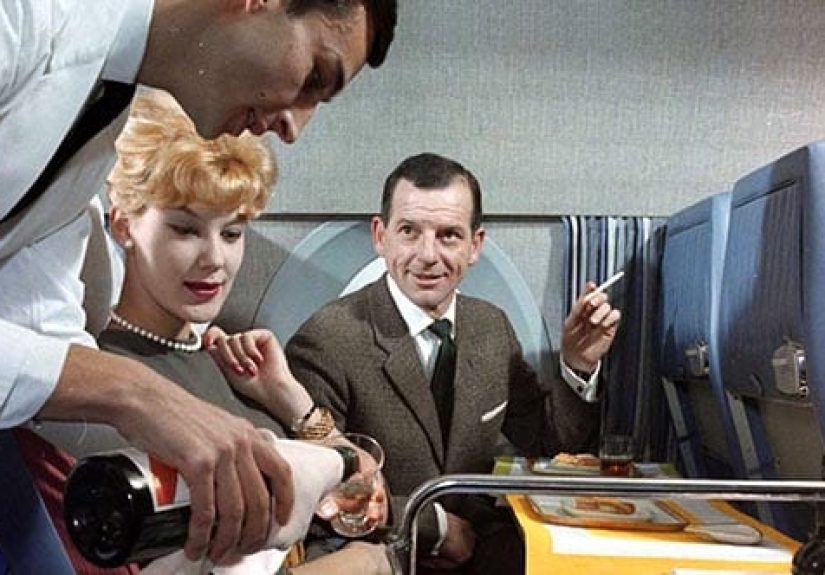
- 5) In-flight dining wasn’t “airplane food.” It was “restaurant service at 35,000 feet”
- 6) Some planes had lounges and cocktail barsbecause apparently the sky needed a social scene
- 7) The first scheduled in-flight movie is older than you think (and it started as a first-class perk)
- 8) Kids flying alone was treated more like a “hosted journey” than a policy PDF
- 9) Security used to be shockingly relaxeduntil hijackings forced the modern era of screening
- 10) Airports were built to inspire awemidcentury terminals were basically optimism in concrete and glass
- Bonus: 5 Modern “Experiences” That Let You Taste the Golden Age of Flying (Without Needing a Time Machine)
- Conclusion
There was a brief, sparkling window in aviation history when flying wasn’t just “a way to get there.”
It was the event. Think late 1950s through the 1960s: the Jet Age takes off, tickets are pricey,
airports feel like futuristic cathedrals, and the phrase “jet set” isn’t a punchlineit’s a lifestyle.
Was it perfect? Not even close. It was louder, smokier, less accessible, and far less secure than today.
But it was also undeniably theatricalan era when airlines competed on glamour, service, and sheer wow-factor.
Below are 10 fascinating, very real facts about that “Golden Age of Flying,” told with enough detail to satisfy
your inner aviation nerd and enough fun to keep your brain in the air instead of stuck in TSA line.
1) The Jet Age didn’t “arrive”it made an entrance (in 1958, with Pan Am leading the parade)
The Golden Age of Flying is inseparable from one big, world-shrinking idea: jets could turn the Atlantic into a long
lunch break instead of an epic saga. When large jetliners began entering transatlantic service in 1958, commercial
aviation shifted toward mass traveland the culture around flying changed with it.
Why this mattered
Jetliners weren’t just faster. They were symbols. They told the world, “Distance is negotiable now,” and that mindset
fueled business globalization, international tourism, and the public’s growing appetite for frequent travel.
2) “No smoking section” used to be a real thing… and it was about as effective as a screen door on a submarine
In the Golden Age, smoking onboard was normalso normal that planes were built around it. Cigarettes, pipes, cigars:
the cabin could feel like a flying cocktail lounge with wings. Eventually, public-health pressure and regulation caught up.
The U.S. moved from partial restrictions to broader bans, and by 1990 federal rules made smoking unlawful on many scheduled
flight segments in the passenger cabin or lavatory (with later expansions after that).
The weird leftover: planes still have ashtrays
If you’ve ever noticed an ashtray in an airplane lavatory and thought, “Is this a museum?”it’s actually a safety feature.
The logic is simple: if someone breaks the rule, there needs to be a safe place to extinguish a cigarette rather than tossing
it into a trash bin full of flammable materials.
3) Early jets were loud enough to make “inside voice” a charming fantasy
The romance of early jet travel came with a soundtrack: roaring engines, especially during takeoff and climb. Modern aircraft
are typically quieter thanks to decades of engineering advances and evolving noise standardsone reason airports and regulators
pushed noise certification and staged standards over time.
What changed
Noise rules didn’t just appear for funthey were driven by real community impacts near airports. Over time, aircraft design,
engine architecture, and certification standards evolved so “loud jet” became a historical category instead of your daily reality.
4) Airlines once competed on luxury because prices were regulatedso service became the battlefield
Here’s a counterintuitive truth: when airlines can’t easily compete on price, they compete on experience. For much of the
mid-century period, the U.S. airline industry operated in a regulated environment that shaped routes and fares. In that world, the
easiest way to win customers wasn’t “cheaper tickets.” It was better meals, nicer cabins, more attentive service, and marketing that
made you feel like a celebrity even if you worked at the local bank.
Then everything changed
Deregulation in the late 1970s fundamentally reshaped the economics of flying. Over time, the industry shifted hard toward price
competition, higher load factors, and operational efficiencygreat for affordability, less great for the era of “sir, would you prefer
your beef carved tableside?”
5) In-flight dining wasn’t “airplane food.” It was “restaurant service at 35,000 feet”
The Golden Age loved a good flex, and airlines flexed with food. One iconic example: Pan Am’s long-running relationship with
Maxim’s of Paris, which pushed the idea that onboard dining could feel like a famous restaurant… just with more turbulence.
Airlines weren’t trying to help you “optimize macros.” They were trying to make you feel like you’d stepped into a magazine ad.
Why menus mattered
Great meals weren’t just nourishmentthey were proof of competence. If an airline could serve a multi-course dinner gracefully
while crossing oceans, it signaled modernity, reliability, and prestige. It was branding you could taste.
6) Some planes had lounges and cocktail barsbecause apparently the sky needed a social scene
Before “seatback screens” became the default distraction, airlines experimented with something wilder:
giving passengers space to mingle. Certain aircraft featured lounge concepts that leaned into the idea of flying
as an occasion. Think cocktails, conversation, and the subtle thrill of realizing you’re networking… while airborne.
A signature example
The era’s design language treated cabins like fashionable interiorscurves, lighting, and layouts built for comfort
and spectacle. The point wasn’t merely transportation; it was atmosphere.
7) The first scheduled in-flight movie is older than you think (and it started as a first-class perk)
Today, entertainment is expected. Back then, it was a novelty. A major milestone came in 1961 when Trans World Airlines (TWA)
introduced what’s widely credited as the first regularly scheduled in-flight movie on a transcontinental Boeing 707 flight.
The concept was simple but revolutionary: a shared screen experience, in the air, on a schedulelike a flying theater.
What people did before screens
They talked. They read. They played cards. They stared out the window like it was the greatest TV show ever invented.
(Which, honestly, it still is.)
8) Kids flying alone was treated more like a “hosted journey” than a policy PDF
Unaccompanied minors have existed for decades, but the Golden Age vibe was more personal and concierge-like. The cultural expectation
was that airlines would shepherd young travelers more visibly through the processless “app notification,” more “human being who knows
your kid’s name and walks them to the gate.”
Why it felt easier
Airports were less locked down, gate areas were more accessible, and the overall system assumed a smaller volume of travelers. Modern
air travel can still accommodate unaccompanied minors, but the environment is more security-driven and operationally dense.
9) Security used to be shockingly relaxeduntil hijackings forced the modern era of screening
One of the most dramatic differences between the Golden Age and today is airport security. While many people associate today’s security
posture with 9/11, earlier waves of hijackingsespecially in the late 1960s and early 1970shelped lay the groundwork for stricter
protocols and the idea that aviation needed systematic security layers.
The hard lesson
Aviation doesn’t get safer by wishing. It gets safer by learningoften the painful wayand then turning those lessons into procedures,
design changes, and enforcement.
10) Airports were built to inspire awemidcentury terminals were basically optimism in concrete and glass
In the Golden Age, airports weren’t just infrastructure. They were statements. Midcentury modern terminals were designed to express the
drama of flight: sweeping roofs, panoramic windows, and spaces that made departure feel ceremonial. Some of the era’s most famous terminals
were engineered to make you feel like you were stepping into the futurebecause, at the time, you were.
Why this architecture still hits
Great terminals captured a feeling we still crave: anticipation. Not the “please remove your belt” anticipationmore like
“I can’t believe I’m about to cross an ocean” anticipation.
Bonus: 5 Modern “Experiences” That Let You Taste the Golden Age of Flying (Without Needing a Time Machine)
You don’t have to own a monogrammed suitcase or know a Pan Am pilot personally to feel a little Golden Age magic. The trick is to look for
places that preserve the ritual of flying: the architecture, the styling, the service culture, and the romance of aircraft as design
objectsnot just transportation appliances.
1) Spend an evening in a restored Jet Age terminal. One of the best ways to feel that midcentury “future” is to step into it.
Some historic terminals have been preserved and repurposed, letting you wander through spaces that were designed to make air travel feel dramatic.
These places often keep the period aestheticcurves, terrazzo, warm lightingso you can imagine the soundtrack of heels on polished floors and a
departure board clicking over like a mechanical heartbeat.
2) Sip a cocktail inside a vintage airliner. Yes, really. There are modern venues that have turned classic aircraft into lounges,
letting you step aboard not for seat assignments, but for ambiance. Sitting inside a vintage cabin with a drink in hand makes the past feel
startlingly present: the windows, the curves, the sense that this machine was built to be admired. It’s a playful way to connect with the era’s
belief that flight should feel specialnot merely efficient.
3) Visit an aviation museum with a “cabin experience” focus. Many museums do more than display aircraft exteriors. Look for exhibits
that highlight interiors, service ware, menus, uniforms, and advertising. The Golden Age wasn’t only about engineering; it was a full cultural package.
When you see original meal service pieces, promotional posters, or cabin mockups, you realize airlines were selling a lifestyle and a moodsometimes
more than they were selling a seat.
4) Chase the Golden Age at an air show or heritage flight event. Warbirds get most of the attention, but some events also celebrate
classic commercial aviation and the transitional aircraft of the Jet Age. The sounds and smells are part of the experience: old engines have a character
modern jets intentionally engineered away. Even if you’re not an aircraft spotter, watching restored planes taxi and take off delivers a very specific
kind of joythe kind that makes you understand why people used to go to airports just to watch airplanes.
5) Recreate the ritual: dress up, arrive early, and make it an occasion. This one costs nothing and feels oddly powerful. The Golden Age
wasn’t magical because everyone had better knees. It was magical because people treated flying like a moment worth honoring. Put on your “going somewhere”
outfit. Pack one nice item (a book, a notebook, a real pen). Arrive early enough to enjoy the terminal instead of sprinting through it. Order a drink or a
good meal before the flight. Watch the planes. If you’re traveling with someone, tell stories instead of scrolling. You’ll be surprised how quickly the mood
changes when you stop treating the trip like a chore and start treating it like a chapter.
The best part? You don’t need to romanticize the downsidessmoky cabins, noisy takeoffs, and less-than-modern safety expectationsto appreciate what the
Golden Age got right: the idea that travel can be meaningful. The destination matters, sure. But so does the feeling of departurethe moment when the world
gets smaller, your calendar gets quieter, and you remember that humans built a machine that can lift you above weather, oceans, and ordinary life.
Conclusion
The Golden Age of Flying wasn’t “better” in every wayit was simply different. It was an era when novelty, regulation, and cultural storytelling combined
to make air travel feel glamorous and rare. Jets shortened the map, airlines competed through service, airports looked like sci-fi dreams, and the cabin felt
like a social space rather than a personal-device zone. Today’s flying is safer, more accessible, and vastly more efficient. But if you miss the romance,
you can still find itin preserved terminals, vintage aircraft experiences, museums, and the small choice to treat travel like an occasion again.