Table of Contents >> Show >> Hide
- Ed Force One Was More Than a Tour Plane
- What Happened in Santiago?
- Why a Towing Accident Can Wreck a 747
- The Tour Did Not Collapse, Which Is Honestly Impressive
- The Repair Job Was Massive
- Bruce Dickinson, the 747, and the Symbolism of the Whole Thing
- Why the Story Still Gets Attention Years Later
- The Legacy of Ed Force One
- Experiences Around the Accident: What This Story Felt Like in Real Time
- Final Thoughts
If there were ever a band destined to have a touring plane dramatic enough to deserve its own documentary, it was Iron Maiden. This is a group that does not exactly believe in subtlety. Giant stage sets, globe-hopping tours, a mascot named Eddie, and a frontman who can both belt out a metal anthem and fly a jumbo jet? Sure. Totally normal. So when Iron Maiden’s Boeing 747, the famous Ed Force One, was badly damaged in a towing accident in Chile, the story hit the sweet spot where aviation nerds and metal fans high-fived each other in mutual disbelief.
The headline sounded like the setup to a very loud disaster movie: a massive 747, a ground tug, a routine airport movement, and then chaos. But the real story behind the accident is even more interesting than the clicky version. It is about how a tow mishap can cripple a giant aircraft in seconds, why Iron Maiden’s flying tour bus was such a big deal in the first place, and how the band managed to keep rolling even when their sky chariot suddenly looked like it had lost a boss battle.
Ed Force One Was More Than a Tour Plane
Before getting into the accident itself, it helps to understand why this airplane mattered so much. Ed Force One was not just some charter jet with a cool paint job. For the 2016 Book of Souls World Tour, Iron Maiden upgraded to a Boeing 747-400, a far bigger aircraft than the Boeing 757 used on earlier tours. The jumbo jet could carry the band, crew, and more than 12 tons of gear while covering enormous distances across multiple continents. That is not a “nice perk.” That is a moving logistics empire with wings.
The plane was operated by Air Atlanta Icelandic and wore custom Iron Maiden branding, which made it instantly recognizable on airport ramps around the world. And yes, the coolest detail remained the coolest detail: frontman Bruce Dickinson, a licensed pilot, was one of the people flying it. Most singers show up with tea and a scarf. Bruce Dickinson showed up qualified to captain the aircraft. That is a tough look to compete with.
For fans, the plane became part of the tour mythology. For the crew, it was a practical machine that made a punishing international schedule more manageable. For aviation watchers, it was the rare moment when a Boeing 747 became pop-culture iconography. Ed Force One was not background scenery. It was part of the show before the first guitar riff even hit.
What Happened in Santiago?
The accident took place on March 12, 2016, at Santiago’s Comodoro Arturo Merino Benítez International Airport in Chile. The aircraft was being towed for refueling before the next leg of the tour, which was set to continue across South America. According to the band’s official account at the time, the steering pin in the mechanism connecting the tug to the aircraft appeared to fall out during the movement. Once that happened, the aircraft reportedly had no steering during the turn and collided with the ground tug.
That is the brutal thing about airport ground operations: they look slow, ordinary, and mildly boring until they suddenly are not. Nobody imagines a lumbering tow at low speed will become headline material. But with an aircraft as large and heavy as a 747, even a seemingly modest ground incident can cause enormous damage. This was not a little scrape you buff out with optimism and a rag.
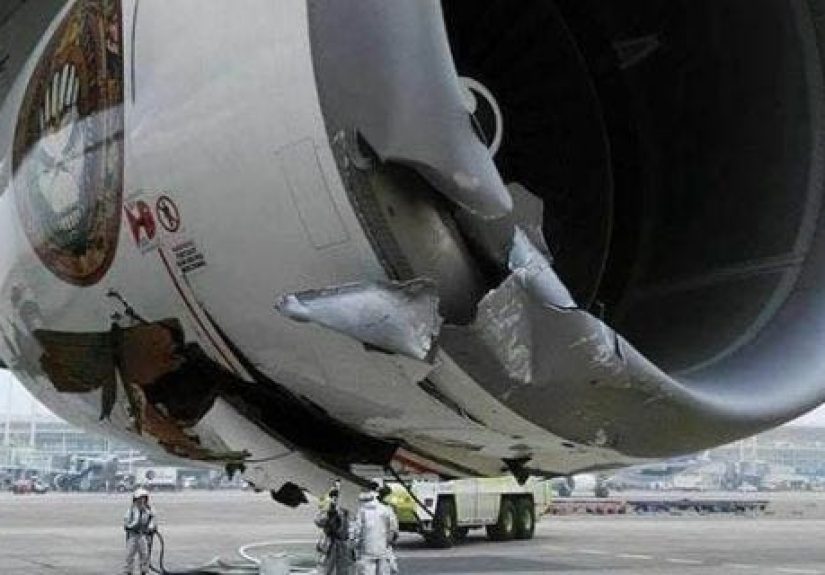
The collision badly damaged the undercarriage and two engines on the port side, or left side, of the aircraft. Two ground tug operators were injured and taken to the hospital. Fortunately, none of the band members or their road crew were on board or near the plane during the accident. In a stroke of very lucky timing, the tour’s 20 tons of equipment had also not yet been loaded onto the aircraft. That detail mattered a lot, because a much heavier load could have made an ugly situation even worse.
Why a Towing Accident Can Wreck a 747
If you are not deep into aviation, a towing accident might sound like the mechanical equivalent of bumping a shopping cart into a parked car. But a Boeing 747 is not a shopping cart, and airport tugs are not harmless little utility toys. Ground handling is a precise, high-risk process where tiny failures can escalate fast because the machines involved are enormous, expensive, and not especially forgiving.
When an aircraft is being towed, the tug and tow assembly effectively become its steering system. If that connection fails, the airplane can continue moving without the normal directional control operators expect. With a widebody aircraft, momentum is no joke. The wingspan is vast, the structure is complex, and the engines sit low enough that a badly managed turn or collision can cause catastrophic external damage.
That is exactly why the damage to Ed Force One was so severe. The accident did not happen at cruising altitude in some dramatic airborne emergency. It happened during an ordinary ground operation, which almost makes it more unsettling. There is something uniquely cruel about a world-famous jet being taken out not by storm clouds or engine failure in the air, but by the airport equivalent of a parking-lot disaster.
The Tour Did Not Collapse, Which Is Honestly Impressive
What makes the Towing Accident Tears Apart Iron Maiden’s 747 story especially memorable is that the damage was serious, yet the tour itself kept going. Iron Maiden quickly made alternate arrangements to continue with scheduled shows, including dates in Córdoba and Buenos Aires. That is easier to type than to accomplish. Replacing an airplane on short notice while moving a stadium-scale concert operation across countries is not the kind of thing you solve with a few frantic phone calls and a motivational playlist.
Still, the machine behind Iron Maiden’s touring operation proved just how sophisticated it was. The band, the flight team, the logistics partners, and the technical crews moved fast enough to prevent the accident from becoming a total schedule disaster. In other words, the real heavy metal miracle here was not a guitar solo. It was operational competence.
The Repair Job Was Massive
The fix was not simple. This was a Boeing 747 with major external damage, including two damaged engines on one side. Repairing that kind of aircraft under ordinary circumstances is a huge technical job. Doing it quickly, in a foreign country, while a global tour is already underway is the kind of logistical problem that gives managers stress dreams.
Replacement parts and specialized teams had to be sourced and flown in from multiple locations. Reports on the repair effort described engines, thrust reversers, cowlings, tools, and technical staff being gathered across several countries and rushed to Santiago. Technicians worked around the clock to get the aircraft airworthy again. That effort gives you a sense of how much value was tied up in keeping Ed Force One alive. This was not just a branded plane. It was a crucial asset in one of the biggest touring machines in rock.
Roughly ten days after the accident, the repaired aircraft was able to rejoin the tour in Brazil. That turnaround is remarkable. For all the jokes about rock stars and excess, the repair saga behind this plane reads more like an elite industrial recovery operation. It was part emergency response, part global supply-chain sprint, and part reminder that aviation runs on expertise more than swagger.
Bruce Dickinson, the 747, and the Symbolism of the Whole Thing
Part of what made the accident resonate so widely was the symbolic value of the aircraft. A band-branded 747 flown by its own singer is the kind of detail that feels invented by a screenwriter trying too hard, except Iron Maiden actually pulled it off. Ed Force One represented scale, ambition, and a very specific kind of analog-era cool. It was big, loud, improbable, and unapologetically theatrical. Basically, it was Iron Maiden in airplane form.
So when the plane was damaged, fans did not react as if a random charter had broken down. They reacted as if a member of the production family had taken a hit. The aircraft had become part transportation tool, part mascot, part icon. It helped blur the line between band logistics and band identity, which is a rare accomplishment for a piece of hardware not normally expected to have a fan base.
Bruce Dickinson’s role amplified that connection. Because he was not just standing beside the plane for publicity photos, the aviation side of the story always felt authentic. There was real enthusiasm and real aviation credibility behind the spectacle. That made the accident feel less like a PR curiosity and more like a genuine operational crisis involving something the band actually cared about.
Why the Story Still Gets Attention Years Later
Years after the towing accident, people still search for this story because it sits at a strange and wonderful intersection: music history, aviation mishap, celebrity logistics, and jumbo-jet mythology. It is a niche topic, sure, but it is niche in the best possible way. Even people who are not lifelong Iron Maiden fans can appreciate the absurd grandeur of a touring 747 getting sidelined by a ground incident in Chile.
There is also a larger lesson hiding inside the headline. The accident shows how vulnerable even the biggest and most carefully planned operations can be during routine moments. Tours are usually imagined in terms of concerts, ticket sales, stage production, and fan energy. But behind all that is transport, timing, engineering, and the sort of hard logistics that become visible only when something goes wrong.
In a sense, the accident peeled back the curtain. For a moment, everyone got to see that global touring at this level depends on the same things that keep any major transport system moving: safety procedures, ground handling discipline, maintenance response, and contingency planning. Strip away the band branding, and it is still a fascinating case study in how a large aircraft incident can ripple through a live-event operation.
The Legacy of Ed Force One
The aircraft’s story did not end in Santiago. Ed Force One returned to service after the tour and eventually reached the end of its commercial life years later. The plane itself became even more legendary in hindsight, not just because it served Iron Maiden, but because it survived one of the weirdest chapters in modern touring lore. In an era when many iconic 747s have disappeared quietly, this one went out with a backstory loud enough to suit the band painted on its side.
That legacy also says something about why the aircraft mattered. Plenty of planes move artists around the world. Very few become cultural characters in their own right. Ed Force One did. It was practical enough to haul a global production and flashy enough to turn every arrival into an event. Even the accident became part of its legend, not because anyone wanted the damage, but because the recovery proved how unusually important the plane had become.
Experiences Around the Accident: What This Story Felt Like in Real Time
One reason the Towing Accident Tears Apart Iron Maiden’s 747 story still has staying power is that it was not just an aviation incident. It was an experience for everyone orbiting the band, from fans to crew members to airport observers who probably started the day expecting a routine tow and ended it with a story they would tell forever. Even from a distance, the event had a strange emotional texture. It felt part shocking, part surreal, and part weirdly personal, which is not something people usually say about damage to a commercial aircraft.
For fans following the Book of Souls tour in 2016, Ed Force One was a symbol of momentum. The plane suggested scale, confidence, and that thrilling sense that Iron Maiden was still operating on a huge canvas decades into its career. Seeing photos of the damaged engines and the battered side of the aircraft felt like watching a superhero limp off-screen. The band was fine, the shows would continue, but the image still landed with a punch. You were not just looking at bent metal. You were looking at a touring icon suddenly made fragile.
For the road crew and logistics people, the experience must have been a different flavor of adrenaline. Fans could gasp and refresh social feeds. The crew had to solve problems. A world tour does not politely pause because a 747 had a disastrous morning on the ramp. Hotel bookings, freight timing, stage equipment, customs issues, schedules, and artist movement all keep marching forward. That makes this story feel bigger than celebrity news. It was a reminder that behind every massive show are professionals quietly preventing chaos from becoming catastrophe.
There is also the airport side of the experience, which is easy to overlook. Ground operations are usually invisible when they work properly. When they fail, the consequences are suddenly public and dramatic. For aviation professionals, the accident likely read as a sobering case of how quickly a routine movement can go wrong. Nobody in ground handling needs a lecture on the importance of procedures, but incidents like this turn abstract risk into unforgettable reality. A mistake, a mechanical issue, a failed connection, and now one of the world’s most recognizable tour planes is disabled on the tarmac.
And then there is the strangely human part of the whole thing: the recovery. Fans did what fans do best. They worried, they speculated, they made jokes, and they rallied around the band’s ability to push forward. The plane became a wounded character in the story rather than a discarded machine. When it was repaired and brought back into service, that felt satisfying in a way only a truly odd modern legend can. It was not just, “Great, the aircraft is fixed.” It was, “Of course Iron Maiden’s 747 came back. Anything less would have felt off-brand.”
That emotional residue is why the story still works today. It offers more than facts. It offers atmosphere. You can almost feel the confusion on the tarmac, the urgency in the repair effort, the nervous humor among fans, and the determination to keep the tour moving no matter what. Some accidents fade into technical archives. This one stuck because it involved a machine people actually cared about, a band with a built-in mythology, and a recovery that felt worthy of the legend.
Final Thoughts
In the end, the towing accident that tore apart Iron Maiden’s 747 was not just a bizarre footnote in rock history. It was a revealing moment about the hidden machinery behind giant tours, the risks of airport ground handling, and the unusual cultural life that an airplane can take on when it becomes part of a band’s identity. Ed Force One was damaged badly, but the story did not become one of collapse. It became one of resilience, rapid repair, and the sheer stubborn momentum of a band that was not about to let a ground tug write the final verse.
Iron Maiden fans got the kind of story only Iron Maiden could provide: a world-famous heavy metal band, a singer-pilot, a wounded Boeing 747, a global repair operation, and a tour that refused to die. Honestly, if that is not peak Iron Maiden energy, what is?