Table of Contents >> Show >> Hide
- What Is Kalamkari, Really?
- Meet the Bianca Traditional Kalamkari Napkins
- Why Choose Traditional Kalamkari Napkins Over Paper?
- Styling Ideas for Bianca Kalamkari Napkins
- How to Care for Traditional Kalamkari Napkins
- Bianca in the Bigger World of Block-Printed Napkins
- Experiences with Traditional Kalamkari Napkins – Bianca
- Conclusion
If you’ve ever looked at a beautifully set table and thought, “My paper napkins are really not pulling their weight,”
it might be time to meet the Bianca Traditional Kalamkari Napkins. These cotton napkins from Les Indiennes, spotlighted
by design editors at Remodelista, bring a 3,000-year-old textile tradition straight to your dinner tableno passport required.
Traditional Kalamkari napkins are more than just cloth squares to dab at spills. They represent a whole world of
craftsmanship: hand block-printing, natural dyes, sun-bleached organic cotton, and motifs that feel both Old-World
and effortlessly modern. The Bianca pattern captures that “quiet luxury” vibeunderstated, artisanal, and surprisingly
versatile in an everyday home.
In this guide, we’ll dive into what Kalamkari actually is, what makes the Bianca napkins special, how to style and
care for them, and why investing in traditional Kalamkari napkins can completely change the way your table looks
(and how your conscience feels).
What Is Kalamkari, Really?
An ancient art with serious storytelling skills
Kalamkari is a traditional Indian textile art that originated in what is now Andhra Pradesh and Telangana.
The word itself comes from two Persian words: kalam, meaning “pen,” and kari, meaning “work”
or “craft.” Historically, artisans literally drew intricate scenes on cotton using a stylus-like pen, then added
color with natural, plant-based dyes. Over time, the technique expanded to include wooden block-printing alongside
hand painting.
These textiles were once used to tell epic stories from Hindu mythologyentire narratives painted or printed onto
cloth panels that could be hung in temples or used as ceremonial textiles. Today, the same traditional Kalamkari
techniques are applied to more everyday pieces: bed linens, tablecloths, and, of course, cloth napkins.
Natural dyes, slow processes, and subtle beauty
One of the defining features of Kalamkari (and why it’s so beloved by eco-minded designers) is the use of natural
dyes. Think pigments made from roots, minerals, bark, flowers, and leaves. Creating a single length of Kalamkari
fabric involves multiple stages: scouring the cotton, treating it in natural mordants, printing or painting the
design, and then rinsing, drying, and often sun-bleaching before the final wash.
The result? Soft, lived-in color rather than loud, flat prints. You’ll often see earthy reds, indigos, soft grays,
and warm neutrals. Slight variations in tone and print alignment aren’t defectsthey’re proof that a real human
being actually made your napkins, not a machine churning through synthetic dye.
Meet the Bianca Traditional Kalamkari Napkins
Bianca by Les Indiennes: a modern classic
The Bianca Traditional Kalamkari Napkins are part of a collection by Les Indiennes, a Hudson, New York–based company
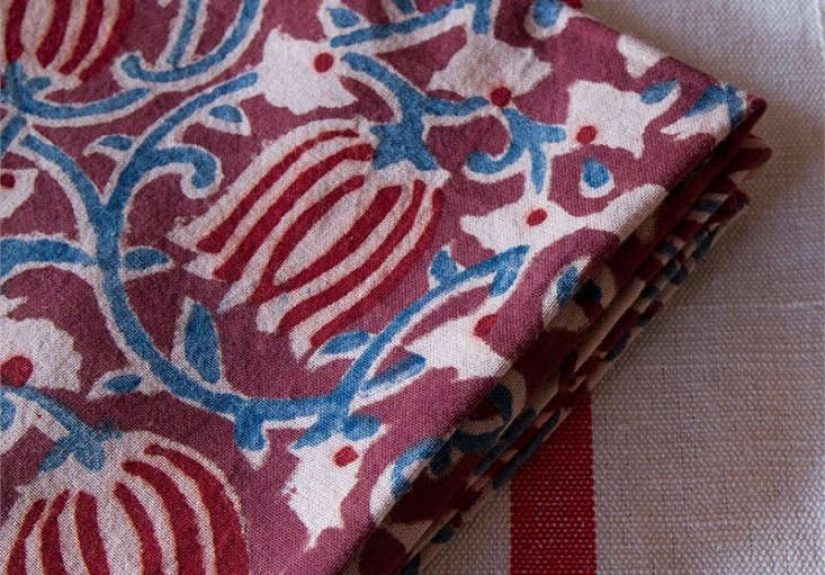
known for hand block-printed, organic cotton textiles produced in India using natural dyes. The Bianca pattern has
that signature Les Indiennes look: airy, patterned, and refined, with a balance of negative space and repeating
motifs that feels calm rather than busy.
Remodelista’s editors describe the Bianca napkins as cotton napkins sized generously for the table and sold as a
set, with a price point that reflects both the craftsmanship and the small-batch production. You’re not just buying
a napkin; you’re buying into a philosophy of slow textiles and long-lasting design.
Materials and construction
The Bianca napkins are created from pure cottonspecifically, organic cotton in keeping with Les Indiennes’ fabric
standards. The cloth is typically:
- Hand block-printed in India using traditional Kalamkari-inspired techniques.
- Dyed using natural, low-impact pigments instead of harsh synthetics.
- Finished by hand, which means you may see small irregularities or tiny smudges that signal authenticity.
For everyday life, this translates to napkins that feel soft in your hands, drape nicely over a plate or in a napkin
ring, and hold up well to repeated use and gentle washing.
Aesthetic: where “laid-back” meets “polished”
Bianca doesn’t scream at the table; it whispers. The pattern is usually arranged in a repeating design that works
with both rustic and contemporary settings:
- Pair with raw wood or stoneware for an earthy, farmhouse look.
- Layer over crisp white linens for a more tailored, minimal feel.
- Mix with subtle stripes or solids if you enjoy a collected, European-style table.
The beauty of traditional Kalamkari napkins like Bianca is that they’re recognizable to design peoplestylists,
bloggers, that friend who always has a perfectly styled kitchenbut still warm and approachable for everyday family
dinners.
Why Choose Traditional Kalamkari Napkins Over Paper?
Sustainability that actually feels good to use
Switching from paper napkins to cloth is one of the easiest sustainability wins in a household. Kalamkari cotton
napkins take that win and add cultural heritage on top. You’re:
- Using a reusable, washable product instead of single-use paper.
- Supporting artisan processes that rely on handwork rather than heavy industrial production.
- Choosing natural fibers and dyes, which are kinder to skin and often gentler on the environment.
Plus, let’s be honest: setting the table with traditional Kalamkari napkins tells your guests, “I care about details,
but I’m not trying too hard.” That’s a very specific and extremely desirable vibe.
Everyday practicality (yes, they can handle spaghetti night)
Cloth napkins have a reputation for being “too nice for everyday use,” but that’s exactly what cotton Kalamkari
napkins are made for. They’re durable, absorbent, and easy to fold or roll. Once you get used to grabbing a Bianca
napkin at every meal, paper towels start to feel like a downgrade.
For households with kids, pets, and real-life messes, keep this simple system:
- Assign each person a napkin for the day or the weekend.
- Hang them over a chair between meals to dry.
- Toss them into a cold, gentle wash at the end of the rotation.
The natural dyes are designed to age gracefully, so a little bit of patina over time just adds character.
Styling Ideas for Bianca Kalamkari Napkins
1. Everyday relaxed table
For a laid-back weekday dinner:
- Start with a plain, solid tablewood, linen, or even a simple white tablecloth.
- Fold Bianca napkins into loose rectangles and tuck them casually under the fork.
- Add a small bud vase or recycled glass bottle with a single branch or flower at the center.
The goal is effortless, not over-engineered: the pattern does enough visual work on its own.
2. Dinner party with layered textures
Hosting a small dinner? Use Bianca napkins to anchor a more layered look:
- Lay down a neutral table runner in linen or cotton.
- Use mixed ceramic platesoff-whites, grays, or soft blues pair beautifully with Kalamkari designs.
- Fold the napkins into simple squares and place them between the dinner and salad plates for a stacked effect.
Add candles at varying heights, and you have a table that feels magazine-worthy without going full “event planner.”
3. Seasonal and holiday twists
Because the Bianca pattern tends to sit in a neutral-to-earthy palette, it can shift seasons easily:
- Fall: Layer with warm brass candleholders and small gourds.
- Winter holidays: Add evergreen sprigs and simple ribbon-tied napkin rings.
- Spring: Pair with pastel flowers and glassware for a light, fresh look.
One set of napkins, year-round utilitythis is the kind of math we like.
How to Care for Traditional Kalamkari Napkins
First wash: set yourself up for success
The first wash is where you show your Bianca napkins you’re a responsible napkin parent. Because natural dyes and
hand block-printing are more delicate than mass-produced textiles, treat them like you would any favorite delicate
garment:
- Wash separately or with similar colors the first few times.
- Use cold water and a gentle or delicate cycle.
- Choose a mild, non-enzymatic detergentnothing harsh or “extra whitening.”
This helps minimize any initial dye runoff and protects those carefully printed motifs.
Everyday washing and drying
Once you’re past the first couple of washes, you can settle into a routine:
- Temperature: Stick with cold or cool water.
- Cycle: Gentle or regular, avoiding heavy agitation.
- Drying: Air-dry flat or line dry in the shade; avoid long sessions in harsh direct sun to reduce fading.
If you must use a dryer, choose the lowest heat setting and remove the napkins while they’re still slightly damp.
Smooth them by hand and either lie flat or hang to finish drying.
Ironing and storage tips
For crisp, Instagram-ready edges, iron your Kalamkari napkins while they are still faintly damp:
- Iron on the reverse side to protect the printed face.
- Use medium heat and, if you’re cautious, a pressing cloth between iron and fabric.
- Store napkins folded in a dry, cool spacestacked in a drawer or a lidded basket near the dining table.
Over time, the cotton softens and the pattern takes on that lived-in elegance that design lovers chase.
Bianca in the Bigger World of Block-Printed Napkins
Traditional Kalamkari napkins like Bianca sit within a broader category of block-printed linens that are having a
major moment in American interiors. From fair-trade brands to boutique textile studios, hand block-printed cotton
napkins are becoming staples for people who want their homes to feel both curated and conscious.
Many of these textiles are produced in partnership with artisan communities in India, often under fair trade or
verified living-wage programs. When you buy Bianca or similar Kalamkari napkins, you’re often supporting:
- Generational craft knowledge and skill.
- Rural employment and economic independence for artisans, especially women.
- Traditional, lower-impact dyeing and printing methods.
So every time you fold one of those napkins at your table, you’re participating in a global story, not just wiping
up salad dressing.
Experiences with Traditional Kalamkari Napkins – Bianca
It’s one thing to read about Kalamkari napkins; it’s another to actually live with them. Imagine unboxing your
Bianca set for the first time. The cotton has that slightly crisp, starched feel that good block-printed textiles
often have right out of the package. The pattern looks even better in persondetailed but not fussy, with a softness
to the color that says “natural dye” rather than “industrial ink.”
The first time you use them might be on a random Tuesday night. You’re serving roasted vegetables and pasta, nothing
fancy, but when you lay those napkins out, the table suddenly looks intentional. Someone at the table notices:
“These are nicewhere did you get them?” That’s the Bianca effect. They quietly elevate everything around them:
the plates, the food, even the leftovers.
After a few washes, the napkins start to relax. The cotton softens, the folds become less sharp, and the overall feel
shifts from “new purchase” to “beloved staple.” You might notice tiny variations in the printslight shifts in where
a motif lands or gentle changes in color intensity. Instead of feeling imperfect, they feel lived in, a reminder that
someone’s hands printed and handled each piece.
Hosting brunch with Bianca napkins is another level. You set them out with simple white plates, a big bowl of fruit,
and a couple of mismatched mugs because, let’s be honest, your mug collection has never matched. Somehow, Bianca
pulls everything together. The pattern bridges the gap between rustic and refined, making your casual brunch look
editorial-ready with almost no extra effort.
They even shine during “messy food” nights. Think tacos, burgers, or anything involving a sauce you secretly want to
drink. Cotton Kalamkari napkins are pleasantly absorbent and sturdy, so guests don’t feel shy about actually using
them. A quick pre-treat on any stubborn spots, then into a cold, gentle wash, and they’re ready for their next
performance.
Over time, these traditional Kalamkari napkins also become part of your home’s rituals. You might reserve them for
weekends, or you might decide every day deserves a nice napkin. They show up in family photos, under birthday cakes,
and next to holiday dishes that only appear once a year. When you travel, you notice how many restaurants still rely
on paper napkins, and you catch yourself thinking, “Bianca would look great here.”
There’s also a subtle mindset shift that happens when you commit to reusable table linens. Using cloth napkins like
Bianca makes meals feel more intentional and less rushed, even when the reality is a 20-minute dinner between work
and bedtime. You’re not just grabbing a paper towelyou’re setting a table, however small, and that has a way of
slowing everyone down just enough to enjoy the moment.
In short, living with Traditional Kalamkari Napkins – Bianca is about more than owning a pretty textile. It’s about
turning daily meals into small rituals, participating in a centuries-old craft tradition, and quietly choosing
sustainability over disposables. They bring history to the table, literallyand they look great doing it.
Conclusion
Traditional Kalamkari napkins like the Bianca design from Les Indiennes prove that functional objects can be deeply
meaningful. They combine ancient textile techniques, natural materials, artisan skill, and contemporary design into
something you’ll reach for every day. Whether you’re hosting a big dinner party or eating leftovers in your favorite
sweatpants, Bianca napkins have a way of making the moment feel a little more special.
If you’re ready to swap out disposable paper for something beautiful, durable, and rooted in tradition, Bianca
Traditional Kalamkari Napkins are an easy, elegant place to start.