Table of Contents >> Show >> Hide
- Table of Contents
- What happened in the Oval Office (and why it mattered)
- Why the internet called the trophy “phallic”
- The ‘South Park’ vibe: when politics becomes pop culture
- FIFA + Trump: trophies, task forces, and tournament pageantry
- Trophy diplomacy: shiny objects and softer power
- The real stakes behind the meme: security, travel, and 2026
- Experiences: what it feels like when a trophy becomes a meme
- FAQ
- SEO Tags (JSON)
Some political moments feel historic. Some feel like policy. And then there are the ones that feel like someone
accidentally sat on the remote and changed the channel from “Civics Class” to “Adult Animation After Dark.”
One of those moments landed in the Oval Office when President Donald Trump posed with a gleaming FIFA trophy
during a White House eventand the internet promptly decided the whole scene looked like it had wandered out of
South Park, wearing sunglasses and a smirk.
Was the trophy officially described as “phallic”? No. Was the moment instantly translated into meme language by
millions of online spectators who specialize in turning serious institutions into reaction GIFs? Absolutely.
And because this wasn’t just a random photo-op but part of the political-and-sports machinery around the 2026
FIFA World Cup and the expanded 2025 FIFA Club World Cup, the spectacle came with real stakes underneath the
jokeslogistics, diplomacy, security, and a very modern question: Who is this event actually forfans, voters, or the algorithm?
What happened in the Oval Office (and why it mattered)
The “straight out of South Park” energy didn’t come from a cartoon setit came from a real White House
appearance with real tournament implications. In an Oval Office event tied to FIFA’s North American plans,
Trump appeared alongside FIFA President Gianni Infantino and used the moment to spotlight World Cup-related
announcements. The trophy itselfgolden, iconic, and instantly recognizablewas displayed and handled during
the event, with cameras capturing the kind of close-up framing that makes the internet’s imagination sprint.
Officially, the point of the appearance was about tournament build-up and planningexactly the kind of thing
that should be boring (in a comforting, “adults are handling it” way). But modern politics rarely
“does” boring, and modern sports marketing definitely doesn’t. Put a trophy on the Resolute Desk, add bright
lighting, toss in a few off-the-cuff jokes, and you’ve got a scene that reads less like a press availability
and more like a cold open.
The funniest part is that trophies are supposed to be symbols of achievement. In this case, the trophy became
a symbol of something else entirely: how quickly a formal setting can be hijacked by informal interpretation.
The Oval Office didn’t change. The trophy didn’t change. But the audience didbecause the audience now includes
millions of people watching through the lens of meme culture, not C-SPAN culture.
Why the internet called the trophy “phallic”
Let’s be grown-ups about this (for at least 30 seconds): “phallic” is often less a medical description than a
cultural shortcut. It’s what people say when an object is tall, rounded, gold, attention-grabbing, and being
held in a way that makes the photo feel unintentionally suggestive. It’s not about what the trophy is; it’s
about what the framing does.
The Oval Office moment checked the classic “meme ignition” boxes:
- Instant recognizability: a shiny trophy + a famous political figure.
- Unexpected setting: sports hardware in the seat of government.
- Ambiguous body language: poses that can be read as proud, playful, or awkward depending on the viewer.
- Low barrier to remix: one still image can launch a thousand jokes.
Sports history is full of trophies that become accidental comedy props: oversized cups, oddly shaped sculptures,
and awards that look like they were designed by someone who said, “Make it abstract,” and then left the room
forever. The difference now is speed. A trophy used to be discussed by sports commentators. Today it’s analyzed
by the world’s most relentless creative department: people on the internet with five minutes, a screenshot,
and no fear.
The ‘South Park’ vibe: when politics becomes pop culture
The “this feels like South Park” line wasn’t random. The series has long treated political power as a
form of absurd theateroften with the exact kind of crass exaggeration that makes headlines and sparks outrage.
Recent South Park storylines and public reactions around its Trump-focused satire reinforced a bigger
point: politics doesn’t just influence pop culture anymorepolitics often performs like pop culture.
So when Trump held a trophy in the Oval Office, it wasn’t just “a president with a sports prop.” To a lot of
viewers, it looked like a scene written by people who specialize in making institutions look ridiculous on
purpose. The setting did half the work. The trophy did the other half. And the internet supplied the punchline.
That’s not merely snark; it’s a reflection of how the public consumes power. A decade ago, a White House event
might have been judged mainly by what was said. Now it’s judged by what it looks likebecause a single
image travels farther than a paragraph of policy.
FIFA + Trump: trophies, task forces, and tournament pageantry
The White House trophy moment didn’t appear out of thin air. It sits inside a larger story: FIFA bringing its
biggest events to North America, and the U.S. government positioning itself as a visible partner in that process.
In March 2025, Trump announced a task force tied to preparations for the 2026 World Cup, with Vice President
JD Vance as vice chairan explicit attempt to show federal coordination around logistics and security.
Around the same time frame, FIFA’s expanded 2025 Club World Cup became both a tournament and a “dress rehearsal”
vibe-check for the summer of 2026. The newly designed Club World Cup trophygold-plated, highly engineered, and
built to look like the future of club footballis itself a marketing statement: “This is bigger now. Treat it
like an event, not an exhibition.”
A trophy that travels: from FIFA showcases to U.S. political theater
FIFA has leaned hard into staging: trophy tours, exhibitions, dramatic unveils, and glossy photo backdrops.
The Club World Cup trophy was presented and displayed as part of the U.S. rollout, including high-profile
appearances that blurred the lines between sports celebration and political branding.
Then came the on-field spectacle. When Trump attended the 2025 Club World Cup final at MetLife Stadium, the
trophy ceremony itself became a news cyclecrowd reaction, stage positioning, and athletes trying to celebrate
while a political figure shared the spotlight. It was the sort of moment that proves the rule: if you put a
trophy near power, the trophy becomes a magnet for camerasand cameras create controversy as a side effect.
The “kept the trophy” storyline and why details matter
Adding to the surreal atmosphere, reports circulated that Trump claimed the original Club World Cup trophy was
kept in the Oval Office and that a replica was awarded to the tournament winner. Whether you treat that as a
literal logistics detail or a boastful anecdote, it fueled the same core dynamic: the trophy stops being just a
sports object and starts acting like a political prop.
And once a trophy becomes a prop, people stop asking, “Who earned it?” and start asking, “What is this image
trying to communicate?” That’s where the “phallic trophy” jokes livenot in the metallurgy, but in the message.
Trophy diplomacy: shiny objects and softer power
Diplomatic history is full of symbolic gifts: plates, paintings, pens, and ceremonial items that are meant to
communicate respect. Modern “trophy diplomacy” is the same idea, upgraded for the age of high-definition video:
put something shiny in the frame so the moment looks consequential.
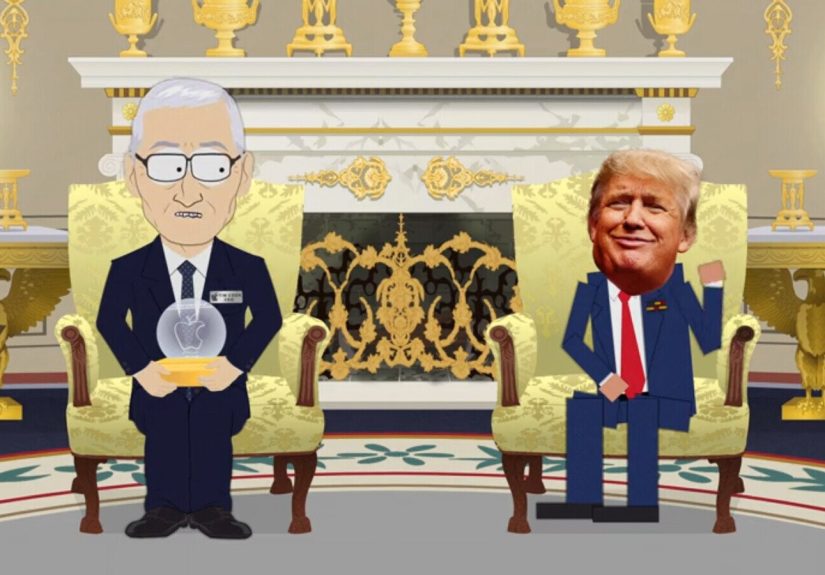
Consider how corporate leaders treat White House appearances. When Apple CEO Tim Cook visited amid a U.S.
manufacturing announcement, he presented Trump with a specially designed glass piece set on a 24-karat gold base.
This wasn’t random gifting; it was opticsan object built to say “Made in USA” without needing a paragraph of
explanation.
In the FIFA context, the trophy does similar work. It compresses a complicated storyhost city planning,
stadium readiness, travel policy, security coordination, sponsorship economicsinto a single image:
leader + trophy = big event is happening here.
The problem (or the comedy, depending on your temperament) is that objects don’t control how they’re interpreted.
A trophy can symbolize international cooperation… or it can symbolize “why does the Oval Office look like a sports
bar display case?” The internet will choose whichever option is funnier and faster.
The real stakes behind the meme: security, travel, and 2026
Beneath the jokes is a genuine reality: the 2026 World Cup is enormous. It spans the United States, Canada, and
Mexico, features 48 teams, and runs from June 11 to July 19, 2026ending with the final at MetLife Stadium in
New Jersey. That scale brings obvious needs: stadium operations, transportation planning, and heavy security.
That’s why task forces, interagency planning, and public reassurances show up repeatedly in official messaging.
It’s also why critics and observers watch U.S. travel policy closely. Fans can’t attend if they can’t enter,
and global sports events are unforgiving when visa backlogs or entry restrictions collide with fixed match dates.
Why FIFA wants governments in the shot
FIFA’s incentives are straightforward: they want the world to believe the host is ready, welcoming, and coordinated.
A trophy in the Oval Office is a shorthand for institutional support. It says, “This isn’t just a sports tournament;
it’s a national-scale operation.” That matters for sponsors, broadcasters, and international confidence.
Why the public reacts differently now
The public reactionespecially the “phallic trophy” and “South Park” framingdoesn’t necessarily mean people
think the event is unimportant. Often it means the opposite: they sense that the event is being staged to look
monumental, and they respond by puncturing the staging.
In other words, it’s not only mockery. It’s a kind of cultural immune system. When the image looks too glossy,
people reach for humor to make it feel human again.
Experiences: what it feels like when a trophy becomes a meme
If you’ve ever watched a big public moment unfold in real timewhether you’re a sports fan, a political junkie,
or just someone who enjoys the internet’s ability to turn reality into a punchlinethis kind of trophy spectacle
produces a very specific set of experiences.
First comes the double-take. You’re scrolling, half paying attention, and suddenly you see an
image that doesn’t fit the category your brain expects. The Oval Office is supposed to signal statecraft.
A trophy is supposed to signal athletic triumph. Put them together, and your mind pauses like a laptop trying
to open a file type it hasn’t seen since 2007.
Then comes the group chat translation. Someone drops the screenshot with no caption because the
caption is implied: “Are you seeing this?” Within minutes, your friends assign it genres. One person calls it
“sports diplomacy.” Another calls it “brand synergy.” Someone else goes straight to “this is a cartoon.”
The tone you chooseserious, amused, annoyedsignals which tribe you’re in more than what you actually believe.
For sports fans, there’s often a split-screen feeling. On one side: genuine excitement about the World Cup
coming to North America, the stadium list, the travel plans, the once-every-four-years sense of global festival.
On the other: frustration that the sport keeps getting used as a stage for political positioning. Fans who just
want to talk about lineups and tactics end up discussing who stood where, who got booed, and who turned the trophy
lift into a photo-op.
If you’ve ever been in a stadium crowd when politics enters the scene, the experience gets even sharper. Noise
becomes its own kind of commentary. Applause and booing mix. People argue about whether it’s appropriate. Others
roll their eyes and say, “Can we just watch the match?” And the playerswhose job is to live in the moment of
victorysuddenly have to navigate the awkward geometry of celebration while someone with a different kind of
power occupies the frame.
For journalists and event staffers, these moments feel like controlled chaos. Everyone knows the
plan: where the principals stand, when the object is presented, when the cameras get their shot. But the most
memorable beats are usually the unscripted onesa joke that lands weird, a pause that looks like a fumble, a
lingering onstage second that turns into a headline. The difference between “standard photo-op” and “viral
phenomenon” is sometimes just one extra beat of body language.
And finally comes the aftertaste: the realization that the meme will travel farther than the
logistical details. A task force announcement won’t trend the way a trophy screenshot will. The nuance of planning
won’t outpace the speed of a joke. That can feel sillyor depressingor both. But it’s also a reminder that modern
public life has two scoreboards: the official one, and the one the internet keeps. The official one tracks dates,
venues, and policies. The internet’s scoreboard tracks vibes. And in the Oval Office trophy moment, the vibes won
by a knockout.
FAQ
Was the trophy actually described as “phallic” by officials?
No. That wording came from internet commentary and satirepeople reacting to how the trophy looked in photos and
how the scene was framed, not an official description.
Why did FIFA bring a trophy to the White House?
It’s a high-visibility way to signal host-nation support and keep attention on the tournament build-up. Big events
rely on government coordination for security, travel, and infrastructureso FIFA often highlights political
partnership through symbolic moments.
What does this mean for the 2026 World Cup?
Mostly, it underscores how central the U.S. is to the tournament’s staging and messaging. The World Cup is both a
sports festival and a massive logistical operationand the optics around it will be scrutinized as much as the
matches.
Why do these moments go viral so fast?
Because they blend three irresistible ingredients: power, symbolism, and awkwardness. The internet doesn’t need
context to remix an image; it only needs contrast.