Table of Contents >> Show >> Hide
- What Is Turkey Frame Soup, Exactly?
- Why Turkey Frame Soup Is Worth Making
- The Building Blocks of a Great Turkey Frame Soup
- How to Make Turkey Frame Soup That Actually Tastes Amazing
- Best Variations for Turkey Frame Soup
- Common Mistakes to Avoid
- Food Safety Tips for Turkey Frame Soup
- How to Store and Freeze It
- Why Turkey Frame Soup Feels Like More Than Soup
- Experience Notes: What Turkey Frame Soup Feels Like in a Real Kitchen
- Conclusion
There are two kinds of cooks after a big turkey dinner: the ones who stare proudly at the leftovers, and the ones who stare at the turkey skeleton like it has one more job to do. This article is for the second group. Turkey frame soupsometimes called turkey carcass soup, bone soup, or the world’s most delicious kitchen encoreis the smart, cozy, budget-friendly answer to “What on earth do I do with this bird now?”
If you have ever tossed a picked-over turkey frame into the trash and immediately felt a tiny pang of guilt, welcome home. The frame still has flavor, the bones still have value, and the little scraps of meat clinging on are basically waving tiny flags that say, “Soup me.” A good turkey frame soup turns leftovers into something deeply savory, practical, and honestly better than many first-night meals. That is not an insult to roast turkey. It is just that soup has range.
What Is Turkey Frame Soup, Exactly?
The “frame” is the roasted turkey carcass: bones, joints, bits of skin, and the last shreds of meat left after carving. When simmered with water and classic aromatics like onion, carrot, celery, garlic, herbs, and a bay leaf, that frame creates a rich homemade broth. Once strained, the broth becomes the base for soup, usually finished with vegetables, noodles, rice, or barley plus chopped turkey meat.
In plain English, turkey frame soup is what happens when thriftiness and comfort food shake hands.
Why Turkey Frame Soup Is Worth Making
1. It stretches your leftovers beautifully
A roast turkey can feel expensive, so using the frame makes financial sense. Instead of getting one big meal and a few sandwiches, you can pull another full pot of soup from the same bird. That is not just frugal. That is efficient bordering on heroic.
2. The broth tastes richer than standard boxed stock
Roasted bones give homemade broth deeper flavor. Even when the seasoning stays simple, the result is fuller, rounder, and more savory than most store-bought broth. You are building flavor from the bones, any drippings you saved, and the little caramelized bits left from roasting.
3. It is highly customizable
Love classic egg noodles? Great. Prefer barley for a heartier bowl? Also great. Want mushrooms, parsnips, cauliflower, green beans, lemon, or wild rice? Soup does not judge. Turkey frame soup is one of those rare recipes that welcomes creativity without falling apart.
4. It reduces food waste
Using the frame is one of the easiest ways to get more from the bird you already cooked. In a season famous for abundance, this soup is a nice reminder that “leftovers” and “opportunity” are often the same thing wearing different hats.
The Building Blocks of a Great Turkey Frame Soup
The frame
The star of the pot is the leftover turkey frame. A little meat still attached is a bonus because it adds flavor while simmering. If the carcass is large, break it into a few pieces so it fits in the pot comfortably.
The aromatics
Most good versions begin with onion, carrots, and celery. Garlic, parsley, thyme, peppercorns, and bay leaf are common supporting players. Some cooks keep it very simple to let the turkey flavor shine. Others add a little poultry seasoning, sage, or rosemary for more holiday warmth.
The liquid
Cold water is usually the starting point. That lets the broth build gradually as the bones simmer. You can also use part broth and part water if you want a stronger base from the jump.
The add-ins
Once the broth is strained, the soup portion begins. Common choices include egg noodles, rice, pearl barley, wild rice, mushrooms, green beans, chopped celery, onion, carrots, and shredded turkey meat. A splash of lemon juice at the end can brighten a heavy pot in seconds.
How to Make Turkey Frame Soup That Actually Tastes Amazing
Step 1: Start with the broth
Place the turkey frame in a large stockpot or Dutch oven. Add chunks of onion, carrots, and celery, a few cloves of garlic, a bay leaf, parsley or thyme if you have them, and enough cold water to cover everything by about an inch. Bring it up to a boil, then immediately reduce it to a gentle simmer.
That simmer matters. A roaring boil can cloud the broth and make it feel rougher around the edges. A gentle simmer gives you a cleaner, more elegant result. Skim any foam or fat from the surface now and then, especially in the first part of cooking.
Step 2: Let patience do the heavy lifting
Simmer the frame until the broth tastes rich and developed. Some recipes go faster, around 90 minutes to 2 hours, while others stretch much longer for a deeper stock. If your kitchen smells like the coziest day after Thanksgiving in history, you are on the right track.
Step 3: Strain well
Lift out the big bones, then strain the broth through a fine-mesh strainer. If you want a cleaner broth, strain it twice. Discard the solids, then pick any usable meat from the cooled bones if it still looks good. That meat can go back into the final soup.
Step 4: Build the soup
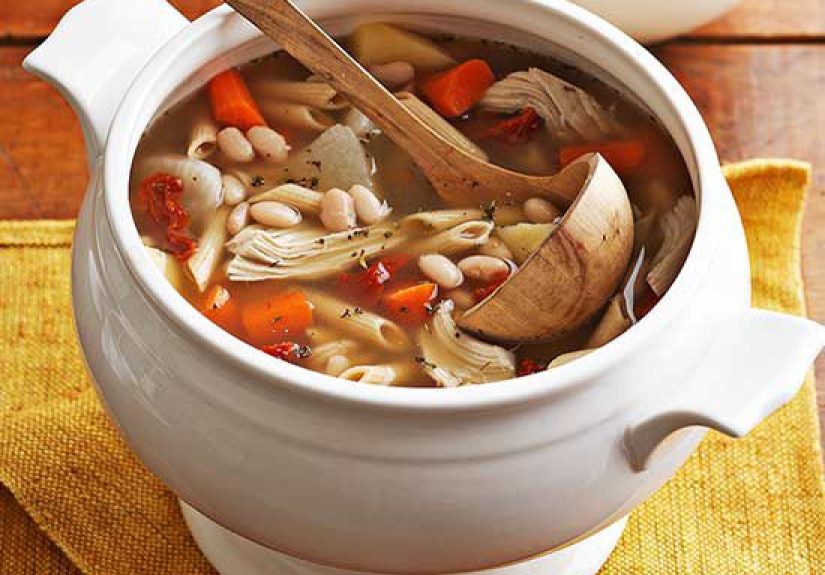
Return the strained broth to the pot. Add diced onion, carrots, celery, and any other vegetables you like. Simmer until the vegetables start to soften. Then add your starch of choiceegg noodles for classic comfort, barley for chew and body, or rice for a softer, more delicate bowl.
Stir in chopped or shredded cooked turkey near the end so it warms through without drying out. Taste, season with salt and black pepper, and add parsley, thyme, or a squeeze of lemon if the soup needs a little lift.
Best Variations for Turkey Frame Soup
Classic Turkey Noodle Soup
This is the most familiar version and for good reason. Carrots, celery, onion, wide egg noodles, and shredded turkey turn the broth into a classic comfort bowl that tastes like the cold-weather equivalent of a clean blanket.
Turkey Barley Soup
Pearl barley makes the soup heartier and slightly nutty. It also gives the broth a fuller texture, which is excellent if you want something that eats like a complete meal instead of a starter.
Turkey and Wild Rice Soup
Wild rice brings chew, earthiness, and a little more personality. Add mushrooms and thyme, and suddenly your leftovers seem oddly sophisticated.
Lemon Herb Turkey Soup
A splash of lemon juice with parsley and thyme can wake up a rich broth beautifully. This version is especially useful when the soup tastes a little too heavy or sleepy.
Clean-Out-the-Fridge Turkey Soup
Parsnips, cauliflower, green beans, mushrooms, rutabaga, spinach, or even leftover roasted vegetables can all work. Turkey frame soup is forgiving, which is one reason home cooks keep coming back to it year after year.
Common Mistakes to Avoid
Boiling the broth too hard
A hard boil can make the broth cloudy and less refined. A low, steady simmer extracts flavor more gracefully.
Over-salting early
Broth reduces as it cooks, so salt can intensify quickly. Season lightly at first, then adjust near the end.
Adding noodles too soon
Noodles can swell and go soft if they sit too long in the pot. For the best texture, cook them just until tender. If you plan to store leftovers, you can even cook noodles separately and add them to each bowl.
Ignoring texture balance
If every ingredient is soft, the soup can feel flat. That is why carrots, celery, wild rice, barley, or a bright finishing touch like herbs or lemon make such a difference.
Food Safety Tips for Turkey Frame Soup
Because this soup is often made from holiday leftovers, safe handling matters. Refrigerate leftover turkey within 2 hours. For best quality and safety, use refrigerated leftovers within 3 to 4 days. If you want to hold them longer, freeze them. When reheating soup, bring it back to a safe, steaming-hot temperature, and make sure leftovers are heated thoroughly before serving.
Another smart move: cool the finished soup in smaller, shallow containers instead of leaving a giant hot pot on the counter forever. A huge batch of soup might look impressive, but food safety does not care about your ambition.
How to Store and Freeze It
Turkey frame soup keeps well in the refrigerator for a few days, though noodles will continue to soften as they sit. If you know you are making a big batch for future meals, freeze the broth or soup in portioned containers. Broth-only freezes especially well because it gives you a blank canvas later for fresh vegetables and starches.
This is one of the reasons turkey frame soup has such staying power. It is not just dinner tonight. It is lunch next week, a freezer win next month, and proof that your holiday bird still had one final act.
Why Turkey Frame Soup Feels Like More Than Soup
Some recipes are flashy. Turkey frame soup is not flashy. It is honest. It rewards patience, smart cooking, and the slightly stubborn belief that good food should not be wasted. It also has a special kind of emotional math: one roasted bird turns into another pot of comfort, and somehow that feels like abundance rather than leftovers.
It is also deeply adaptable to real life. You can make it rustic or refined, brothy or hearty, classic or creative. You can keep the seasoning simple and let the turkey shine, or build in barley, mushrooms, herbs, and lemon for something layered and elegant. No matter which direction you go, the result is usually the same: a pot that smells incredible and disappears faster than expected.
Experience Notes: What Turkey Frame Soup Feels Like in a Real Kitchen
The best part about turkey frame soup is that it does not feel like a recipe invented by perfectionists in a spotless test kitchen. It feels real. It feels like the morning after a holiday meal when the dishwasher is working overtime, someone is still eating pie for breakfast, and the turkey platter looks like it survived a dramatic but delicious event.
Making this soup can be strangely satisfying because it turns post-feast chaos into order. The frame goes into the pot, the vegetables get chopped, the broth starts to bubble, and suddenly the kitchen has purpose again. Instead of staring down containers of random leftovers and asking what to do next, you have a plan. A fragrant, steamy, deeply practical plan.
There is also a sensory side to it that people do not talk about enough. Turkey frame soup smells different from a roast turkey dinner. Dinner smells rich and celebratory. Soup smells mellow, savory, and comforting. It fills the house slowly. It is less grand entrance, more wool-socks energy. The scent of onion, celery, and turkey stock drifting through the kitchen has a way of making everybody wander in and ask, “So… when is that ready?”
Another real-life joy is how forgiving the process can be. Your carrots do not have to be cut into identical little coins like they are auditioning for culinary school. Your celery can be slightly uneven. Your herbs can be fresh, dried, or suspiciously left over from the previous week as long as they still smell alive. Turkey frame soup is not interested in perfection. It is interested in flavor.
For many home cooks, the soup becomes a tradition as important as the roast itself. The turkey dinner may be the holiday headline, but the soup is the excellent epilogue. Some families make it the next morning. Others wait a day, once the fridge is full and the practical side of the brain takes over. Either way, it often becomes the meal that signals the holiday is shifting from event mode to comfort mode.
There is also pride involved. Not loud, dramatic pridejust that quiet satisfaction that comes from making something genuinely good out of what others might throw away. You look at a bowl of golden broth, tender vegetables, noodles, and turkey, and think, “Yes. This was the correct use of that bird.” It feels resourceful without feeling stingy, cozy without feeling boring, and homemade in the best possible way.
And then there is the final little miracle: the soup often tastes even better the next day. The flavors settle in, the broth deepens, and lunch suddenly looks suspiciously excellent. That might be the true magic of turkey frame soup. It starts as leftovers, but it never feels second-rate. In a lot of kitchens, it becomes the meal people remember most fondlywarm bowl in hand, fridge finally under control, holiday stress fading, and one heroic turkey still giving its all.
Conclusion
Turkey frame soup is proof that leftovers can be the beginning of something, not the end of it. With a simple broth, a handful of vegetables, and a smart choice of noodles, rice, or barley, you can turn a picked-over turkey frame into a deeply flavorful homemade meal. It is economical, flexible, cozy, and surprisingly elegant for something born from a pile of bones and good intentions.
If you have a turkey frame in the fridge and a soup pot on the shelf, you already have the makings of a very good idea.