Table of Contents >> Show >> Hide
- What Is Typographic Shadow Graffiti, Exactly?
- The Iconic Example: DAKU’s “Time Changes Everything”
- Why This Turns a “Meh” Building Into a Masterpiece
- Designing Shadow Typography: The Hidden Work Behind the “Effortless” Look
- From Delhi to the U.S.: Sunlight-Activated Text in Las Vegas
- What Makes Shadow Graffiti “SEO Gold” for Cities, Brands, and Public Art Districts
- If You Want to Experience a Shadow Typography Mural, Here’s How to Do It Right
- Conclusion
- Bonus: of Real-World “Experience” With Shadow Typography
Most graffiti works the same way your morning coffee works: it shows up fast, hits hard, and leaves a mark. But typographic shadow graffiti? That’s a different kind of caffeine. It doesn’t stain a wallit borrows the sun, schedules an appointment with the building, and then lets time do the painting.
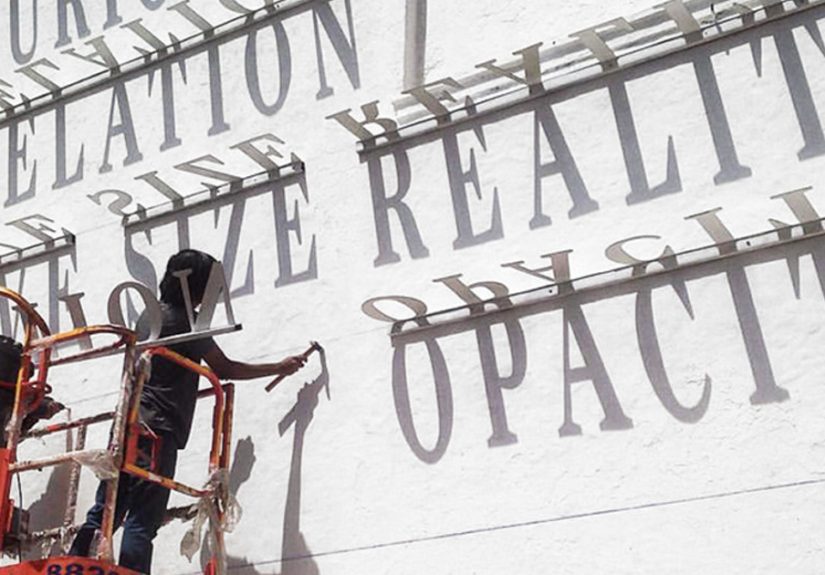
The idea is simple enough to explain at a cookout and weird enough to make your neighbor squint: instead of spraying letters onto a façade, an artist mounts physical letterforms (often metal) so they stick out from the wall. When sunlight hits them, the letters cast shadows that line up into readable words. As the day moves on, the shadows slide, stretch, sharpen, blur, and vanishturning a plain surface into a living message that never repeats itself in exactly the same way.
In other words: the “paint” is light, the “ink” is shadow, and the “clock” is the sky. Boring building? Not anymore.
What Is Typographic Shadow Graffiti, Exactly?
Typographic shadow graffiti sits at the intersection of street art, sculpture, and what you might call “polite architecture hacking.” It’s typography you don’t see directlyyou see its consequence. The wall stays relatively clean, while the sun does the heavy lifting.
Think of it like a sundial that learned how to write poetry.
How it works (without turning this into a physics lecture)
- Physical letters are mounted perpendicular (or angled) to a wallusually as thin metal forms.
- Sunlight hits those forms, casting shadows onto the façade.
- Shadows align into readable words only at certain times of day, when the sun’s angle cooperates.
- As the sun moves, the message shiftsletters stretch, tilt, sharpen, and eventually disappear.
The magic is that the building becomes a time-based canvas. You can walk past at 10:00 a.m. and see one crisp phrase, come back at noon and see it in peak clarity, then return later and watch it dissolve like a text message you didn’t mean to send.
The Iconic Example: DAKU’s “Time Changes Everything”
One of the best-known examples of typographic shadow graffiti is “Time Changes Everything” by the anonymous street artist DAKU. Installed in Delhi’s Lodhi Colony (in what became a celebrated public art district), the piece uses mounted words to cast an evolving set of shadow-text across a white façade.
Here’s what makes it unforgettable: the building itself looks calm and minimal, but the shadows turn it into a daily performance. Words related to human experiencethings like love, memory, perception, value, and moreappear with changing legibility as the day progresses. At the right moment, the letters snap into place. At the wrong moment, the wall looks blank, like it’s pretending nothing interesting ever happens there.
The “only visible at the right time” effect
Unlike a mural that shouts at you 24/7, this kind of shadow typography whispers on a schedule. In DAKU’s installation, the text is most readable when the sun reaches the right angle (often around solar noon). Earlier in the day, the letters can appear slanted or soft; later, they stretch and fade.
Even better (and a little poetic, if you’re into that sort of thing): the work can disappear for seasonal stretches depending on sun position and the wall’s orientationso it becomes a literal reminder that time changes not just hours, but months.
Why This Turns a “Meh” Building Into a Masterpiece
Plenty of street art transforms buildings. What’s special here is the building becomes a collaborator. A flat wall isn’t just a surfaceit’s a screen. The sky isn’t just weatherit’s the projector. The art is never truly “finished,” because it’s re-authored every day by shifting light.
1) It’s kinetic without needing a motor
The movement comes free. No electricity. No screens. No software updates. Just the sun doing what it has always donemovingwhile the artwork turns that movement into meaning.
2) It rewards curiosity (and mildly punishes poor timing)
If you want the “full” piece, you have to show up. That makes it feel more like a small discovery than a billboard. It’s street art with a built-in scavenger hunt.
3) It changes how people use the space
When words appear and disappear, people linger. They point. They take photos. They argue about whether the letters were “there before.” In a city where everyone’s rushing somewhere, typographic shadow graffiti builds a tiny pause into the day.
Designing Shadow Typography: The Hidden Work Behind the “Effortless” Look
These pieces look spontaneous until you realize they require planning that borders on obsessive (in the best way). A shadow-letter mural has to be engineered so the message lands where you want it, when you want it, in a way pedestrians can actually read without needing binoculars and a degree in geometry.
What artists must plan for
- Solar angles: The sun’s position changes by hour, season, and latitude. That affects shadow length and direction.
- Letter depth and thickness: Too shallow, and shadows lose clarity; too deep, and it can become visually heavy or structurally complex.
- Wall orientation: A façade facing one direction may only “perform” during certain months.
- Readability: Letters must resolve into legible forms quickly enough for real humans walking by at real speed.
- Materials & maintenance: Wind load, heat, corrosion, and mounting safety matterbecause gravity is not an art critic you can ignore.
The result is street art that behaves like architecture: it has to survive outdoors, comply with real-world constraints, and still communicate an idea clearly. That’s why this style feels so satisfyingbecause it’s both poetic and practical.
From Delhi to the U.S.: Sunlight-Activated Text in Las Vegas
The concept didn’t stay in one city. DAKU’s time-and-light approach has shown up in other places, including a notable sunlight-activated text installation in Downtown Las Vegas, tied to the city’s festival-driven public art energy.
In that Las Vegas work, the installation used protruding letterforms to cast a short poem about how time feels different depending on what you’re experiencingslow when you’re waiting, fast when you’re scared, long when you’re grieving, short when you’re celebrating. The piece was also positioned as an homage to a building that previously housed a bookstore, which is the kind of detail that makes typographic public art feel rooted in place rather than dropped in from space.
That’s the larger story here: typographic shadow graffiti can travel, but it works best when it belongs. The most powerful pieces don’t just decorate a wallthey reflect the neighborhood’s rhythm, history, and daily movement.
What Makes Shadow Graffiti “SEO Gold” for Cities, Brands, and Public Art Districts
If you’re thinking like a marketer (or a city planner who secretly loves Instagram), this art form checks an absurd number of boxes:
It’s naturally shareable
People film it in time-lapse. They come back at different hours. They post “before/after” moments. The artwork creates content without begging for attentionbecause the transformation is the attention.
It encourages repeat visits
A static mural is a one-and-done photo stop. A shadow typography installation is a “come back later” experience. That’s good for foot traffic, local businesses, and neighborhood identity.
It feels modern without being digital
In a world of screens, a solar-powered street art installation feels refreshingly analog. It’s high-concept but low-tech, which is basically the sweet spot for people who are tired of charging everything.
If You Want to Experience a Shadow Typography Mural, Here’s How to Do It Right
Show up at the best time
Most pieces have a “peak legibility” window. Midday often delivers the sharpest shadows, but it depends on location and wall orientation. If you’re visiting a known installation, aim to see it at least twice in one dayonce in late morning and once around middayso you can watch the shift.
Bring patience (and maybe sunglasses)
Cloud cover changes everything. A partly cloudy day can turn the artwork into a flickering message; full sun can make the text snap into clarity. Either way, the unpredictability is part of the point.
Look for the “invisible” letters first
One fun trick: step close and find the physical letterforms that create the shadows. When you spot them, your brain starts flipping between sculpture and typography, and suddenly you’re watching a wall like it’s a movie screen.
Conclusion
Typographic shadow graffiti is what happens when street art stops fighting time and starts collaborating with it. Instead of permanent paint, it uses a daily cycle. Instead of shouting, it appears quietlythen slips awaythen returns, slightly changed, like a reminder you didn’t set but somehow needed.
And that’s how a boring building becomes an ever-changing masterpiece: not by adding more stuff, but by letting light reveal meaning on its own schedule. The wall stays. The sun moves. The message keeps evolving. If that’s not art and life in one neat package, I don’t know what is.
Bonus: of Real-World “Experience” With Shadow Typography
The first time you encounter typographic shadow graffiti in person, it usually happens backwards. You don’t notice the hardware firstyou notice people staring at a wall like it just told a joke. Then you look up and realize the building is “talking,” but only if the sun is in the mood.
Imagine arriving in the late morning. The façade looks clean and almost too plain, the kind of wall nobody would ever photograph on purpose. Then you catch the first readable wordmaybe slightly slanted, maybe a little fuzzy at the edges like it’s still waking up. You step left. You step right. The word sharpens. Your brain does that satisfying click where it understands the trick, and suddenly you’re hunting for the next phrase like it’s a hidden level in a video game.
By midday, the experience changes. The shadows become crisp and confident, like the artwork finally hit its stride. People start pointing out individual words, debating what they mean, andbecause we’re humandeciding which phrase is “the most them” for a photo. Someone inevitably tries to line their head up so it looks like the word is coming out of their ear. Someone else tries a time-lapse. A kid asks why the letters aren’t painted. An adult answers, “Because time,” which is both unhelpful and somehow correct.
If you wait long enough, you get the best part: the fade-out. The message starts stretching. The letter edges soften. It feels like watching language melt in slow motion. The wall doesn’t suddenly go blank; it gradually returns to silence. And when the words disappear, the building looks “normal” againexcept now normal feels like a costume. You know there’s a whole performance hiding in plain sight, waiting for the next shift of sunlight.
Artists and designers often describe a different kind of experience: the planning phase feels like part poetry workshop, part engineering sprint. You test letter depth, spacing, and angles. You mock up shadows with a flashlight indoors, then realize the sun is a wildly inconsistent collaborator. You check solar position data, think about seasonal changes, and accept that your most important co-creator is a glowing ball of gas that does not read your project brief. There’s a surprising humility in that. The piece can be brilliantly designed and still look wrong if the environment says, “Not today.”
The most memorable “experience,” though, is what it does to your sense of time. You don’t just read the wordsyou watch them happen. You see minutes pass because the letters drift. You feel the day move because the message moves with it. It’s street art that makes you slow down without telling you to slow down, and that’s rare. In a city designed for speed, a wall that rewards waiting is basically a quiet revolutionone shadow at a time.