Table of Contents >> Show >> Hide
- What the Ultrahuman Ring AIR Gets Right
- Where the Ring AIR Starts to Stumble
- Battery Life, Durability, and Daily Use
- How It Compares to Oura and Other Smart Rings
- Who Should Buy the Ultrahuman Ring AIR?
- Final Verdict
- Extended Experience: What Living With the Ultrahuman Ring AIR Actually Feels Like
- SEO Tags
If the smart ring market were a high school cafeteria, the Ultrahuman Ring AIR would be the cool kid with excellent style, solid grades, and a tendency to talk way too much about biohacking. On the surface, this ring has a lot going for it: it is light, attractive, subscription-free at its core, and genuinely good at the things most people actually buy a smart ring forsleep, recovery, and general wellness tracking.
Then you open the app.
That is where the Ultrahuman Ring AIR starts to feel like a wellness coach who drank three cold brews and found a thesaurus. Instead of simply telling you how you slept and whether your body is ready for a workout, the app often piles on data, nudges, stimulant warnings, circadian recommendations, and dense terminology that can make a simple morning check-in feel like a pop quiz you forgot to study for.
That tension defines the whole experience. The ring itself is polished, comfortable, and surprisingly easy to like. The software attached to it, however, can feel cluttered, overzealous, and occasionally more interested in impressing you than helping you. So is the Ultrahuman Ring AIR still worth buying? Yesfor the right person. But it is also one of those products where the hardware deserves a calmer, friendlier brain.
What the Ultrahuman Ring AIR Gets Right
A design that feels more jewelry than gadget
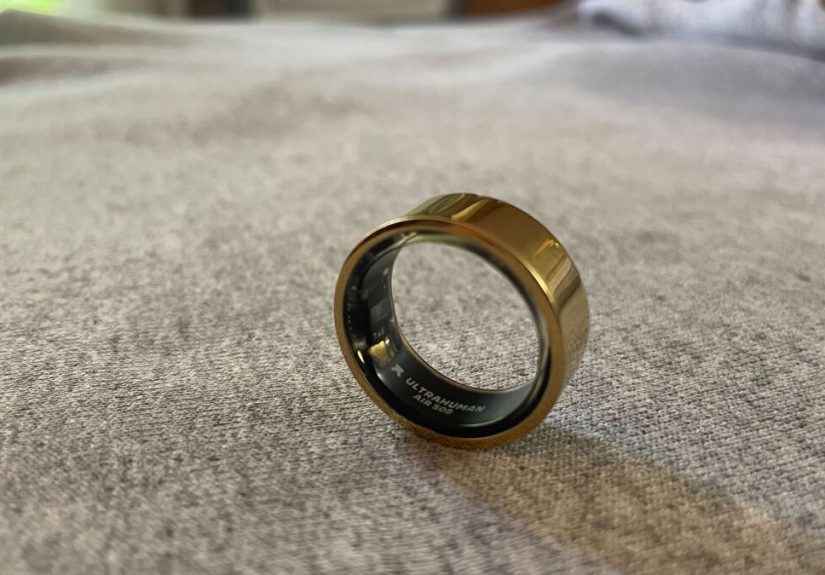
The first thing the Ultrahuman Ring AIR absolutely nails is wearability. That matters more than smart ring marketing departments would like to admit. A ring that tracks sleep, recovery, heart rate, temperature, and movement only works if you actually want to keep it on. Fortunately, the Ring AIR is one of the easiest smart rings to wear all day and all night.
It is slim, lightweight, and made from titanium, so it does not feel like you strapped a tiny robot donut to your finger. The design is understated enough to pass as a normal ring, which is exactly the point. Unlike a smartwatch, it does not buzz on your wrist, light up during dinner, or scream “I count REM cycles” from across the room. It quietly does its job, which is refreshing in a world where half our gadgets behave like needy interns.
Comfort is a major win here. Multiple reviewers have praised how easy it is to forget the ring is even there, especially overnight. That gives it a natural advantage for sleep tracking, because many people find watches annoying in bed. The Ring AIR solves that problem elegantly. Put it on, go to sleep, and let the tiny metal overachiever do its thing.
Sleep and recovery tracking are the real stars
This is where the Ultrahuman Ring AIR earns its keep. If your main goal is understanding how well you sleep, how recovered your body feels, and how your habits affect your daily readiness, the ring is a strong performer.
It tracks the metrics shoppers expect in this category: sleep duration, sleep stages, resting heart rate, heart rate variability, skin temperature, movement, and blood oxygen trends. More importantly, it tries to connect those numbers to behavior. Instead of just saying, “Congratulations, human, you existed for eight hours in a horizontal position,” it pushes toward interpretationhow rested you are, how your sleep efficiency changed, and whether your body seems primed for activity or begging for mercy.
The recovery framing is one of the product’s better ideas. A lot of people do not need elite-athlete analytics; they need a reasonable sense of whether a rough night, late meal, stress spike, or hard workout is affecting how they feel the next day. The Ring AIR usually does a good job of surfacing that bigger picture. Its sleep-first approach is practical, and for many users, that will be more useful than flashy workout charts.
There is also a real appeal in the ring’s subscription-free foundation. Compared with competitors that charge recurring fees just to unlock the best version of your own body data, Ultrahuman’s upfront model feels cleaner. Paying once and getting the core tracking experience without an ongoing toll booth is a strong selling point.
Where the Ring AIR Starts to Stumble
The app is doing the absolute most
Now we arrive at the part of the review where the Ultrahuman app enters the chat, carrying 14 graphs, three life philosophies, and a caffeine intervention.
The biggest issue with the Ring AIR is not the hardware. It is the software experience wrapped around that hardware. The app is packed with information, but it does not always present it in a way that feels intuitive. Useful data can be buried in submenus. Key trends are sometimes surrounded by jargon-heavy labels. The home screen can feel busy. And the overall tone occasionally drifts from “helpful coach” into “slightly overbearing wellness roommate.”
For some users, this will be a plus. If you love metrics, optimization, and the general vibe of turning your biology into a side project, the app may feel rich and ambitious. But for average users who simply want a readable morning snapshot, it can be too much. A smart ring app should reduce friction. The Ultrahuman app sometimes creates it.
One of the more polarizing examples is its focus on stimulants, circadian timing, light exposure, and behavior nudges. On paper, these are thoughtful features. In practice, the presentation can be intense. The app often feels eager to coach every decision you make, from when you should stop drinking coffee to when you should avoid bright screens. There is good science behind many of those recommendations, but that does not automatically make the experience enjoyable.
Sometimes you want insight. Sometimes you just want to know whether you slept badly because your neighbor’s dog launched a midnight podcast. The app is not always great at knowing the difference.
Workout tracking is fine… until it isn’t
If sleep and recovery are the Ring AIR’s comfort zone, workouts are where the confidence starts to wobble.
For casual movementsteps, general activity, daily motionthe ring is perfectly serviceable. It can help keep you honest about how sedentary your day has been, and that alone will be useful for many people. But once you start expecting smartwatch-level exercise tracking, the limitations become hard to ignore.
Workout tracking has long felt like a secondary feature here. It has been described as beta-like, manual, and less reliable than what you get from stronger fitness wearables. Heart rate during exercise can be hit-or-miss, and that matters because bad heart rate data turns calorie estimates and training insights into decorative fiction. If your workout intensity is wrong, the rest of the story usually is too.
That does not make the Ring AIR useless for active people. It just means it works best as a wellness ring with fitness ambitions, not a dedicated training tool. If you are a runner, lifter, cyclist, or data-hungry athlete, a smartwatch or chest strap will still be the grown-up in the room.
Battery Life, Durability, and Daily Use
Battery life is good, not magical
Ultrahuman’s battery life is respectable, though not wildly better than the rest of the category. In real life, expect roughly four to six days depending on usage, settings, and how often you interact with the app. That is enough to avoid daily charging anxiety, which is half the battle with wearables.
The bigger win is psychological. Because the ring has no screen and no constant interaction loop, it fades into the background in a way many watches never do. You charge it, wear it, forget about it, and check your stats when you feel like it. That low-drama rhythm is one of the Ring AIR’s best qualities.
Durability is decent, but not invincible
The titanium build sounds tough, and for everyday wear it generally is. But let us be honest: rings live hard lives. They scrape desks, bang into dumbbells, tap kitchen counters, and survive the occasional “why did I try to carry six grocery bags at once?” moment. The Ring AIR can pick up scratches, especially darker finishes, so perfectionists should prepare emotionally.
This is also not the ideal wearable for weightlifting unless you are comfortable taking it off. Rings and barbells have a famously toxic relationship. If your fitness routine involves gripping metal like you are auditioning for a Viking reboot, expect some cosmetic wear sooner rather than later.
How It Compares to Oura and Other Smart Rings
The Ultrahuman Ring AIR is often framed as one of the clearest alternatives to Oura, and that comparison is fair. In some ways, Ultrahuman makes a compelling case. The ring is lightweight, attractive, and avoids the monthly subscription model that irritates plenty of buyers. Its app also leans harder into fitness and biohacking culture, which some people genuinely prefer.
But Oura still tends to feel more polished and more accessible. Its software is cleaner, easier to understand, and generally better at turning health data into something that feels useful instead of overwhelming. That is the key trade-off. With Ultrahuman, you may save on subscription fees and gain a more aggressive health-optimization toolkit, but you also sign up for an app experience that can feel busier and less refined.
Compared with cheaper smart ring options, the Ring AIR still holds its own through comfort, design, and a broader feature set. It feels premium. It just does not always feel relaxed.
Who Should Buy the Ultrahuman Ring AIR?
Buy it if:
You want a stylish, lightweight smart ring that is especially strong for sleep and recovery tracking. You like the idea of paying once instead of dealing with a monthly subscription. You enjoy wellness data, behavior nudges, and reading more deeply into how your habits affect your body.
Skip it if:
You want the simplest possible app, the clearest coaching, or the best workout tracking. You get annoyed by frequent notifications, dense dashboards, or apps that feel like they are trying to turn your morning into a performance review. You also may want to look elsewhere if you expect a ring to replace a serious sports watch.
Final Verdict
The Ultrahuman Ring AIR is easy to like and slightly harder to love. As hardware, it is thoughtful, comfortable, attractive, and genuinely good at tracking sleep and recovery. It feels premium on the finger without demanding constant attention, and its no-core-subscription appeal remains one of its strongest advantages.
As a full product experience, though, it is less harmonious. The app can be informative, but it can also be overbearing. It delivers plenty of insight, yet sometimes lacks the calm clarity that makes wearable tech feel truly helpful. Instead of guiding you smoothly, it occasionally throws open every drawer in the wellness kitchen and asks you to cook your own interpretation.
That is why this ring lands in a very specific sweet spot. If you are the kind of person who wants more numbers, more nudges, more experimentation, and more control, the Ultrahuman Ring AIR may feel exciting. If you want elegance on your finger and simplicity on your phone, you may admire this ring more than you enjoy living with it.
In the end, the Ultrahuman Ring AIR is a nice ring with an overbearing app. The ring deserves praise. The app deserves a deep breath.
Extended Experience: What Living With the Ultrahuman Ring AIR Actually Feels Like
The most revealing thing about the Ultrahuman Ring AIR is how differently it behaves depending on when you interact with it. At night, it feels almost perfect. You slip it on, forget it exists, and wake up with a surprisingly rich snapshot of how your body handled the evening. That is the Ring AIR at its best: invisible hardware, useful passive tracking, no drama. It is the kind of wearable experience people imagine when they first become interested in smart rings. No glowing screen. No strap marks. No bedtime negotiations with a bulky watch.
Morning is where the relationship gets more complicated. Open the app after a good night’s sleep and it can feel helpful, even a little clever. You get your sleep score, recovery data, heart rate trends, temperature context, and movement insights all pointing toward a larger story. The best moments are when the app helps you connect cause and effect. Maybe you slept worse after a late meal. Maybe your resting heart rate stayed elevated after a stressful day. Maybe your recovery dropped after stacking hard workouts. When the software sticks to that lane, it feels smart and worthwhile.
But there are also mornings when the app feels like it woke up before you and already has opinions. It wants to discuss stimulants, timing, light exposure, movement strategy, sleep debt, and behavioral nudges before you have even finished blinking at the coffee maker. That can make the experience feel heavier than it needs to be. The ring itself is subtle; the app is not. The contrast is almost funny. On your finger, the Ring AIR whispers. On your phone, it delivers a TED Talk.
Over time, that split becomes the product’s defining personality. The ring is best for people who do not mind checking in often, exploring metrics, and learning a new data language. It is less ideal for users who want clean summaries and quick answers. You can absolutely get value from the Ring AIR as a casual user, but you may also find yourself muting notifications, ignoring half the recommendations, and wishing the app had an “explain this like I have not become a moonlight chronobiologist” mode.
That said, there is something undeniably compelling about a smart ring that tries this hard. Even when the app overreaches, it is at least attempting to do more than count steps and hand out digital gold stars. The Ring AIR wants to be part sleep coach, part recovery tracker, part metabolism sidekick, and part wellness lab notebook. Sometimes that ambition works. Sometimes it trips over itself. But it never feels lazy.
And that is why the Ultrahuman Ring AIR remains interesting. It is not the smartest app in the category, nor the simplest, nor the most polished. But the hardware is strong enough, and the sleep-and-recovery experience is good enough, that you keep wanting the software to catch up. If Ultrahuman can make the app calmer, clearer, and more human, this already-good ring could become a great one. Right now, it is still a strong smart ringjust one that occasionally confuses intensity with usefulness.