Table of Contents >> Show >> Hide
- Why Sawdust Is a Surprisingly Powerful Spill Absorbent
- Step-by-Step: How to Use Sawdust to Soak Up Spills
- Where to Get Sawdust (and What Kind to Use)
- Sawdust vs. Other Spill-Soaking Options
- Smart Safety Tips When Using Sawdust for Spills
- Real-World Experiences Using Sawdust to Soak Up Spills
- Conclusion: Turn Shop Waste into a Spill-Cleanup Win
If you have a garage, a driveway, or a workshop, one thing is guaranteed: sooner or later, something messy is going to hit the floor. Motor oil misses the drain pan, a can of stain tips over, somebody overfills the lawn mower. The good news? You don’t need a fancy industrial spill kit to deal with a lot of everyday messes. You can clean it up with something you probably already have: sawdust.
That’s rightthose fluffy little curls and dusty piles left from your last woodworking project are actually a powerful, low-cost absorbent. Used properly, sawdust can soak up oil, fuel, and other liquids, help control odors, and make cleanup fast and surprisingly satisfying (yes, sweeping can be satisfyingespecially when you’re not skating across an oil slick).
Let’s walk through why sawdust works so well, when to use it (and when not to), step-by-step instructions, and some real-world tips so you can handle spills like a seasoned family handyman.
Why Sawdust Is a Surprisingly Powerful Spill Absorbent
The science behind sawdust’s superpower
Sawdust is mostly made of cellulose, a natural material full of tiny pores and fibers. Those pores act like a sponge, pulling in and holding onto liquids. That’s the same reason wood shavings and sawdust are widely used as bedding in barns and stablesthey soak up urine and moisture while helping control odor and keeping surfaces drier and more comfortable for animals.
Because sawdust is lightweight and spreads out easily, a relatively small amount can cover a large spill. Newer shop safety guides and spill-control suppliers still list sawdust and wood granules alongside cat litter and specialty absorbent products as practical options for soaking up oils, fuels, and other non-corrosive liquids.
What kinds of spills sawdust can handle
For most homeowners and DIYers, sawdust is ideal for:
- Fresh oil spots from cars, mowers, or snow blowers on concrete.
- Transmission fluid, power steering fluid, or gear oil that didn’t quite make it into the drain pan.
- Small fuel spills when refilling yard equipment (think gasoline or diesel mist, not a full tank dumped over).
- Non-toxic finishes and stains that splash onto the floor around your workbench.
- General shop gunkmixed moisture, grime, and dirt on garage or workshop floors.
Even many concrete-cleaning guides still recommend using an absorbent firstlike cat litter or sawdustto pull up as much oil as possible before scrubbing out the remaining stain.
When you should NOT use sawdust
Sawdust is powerful, but it’s not a universal cleanup hero. Skip sawdust if:
- The spill is a strong acid or base (like drain cleaner or concrete etcher).
- You’re dealing with oxidizers or highly reactive chemicals.
- The product label clearly says “Do not use absorbents like sawdust” or has special cleanup instructions.
- You suspect the spill will be classified as hazardous waste under local or federal rules.
In those cases, you’ll want to follow the manufacturer’s cleanup directions and, if necessary, your local hazardous waste guidelines or the U.S. EPA’s waste handling recommendations.
Step-by-Step: How to Use Sawdust to Soak Up Spills
1. Gear up and stay safe
Before you start sprinkling sawdust like confetti, pause for a second and think safety. At minimum, you’ll want:
- Gloves (nitrile or work gloves) to keep oil and chemicals off your skin.
- Safety glasses if you’re sweeping vigorously.
- A dust mask or respirator if you’re handling very fine sawdust or working in a tight space.
And one more thing: avoid using sawdust from pressure-treated wood, MDF, or plywood for cleanup. That material may contain glues, resins, or preservatives you don’t want to mix into your waste pile.
2. Contain the spill so it doesn’t spread
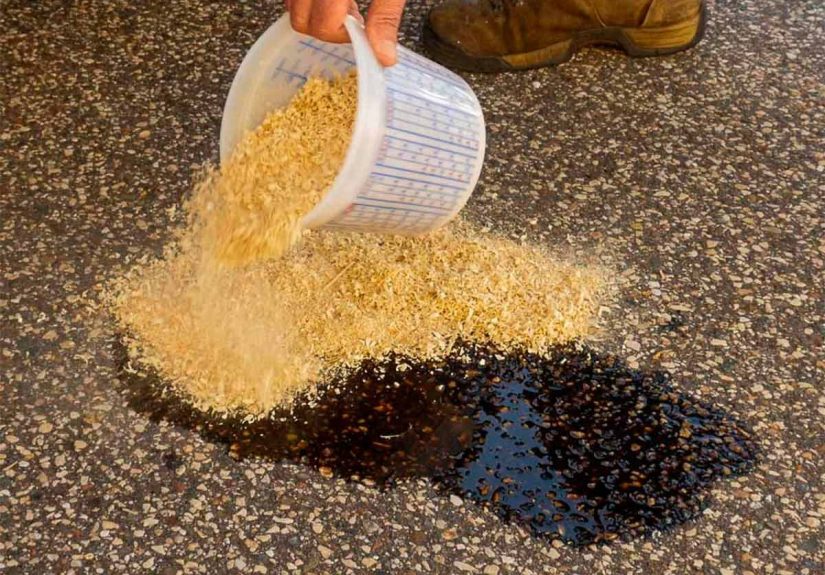
If the spill is still spreading, act quickly. Use a ring of sawdust around the outside edge to create a little “dam.” Once the spill is penned in, sprinkle more sawdust directly over the liquid, forming a thin, even layer that fully covers the shiny, wet surface.
For thicker fluids like motor oil or gear lube, you might need a slightly deeper layer. For watery messes, a light, fluffy coat is often enough.
3. Let the sawdust do its job
Now the easiest (and hardest) step: wait. Most garage-cleaning guides suggest leaving absorbent materials on oil spills for at least 30 minutes to pull up as much liquid as possible.
For very fresh spills, you’ll see the sawdust darken as it soaks up the fluid. For stubborn or older stains, you can gently tamp the sawdust with a brush or your shoe to improve contact with the surface.
4. Sweep up and inspect the stain
Once the sawdust is saturated and the surface looks less shiny, grab a stiff push broom or shop broom and sweep the material into a pile. Use a dustpan, shovel, or flat piece of cardboard to transfer it into a heavy-duty trash bag or a sealable container.
Take a look at the floor. If there’s still a visible sheen or wet spots, repeat the process: more sawdust, more waiting, more sweeping. After that, you can move on to a degreaser, dish soap, or a concrete cleaner to remove any remaining stain.
5. Dispose of oil-soaked sawdust the right way
Here’s where many people drop the ball. Used absorbents aren’t always “just trash.” Environmental agencies and safety guidelines emphasize that you may need to treat oil-soaked absorbent materials (including sawdust, rags, and commercial granules) as a regulated waste, depending on what they absorbed and your local rules.
Good general habits include:
- Allowing the sawdust to fully absorb the spill.
- Sealing it in a sturdy bag or container so it doesn’t leak.
- Checking your city, county, or state guidance on disposing of oil-soaked absorbents.
- Taking questionable waste to a household hazardous waste drop-off event or facility if required.
Household used oil and small spills are often handled with more relaxed rules than industrial waste, but local regulations can be stricteralways err on the side of caution.
Where to Get Sawdust (and What Kind to Use)
Free sawdust from your own shop
If you use a table saw, miter saw, planer, or sander, you probably already have sawdust on hand. Instead of bagging it all for the trash, keep a small bin or metal trash can of clean sawdust specifically for spill control. Avoid mixing in screws, nails, plastic, or bits of hardwarethose make cleanup more dangerous and disposal more complicated.
Ask local lumberyards or woodworking shops
Many lumberyards, cabinet shops, and mills produce more sawdust than they know what to do with. In some cases, they’re happy to let local DIYers take a bag or two off their hands. Just ask for untreated, kiln-dried wood dust or shavings if possible.
The same absorbent qualities that make wood shavings great for livestock bedding and even specialty floor applicationsmoisture absorption, odor control, and cleanlinessmake them ideal for spill response in garages and shops.
What to avoid
- Pressure-treated lumber dust – may contain preservatives and chemicals best kept out of your waste stream.
- Heavily painted or stained wood – those finishes can complicate disposal and add fumes.
- Very fine MDF dust – extremely dusty and usually bound with resins and glues.
Sawdust vs. Other Spill-Soaking Options
Sawdust isn’t the only game in town. Here’s how it stacks up against some popular alternatives.
Sawdust vs. cat litter
Cat litter (especially clay-based) is another classic garage cleanup tool. It’s cheap, heavy, and does a solid job on fresh oil. But it can be dusty, and sweeping it can feel like pushing gravel around. Sawdust, by comparison, is lighter and easier to spread and sweep, though you may need more volume to match the absorbency of dense clay granules.
Sawdust vs. commercial absorbent granules
Commercial absorbentslike industrial granules and sweeping compoundsare designed for shop floors and often contain special fillers or abrasives to loosen grime while you sweep. They’re excellent for routine maintenance in busy workspaces.
Sawdust, on the other hand, shines in home workshops where it’s effectively “free” and always on hand. For large, frequent spills in a commercial shop, purpose-made absorbents may still be the better long-term option.
Sawdust vs. absorbent pads and socks
Absorbent pads and socks are neat, low-dust, and easy to deploy. They’re great for under vehicles that drip regularly or for catching small leaks before they hit the floor. But they’re more expensive and less flexible for random, spread-out spills.
A practical strategy for many DIYers is to use sawdust for sudden, messy spills and reserve pads or socks for long-term drip control under vehicles or machinery.
Smart Safety Tips When Using Sawdust for Spills
- Ventilate the area. If you’re dealing with fuel or solvent spills, open the garage door and windows to avoid fume buildup.
- Don’t grind or sand on top of oily sawdust. You don’t want to spread contaminated dust further.
- Avoid big, compacted piles of oily sawdust. Oily rags and some oil-soaked materials can pose a combustion risk under the wrong conditionsstore and dispose of them promptly and properly.
- Label bags or containers. Mark them as “oil-soaked absorbent” or similar so you (and anyone handling your trash) know what’s inside.
Handled with a little common sense, sawdust is a safe, eco-friendlier option than many synthetic absorbents and can drastically cut your spill-cleanup costs.
Real-World Experiences Using Sawdust to Soak Up Spills
On paper, using sawdust to soak up spills sounds simplebut how does it play out in real garages, driveways, and workshops? Here are some practical lessons drawn from real-world experience and common shop scenarios.
The first-time oil-change surprise
Imagine your first DIY oil change. You line up the drain pan, loosen the plug, andwhoopsthe stream of oil arcs just past the pan and splashes across the floor. That’s the moment a lot of people discover sawdust.
Instead of panicking, one calm move makes all the difference: grabbing a small bucket of sawdust from under the workbench, building a quick ring around the spreading pool, and then sprinkling more over the middle. Within minutes, the slick, shiny patch turns into a darker, matte pile of sawdust. Once swept up, the “disaster” is reduced to a faint stain and a bag of waste that can be handled responsibly.
People who try this once tend to keep a dedicated “spill bucket” of sawdust within arm’s reach every time they work on a vehicle or tool. The habit pays off the next time a drain plug pops loose or a filter spills down your arm and onto the concrete.
The mystery stain under the parked car
Another common scenario: you notice a growing dark spot where the car always sits. Maybe it’s engine oil, maybe transmission fluid, maybe power steering fluidbut whatever it is, it’s slowly spreading and attracting dust.
Here, sawdust pulls double duty. First, you can sprinkle a generous layer over the fresh stain to soak up the newest fluid. After sweeping that up, repeat with a smaller amount to catch any residual wet spots. Then, once the surface is mostly dry, you can scrub with dish soap or a degreaser and rinse. Many homeowners find that pairing sawdust with a cleaner produces noticeably better results than scrubbing alone, because the absorbent stage pulls a lot of the oil out before it has a chance to soak deeper into the concrete.
This approach also helps diagnose leaks. Once the area is clean and dry, you can put down a piece of cardboard or a small, clean patch of sawdust overnight. New drips will show up clearly, telling you whether the leak is continuing and where it’s coming from.
The “paint and stain” workshop mess
Woodworkers quickly learn that finishes have a mind of their own. A can of stain or polyurethane perched on the edge of the bench can tip just enough to dribble down the side or drip onto the floor while you’re focused on your project. Small spills of stain or finish on bare concrete can be tamed with sawdust, especially if you react quickly.
Sprinkling a ring of sawdust around the stain and gently pressing more into the center keeps the liquid from spreading toward walls, cabinets, or stored tools. After the first sweep-up, many people go back with a smaller amount of clean sawdust to catch the last bit of sheen, then follow with a cleaner suited to the product they spilled. This layered approachabsorb first, then washlimit how far the stain travels and how strong the lingering odor is.
Lessons from barns, stables, and farm shops
Farmers and horse owners have used wood shavings and sawdust for generations to keep stalls dry and control odors. The same logic carries over to farm shops and equipment bays, where tractors, skid steers, and implements may weep hydraulic fluid or oil. Instead of letting those drips build up into a slippery mess, many people simply kick a scoop of shavings or sawdust under the leak, then sweep and replace as needed.
That experience teaches a valuable lesson for home garages: prevention beats cleanup. If you know a lawn tractor or an older truck has a slow drip, placing a small “pad” of sawdust underneath it absorbs the leak before it has a chance to spread. Then, every few weeks, you sweep it up, refresh the layer, and keep the floor safe and less stained.
Why keeping a “sawdust station” just makes sense
After a few close calls, many DIYers and homeowners set up a simple “sawdust station”:
- A metal trash can or heavy plastic bin filled with clean, dry sawdust or shavings.
- A small scoop, dustpan, or old plastic container for spreading the material quickly.
- A dedicated, sturdy broom and dustpan just for oil or chemical spills.
When a spill happens, everything you need is in one place. No scrambling for old rags. No sacrificing the good bath towels. No sliding across the floor in socks trying to throw paper towels at the problem. You just scoop, sprinkle, wait, sweep, and dispose.
Over time, most people find that keeping sawdust on hand changes how they think about messes. Spills feel less like emergencies and more like small, solvable problems. And that confidence makes it easier to tackle bigger projectswhether it’s changing your own oil, rebuilding a lawn mower, or finally starting that long-delayed woodworking buildbecause you know that if something leaks, you’re ready.
So the next time you finish a woodworking session, don’t treat all that sawdust as useless waste. Save a bin of it. Your future selfthe one standing in a small puddle of motor oilwill be very, very grateful.
Conclusion: Turn Shop Waste into a Spill-Cleanup Win
Using sawdust to soak up spills is one of those simple, clever tricks that feels like it came straight from a seasoned family handyman: it’s cheap, it works, and it uses something you already have. Thanks to its porous, fibrous structure, sawdust can absorb oils, fuels, and other everyday garage liquids, limiting stains and preventing slippery, dangerous floors.
With a small sawdust station, a broom, and a little awareness of disposal rules, you can handle most routine garage and driveway spills quickly and safely. Just remember: absorb first, scrub second, and dispose responsibly. Your floors will be cleaner, your shop will be safer, and your leftover sawdust will finally earn its keep.