Table of Contents >> Show >> Hide
- What Is a Villain or Hero Quiz (Really)?
- Why People Love These Quizzes (Besides the Drama)
- The “Science-y” Ingredients Behind Hero and Villain Archetypes
- How This Villain or Hero Quiz Works
- Take the Villain or Hero Quiz (12 Questions)
- Calculate Your Result
- Villain or Hero Quiz Results: What Your Archetype Says About You
- How to Use Your Result (Without Turning It Into a Personality Prison)
- Experiences With Villain or Hero Quizzes (The Part No One Warns You About)
- Conclusion
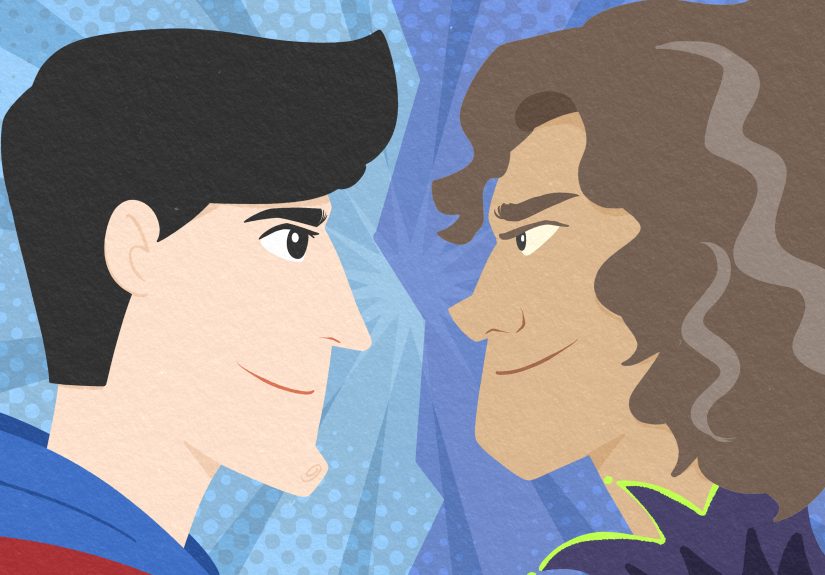
You know that moment in a movie when the “hero” makes a choice so questionable you whisper, “Okay… but why do I kinda get it?”
That’s the energy behind a Villain or Hero Quiz: a playful personality quiz that borrows from storytelling archetypes,
moral psychology, and pop-culture “good vs. evil” vibes to answer one very important question:
When life gets messy, do you charge in like a hero… or monologue like a villain?
Before we roll out the dramatic cape: this is not a clinical assessment or a label you’re stuck with forever.
It’s a fun, self-reflection toollike holding up a mirror that also makes a tiny “dun-dun-DUN!” sound when you look into it.
Use it to spot your decision-making style, your conflict habits, and the values you default to when pressure is high.
What Is a Villain or Hero Quiz (Really)?
A Villain or Hero Quiz is a personality-style quiz that sorts you into a “role” based on patterns:
how you handle power, how you treat other people, and what you do when the stakes rise.
Many versions borrow from classic story categorieshero, villain, antihero, trickster, mentorand remix them for real-life choices
like teamwork, conflict, loyalty, and ambition.
Pop culture keeps this debate alive because our favorite characters rarely stay neatly in one box.
Even the American Film Institute’s famous heroes-and-villains list highlights how memorable characters can be bold, flawed, and complicated.
And then there’s the antihero: the main character who doesn’t have the usual heroic qualities, but still pulls the story forward.
In other words: sometimes the “hero” is a mess… and that’s why people keep watching.
Why People Love These Quizzes (Besides the Drama)
1) Identity, in bite-size form
Quizzes offer a quick story about who you areespecially when real life is moving fast.
It’s easier to say “I’m a reluctant hero” than to write a 47-page memoir titled
“My Relationship With Responsibility: A Complicated Saga.”
2) Social sharing without oversharing
Posting a quiz result can feel safer than posting a diary entry. It signals personality (“I’m chaotic good!”)
without giving away personal details. It’s a light way to connect, joke, and compare.
3) A small nudge toward self-awareness
The best quizzes don’t just flatter you. They highlight trade-offs:
courage vs. recklessness, ambition vs. empathy, strategy vs. manipulation.
When a quiz is well-designed, it can help you notice patterns you usually missespecially under stress.
The “Science-y” Ingredients Behind Hero and Villain Archetypes
A good Villain or Hero Quiz doesn’t need a lab coat, but it helps to borrow ideas that researchers and storytellers have studied for years.
Here are a few real-world concepts that can make a quiz feel smarter (and less like a fortune cookie).
Heroism: risk, sacrifice, and prosocial action
In psychology research, heroism is often framed as a form of extreme prosocial behaviorvoluntary action that helps others,
involves meaningful risk or cost, and isn’t done for personal gain. In other words, it’s not “being nice.”
It’s “doing the right thing when it’s hard.” Your quiz result might reflect whether you lean toward that kind of risk-taking
or whether you prefer safer, steadier forms of helping.
Moral “taste buds” (aka what feels right to you)
Moral Foundations Theory suggests people rely on multiple moral instincts (like care, fairness, loyalty, authority, sanctity, liberty),
and that different people emphasize different “foundations.” That matters because two people can face the same situation and both feel moral
just in different directions. A Villain or Hero Quiz often measures which values you prioritize when they collide.
The “dark” and “light” sides of personality
Some research groups discuss the Dark Triad traitsnarcissism, Machiavellianism, and psychopathyas overlapping patterns
tied to manipulation, callousness, and self-focus (at subclinical levels in everyday populations).
On the flip side, newer work discusses a Light Triad orientation that reflects faith in humanity, humanism,
and treating people as ends rather than tools. A quiz should never diagnose you, but it can explore whether your style leans more cooperative
or more exploitative when you’re in charge.
Big Five personality: a reality check
If you want a solid backbone for “how people differ,” psychologists often reference the Big Five dimensions
(extraversion, neuroticism, agreeableness, conscientiousness, openness). A villain-or-hero vibe can be shaped by these traits:
high conscientiousness can look like principled leadership… or rigid control.
High openness can look like creative heroism… or chaotic plot twists.
Translation: the same trait can show up as “hero” or “villain” depending on your intentions, your empathy,
and whether you treat people like teammates or chess pieces.
How This Villain or Hero Quiz Works
This quiz uses three simple lenses:
- Intent: Are you trying to protect, improve, and helpor mainly to win, control, or punish?
- Method: Do you prefer honest action, rules, and transparencyor secrets, leverage, and shortcuts?
- Risk & sacrifice: When it counts, are you willing to pay a cost to do what you think is right?
Think of it like a modern, real-life cousin of the classic “alignment” grid used in tabletop storytelling:
not to lock you into a box, but to show your default tendencies under pressure.
Take the Villain or Hero Quiz (12 Questions)
Choose the answer that feels most like you on your most typical daynot your best day, not your “I’m auditioning to be a saint” day.
Keep score as you go.
Scoring Key
- A = +2 Hero points
- B = +1 Hero point, +1 Antihero point
- C = +2 Antihero points
- D = +2 Villain points
A teammate messes up and everyone notices. Your first move is…
- A) Cover for them publicly, then help them fix it privately.
- B) Calm the room, then ask what happenedno shaming, but no excuses.
- C) Fix it yourself fast and deal with the teammate later.
- D) Make sure people know it wasn’t your fault.
You find out a rule is unfair. You’re most likely to…
- A) Challenge it openly and propose a better solution.
- B) Work within the system while building support for change.
- C) Bend it quietly if that prevents harm.
- D) Exploit itif the system is broken, why shouldn’t you benefit?
Someone you dislike asks for help. Your honest response is…
- A) Help anyway. You’re not trying to be their friend; you’re trying to be fair.
- B) Help, but set clear boundaries.
- C) Help if it also helps you or your people.
- D) Nothis is a chance to let consequences do the talking.
When you’re in charge, you feel most comfortable when…
- A) Everyone is protected and empowered, even if it’s slower.
- B) Expectations are clear and the team is steady.
- C) Outcomes are strong and you’re free to improvise.
- D) You have leverage and nobody can surprise you.
A friend is being treated unfairly. You…
- A) Step in immediately, even if it’s awkward.
- B) Document what happened and back them up strategically.
- C) Confront the issue, but on your terms and timeline.
- D) Plot the most satisfying comeback in human history.
Pick the sentence that sounds most like you:
- A) “If I can help, I should.”
- B) “Doing good requires systems, not just feelings.”
- C) “Life is complicated. I do what works.”
- D) “The world rewards winners. I’m learning the rules.”
You get criticism that feels unfair. You usually…
- A) Ask questions, then improve what you can.
- B) Defend yourself calmly with facts.
- C) Shrug it off publicly, but stew privately.
- D) Remember it. File it. Use it later.
Someone offers you a shortcut that helps you but harms others a little. You…
- A) Decline. “A little harm” grows legs and runs around.
- B) Decline unless you can reduce the harm to nearly zero.
- C) Consider it, especially if the system is already unfair.
- D) Take it. That’s what shortcuts are for.
You’re most motivated by…
- A) Purpose and protecting people.
- B) Responsibility and competence.
- C) Freedom and results.
- D) Power and control.
If your plan fails, you tend to…
- A) Own it and repair the damage.
- B) Review what went wrong and rebuild smarter.
- C) Pivot quicklyfailure is data.
- D) Find who caused it (and make sure it never happens again).
In a crisis, your greatest strength is…
- A) Courage and compassion.
- B) Calm leadership and structure.
- C) Improvisation and grit.
- D) Ruthless clarity.
Your biggest risk is…
- A) Caring so much you burn out.
- B) Becoming rigid or overly cautious.
- C) Justifying choices you’ll regret later.
- D) Mistaking control for strength.
Calculate Your Result
Add up your points in each bucket (Hero, Antihero, Villain). Then use this guide:
- Mostly Hero: 16+ Hero points and Villain points under 6
- Hero-Leaning Antihero: Hero and Antihero are close, Villain stays low
- Classic Antihero: Antihero is highest, Hero is moderate, Villain is low-to-medium
- Antihero With Villain Spice: Antihero is highest, Villain is also high (7+)
- Full Villain Energy: Villain is highest (and you smiled during that sentence)
Villain or Hero Quiz Results: What Your Archetype Says About You
1) The Classic Hero
You’re values-forward and people-protective. You step in when something is wrong, even if it costs you comfort, time, or popularity.
You don’t need credityou need the outcome to be right.
- Strength: Trustworthy under pressure; others feel safe around you.
- Blind spot: You can over-functionsaving everyone until there’s no oxygen left for you.
- Level-up tip: Build support systems. Heroism scales when it’s shared.
2) The Guardian Hero (Lawful Good Energy)
You believe doing the right thing works best when it’s repeatable. You love clarity, fairness, and sustainable standards.
You’re the person who brings a flashlight and spare batteries.
- Strength: Reliable leadership; you prevent chaos before it starts.
- Blind spot: Rigidityrules can become more important than people if you’re stressed.
- Level-up tip: Keep one “compassion exception” in every policy.
3) The Reluctant Hero
You don’t seek the spotlightyou’d actually prefer the spotlight not know your address.
But when it matters, you show up. You act because you can’t live with doing nothing.
- Strength: Quiet courage; you’re steady when others panic.
- Blind spot: You may delay action while you debate yourself.
- Level-up tip: Decide your “non-negotiables” ahead of time.
4) The Classic Antihero
You’re pragmatic, complicated, and allergic to fake optimism. You’ll do goodbut you’ll do it your way,
and you might roll your eyes while doing it. You don’t trust easy answers, and you’re often right not to.
- Strength: Realism; you see the hidden costs and inconvenient truths.
- Blind spot: “Ends justify the means” thinking can creep in when you’re tired or angry.
- Level-up tip: Make a personal rule: never solve a problem by creating a new victim.
5) The Charming Villain (Strategist)
You’re sharp, persuasive, and big-picture. You think in leverage, incentives, and timing.
In healthy mode, you’re a strategic leader. In unhealthy mode, you’re a friendly tornado with a calendar invite.
- Strength: Influence; you can move people and systems.
- Blind spot: Treating people as pieces instead of partners.
- Level-up tip: Practice “consent-based strategy”: if you wouldn’t explain it out loud, don’t do it.
6) The Chaotic Villain (Force of Nature)
You don’t just break rulesyou question why they exist and who they serve.
That can be revolutionary… or reckless. Your biggest growth edge is learning the difference.
- Strength: Fearless disruption; you’re not easily controlled.
- Blind spot: Collateral damageother people can get hurt in your “main character moment.”
- Level-up tip: Build one accountability anchor: a person who can tell you “no” and you’ll actually listen.
How to Use Your Result (Without Turning It Into a Personality Prison)
A quiz result is most useful when it becomes a conversation starter, not a final verdict.
Try these:
- Reflection: Which questions were easiest? Which ones made you hesitate? That’s where your real values live.
- Pattern spotting: Are you more “hero” at home but more “antihero” at work? Context matters.
- Growth plan: Pick one “hero habit” (help without rescuing) or one “villain detox” habit (reduce manipulation).
- Group play: Have friends answer the quiz “as you” and comparecarefully, kindly, and with snacks.
Experiences With Villain or Hero Quizzes (The Part No One Warns You About)
Villain-or-hero quizzes are rarely just solo activities. In real life, they turn into mini social experiments
where people learn somethingeven if they came for the jokes.
The first experience most people have is the “Wait, that’s too accurate” moment. It usually happens on a question about
power, fairness, or shortcuts. Someone picks an answer confidentlythen pauses because they realize they’ve just admitted something true,
like “I will absolutely take the shortcut if the system is unfair.” The room laughs, but the laughter has that tiny edge of recognition.
That’s the magic: the quiz gives you a safe way to say what you normally keep hidden under polite conversation.
The second common experience is the group debate. People start arguing over the definitions:
“That’s not villain behaviorthat’s strategy!” or “No, it’s villain behavior if you don’t care who gets hurt.”
This is where the quiz becomes more interesting than the score. You see how different people define “good,” “evil,” and “necessary.”
In one group, “hero” might mean self-sacrifice. In another, it might mean protecting boundaries and refusing to be manipulated.
Nobody is lying; they’re just prioritizing different values. Suddenly you’re not just taking a quizyou’re watching moral philosophy
happen over pizza.
A third experience is the “antihero solidarity” effect. Antiheroes tend to recognize each other quickly:
they’re often the people who value honesty over politeness, results over optics, and realism over motivational posters.
When multiple antiheroes take the same quiz, you’ll see a wave of mutual respect:
“Finally, someone else who doesn’t pretend everything is fine.” In a healthy group, this becomes a strength:
antiheroes can spot problems early, call out nonsense, and still do goodespecially when teamed up with heroes who keep the mission
compassionate.
Then there’s the sneaky experience nobody expects: the “villain as a warning label” moment.
Sometimes someone scores high on the villain side and treats it like a flex. That can be playfulup to a point.
What makes it useful is when the quiz turns into a self-check: “Okay, I can be controlling when I’m stressed,” or
“I use sarcasm as armor,” or “I want to win so badly I stop listening.” Those admissions are uncomfortable, but they’re also
the beginning of growth. The best villain results come with a built-in invitation:
Use your power with consent. Use your intelligence with empathy. Use your ambition without making people disposable.
Finally, villain-or-hero quizzes create a surprisingly positive experience when people take them as a
team-building tool rather than a “who’s good vs. bad” ranking. A team with only heroes can burn out.
A team with only strategists can lose trust. A mixheroic purpose, guardian structure, antihero realism, strategist planning
can actually be balanced. People start assigning strengths: “You do the crisis plan,” “You do the fairness check,”
“You do the creative workaround,” “You do the relationship repair.” Instead of labeling each other, they learn how to collaborate.
The quiz becomes a language for differences that would otherwise cause friction.
So if you take this quiz and it sparks laughs, debates, mild existential dread, and one person saying,
“I KNEW you were a chaotic villain,” congratulations: you’re having the full Villain-or-Hero Quiz experience.
Just remember the real win isn’t the labelit’s noticing your patterns and choosing what kind of character you want to be
when the plot thickens.
Conclusion
A Villain or Hero Quiz is fun because it’s dramatic, but it sticks because it’s relatable.
Underneath the costumes and catchphrases, it’s really about values: how you treat people, how you handle power,
and what you do when the easy choice isn’t the right one.
Take the result that fits, laugh at what’s exaggerated, and steal the best lesson from every archetype:
heroes protect, guardians stabilize, antiheroes tell the truth, and even villains (when they grow up a little) learn
that power is only impressive when it’s used responsibly.