Table of Contents >> Show >> Hide
- Why Woven Accents Work (Even When Nothing Else Does)
- Walls: Woven Texture You Can Hang
- Windows: Woven Shades That Filter Light Like a Pro
- Floors: The Rug Layer That Makes Everything Make Sense
- The “Three-Surface Rule” for Woven Accents
- Room-by-Room Ideas
- Care & Longevity: Keep the Texture, Lose the Stress
- FAQ: Quick Answers Before You Buy Anything
- Experience Notes: What Woven Accents Look Like in Real Homes (Extra )
If your room feels like it’s missing somethingand you’ve already tried paint, pillows, and a candle that smells like “Coastal Tax Refund”
you probably don’t need more stuff. You need more texture.
Enter: woven accents. The secret weapon for making a space feel warmer, richer, and intentionally designed (instead of “I moved in last week and
my personality is still in a box somewhere”). And if you want an inspiring north star for this look, Gypsy/Maturin style woven work is basically
a masterclass in how handcrafted textiles can carry a roomespecially when you echo them across walls, windows, and floors.
In this guide, we’ll break down exactly how to use woven elementsthink grasscloth wallcoverings, bamboo or woven-wood shades, and layered rugsso your home feels
collected, not cluttered. You’ll get practical do’s and don’ts, room-by-room ideas, and a set of “designer rules” that are easy to follow even if your design budget
is currently competing with your grocery budget.
Why Woven Accents Work (Even When Nothing Else Does)
Woven materials do something paint can’t: they add dimension. Texture bends light, softens hard edges, and makes “simple” rooms feel expensive
without requiring expensive square footage.
The three big benefits of weaving texture into a space
- Visual warmth: Natural fibers and tactile surfaces make a room feel coziereven in a neutral palette.
- Instant depth: Woven texture creates shadow and variation, so flat surfaces look layered instead of bare.
- Balance: If you’ve got sleek finishes (glass, metal, lacquer, stone), weaving brings in an organic counterpoint that keeps things human.
The trick is to repeat the texture at different heightssomething on the wall, something at the window, something underfootso it feels like a design decision,
not a random purchase you justified at 1:00 a.m.
Walls: Woven Texture You Can Hang
1) Grasscloth and woven wallcoverings
Grasscloth (and other woven wallcoverings) is wallpaper made from natural fibers that are woven and backed with paper. It’s famous for subtle variation, gentle
irregularity, and a “quiet luxury” vibe that makes even a small hallway feel like it has a publicist.
Styling tip: treat grasscloth like you’d treat a special sweater. Put it where it won’t get splashed, scratched, or steam-cleaned by life. Think
bedrooms, home offices, dining rooms, and powder rooms (if it’s low moisture).
2) Faux grasscloth: the “no drama” option
If you love the look but don’t love the idea of a delicate wall finish, faux grasscloth wallpapers mimic the texture with better durability.
This is especially helpful for kids’ spaces, busy entries, or homes where “wipeable” is a love language.
3) Woven panels, cane, and rattan as wall moments
Cane and rattan aren’t just for chairs anymore. A framed cane panel, rattan wall art, or even a woven headboard can give you that same layered texture without
committing to full-wall coverage. It’s the design equivalent of bangs: a big visual change, but reversible if you panic.
4) Textile art and tapestries (yes, in a modern way)
Woven wall hangings can feel fresh when you keep the palette tight and the silhouette clean. Look for:
- Graphic weaves in neutral + one accent color
- Flat-woven pieces that read more “textile art” than “college dorm”
- Oversized scale (one strong piece beats five small ones)
Windows: Woven Shades That Filter Light Like a Pro
1) Woven wood and bamboo shades
Woven shades (often bamboo, reeds, grasses, or mixed natural materials) are a go-to because they soften daylight and add organic texture right at eye level.
They’re especially good in rooms where you want warmth without heavy drapery.
2) Privacy, light control, and liners (the part people forget)
Most woven shades are naturally light-filtering. If you need more privacyor you don’t want your living room to become a shadow puppet theater at nightadd a liner.
A privacy or blackout liner keeps the woven look on the room side while giving you real performance.
3) Layering woven shades with curtains
This is where rooms start looking “designer.” Pair woven shades with:
- Floor-length linen curtains for softness
- Simple pinch-pleat drapery for structure
- Sheers for daytime glow, plus woven shades for nighttime privacy
Pro move: match the undertone. If your shade reads golden, pick curtain hardware in warm metals. If it reads cooler/ashen, lean toward nickel or iron.
Floors: The Rug Layer That Makes Everything Make Sense
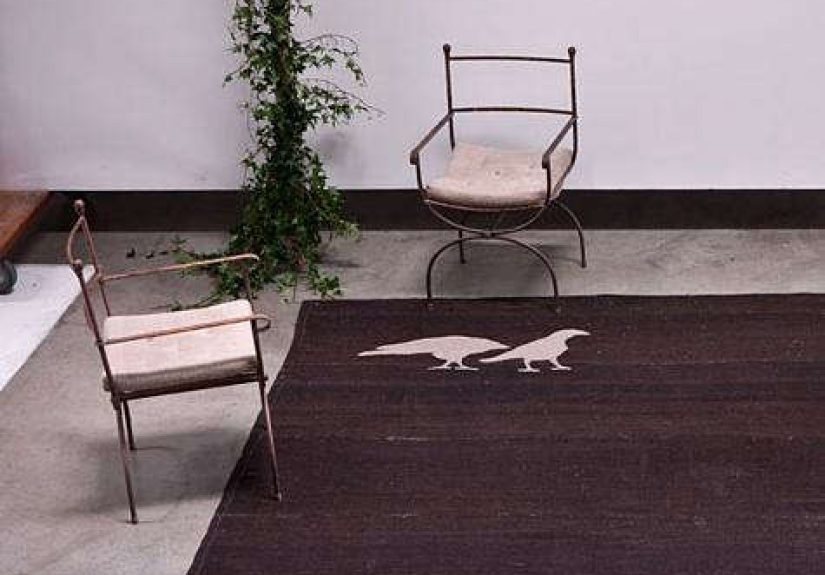
1) Gypsy/Maturin-inspired rugs: statement weaving with personality
The Gypsy/Maturin approach to woven accents is a reminder that rugs don’t have to be background. Think of the floor as your room’s “base note”it can carry motif,
texture, and story. A textile-forward rug can anchor the palette, set the mood, and make even minimal furniture feel intentional.
If you love the look of antique kilims and heritage-inspired motifs, choose a rug that has:
- A strong but limited color story (3–5 colors is plenty)
- Handcrafted variation (a little irregularity reads high-end)
- Graphic motifs that feel curated rather than chaotic
2) Natural-fiber rugs (jute, sisal, seagrass): the “quiet texture” workhorses
Natural-fiber rugs are amazing for grounding a room, especially in open-plan spaces. They’re neutral without being boring, and they add texture without shouting.
But they come with a personality trait: they can be picky about moisture and stains.
3) Layering rugs: the easiest upgrade with the biggest payoff
Want a room to look finished in one afternoon? Layer a patterned rug over a larger natural-fiber base. You get:
- More scale (the room feels larger)
- More comfort (especially if you add a rug pad)
- More flexibility (swap the top rug seasonally)
The “Three-Surface Rule” for Woven Accents
If you only remember one thing, make it this: repeat the woven texture across three surfaces so it feels cohesive.
Here’s the simplest formula:
- Pick an anchor: either a rug, a woven shade, or a wallcovering.
- Echo it twice: add woven texture in two other places (wall + window, window + floor, etc.).
- Add contrast: balance with smooth finishes (painted trim, glass, metal, polished wood) so it doesn’t turn into “accidental tiki bar.”
Common woven accent pairings that always work
- Grasscloth wall + woven shade + wool or flatweave rug
- Textile wall art + bamboo shade + layered rugs
- Cane/rattan wall panel + linen curtains + kilim runner
Room-by-Room Ideas
Entryway
Go durable but textured: a flatweave runner, a woven basket for drop-zone storage, and one wall moment (framed textile, cane panel, or a wipe-friendly textured wallpaper).
The goal is “inviting,” not “mudroom panic.”
Living room
Start with the floor. A statement woven rug (Gypsy/Maturin-inspired or kilim-adjacent) sets the tone. Add woven shades to soften daylight. Then finish with one
textured wall elementgrasscloth on a single accent wall or a large woven artwork.
Bedroom
Bedrooms love texture because they’re mostly soft materials anyway. A grasscloth feature wall behind the bed, woven shades for calm light, and a plush rug (or
layered rugs) gives you that boutique-hotel feelingwithout needing boutique-hotel money.
Dining room
Dining rooms are perfect for grasscloth because traffic is predictable and the walls don’t usually take a beating. Pair with woven shades to warm up daylight,
and use a rug that can handle chair movement (flatweave and low pile tend to behave better).
Kitchen
Keep walls practical: instead of delicate woven wallpaper near splashes, use woven shades and floor texture (runner or mat) to bring the weave in safely.
If you want wall texture, try a small breakfast nook area away from cooking steam.
Bathroom
Real woven wallcoverings can be risky in high-humidity rooms. If you love the look, consider faux textures, use strong ventilation, and keep it away from direct
water exposure. Woven shades (in moisture-appropriate materials) can still add warmth.
Care & Longevity: Keep the Texture, Lose the Stress
Grasscloth & woven wallcoverings
- Do: dust gently; treat seams carefully; plan panels so natural variation looks intentional.
- Don’t: scrub with water or harsh cleaners; rush installation; install where steam and splashes are constant.
Woven shades
- Do: dust regularly; consider liners for privacy/light control; measure carefully for inside mount.
- Don’t: assume all woven shades are blackout (most aren’t without liners).
Natural-fiber rugs
- Do: vacuum with the right attachment; rotate for even wear; use a pad to prevent slipping and extend life.
- Don’t: soak; over-wet clean; toss most natural-fiber rugs into a washing machine (they’re not built for that).
FAQ: Quick Answers Before You Buy Anything
Do woven accents only work in “boho” homes?
Not at all. Woven texture is style-agnostic. It can read coastal, modern, traditional, rustic, Scandinavian, or minimalist depending on color, scale, and what you pair it with.
How do I keep woven texture from feeling too busy?
Limit your palette, repeat the texture across three surfaces, and keep the surrounding shapes clean. If the rug is bold, make the wall texture subtle. If the wall is textured,
keep the rug simpler.
What’s the easiest “first woven accent”?
Woven shades. They add texture instantly, don’t take floor space, and you can upgrade light control with liners.
Experience Notes: What Woven Accents Look Like in Real Homes (Extra )
Case Study 1: The “Rental-Friendly Glow-Up” (Small City Apartment)
In a small apartment with white walls and builder-grade blinds, woven accents can be the difference between “temporary” and “tailored.” The simplest win is swapping
basic blinds for woven shades that filter light warmly. Suddenly, the daylight looks softermore latte, less fluorescent office breakroom. From there, the floor becomes
the anchor: a patterned flatweave rug (or Gypsy/Maturin-inspired motif) adds identity without overwhelming the limited square footage. The final touch is a removable wall
moment: a large woven textile in a simple frame. The experience here is less about making a bold statement and more about giving the room a pulse. The big lesson?
Texture carries harder than color when you’re stuck with a landlord’s paint choices.
Case Study 2: The “Sun-Soaked Bungalow” (Warm Climate, Bright Light)
In homes with strong natural light, woven materials shineliterallybecause texture creates changing shadows throughout the day. A living room with bright windows can handle
a richer wall texture (like grasscloth) because the light makes the weave visible from every angle. But the real-world learning curve is placement: woven wallcoverings are best
on walls that won’t be splashed, bumped, or steam-blasted. Instead of putting delicate texture near a busy hallway, the most successful projects place it behind a sofa, in a
reading nook, or as a bedroom feature wall. On the window side, woven shades help manage glare while keeping the room airy. The floor pulls it together with a rug that has both
craft and structure. What designers notice in practice is how repeating fiber across the room makes it feel cohesiveeven when furniture styles are mixed. The weave becomes the
“common language.”
Case Study 3: The “Family-Proof Texture Plan” (High Traffic, Real Life)
In a family homekids, pets, constant movementthe goal is to get the woven look without fragile finishes. This is where faux textures and smart layering earn their keep.
Instead of real grasscloth in a playroom, you choose a wipeable textured wallpaper or keep the walls painted and bring the weave in through window treatments and rugs.
A larger natural-fiber rug can ground the space, but you learn quickly that moisture and spills need a plan: use rug pads, vacuum often, and treat stains fast with minimal
moisture. The top layer can be a smaller, more character-driven rug that’s easier to swap if life happens (and it will). One of the most useful “in-the-wild” design insights
is that you can still get the handcrafted vibe by focusing on shape and repeat: a woven pendant, woven shades, and a flatweave rug reads intentional without relying
on delicate wall finishes. The best outcome isn’t perfection; it’s a room that feels warm, textured, and livablelike it can handle a birthday party and still look good after.
The overall takeaway from real spaces is consistent: woven accents work when they’re treated as a system, not a one-off purchase. Choose one anchor, echo it
in two other places, and keep the rest calm. That’s how you get “collected home” energy instead of “I bought a basket and now I’m an interior designer.”