Table of Contents >> Show >> Hide
- Start Here: The 5-Minute Yard Detective Checklist
- Hole ID Cheat Sheet (Fast Answers for Busy Humans)
- The Usual Suspects (And How Their “Work” Looks)
- Moles: The Underground Subway Engineers
- Voles: The Sneaky Lawn Nibblers
- Pocket Gophers: The “Fan-Shaped Mound” Artists
- Skunks: The Midnight “Nose Punch” Crew
- Raccoons: The Sod-Rolling “Strength Team”
- Armadillos: The Polka-Dot Diggers
- Groundhogs (Woodchucks): The Big-Burrow Builders
- Chipmunks: The “No Dirt Pile” Minimalists
- Squirrels: The Acorn Archaeologists
- Don’t Forget the Non-Mammals
- Is It Really Grubs? How to Check Before You Treat
- Humane, Effective Fixes (Without Turning Your Yard Into a Battlefield)
- When to Worry (A Quick Safety Reality Check)
- Putting It All Together: A Simple “If This, Then That” Guide
- Real-World Yard Detective Stories (And What They Teach)
- Conclusion: Your Yard Isn’t BrokenIt’s Just Popular
You walk outside, coffee in hand, ready for a peaceful moment with your lawn… and there it is: a fresh set of holes,
divots, tunnels, or what looks like your grass got into a tiny bar fight overnight. Before you blame the neighbor’s
kid, your dog, or “aliens (again),” here’s the truth: yards are basically outdoor buffets, and a surprising number of
animals know the address.
The good news? Most mystery-hole cases are solvable with a little yard detective work. The better news? You don’t need
a magnifying glassjust a ruler, a phone camera, and the willingness to look at dirt like it’s telling you secrets.
This guide will help you figure out what animal is digging holes in your yard, how to confirm your
suspect, and how to fix the problem without turning your lawn into a war zone.
Start Here: The 5-Minute Yard Detective Checklist
- Measure the opening. Diameter matters. A 1-inch hole and a 10-inch hole are not the same crime.
- Look for dirt piles (or no dirt piles). Mounds, fan shapes, “volcanoes,” or perfectly clean entrances are major clues.
- Check the pattern. Random peppered holes? One big entrance? Long raised ridges? A torn-up patch of sod?
- Time of day. Damage that “appears overnight” often points to nocturnal foragers like skunks and raccoons.
- Search for bonus evidence. Tracks, droppings, chewed plants, surface runways, or nearby food sources (fallen fruit, pet food, grubs).
Hole ID Cheat Sheet (Fast Answers for Busy Humans)
| Clue | What You’re Seeing | Most Likely Culprit |
|---|---|---|
| Raised ridges + “volcano” mounds | No open hole, spongy tunnels under grass | Moles |
| Lots of small cone holes | 1–3 inches wide; looks like someone poked the lawn repeatedly | Skunks (for grubs/worms) |
| Sod rolled back / big torn patches | Grass peeled like a bad toupee | Raccoons (often for grubs) |
| Small round entrance, no dirt pile | About 2 inches across; often near patios, woodpiles, foundations | Chipmunks |
| Fan-shaped mound with plugged hole | Dirt piled like a sideways fan; hole may be off-center/plugged | Pocket gophers |
| Many shallow “snout” holes | 1–2 inches wide, up to ~6 inches deep, scattered like polka dots | Armadillos (common in parts of the South) |
| One big entrance + mound nearby | 6–12 inches across, obvious excavation | Groundhogs (woodchucks) or similar burrowers |
| Little mounds of fine soil around holes | Multiple small soil “piles” in thin turf/bare areas | Ground-nesting wasps (like cicada killers) |
The Usual Suspects (And How Their “Work” Looks)
Moles: The Underground Subway Engineers
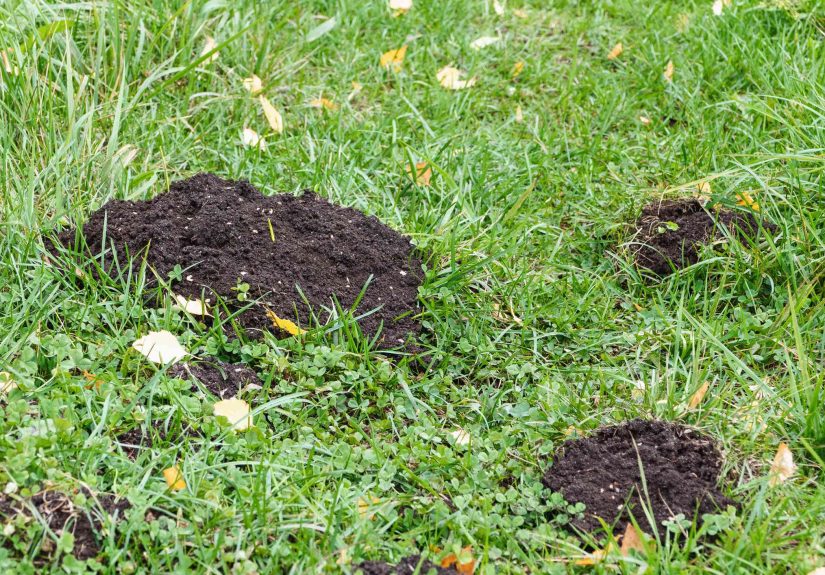
If your “holes” are really raised ridges that feel squishy underfootor you see
volcano-shaped mounds with no obvious entry holeyou’re likely dealing with moles.
Moles don’t typically leave open holes like a little door to Moleville. They push soil up as they tunnel
while hunting insects, grubs, and earthworms.
- Signature sign: Raised surface tunnels and occasional volcano mounds.
- Where: Often in moist soil, shade edges, garden beds, and lawns with lots of soil life.
- Extra twist: Moles are often blamed for plant damage that’s actually caused by voles using mole tunnels.
What to do: Reduce watering (when possible), fix soil drainage issues, and monitor active runs by
gently tamping down a short tunnel sectionif it pops back up within a day or two, that run is active.
For persistent damage, targeted trapping is usually more effective than random “mole repellent” gadgets.
Voles: The Sneaky Lawn Nibblers
Voles are small rodents that can leave tiny holes (often 1–2 inches) and
surface runways through grassespecially noticeable after snow melt or when turf is tall.
They’re plant-eaters, and they may chew roots, stems, and bark. Unlike moles, voles aren’t building ridges everywhere;
they’re traveling and feeding.
- Signature sign: Narrow “runways” in grass, small openings, gnaw marks on plants.
- Where: Under groundcover, tall grass, mulch, and along dense landscaping.
- Big clue: Damage to bulbs, perennials, young trees, or shrub bark suggests voles more than moles.
What to do: Mow regularly, trim vegetation around beds, pull back thick mulch from trunks,
and consider hardware cloth guards for young trees. If you see active runways, habitat cleanup is your first win.
Pocket Gophers: The “Fan-Shaped Mound” Artists
Pocket gophers are famous for soil mounds that look like fans or crescents, often with the tunnel
entrance plugged (they like privacy). Their work is typically more about mounds than open holes.
- Signature sign: Flatter fan-shaped mounds; entry may be off to the side and plugged.
- Where: Regions where pocket gophers are common (varies by state), especially in loose, workable soil.
What to do: Identify active systems before acting; gopher control is usually best handled with
targeted trapping, because many baits and home remedies don’t reach the right place (or create other risks).
Skunks: The Midnight “Nose Punch” Crew
Skunks often create small, cone-shaped holes about the size of their nose as they dig for
grubs, worms, and soil insects. The damage commonly appears overnight because skunks are typically nocturnal.
If your yard looks like it was attacked by a tiny ice-cream scooper, skunk is a strong suspect.
- Signature sign: Many small cone holes (often 1–3 inches), sometimes clustered.
- Where: Lawns with moist soil, thick thatch, or an active grub population.
- Reality check: Skunks digging doesn’t automatically mean you have grubsworms can be the prize, too.
What to do: If the lawn is frequently watered, ease upwet soil pushes prey closer to the surface.
If you suspect grubs, confirm before treating (more on that below). Also secure trash and remove outdoor pet food to
reduce general skunk interest.
Raccoons: The Sod-Rolling “Strength Team”
Raccoons can do skunk-like grub hunting, but with more… enthusiasm. They may pull up large sections of sod or flip
turf like they’re searching for a lost contact lens. If you find big peeled patches, raccoons are often involved.
- Signature sign: Torn sod, larger disturbed areas, sometimes near edges/trees.
- Where: Lawns with grubs, fallen fruit, unsecured trash, or accessible compost.
Safety note: If you find raccoon droppings (especially in repeated “latrine” spots), avoid direct contact,
keep kids away, and wash hands after yard work. Consider professional cleanup guidance for heavy contamination.
Armadillos: The Polka-Dot Diggers
In many southern and southeastern areas, armadillos are a classic cause of scattered, shallow holes.
They forage for insects and other invertebrates and can leave lots of small openingsoften
1–2 inches wide and up to several inches deepespecially when soil is easy to dig (like after irrigation).
- Signature sign: Numerous shallow holes, often 1–2 inches wide, scattered across the yard.
- Where: Moist lawns, mulched beds, and areas rich in soil critters.
What to do: Reduce overwatering and remove easy food sources (like concentrated insect activity in mulch).
In persistent cases, exclusion fencing may be needed around high-value areas.
Groundhogs (Woodchucks): The Big-Burrow Builders
If you have a hole that looks like it could comfortably fit a bowling ball (or a small dog that makes poor life choices),
think groundhog. Burrow entrances can be roughly 10–12 inches in diameter and often have a mound of excavated dirt nearby.
Groundhogs may also have multiple entrances.
- Signature sign: Large entrance with obvious excavation; often near sheds, foundations, fencerows, or tree lines.
- Risks: Burrows can undermine patios, slabs, and garden edges.
What to do: Exclude with heavy-gauge wire/hardware cloth, buried to prevent digging under; remove brush piles
and tall weeds near structures. For major burrows near foundations, professional help is often the safest route.
Chipmunks: The “No Dirt Pile” Minimalists
Chipmunk burrow entrances are often about 2 inches across and typically have
little to no dirt mound because chipmunks carry soil away to keep the entrance less obvious.
If you see neat little holes near steps, patios, woodpiles, or foundationswithout a matching dirt pilechipmunks jump up the suspect list.
Squirrels: The Acorn Archaeologists
Squirrels can create lots of small holes while burying and retrieving nuts. These are usually shallow “digs,”
not deep burrow entrances. You’ll often see them near trees, garden beds, and places where nuts or bulbs exist.
- Signature sign: Small shallow holes, scattered; often seasonal (fall/spring).
- What to do: Keep fallen nuts picked up, use mulch or groundcover to reduce easy digging, and protect bulbs with wire mesh.
Don’t Forget the Non-Mammals
Cicada Killer Wasps and Other Ground-Nesting Insects
Sometimes the “animal” digging holes in your yard has wings and a work ethic. Cicada killer wasps (and other solitary
ground-nesting wasps) can create noticeable burrow entrances with a small mound of fine soil. These burrows often show
up in thin turf or bare patches. While their size can look intimidating, many solitary wasps are generally not aggressive
toward people when left alone.
- Signature sign: Multiple holes with little piles of fine soil, often in sunny, sparse grass areas.
- What to do: Improve turf density (healthy, thick grass discourages nesting), reduce bare spots, and avoid swatting “just because.”
Crayfish “Chimneys”
In wetter regions or poorly drained lawns, crayfish can build little mud “chimneys” near burrow openings.
If you see tiny towers of mud pellets, you’re dealing with a moisture-and-drainage issue as much as a critter issue.
Is It Really Grubs? How to Check Before You Treat
Skunks and raccoons get blamed for “grub lawns,” and sometimes they’re right. But treating blindly can waste money and
upset beneficial soil life. Instead, confirm:
- Pick a test spot near damage. Cut a small square of sod (about 1 square foot) like you’re opening a hinged door.
- Count what you find. A few grubs can be normal; a heavy concentration is more concerning.
- Look at turf health. If grass roots are weak and sod peels up easily, grubs may be contributing.
If grubs are confirmed: Use targeted, label-directed lawn treatments or biological options when appropriate,
and time them correctly for your region. Also adjust wateringoverly lush, constantly moist lawns can invite the very soil
buffet that grub-hunters love.
Humane, Effective Fixes (Without Turning Your Yard Into a Battlefield)
1) Remove the Buffet
- Stop feeding wildlife accidentally: Bring pet food indoors, secure trash lids, and clean up fallen fruit.
- Adjust irrigation: Overwatering boosts worms/insects near the surface and makes digging easier.
- Thin the thatch: Heavy thatch can shelter insects and make turf easier to peel back.
2) Make Your Yard Less Cozy
- Keep grass trimmed and reduce dense groundcover where rodents hide.
- Move brush piles and stacked lumber away from the house.
- Seal crawl spaces, under-deck gaps, and shed edges with appropriate barriers.
3) Use Exclusion Where It Counts
For persistent burrowers (groundhogs, armadillos, some rodents), exclusion fencing is often the most reliable long-term fix.
The trick is installing it correctlysturdy material and buried depth matter more than wishful thinking.
4) Confirm Before You Escalate
Many people jump straight to repellents or gadgets. Instead, confirm the culprit first. A trail camera aimed at the damaged
area for one night can solve a week’s worth of guessing. If you prefer low-tech, smooth a patch of soil and look for tracks
the next morning.
5) Know When to Call a Pro
If digging is extensive, near a foundation, or involves a potentially protected species (region-dependent), contacting a licensed
wildlife control professional or local extension office can save time and prevent costly mistakes. Also, relocation laws vary by state,
and moving wildlife can create humane and disease risks.
When to Worry (A Quick Safety Reality Check)
Most hole-digging is a nuisance problem, not a crisis. Still, take extra caution if:
- You find repeated raccoon droppings/latrines where kids play (avoid contact; practice careful hygiene).
- A burrow is undermining a sidewalk, retaining wall, patio, or foundation.
- Your pet is obsessively investigating a hole (it may contain wildlife, insects, or a nest).
- The animal could be protected in your state/region (some burrowers are legally protected).
Putting It All Together: A Simple “If This, Then That” Guide
- Raised ridges + volcano mounds: Think moles (then check if voles are also present).
- Many 1–3 inch cone holes appearing overnight: Skunks (and possibly grubs/worms).
- Large peeled sod patches: Raccoons (often grub hunting).
- 2-inch entrance with no dirt pile: Chipmunks (especially near structures).
- Fan-shaped dirt mounds: Pocket gophers.
- Scattered shallow holes 1–2 inches wide (often in warm months): Armadillos (in regions where present).
- One big 10–12 inch entrance with a mound: Groundhog/woodchuck.
- Multiple small holes with fine soil mounds in thin turf: Ground-nesting wasps (often harmless if left alone).
Real-World Yard Detective Stories (And What They Teach)
To make this feel less like a textbook and more like real life, here are some common “mystery hole” scenarios homeowners
reportplus the lessons that come with them. No cape required, though it’s not discouraged.
Experience #1: “My Lawn Feels Like a Waterbed”
A homeowner notices the grass looks fine from a distance, but walking across the yard feels springy, like the lawn is
hiding a trampoline. There aren’t many obvious holesjust weird, raised lines that weave across the grass. A closer look
reveals soft ridges and a couple of soil mounds that resemble mini volcanoes. The first assumption is “grubs,” and the
second assumption is “my lawn is doomed.” But what’s really happening is underground tunnelingclassic mole activity.
The lesson: not all “holes” are holes. In many cases, the best first step isn’t throwing products at the problem;
it’s identifying active runs and reducing the yard conditions that make tunneling easy (like consistently wet, insect-rich soil).
Experience #2: “Overnight, My Yard Got Pepper-Shakered”
This is the classic morning shock: dozens of small cone-shaped holes appear in one night, as if the yard was attacked by
a very determined golf tee. The dog is thrilled. The homeowner is not. The holes are small (often just a couple inches wide),
and many are clustered. That pattern often points to skunks foraging for worms or grubs, especially in moist soil.
The lesson: you don’t fix skunk digging by only focusing on skunks. You also fix the buffet. If the lawn is
overwatered or thick with thatch, it’s easier for skunks to find food close to the surface. When soil conditions change,
the “dinner bell” gets quieter.
Experience #3: “A Perfectly Round Hole… With Zero Dirt”
A homeowner finds a neat, round opening near the front steps. It’s about two inches acrosstoo small for a groundhog,
too tidy for a random raccoon dig, and there’s practically no dirt piled nearby. It looks like someone installed a tiny
doorway and forgot to add a welcome mat. This often turns out to be chipmunk real estate. Chipmunks are known for keeping
entrances clean by carrying soil away rather than leaving a mound at the door. The lesson: the absence of dirt is evidence.
When you see tidy entrances near structures, think “small burrow resident,” then focus on habitat changes (woodpiles, brush,
easy hiding spots) and exclusion where needed.
Experience #4: “My Sod Was Peeled Like a Banana”
Few yard moments are as dramatic as walking outside and seeing chunks of sod rolled back, exposing soil like your lawn is
mid-surgery. This damage often happens overnight and can be extensive. In many neighborhoods, raccoons are the prime suspects,
especially if there’s a grub population under the turf. The lesson: big damage doesn’t always mean a big animal, but it often means strong paws.
If you repair the sod without addressing what the raccoon was after, you’re basically reopening the buffet with fresh table linens.
Confirm grubs before treating, secure trash and outdoor food sources, and consider temporary deterrents while the food supply is addressed.
Experience #5: “Summer Polka Dots Everywhere”
In warmer regions, homeowners sometimes notice many shallow holes scattered across the yard during summerespecially after
irrigation runs regularly. The holes are small and numerous, like a lawn with acne. This is a common description of armadillo
foraging, since armadillos dig for insects and other invertebrates in soil that’s easy to work. The lesson:
season and location matter. If you’re in an area where armadillos are present, repeated shallow holes in warm months
are a strong clue. Cutting back on excess watering and reducing soil-insect hotspots can reduce repeat visits.
The big takeaway from all these experiences is simple: the fastest path to a calmer yard is
matching the fix to the culprit. Guessing leads to wasted effort. Identifying leads to smart preventionand a lawn
that stops looking like it’s auditioning for a “before” photo.
Conclusion: Your Yard Isn’t BrokenIt’s Just Popular
If you’re asking, “What animal is digging holes in my yard?” you’re already doing the right thing: looking for
evidence instead of declaring war on every creature in a five-block radius. Measure the holes, check for mounds or ridges,
notice patterns, and consider timing. Then fix what’s attracting the diggingoften food (grubs, worms, insects), shelter, or easy soil conditions.
With the right ID and a few targeted changes, you can keep your lawn healthier, safer, and a lot less cratered.