Table of Contents >> Show >> Hide
- Vibration Therapy, Defined (Without the Hype)
- How Vibration Therapy Works (The “Why Is My Body Doing That?” Part)
- Types of Vibration Therapy
- What Does the Research Say Vibration Therapy May Help With?
- Is Vibration Therapy Safe?
- How to Use Vibration Therapy the Smart Way
- Common Questions People Ask (And the Answers They Deserve)
- The Bottom Line
- Experiences With Vibration Therapy (What It’s Like in Real Life)
Vibration therapy sounds like something you’d try after a long dayright next to “bubble bath therapy” and “not checking email therapy.” But it’s also a real, research-studied approach that uses controlled mechanical vibrations to stimulate muscles, nerves, and sometimes bones. Depending on the setup, it can look like standing on a vibration plate at the gym, using a handheld massage gun, or wearing a medical device designed to deliver specific vibrations to certain parts of the skeleton.
Here’s the honest take: vibration therapy isn’t magic, it’s not a shortcut that replaces movement, and it’s definitely not “shake your way to a six-pack in 10 minutes.” But in the right contextespecially for certain people and goalsit may offer measurable benefits.
Vibration Therapy, Defined (Without the Hype)
Vibration therapy is the use of mechanical oscillations (vibrations) delivered to the bodyeither the whole body or a targeted areato create physiological effects. Those effects can include:
- Muscle contractions (often involuntary)
- Changes in balance and neuromuscular coordination
- Increased local circulation and tissue stimulation
- Potential effects on bone and connective tissue (depending on the intensity and target)
The most common form you’ll see is whole-body vibration (WBV), where you stand, sit, or exercise on a platform that vibrates. Another big category is localized vibration (think massage guns and vibrating rollers). There’s also a smaller, more medical lane: prescription-style vibration devices designed for specific indications, delivered at specific frequencies and amplitudes.
How Vibration Therapy Works (The “Why Is My Body Doing That?” Part)
When vibration travels through your body, it creates rapid changes in muscle length. Your nervous system responds with a reflexive muscle contractionoften called the tonic vibration reflex. Translation: your muscles fire automatically to stabilize you.
At the same time, vibration can stimulate sensory receptors in the skin, muscles, and joints. This is one reason vibration therapy is often discussed in relation to:
- Balance training and fall-risk reduction
- Strength and power (especially lower body)
- Mobility and range of motion
- Rehabilitation when traditional exercise is limited
Key “Dose” Variables: Frequency, Amplitude, Time
Not all vibration is created equal. A gentle medical device delivering a controlled signal is not the same as a high-intensity gym platform trying to launch you into orbit.
Researchers often describe vibration using:
- Frequency (how many times per second the platform vibrates, measured in Hz)
- Amplitude (how far the platform moves, often in millimeters)
- Acceleration (sometimes described relative to gravity, like “0.3g” or “2g”)
- Exposure time (how long per session and how often per week)
This matters because benefitsand side effectstend to be dose-dependent. More isn’t automatically better. Sometimes, “more” is just… louder.
Types of Vibration Therapy
1) Whole-Body Vibration (WBV) Platforms
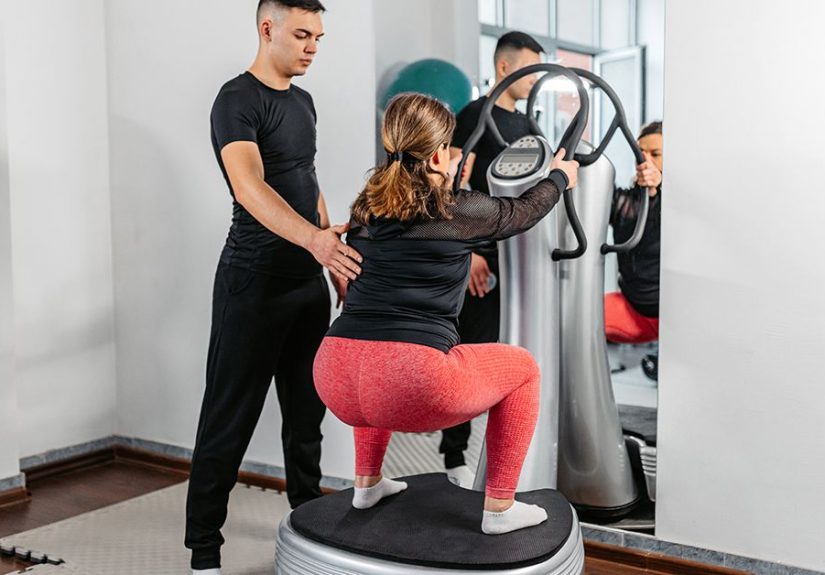
This is the classic vibration plate: you stand with knees slightly bent, hold a rail (often a smart idea), and let the platform create rapid oscillations. Some platforms move mostly up-and-down (vertical vibration). Others tilt side-to-side like a seesaw (oscillating or pivotal vibration). Some combine patterns.
WBV can be used in a few ways:
- Passive standing (minimal movement, mostly stabilization)
- Static holds (squat holds, planks, lunges)
- Dynamic exercises (squats, calf raises, light movement drills)
2) Localized Vibration (Massage Guns, Rollers, Targeted Tools)
Localized vibration is applied to a specific arealike calves after a run or shoulders after a day of impersonating a desk chair. These tools aim to affect muscle tone, soreness, and mobility through targeted stimulation. They’re not the same intervention as WBV, but they share the “vibration-as-stimulus” concept.
3) Medical or Prescription-Style Vibration Devices
Some devices are designed to deliver vibration to specific skeletal regions with a defined signal. These are typically studied with tighter controls and clearer safety parameters than consumer fitness devices. If you’ve seen claims about vibration for bone health, this is usually the category where the conversation becomes more seriousand more specific.
What Does the Research Say Vibration Therapy May Help With?
Let’s keep expectations realistic and grounded: evidence is mixed across outcomes, and results vary based on protocol, population, device type, and whether vibration is used alone or paired with exercise.
Muscle Activation, Strength, and Power
WBV can increase muscle activation because your body is constantly stabilizing against the vibration. Some studies suggest improvements in strength or performance, particularly in the lower body, and especially when vibration is combined with traditional training rather than replacing it.
Who may benefit most? People who need a lower-impact option, older adults building baseline strength, or individuals using it as an add-on to a broader program.
Balance, Mobility, and Fall Risk
One of the more promising areas is balance training. Standing on a vibrating platform challenges stability, which can train the neuromuscular system in a way that resembles balance drillsjust with more buzzing.
Some research and expert commentary suggest WBV may help with balance and mobility in certain populations, though protocols vary and it’s not universally recommended for everyone.
Bone Health (Proceed With Cautionand Context)
Bone health is where the internet tends to sprint ahead of the evidence.
There are studies exploring whether certain vibration signals can help slow bone loss or support bone density, but major reviews have noted that evidence has been limited, protocols are inconsistent, and long-term outcomes (like fracture reduction) often aren’t well established. Some trials have shown little to no meaningful benefit for bone loss in certain groups. This doesn’t mean vibration is useless; it means bone claims require careful interpretationand ideally, clinical guidance.
Important nuance: “Bone-focused vibration therapy” (low magnitude, specific parameters) is not the same thing as “standing on a random high-intensity plate in your living room while doom-scrolling.”
Weight Loss and Metabolic Health
You’ll often see promises like “15 minutes, three times a week, melts fat.” Reality check: vibration therapy is not a calorie incinerator by itself. Some sources note it may support weight loss when paired with calorie reduction and exercisemeaning it can be part of the plan, not the plan.
If it helps someone move more comfortably, build confidence, or stay consistent, that indirect effect can matter. But vibration alone isn’t a substitute for overall activity, nutrition, and sleep.
Muscle Soreness and Recovery
Vibration is sometimes used post-workout for recovery, with the goal of reducing soreness and improving circulation. Some athletes and clinicians use it as a “recovery tool,” but results depend on the method and the person. If your recovery routine currently involves zero stretching and maximum ambition, vibration therapy won’t fix the whole situationbut it might be a helpful add-on.
Rehab and Special Populations
WBV has been studied in rehabilitation contextsoften as a way to deliver a “passive exercise-like” stimulus when traditional exercise is difficult. Researchers have explored its use across diverse groups, including older adults and people managing neurological or musculoskeletal limitations.
That said, “studied” does not equal “right for everyone.” This is where it’s especially smart to involve a physical therapist or clinician.
Is Vibration Therapy Safe?
Vibration therapy is generally considered low-risk for many healthy adults when used appropriately. The problem is that “appropriately” isn’t always how gadgets get used in the wild. (See also: treadmills as clothing racks.)
Common Side Effects
Some people experience temporary effects such as:
- Headache
- Nausea or dizziness
- Balance disruption (especially at first)
- Muscle fatigue or soreness
- Blurred vision or discomfort at higher intensities
These may be more likely if intensity is too high, posture is poor, sessions are too long, or the device is aggressively powerful.
Who Should Avoid Vibration Therapy (Or Get Medical Clearance First)?
General contraindications and “ask your clinician first” categories often include:
- Pregnancy
- Recent fractures, acute injuries, or fresh surgical sites
- Some joint replacements or certain implanted devices (depending on location and type)
- Severe cardiovascular disease or unstable medical conditions
- History of blood clots (DVT) or high clot risk
- Severe neuropathy or conditions where sensation and balance are impaired
- Active cancer issues affecting bone integrity (or treatment-related side effects), unless cleared by an oncology team
If you’re in a category where your bones, balance, nerves, or implants are a “big deal,” don’t crowdsource medical decisions from a comment section. A short conversation with your clinician is faster than a long conversation with regret.
How to Use Vibration Therapy the Smart Way
Start With a “Low and Slow” Protocol
For beginners, shorter sessions at lower intensity are more sensible than going full blender-mode on day one. Many people start with a few minutes and build gradually, paying close attention to how they feel afterward.
Use Proper Posture
On a platform, a slight knee bend can reduce unnecessary transmission of vibration up the spine and help the legs absorb the load. Using a handrail (if available) can help prevent falls while you adapt.
Pair It With Real Movement
If vibration therapy has a best role, it’s often as an adjuncta supplement to strength training, walking, mobility work, or rehabilitation exercises. If a device claim sounds like it can replace all effort, it’s probably selling more hope than science.
Choose the Goal Before You Choose the Gadget
Ask yourself:
- Am I trying to improve balance and stability?
- Do I want a low-impact way to activate muscles?
- Am I using this as a recovery tool?
- Is there a medical goal (like bone health) that requires a clinician-guided plan?
Different goals may call for different devices, settings, and supervision levels.
Common Questions People Ask (And the Answers They Deserve)
Can vibration therapy replace exercise?
For most people, no. It may provide some muscle activation and support certain outcomes, but it doesn’t replicate the full benefits of cardiovascular exercise, strength training, or intentional movement patterns. Think of it more like a “helpful tool” than a “miracle substitute.”
Do vibration plates help circulation or lymphatic drainage?
Some clinicians and health systems discuss vibration plates as potentially supportive for circulation and lymphatic movement in certain contexts, but the evidence base is still developing and the claims can outpace the research. If you have lymphedema or vascular conditions, medical guidance matters here.
Is “more intense” always better?
No. Higher intensity may increase discomfort and risk without adding benefits. The best setting is the one that fits your body, your goal, and your health statusnot the one that rattles your teeth like dice in a cup.
The Bottom Line
Vibration therapy is a real modality that uses mechanical vibrations to stimulate muscles and sensory systems, and sometimes to support rehabilitation goals. The strongest, most consistent use cases tend to be muscle activation, balance, mobility, and adjunctive trainingespecially when vibration is combined with conventional movement rather than used as a replacement.
For bone health, metabolic benefits, and specialized medical outcomes, evidence is more mixed and highly dependent on the type of device and protocol. If you’re considering vibration therapy for a medical reasonor you have conditions that affect bones, nerves, balance, or implantsget clinical guidance before you hop on a plate and call it “healthcare.”
Experiences With Vibration Therapy (What It’s Like in Real Life)
People’s experiences with vibration therapy tend to fall into a few very relatable categoriessome surprising, some hilarious, and some that scream “I definitely turned it up too high.” Here are common, realistic experience patterns reported by users and clinicians (without the fairy-tale marketing soundtrack).
The First-Time “Why Are My Legs Buzzing?” Moment
Most beginners notice the same thing within seconds: your muscles start working even though you’re “just standing there.” It can feel like a gentle hum through the feet and calves at low settings. At higher settings, it can feel like your body is trying to stabilize on a tiny earthquake. Many people describe an immediate sense of increased muscle engagementespecially in the calves, quads, and corebecause your body is constantly making micro-adjustments to stay steady.
“This Is Easy”… Followed by “Why Am I Sore?”
A very common experience is underestimating how fatiguing stabilization work can be. Someone might do a few minutes, step off, and think, “That was nothing.” Then the next day their legs feel like they did a squat workout they don’t remember signing up for. That’s not always a bad sign; it’s often a sign that vibration created enough muscle activation to challenge tissues that don’t usually get targeted during daily lifeespecially for people who sit a lot.
Balance Confidence Boosts (When It’s Used Wisely)
In supervised or careful home use, some peopleespecially older adultsreport that vibration sessions can make them feel more “awake” in their legs, with better awareness of posture and steadiness afterward. The key word is careful. Many platforms change your balance input, so the first few sessions can feel wobbly. Users who do best tend to start with low intensity, short durations, and a handrail, and they treat it like balance practicenot like a carnival ride.
The Recovery Crowd: “My Body Feels Looser”
Athletes and active people often describe vibration therapy as a recovery add-on. After training, short sessions may feel like they make the legs “lighter” or less stiffsimilar to the way gentle movement helps after a workout. Others pair vibration with stretching and report that it’s easier to move afterward. It’s important not to oversell this: recovery still relies on fundamentals (sleep, nutrition, smart training load). But many users find vibration enjoyable because it’s low effort and feels physically “resetting.”
The “Not For Me” Group (And That’s Okay)
Some people simply don’t like how vibration feels. They may get headaches, nausea, dizziness, or an unpleasant “jiggly” sensation that makes them want to stop immediately. Others notice symptoms when intensity is too high, posture is off, or sessions go too long. This group often does better switching to localized vibration (like a massage tool) or skipping vibration altogether and focusing on conventional exercise. A therapy doesn’t need to be universally loved to be usefulbut it does need to be tolerable and safe for you.
The Most Practical Experience Lesson
The people who get the best experience tend to treat vibration therapy like seasoning, not the whole meal: a few minutes, specific settings, clear goal, and paired with real movement. The people who have the worst experience usually go too hard too fast, chase dramatic settings, or try to replace foundational activity with a gadget. If vibration therapy fits your body and goals, it can feel like a helpful boost. If it doesn’t, it’s perfectly fine to wave goodbye and choose a method that works better for you.