Table of Contents >> Show >> Hide
- Why your menu matters more now (and why it’s not “just hormones”)
- The “Menopause Plate”: an easy way to build meals without counting everything
- 1) Protein: the “keep your muscle” MVP
- 2) Fiber + plant foods: your heart, gut, and cravings will thank you
- 3) Bone support: calcium and vitamin D aren’t optional extras
- 4) Healthy fats: because your heart is not impressed by fried mystery nuggets
- 5) Phytoestrogens: soy foods can be a smart “maybe”
- 6) Fermented foods + magnesium-rich foods: quiet helpers for mood and sleep
- Foods and drinks that can make symptoms louder (if you’re sensitive)
- A one-day menopause-friendly menu (realistic, not sad)
- Supplements and “menopause superfoods”: a reality check
- Experience section: what “actually works” when real life is loud (about )
- Conclusion: eat like you’re supporting the next chapter (because you are)
Menopause has a way of showing up like an uninvited houseguest: it rearranges your furniture (hello, belly fat), turns the thermostat into a prank (hot flashes), and somehow makes you tired and wired at the same time. The good news? Food can’t “cure” menopause (if it could, grocery stores would need bouncers), but it can absolutely make the ride smoothersupporting your bones, heart, mood, sleep, and energy while helping you feel more like you.
This guide breaks down what to eat during menopause in a practical, not-preachy way. You’ll get a simple framework, specific foods that tend to help (and those that might poke the bear), and a sample day of meals you can actually imagine eating on a Tuesday.
Friendly note: Menopause is personal. If you have a medical condition, take medications, or have a history of hormone-sensitive cancers, talk with your clinician or a registered dietitian about what’s best for you.
Why your menu matters more now (and why it’s not “just hormones”)
During the menopause transition, estrogen levels drop. That shift can affect where your body stores fat, how easily you build (or lose) muscle, how your blood vessels behave, and how quickly bone breaks down. Translation: your “old” eating habits might suddenly feel like they’re not getting the job done.
A menopause-friendly way of eating isn’t about perfection or punishing rules. It’s about building meals that do four big jobs:
- Protect bones (calcium, vitamin D, and overall nutrient density)
- Support heart and metabolism (fiber, healthy fats, less ultra-processed food)
- Preserve muscle (enough protein + strength training’s best friend: consistency)
- Reduce symptom “spikes” (identify triggers like alcohol/caffeine/spicy foods if they bother you)
The “Menopause Plate”: an easy way to build meals without counting everything
If tracking macros makes you feel like you’re doing taxes for your lunch, try this instead. Aim for:
- 1/2 plate: colorful vegetables (plus fruit on the side)
- 1/4 plate: protein
- 1/4 plate: high-fiber carbs (whole grains, beans, starchy veg)
- + 1 thumb: healthy fat (olive oil, nuts, seeds, avocado)
- + a bone boost: calcium-rich foods (or fortified alternatives)
1) Protein: the “keep your muscle” MVP
Midlife weight gain isn’t just about caloriesit’s also about muscle. As muscle mass trends down with age and during the menopause transition, metabolism can slow. Protein helps preserve lean mass and supports steady energy (and fewer “why am I starving at 4 p.m.?” moments).
Great options:
- Fish (especially salmon, sardines)
- Chicken or turkey
- Eggs
- Greek yogurt, cottage cheese
- Tofu, tempeh, edamame
- Beans and lentils (bonus: fiber)
- Nuts/seeds (also healthy fatsportion-friendly handful)
Practical target: Many menopause resources emphasize prioritizing protein daily to help protect muscle. If you want a number to discuss with a clinician/dietitian, some guidance suggests roughly 1.2 g/kg/day for women focused on preserving muscle while managing weightindividual needs vary based on activity, kidney health, and goals.
sources:
2) Fiber + plant foods: your heart, gut, and cravings will thank you
A plant-forward eating pattern (think: vegetables, fruit, beans, whole grains, nuts, seeds) can help you feel fuller longer, supports healthy cholesterol, and keeps digestion movingan underappreciated win when hormones are shifting. Fiber also helps smooth blood sugar swings, which can mean fewer energy crashes and fewer snack attacks.
Simple upgrades:
- Swap white bread/pasta for whole-grain versions most of the time
- Add beans or lentils to salads, soups, tacos, or pasta sauce
- Keep “lazy veggies” on hand: pre-washed greens, baby carrots, frozen broccoli
- Make fruit the default sweet: berries, apples, oranges, grapes
sources:
3) Bone support: calcium and vitamin D aren’t optional extras
After menopause, bone loss can accelerate. Food can’t stop time, but it can give your skeleton the raw materials it needs. Aim for calcium-rich foods daily and make sure you’re not missing vitamin D, which helps the body absorb calcium.
Calcium-rich picks:
- Milk, yogurt, cheese
- Fortified soy milk (often closer to dairy in protein than many other plant milks)
- Calcium-set tofu (check the label)
- Canned salmon or sardines with bones
- Leafy greens (collards, kale), though absorption varies by type
- Fortified cereals or orange juice (watch added sugar)
Reference point: For adult women ages 51–70, recommended calcium intake is commonly listed at 1,200 mg/day. Vitamin D needs vary; a common benchmark is 600 IU/day through age 70 and 800 IU/day after, but your clinician may recommend testing and a personalized plan.
sources:
4) Healthy fats: because your heart is not impressed by fried mystery nuggets
Heart disease risk rises with age, and menopause is a good moment to “audit” fats. Prioritize unsaturated fats (olive oil, avocado, nuts, seeds) and omega-3 fats (fatty fish). These support heart health and may help with inflammationuseful when you feel like your joints are suddenly auditioning for a creaky-door sound effect.
Easy ways to add them:
- Drizzle olive oil + lemon on vegetables
- Add chia or ground flax to oatmeal or yogurt
- Eat salmon once or twice a week (or talk to your clinician about omega-3 options if you don’t eat fish)
- Snack on walnuts + berries instead of cookies (most daysbe human)
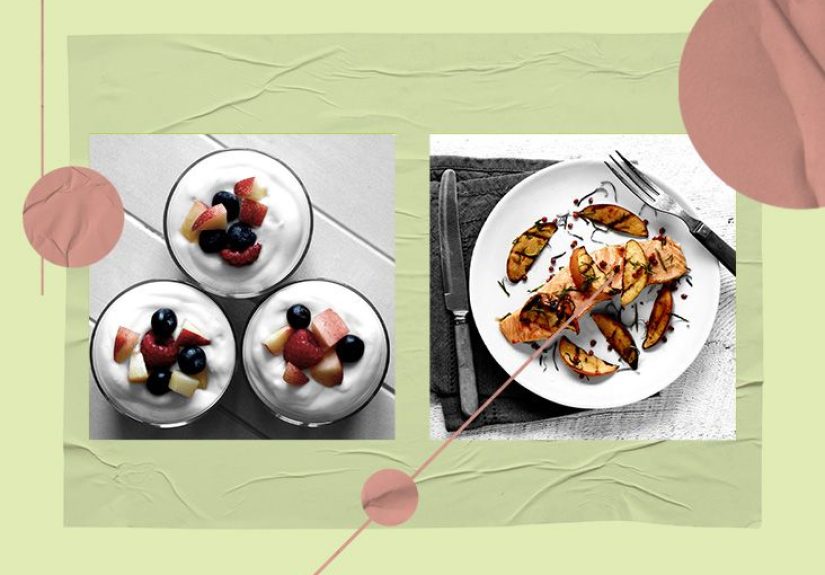
- Greek yogurt bowl with berries, chia seeds, and a sprinkle of walnuts
Why it works: protein + calcium + fiber + healthy fats. - Option B: oatmeal cooked with milk or fortified soy milk, topped with ground flax and sliced apples
- Big salad: leafy greens, chickpeas or lentils, chopped veggies, pumpkin seeds, and olive-oil vinaigrette
Add-on: canned salmon or a hard-boiled egg for extra protein. - Option B: whole-grain wrap with turkey (or tofu), hummus, spinach, and crunchy veggies
- Apple + peanut butter
- Edamame with a pinch of salt and lemon
- Carrots + hummus
- String cheese + grapes
- Salmon (or beans/lentils if plant-based) with roasted vegetables and quinoa or brown rice
- Option B: tofu and veggie stir-fry with garlic, ginger, and a modest splash of soy sauce over whole grains
- Option C: turkey chili with beans + a side of sautéed greens
- Herbal tea
- If you need a bite: a small bowl of yogurt or warm milk
- Try finishing your last bigger meal 2–3 hours before bedtime if reflux or night sweats are messing with sleep
- Food first is usually the safest starting point.
- Test, don’t guess for vitamin D if possibleyour clinician can guide dosing.
- Be careful with high-dose supplements if you have kidney issues or take medications.
- Whole soy foods are often preferred over concentrated isoflavone pills.
5) Phytoestrogens: soy foods can be a smart “maybe”
Phytoestrogens (like isoflavones in soy) have estrogen-like activity, and many women are curious whether soy helps with hot flashes. Whole soy foodssuch as tofu, edamame, miso, and soy milkare widely discussed as options that may help some people, and they’re also solid protein sources.
The vibe here is: food first. If you want to try soy, start with whole foods rather than high-dose supplements, and give it a few weeks while you watch your symptoms.
sources:
6) Fermented foods + magnesium-rich foods: quiet helpers for mood and sleep
Menopause can bring mood swings, stress sensitivity, and sleep disruption. While food isn’t therapy (and therapy is great), building meals with fermented foods (like yogurt or kimchi) plus magnesium-containing foods (legumes, seeds, leafy greens) is an easy, low-drama move that many clinicians include in overall lifestyle guidance.
sources:
Foods and drinks that can make symptoms louder (if you’re sensitive)
Not everyone has the same triggers, but a few usual suspects show up again and again. If hot flashes, night sweats, or sleep are a problem, consider experimenting with these:
Caffeine (especially later in the day)
If you’re already sleeping lightly, caffeine can be like adding a marching band to your brain at midnight. Try keeping coffee to the morning and switching to decaf or herbal tea after lunch.
Alcohol
Alcohol can worsen sleep quality and may trigger hot flashes for some women. If you notice a pattern, try a two-week “reset” and see what happens. Your future self at 3 a.m. may write you a thank-you note.
Spicy foods
Spicy meals can trigger flushing for some people. If you love heat, keep itjust don’t schedule your hottest curry for the same night you’re trying to sleep like a peaceful woodland creature.
Added sugars and ultra-processed foods
These can drive cravings and energy crashes, and they make it harder to manage weight during a time when your body is already renegotiating the rules. You don’t need to ban them; just stop letting them be the main character.
sources:
A one-day menopause-friendly menu (realistic, not sad)
Use this as inspiration, not a strict plan. Mix and match based on preferences, budget, culture, and what your taste buds are currently obsessed with.
Breakfast: steady energy, bone support, protein
Lunch: fiber-forward + satisfying
Snack: prevent the 4 p.m. pantry raid
Dinner: Mediterranean-ish (because it’s delicious and your heart likes it)
Evening: if sleep is the mission
sources:
Supplements and “menopause superfoods”: a reality check
The internet loves a miracle. Menopause does not. If you’re considering supplements (calcium, vitamin D, omega-3s, herbal blends), treat them like medications: they can help, they can interact, and they can be unnecessary.
Experience section: what “actually works” when real life is loud (about )
Let’s talk about the part no one puts on the wellness poster: you can know exactly what to eat with menopause and still find yourself eating cereal over the sink at 9:47 p.m. because the day steamrolled you. That’s normal. What tends to help (based on recurring patterns clinicians share and what many women report) isn’t a perfect dietit’s a few repeatable moves that make good choices easier than chaotic ones.
1) The “protein anchor” trick. Many women notice that when breakfast is basically coffee and vibes, the rest of the day turns into snack roulette. A protein-forward breakfastGreek yogurt, eggs, tofu scramble, a smoothie with proteinoften leads to steadier energy and fewer cravings later. Not because protein is magical, but because your blood sugar isn’t riding a roller coaster with no seatbelt.
2) The two-week trigger experiment. Hot flashes and night sweats can feel random… until you track them. A simple approach: pick one suspected trigger (alcohol, late-day caffeine, super spicy dinners) and remove it for two weeks. If symptoms improve, you’ve learned something useful. If nothing changes, congratulationsyou just got your spicy food privileges back (pending sleep).
3) The calcium “sprinkles” strategy. Hitting bone-supportive nutrients doesn’t have to be a spreadsheet. People do better with small add-ons: yogurt with fruit, fortified soy milk in oatmeal, sardines on toast, tofu in a stir-fry, cheese on a salad. These little “sprinkles” add up without making you feel like you’re living on chalky tablets and regret.
4) The Mediterranean template (without the influencer soundtrack). A lot of women like Mediterranean-style eating because it feels like real food: veggies, beans, fish, olive oil, herbs, whole grains. It’s flexible, social, and doesn’t require pretending you enjoy plain rice cakes. The most sustainable version is the one that matches your culture and scheduletacos can be Mediterranean-ish if they’re loaded with beans, veggies, avocado, and a sensible portion of cheese. Nobody’s grading you.
5) The “sleep-supporting dinner” shift. If sleep is fragile, heavy late dinners can backfire (reflux, temperature spikes, restless sleep). Many women report doing better when dinner is earlier and lighterthen they keep a small, protein-rich option available if hunger shows up later. This isn’t about restriction; it’s about not waking up at 2 a.m. feeling like your chest is hosting a bonfire.
6) Progress beats purity. The most consistent wins tend to be boring in the best way: more vegetables most days, protein at each meal, fewer ultra-processed “auto-snacks,” and a realistic plan for weekends. If you aim for 80% supportive choices, you still have room for birthday cake, restaurant meals, and being a person who lives in the world.
Conclusion: eat like you’re supporting the next chapter (because you are)
If you’re wondering what to eat during menopause, start with the basics that move the needle: a plant-forward pattern, enough protein to protect muscle, calcium and vitamin D for bones, healthy fats for heart health, and a little curiosity about your personal symptom triggers. You don’t need a perfect dietjust a repeatable one that makes you feel steadier, stronger, and more like yourself.
Research synthesized from reputable US sources including: Mayo Clinic, Cleveland Clinic, Harvard Health Publishing, The Menopause Society (NAMS), ACOG, MedlinePlus/NIH, NIH Office of Dietary Supplements, National Institute on Aging (NIH), womenshealth.gov (HHS), Johns Hopkins Medicine, Yale Medicine, UCLA Health, and VA resources. Key citations: