Table of Contents >> Show >> Hide
- Passover 2025 at a Glance (Save This for Your Group Chat)
- So… Why Does Passover Move Around Every Year?
- Passover 2025 Dates: Israel vs. Outside Israel
- What Happens on Passover? (A Friendly, Practical Overview)
- Planning Tips: How to Get Ready for Passover 2025 Without Panicking
- Common Questions People Google Right Before Passover
- Why This Date Matters (Beyond the Calendar)
- Passover Experiences: What It Feels Like in Real Life (500+ Words)
If you’re trying to plan a Seder menu, book flights, or figure out why your coworker is suddenly side-eyeing bread, here’s the headline: Passover 2025 begins at sundown on Saturday, April 12, 2025. The end date depends on where (and how) you observe: in Israel, it ends Saturday night, April 19, while many Jewish communities outside Israel observe an extra day, ending Sunday night, April 20.
And yesthis is one of those holidays where the calendar answer comes with a tiny asterisk: in Jewish tradition, the day begins at sundown. So the “start date” you see on a standard calendar is often the evening before the first full day of the holiday. Translation: your “Saturday night plans” may quietly become “Seder plans.”
Passover 2025 at a Glance (Save This for Your Group Chat)
- Passover (Pesach) begins: Saturday evening, April 12, 2025 (at sundown)
- First Seder night: Saturday evening, April 12, 2025
- Second Seder night (common in the Diaspora): Sunday evening, April 13, 2025
- Ends in Israel (7 days): Saturday night, April 19, 2025
- Ends in many communities outside Israel (8 days): Sunday night, April 20, 2025
One more practical note: “sundown” and “nightfall” are location-specific. If you need exact times (especially for candle lighting, holiday meals, or travel), check a local Jewish calendar for your city.
So… Why Does Passover Move Around Every Year?
Passover isn’t fixed to a single Gregorian date because it follows the Jewish calendar, which is lunisolarit tracks lunar months while staying aligned with the solar seasons. That’s why Passover shows up in March or April on the civil calendar most years.
Passover begins on the 15th day of Nisan, a date that lands around a full moon in spring. The Jewish calendar periodically adds an extra month (a leap month) to keep holidays from drifting into the “wrong” seasonso you don’t end up celebrating spring liberation narratives while wearing a winter coat the size of a duvet.
A quick example of what “begins at sundown” looks like in real life
If a calendar says “Passover: April 13,” that often means April 13 is the first full daytime portion of the holiday. Observance actually starts the evening beforeSaturday, April 12because Jewish days begin at sundown. That’s why Seders happen at night at the very start of Passover.
Passover 2025 Dates: Israel vs. Outside Israel
Here’s the most common source of confusion (and frantic texting): how long is Passover? The traditional baseline is seven days. In Israel, Passover is observed for seven days. Outside Israel, many communities observe an eighth day (an extra festival day with historical roots in how calendars were set and communicated).
| What you’re planning | Date in 2025 | What it means |
|---|---|---|
| Holiday begins | Sat evening, Apr 12 | Passover starts at sundown |
| First Seder | Sat evening, Apr 12 | Main ritual meal (night 1) |
| Second Seder (many outside Israel) | Sun evening, Apr 13 | A second ritual meal (night 2) |
| Passover ends (Israel) | Sat night, Apr 19 | 7-day observance ends |
| Passover ends (many outside Israel) | Sun night, Apr 20 | 8-day observance ends |
There’s also variety within the U.S.: for example, many Reform Jews observe seven days even outside Israel, while others keep eight. Your best move is to follow your community and family traditionPassover is a holiday of freedom, not a pop quiz.
What Happens on Passover? (A Friendly, Practical Overview)
Passover commemorates the ExodusIsraelites leaving slavery in Egyptso the holiday is built around storytelling, symbols, and (let’s be honest) very determined menu planning. The centerpoint is the Passover Seder, a structured meal where families and friends retell the story and connect it to themes of liberation.
The Seder, in plain English
Many Seders follow a 15-step order (the word “Seder” literally means “order”). You’ll typically see: blessings over wine, symbolic foods, readings and questions (including the famous “Four Questions”), and a meal that begins later than your stomach thinks is reasonable.
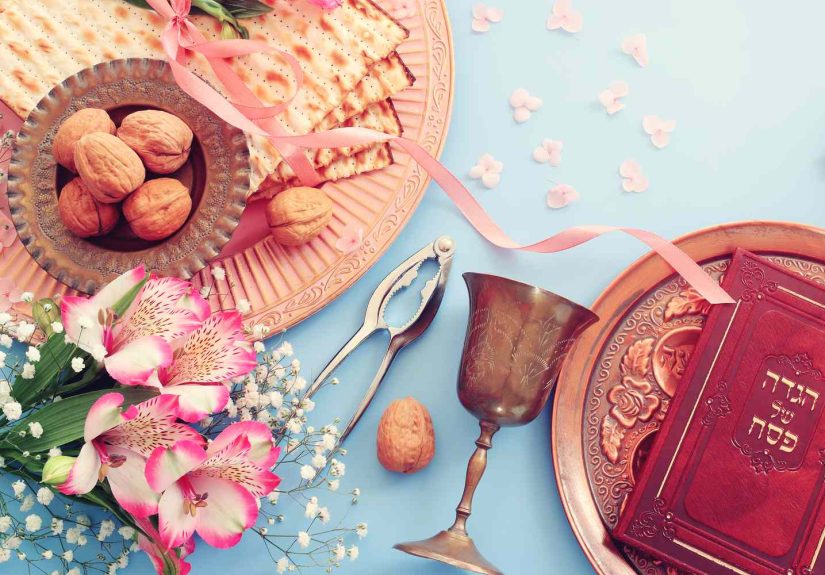
The Seder plate usually includes symbolic items like bitter herbs (maror), charoset (a sweet mixture), greens, salt water, and other elements that represent slavery, hardship, hope, and renewal.
What foods are avoided during Passover?
The big headline is chametzleavened grain products (and foods that contain them). Many households avoid bread, pasta, beer, and baked goods made with certain grains unless certified kosher for Passover. In many traditions, matzah (unleavened bread) becomes the star of the weekcrispy, symbolic, and guaranteed to leave crumbs in places crumbs have no business being.
Food customs can vary by family heritage and tradition (Ashkenazi, Sephardi, Mizrahi, and more). That’s why you might see rice on one table, and a firm “absolutely not” on another. When in doubt, ask your hostor follow the kosher-for-Passover label if you’re shopping.
Planning Tips: How to Get Ready for Passover 2025 Without Panicking
Because Passover includes specific food rules and usually at least one big communal meal, planning helps. A lot. Here’s a timeline that works whether you’re hosting 2 people or 20 (and whether your matzah budget is “reasonable” or “why is this box $9?”).
3–4 weeks before (mid-March 2025): choose your level of observance
- Confirm which dates your household follows (7 or 8 days).
- Decide if you’re hosting a Seder, attending one, or doing a smaller at-home version.
- Start a guest list (or at least a “who is definitely bringing a weird casserole” list).
1–2 weeks before (late March to early April 2025): shop smart
- Buy shelf-stable Passover basics early: matzah, matzah meal, grape juice/wine, broth, spices.
- Plan your menu with at least one “easy win” dish so you’re not braising brisket at 2 a.m.
- If you keep kosher for Passover, look for certified products before the best brands disappear.
Week of Passover (starting April 6, 2025): prep in real life
- Do a pantry check and decide what gets used, donated, or stored away for the holiday.
- Clean at the pace that matches your household. (Passover cleaning is meaningfulalso not a competitive sport.)
- Print or download a Haggadah, or pick a shorter family-friendly version if kids are involved.
Day of the first Seder (Saturday, April 12, 2025): set yourself up to enjoy it
- Set the table early. The Seder has a rhythm; your kitchen doesn’t need chaos as a soundtrack.
- Prep what you can ahead (charoset, hard-boiled eggs, chopped herbs, desserts).
- Assign one or two “helpers” who can refill water and clear platesyour future self will send thanks.
Common Questions People Google Right Before Passover
When does Passover 2025 start?
Passover 2025 begins at sundown on Saturday, April 12. Many families begin with the first Seder that evening.
When does Passover 2025 end?
In Israel: Saturday night, April 19, 2025 (7 days).
Outside Israel (common): Sunday night, April 20, 2025 (8 days).
Some communities outside Israel observe 7 daysfollow your tradition.
Why do some people have two Seders?
Many Jewish communities outside Israel observe two “festival days” at the beginning of Passover, which is why a second Seder is held on the second night. Other communities do one Seder, or do a second night in a more casual way.
Does Passover overlap with Easter in 2025?
It can. In 2025, Easter Sunday lands during Passover, which sometimes affects travel, school breaks, and grocery store vibes. If you’re planning a big family meal weekend, book early and shop earlier than you think you need to.
Why This Date Matters (Beyond the Calendar)
Asking “When is Passover 2025?” is partly logisticstime off work, dinner plans, travel. But it’s also about rhythm. Passover arrives as spring shows up, and the holiday’s themesfreedom, identity, responsibility, and hopefeel different depending on what kind of year you’ve had.
The calendar gives you a start and end point. What happens inside that windowstories told, questions asked, songs sung, and community gatheredis the part people remember.
Passover Experiences: What It Feels Like in Real Life (500+ Words)
If you’ve never been to a Passover Seder, the best description might be: a dinner party, a history lesson, a group sing-along, and a snack huntall happening in the same evening, often with at least one relative asking, “Are we at the food part yet?”
In many homes, the “Passover experience” starts before Passover starts. Not with candles or prayersoften with a suddenly serious relationship to crumbs. People tell stories about turning couch cushions into archaeological sites, discovering mystery pretzels from 2019, and having that one cabinet that becomes the official “chametz exile zone.” Some families go all-in with deep cleaning, separate dishes, and careful shopping. Others keep it simpler: no bread, no pasta, and a sincere commitment to doing their best without turning the week into a stress marathon.
Then comes Seder nightApril 12, 2025, for the first one. There’s a special kind of energy when everyone sits down and the Haggadah begins. The table has symbolic foods that look deceptively small but carry big meaning: bitter herbs that can make you tear up, salt water that tastes like memory, and charoset that is sweet enough to convince even skeptical kids that ritual food can be dessert-adjacent. Some Seders are deeply traditional and text-heavy. Others are modern, musical, shorter, and full of discussion questions like “What does freedom mean to you this year?” Both can be powerfulbecause the point is to tell the story in a way that makes it feel alive.
If kids are involved, you’ll likely see the holiday transform into a mini-adventure. The afikoman huntwhere a piece of matzah is hidden and later “redeemed”can turn even polite children into tiny, focused detectives. Adults like to pretend it’s for the kids, but everyone secretly loves it. You also get the classic moment when the youngest person asks the Four Questions, and suddenly the room goes quiet in that “okay, this matters” way.
Food memories are a major part of Passover, too. You might hear people talk about matzah ball soup that tastes like home, brisket that takes all day and disappears in ten minutes, or Sephardic dishes filled with herbs, rice, and bright flavors. There’s also the reality that matzah ends up in everythingmatzah brei for breakfast, matzah meal in meatballs, matzah crumbs in places you’ll find in July. By day three, someone will crack a joke about “missing bread,” and someone else will say, “That’s the point.” Both are correct.
For many people, the most moving part is the shared feeling of continuity. Even if the melodies differ or the interpretations change, the core experiencegathering, telling a story of liberation, and linking past to presentcan feel grounding. Some years it’s joyful and loud; other years it’s quieter and reflective. Either way, Passover tends to leave people with something more lasting than a calendar date: a sense of connection, and the reminder that freedom is both a gift and a responsibility.