Table of Contents >> Show >> Hide
- Batman Is Evergreen, but Joker Is the Engine
- The Joker’s Secret: He’s Not One Character
- How Joker Keeps Rebooting Batman on Screen
- Why Filmmakers Keep Coming Back to the Joker
- The Joker Problem: Controversy, Responsibility, and the Real World
- So Why Do We Still Have Batman Movies Today?
- What’s Next for Batman (and the Joke That Won’t Die)
- Experience Add-On: of “Living With” Batman and the Joker
Batman has an amazing superpower. No, not the cape, the gadgets, or the ability to disappear mid-conversation while Commissioner Gordon is still finishing a sentence. Batman’s real superpower is that Hollywood can’t quit him. And the reason isn’t just “because money.” (Okay, it’s also because money.) It’s because Gotham keeps handing filmmakers the same irresistible dare: “Try to make sense of chaos.”
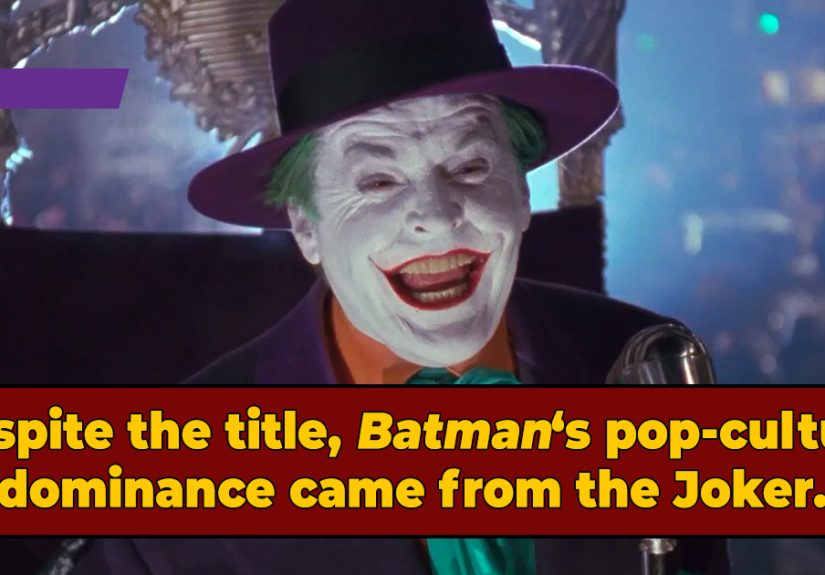
Enter The Jokerthe villain who’s basically a walking genre switch. Put him in a Batman movie and suddenly your superhero story can become a crime thriller, a psychological drama, a satire, a horror-adjacent nightmare, or a culture-war think piece that makes your group chat melt down before the opening credits are done. The Joker is why Batman movies keep getting made today: he’s the match that keeps relighting the Bat-signal, even when the city (and the studio) swears it’s done with fires.
So let’s ask the real question: why do we even still have Batman movies today? Because Batman is the “order” half of a timeless argumentand the Joker is the “why are you so serious?” half that keeps the argument from ever ending.[1]
Batman Is Evergreen, but Joker Is the Engine
Batman has been around since the late 1930s, which means he’s survived radio stars, disco, dial-up internet, and at least three eras of “we only listen to vinyl now.” He debuted in Detective Comics in 1939 and quickly became a pop-culture mainstay.[1] That longevity matters for studios: Batman is a known quantity with global recognition, deep lore, and a built-in fanbase.
But brand recognition isn’t enough to justify reboot after reboot. If it were, we’d have twelve gritty reimaginings of the Monopoly mascot. Batman movies keep happening because creators can use the character as a framework to tell different stories about power, fear, trauma, surveillance, class, violence, and justicewithout needing to invent a whole new mythology from scratch.
And still… none of that explains the obsession. Not really. The obsession comes from conflict. Batman needs someone to push him into philosophical corners, to test the limits of his rules, to force him to answer the question: “What are you, exactly?”
The Joker is the villain who turns Batman from “cool vigilante with nice cheekbones” into a living moral experiment. He’s Batman’s nightmare mirror: not an equal in strength, but an equal in intensity. One is discipline; the other is impulse. One is a plan; the other is a punchline with teeth.[2]
The Joker’s Secret: He’s Not One Character
Here’s why the Joker keeps returning: he’s less a single personality than a template that each era can rewrite. The Joker can be:
- Campy (a prankster with flair)
- Criminal (a mob-adjacent schemer)
- Philosophical (a chaos theologian)
- Psychological (a tragedy in clown makeup)
- Symbolic (a cultural Rorschach test)
He can be funny, terrifying, pathetic, magnetic, or all of the above in the same scene. That flexibility is cinematic gold because every new Batman movie needs a new angle, and the Joker is practically an angle factory.
Even his visual DNA comes from older pop culturelike the eerie grin associated with The Man Who Laughs, which has been cited as a major influence on the Joker’s look and vibe.[3] The character is basically a collage of American anxieties: entertainment, violence, celebrity, alienation, and the uncomfortable fact that people sometimes clap for the wrong reasons.
How Joker Keeps Rebooting Batman on Screen
If Batman movies are a long-running TV show with different costumes, the Joker is the season finale you can’t skip. He shows up when the franchise wants to make a statementabout society, about cinema, or about how far a character can be pushed before he breaks.
1) The Pop-Art Joker: When Batman Was a Party
The 1960s era leaned into bright colors and cheeky fun, turning Gotham into a playground for theatrical villains. This Joker wasn’t trying to be a cultural apocalypsehe was trying to be memorable, loud, and delightfully ridiculous. That matters because it proves Batman is flexible enough to be light or dark depending on the momentand the Joker can swing with him.[4]
2) 1989: The Joker Helps Batman Become Modern Hollywood
Tim Burton’s Batman didn’t just give us a gothic Gotham; it helped reshape how studios thought about superhero films as major events, complete with massive marketing and merchandising. This is where Batman becomes not just a character, but an entertainment machineand the Joker is the villain who makes that machine feel dangerous and stylish instead of safe and sleepy.[5]
3) 2008: The Joker Turns Batman into a Cultural Benchmark
Christopher Nolan’s The Dark Knight is often treated like a “before and after” moment for blockbuster filmmaking, with Heath Ledger’s Joker standing at the center of that shift.[2] This Joker wasn’t about jewelry-store capers. He was about moral collapse: forcing a city to reveal what it really is when the rules no longer protect it.
And here’s the key: the film doesn’t just ask whether Batman can stop crime. It asks whether he can stop meaninglessnessthe idea that the world doesn’t have to make sense for bad things to happen. That’s why Ledger’s Joker feels like a turning point: he weaponizes psychology, media, and fear, which makes him feel uncomfortably modern.[6]
4) 2019: The Joker Leaves Batman Behindand Still Drags Him Into the Spotlight
Todd Phillips’ Joker did something bold: it made a Joker movie that largely removes Batman from the equation, then uses Gotham’s social fractures to explain why a “Batman story” exists in the first place. It sparked intense debate before release, especially around violence, mental illness, and how audiences might interpret the film’s sympathy for its protagonist.[7]
It also became a massive box-office story: a record-breaking October opening and a global gross that pushed it into blockbuster history territory.[8] Love the movie or hate it, it proved a Joker-led story could be an event without relying on cape-and-cowl comfort food.
And that’s the real franchise fuel: the Joker lets Batman films reinvent themselves. When superhero cinema gets crowded, the Joker gives studios a way to claim they’re doing something “different” while still living in the same money-printing universe.
5) 2024: When a Joker Sequel Tests the Limits of the Joke
Sequels are where franchises go to either expand the worldor discover that the world’s expansion pack is mostly empty. Joker: Folie à Deux landed in a much more skeptical cultural moment, with commentary focusing on its reception and box-office performance compared to the first film.[9] That whiplash is instructive: audiences don’t just want “the Joker.” They want a Joker story that feels necessary, not just inevitable.
Why Filmmakers Keep Coming Back to the Joker
The Joker Makes Batman Movies About Ideas, Not Just Fights
Batman can punch criminals all day (and he will), but the Joker forces Batman to debate the point of punching criminals at all. That tension turns a standard superhero plot into a story with themes: justice vs. vengeance, control vs. chaos, identity vs. performance.
In other words, the Joker upgrades Batman from “action hero” to “philosophy problem you can sell tickets for.”
The Joker Is a Genre Cheat Code
Want to make a Batman movie that feels like a crime thriller? Joker works. Want a psychological spiral? Joker works. Want satire? Joker works. Want a cautionary tale about society’s cracks? Joker practically writes the outline while juggling knives.
This is also why the Joker becomes a lightning rod for discourse. Some critics argue certain Joker stories muddle their message, especially when they flirt with social commentary without committing to what they actually believe.[10] But even that criticism proves the point: Joker films invite interpretation, not just consumption.
He’s Built for Star Performances (and Awards)
The Joker role is a magnet for actors because it’s theatrical, high-wire, and culturally visible. It invites reinvention and riskexactly the sort of thing awards bodies tend to notice. Phoenix’s awards-season presence, for example, became part of the broader conversation around the film and its impact.[11]
From a studio perspective, that’s the dream: a comic-book property that can generate prestige headlines and box-office numbers at the same time.
The Joker Taps Into a Deep Fear: When Clowning Isn’t Funny
Clowns are supposed to be silly. The Joker is what happens when “silly” becomes “unpredictable.” American culture has a long history of being creeped out by clownspartly because the painted smile breaks our ability to read someone’s real emotions.[12] The Joker weaponizes that unease. He’s comedy with a threat behind it, a grin that doesn’t reassure youit challenges you.
That’s why he endures: he’s not just a villain; he’s a feeling.
The Joker Problem: Controversy, Responsibility, and the Real World
Here’s where things get serious (sorry, Joker): stories about alienation and violence don’t exist in a vacuum. The 2019 Joker controversy showed how quickly a movie can become a national conversation about safety, media influence, and social responsibility. Families connected to the Aurora theater shooting expressed concerns, and theaters and law enforcement paid close attention to potential risks around screenings.[7]
Some coverage focused on whether the film could be misread as validating violence; other perspectives argued that panic can become its own kind of distortion, turning art into a scapegoat for broader societal problems.[13] Regardless of where you land, it’s another reason Batman movies keep returning: Gotham is a safe fictional container for unsafe real conversations.
And the Joker sits right at the center of that paradox. He is the character most likely to spark debate about what the audience is “supposed” to feeland whether the film is being clear enough about consequences.
So Why Do We Still Have Batman Movies Today?
Because Batman is a platform, and the Joker is a stress test.
Batman movies let filmmakers ask: What does justice look like in a broken system? What does fear do to a city? What happens when institutions fail? The Joker is the character who forces those questions to become personal. He takes Gotham’s problems and turns them into theaterloud, messy theater that dares you to look away.
Also, yes, because it sells. The 2019 Joker hit enormous commercial heights, and trade coverage broke down its box-office milestones and profitability in detail.[8] When a studio sees numbers like that, it doesn’t see a cautionary tale. It sees a roadmap.
But the deeper reason is storytelling math: Batman without the Joker is a detective story. Batman with the Joker is a myth about civilization and chaos. And myths don’t retire. They just get rebooted with better cameras and a darker color palette.
What’s Next for Batman (and the Joke That Won’t Die)
Batman’s cinematic future remains a tale of two strategies: stand-alone auteur-driven projects and interconnected universe planning. Even release schedules become part of the storylike when The Batman Part II shifted dates, moving its release to October 1, 2027 according to major trade reporting.[14]
That delay is more than calendar trivia. It’s a reminder that Batman is big enough to exist as multiple “versions” at once, and the Joker’s shadow hangs over all of them. Whether the next films lean grounded, fantastical, or something in-between, studios know one thing: when they want Batman to feel urgent again, they reach for the villain who turns the whole thing into a referendum on meaning.
Experience Add-On: of “Living With” Batman and the Joker
Even if you’ve never owned a comic book, you’ve probably had a Joker experience. Not “fell into a vat of chemicals” (we hope), but the kind where pop culture sneaks into your life and refuses to leave politely.
It starts small: a quote floating through social media, a meme template built from a still frame, a Halloween costume that’s clearly someone’s excuse to buy purple gloves and emotionally commit to eyeliner. Heath Ledger’s Joker became a shorthand for chaos in everyday conversationspeople used his imagery to talk about trolling, outrage, and the feeling that the internet rewards the loudest person in the room.[6] Joaquin Phoenix’s Joker, meanwhile, became a different kind of shorthand: loneliness, humiliation, and the uncomfortable question of who gets ignored until they explode.[10]
If you’ve ever watched a Batman movie with a group, you’ve seen how the Joker changes the room temperature. A normal superhero scene gets cheers; a Joker scene gets a nervous laugh. People don’t just reactthey interpret. Someone will say, “He’s right though,” and someone else will immediately reply, “No, absolutely not,” and suddenly the popcorn is just a prop while everyone debates society. That’s the Joker’s magic trick: he turns entertainment into argument, and argument into a weird form of community.
There’s also the “rewatch phenomenon.” Batman movies are comfort watches for a lot of peopledark comfort, sure, like drinking coffee at midnight. But Joker-centric stories get rewound for different reasons. You rewatch to catch the performance choices: the pauses, the voice shifts, the way a smile lands like a threat. You rewatch because the Joker is never just “plot.” He’s texture. That’s why critics can disagree sharply about a Joker film and still spend thousands of words on it. The character practically dares writers to explain what they just felt.
And then there’s the strange afterlife of Joker movies: the discourse. You might not remember the entire third act, but you’ll remember the headlines, the think pieces, the “is this dangerous?” debates, the arguments about whether a movie is responsible for its audience or whether audiences are responsible for themselves.[7] That conversation becomes part of the viewing experience, like a second soundtrack that plays over the movie in your head.
Ultimately, living with Batman and the Joker as cultural fixtures is like living near a famous landmark: you stop noticing it every day, but it’s always there, quietly shaping the map. Batman represents the fantasy that order can be restored. The Joker represents the fear that order is a performance. We keep watching because we keep needing both storiesespecially when the real world feels like it’s laughing at the rules.