Table of Contents >> Show >> Hide
- Who Is Pedro Jarque Krebs?
- Why These Close-Up Portraits Hit So Hard
- Inside “Wild Animals From Up Close: 32 Portraits”
- How Jarque Krebs Creates These Images
- What We Can Learn From These 32 Animal Portraits
- Tips to Photograph Animals in a Jarque Krebs–Inspired Style
- What It Feels Like to See These Wild Animals Up Close (Experience Section)
- Conclusion: Why These 32 Portraits Stay With You
Scroll through Bored Panda on any random afternoon and you’ll see lots of memes, some DIY fails,
and then suddenlybama lion staring straight into your soul. That’s the power of Peruvian
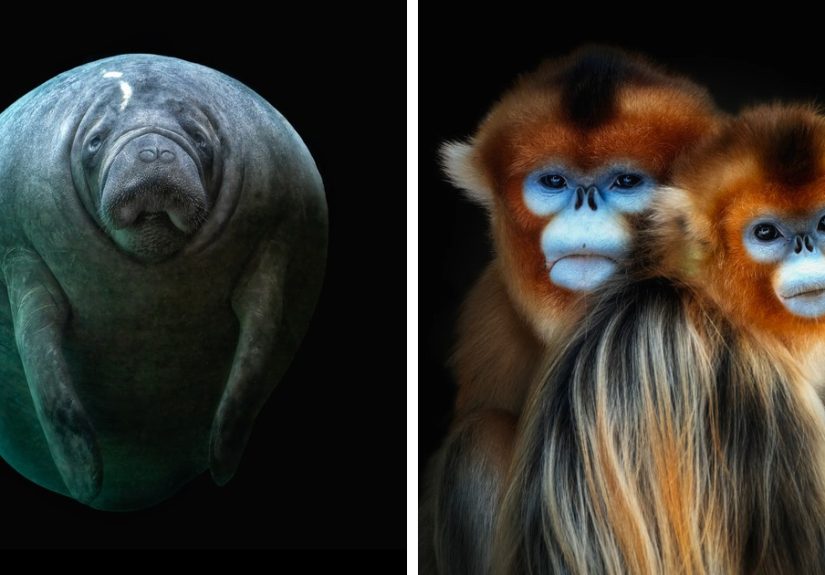
photographer Pedro Jarque Krebs. His series “Wild Animals From Up Close: 32 Portraits”
takes wild creatures we usually see from a safe distance and pulls them right into our personal
space, every whisker, feather, and glare in high definition.
These are not your average safari snapshots. Jarque Krebs shoots animals with the drama of
high-end studio portraits: deep black backgrounds, razor-sharp eyes, and lighting that would
make a fashion model jealous. The result is a set of 32 images that feel intimate, emotional,
and just uncomfortable enough to remind us that we’re not actually in charge of this planet.
Who Is Pedro Jarque Krebs?
Pedro Jarque Krebs was born in Lima, Peru, and originally studied philosophy at the Sorbonne in
Paris before dedicating himself fully to photography. That philosophical background shows up in
his work: he’s not simply documenting animals; he’s asking big questions about our relationship
with them, about power, fragility, and what it means to share a planet with other species.
Over the past decades, Jarque Krebs has become one of the most decorated wildlife photographers
in the world. His images have earned hundreds of international awards, including multiple wins
at the Sony World Photography Awards, the Siena Creative Awards, and the International
Photography Awards. His collections have been published in fine art books like
Fragile and WildLOVE, which focus on the beauty and vulnerability of animals
in a rapidly changing world.
Despite being known as a wildlife photographer, he often describes himself more broadly as an
“animal photographer.” Rather than chasing animals endlessly through the wilderness, he
frequently works in zoos, sanctuaries, and reserves. There, he can concentrate on the
personality of each animal, using careful composition and lighting to create portraits that feel
more like character studies than field notes.
Why These Close-Up Portraits Hit So Hard
At first glance, the 32 portraits in the Bored Panda feature look almost unreal. A white lion
appears carved out of light and shadow. Zebras intertwine like a living optical illusion. A
parrot hangs in midair, wings frozen in a burst of color. Many viewers assume the images are
digital paintings or 3D renders until they read the captionnope, they’re photographs.
Baroque Light and Studio-Style Drama
One of the secrets behind Jarque Krebs’ style is his use of low-key, baroque-style lighting.
Instead of bright daylight, he leans into deep blacks and surgical highlights. The animals are
usually isolated on a dark background, which erases visual clutter and focuses your attention
on a single gaze, a curl of fur, or a tension-filled posture.
That studio aesthetic is often achieved by carefully controlling the light and, in some cases,
blending exposures or backgrounds in post-processing. The intention is not to trick the viewer
but to remove distractions and put the animal at center stage, the same way a portrait
photographer lights a human subject.
The Eyes Have It
Nearly every portrait in the series has the same anchor: the eyes. Whether it’s a fox curled
into a ball but staring directly at you, or a raptor tilting its head with icy curiosity, Jarque
Krebs treats eye contact as a bridge between species. The animals stop being anonymous “wildlife”
and become individualsthis fox, this lion, this zebra.
That kind of connection is part of why the collection went viral. We’re used to seeing animals
as either cute or dangerous props in the background of our lives. Here, they look back. And that
momentwhen you realize you’re being watched as much as you’re watchingis strangely humbling.
Texture, Color, and Character
The portraits are also incredibly tactile. You can almost feel the softness of an otter’s fur,
the rough texture of a bison’s coat, or the sleek feathers of a bird of prey. Jarque Krebs uses
high resolution and close framing to celebrate every detail: the tiny scars around a lion’s nose,
the chipped horn of a fighting ibex, the gleam of moisture on a polar bear’s nose.
Instead of arranging the series by species or geography, the images feel curated by mood:
tenderness, power, curiosity, mischief, melancholy. A sleepy lion with its face turned toward
light is all quiet majesty. Two otters curled into a perfect heart shape radiate affection. A
leopard resting its head on a darker companion looks both relaxed and alert, embodying the thin
line between comfort and danger.
Inside “Wild Animals From Up Close: 32 Portraits”
The Bored Panda collection gathers 32 of Jarque Krebs’ most striking portraits from his ongoing
wildlife series. You’ll find big cats, birds, primates, ungulates, and marine mammals all
treated with equal attention and respect. Rather than simply showing animals “in their habitat,”
the series emphasizes personalityalmost like a yearbook of the animal kingdom, if your school
photographer were obsessed with chiaroscuro.
Some portraits feel like classical hero shots: a white lion framed in silvery mane, a polar bear
striding across the frame like a furry tank, or an eagle caught mid-turn with eyes that seem to
glow. Others are more intimate and tender: zebras leaning into each other, two otters pressed
cheek to cheek, a fox curled up protectively around itself yet still keeping one eye on you.
What makes the series cohesive is not the species list but the emotional throughline. Every
portrait asks, “Who is this animal, really?” You’re not just identifying a lion or a zebra; you
’re wondering what that specific animal has seen, endured, or survived to end up in front of the
camera at that exact moment.
Not Just AestheticA Subtle Conservation Message
Underneath all the drama and beauty, there’s a quiet alarm bell ringing. Jarque Krebs has spoken
often about how animal populations worldwide have plummeted over the last half-century, and his
work is designed to make that loss impossible to ignore. By showing animals as individuals rather
than distant figures in a landscape, he encourages us to think about what it would mean if those
faces simply disappeared.
The portraits don’t beat you over the head with statistics or slogans. Instead, they lean on
empathy. Once you’ve locked eyes with a lion that looks oddly contemplative, or a bear that
seems almost weary, it becomes much harder to shrug off headlines about habitat loss, poaching,
or climate change. Beauty becomes a gateway to responsibility.
How Jarque Krebs Creates These Images
Many viewers assume these portraits were captured deep in remote jungles or endless savannas.
In reality, a large part of Jarque Krebs’ work is done in controlled environments like zoos,
reserves, and sanctuaries. This approach lets him get close enough to capture microscopic
details while minimizing risk to both himself and the animals.
He often waits patiently for hours for the right momentan expression, a posture, a fleeting
interaction between two animals. With telephoto lenses, fast shutter speeds, and careful
exposure control, he freezes micro-expressions that would otherwise vanish in a blink. Later, in
post-production, he refines tone, contrast, and background to create that signature
“floating-in-the-dark” effect.
Ethics, Captivity, and Respect
Photographing animals in human-managed settings always raises ethical questions, and Jarque
Krebs doesn’t shy away from that tension. In interviews, he has emphasized that his goal is not
to glamorize captivity but to use the access it provides to advocate for wildlife and their
habitats. By making animals visible and emotionally present, he hopes to generate support for
conservation efforts that benefit their wild counterparts.
He works within the rules of each facility, maintains distance where necessary, avoids the use
of harsh flashes near sensitive species, and relies on patience rather than provocation. The
animals aren’t trained actors; they’re simply themselves. The magic comes from being ready when
a genuine moment happens.
What We Can Learn From These 32 Animal Portraits
Beyond the visual wow factor, “Wild Animals From Up Close” offers a handful of important
lessons:
- Animals are individuals, not decorations. Each portrait underlines that
every creature has a unique presence and personality. - Distance is an illusion. Even if we rarely see these animals in person,
our daily choiceswhat we buy, how we travel, which policies we supportaffect their fate. - Beauty can be a powerful motivator. People are more likely to protect what
they feel connected to. These images build that connection. - Art and advocacy can work together. Jarque Krebs’ photos are gallery-worthy
art and, at the same time, subtle calls to action.
Tips to Photograph Animals in a Jarque Krebs–Inspired Style
You may not have access to lions or polar bears, but you can still borrow a few principles from
Jarque Krebs for your own animal photography, whether you’re shooting at a local wildlife park
or your neighbor’s very dramatic cat.
1. Make the Eyes the Star
Always focus on the eyes. If the eyes are sharp, the viewer will forgive a lot of other
imperfections. Try to catch an expressioncuriosity, calm, suspicion, playfulnessrather than
just an animal standing there.
2. Simplify the Background
You may not be able to turn a zoo into a dark studio, but you can still simplify your scene. Use
a wide aperture to blur distractions, or reposition yourself so the background is darker or more
neutral. Even moving a few steps can clean up a busy frame.
3. Think in Portraits, Not Snapshots
Instead of spraying random frames, wait for specific gestures: a turn of the head, the flick of
an ear, the moment two animals interact. Pretend you’re photographing a celebrityyou’re after a
defining image, not proof that they exist.
4. Be Patient and Respectful
Animals owe you nothing. If they turn away, lie down, or leave, that’s their right. Be patient,
stay quiet, and avoid behavior that would stress or provoke them. The calm, dignified feeling in
Jarque Krebs’ portraits comes from waiting for moments when animals feel safe enough to simply
be themselves.
What It Feels Like to See These Wild Animals Up Close (Experience Section)
The first time you scroll through the 32 portraits, you might not notice how quiet you’ve
become. One minute you’re casually browsing funny posts, and the next you’re staring at a lion
with your shoulders slightly hunched, as if it might step out of the screen. You lean closer to
your laptop without even realizing it, almost nose-to-nose with an apex predator that, in real
life, you’d only approach in a very sturdy vehicle.
Then you swipe to the next image: two zebras woven together like a living barcode. The stripes
line up just so, creating a pattern that looks almost too perfect to be real. You start
imagining how long the photographer waited for that momentfor one animal to rest its head at
exactly the right angle, for their bodies to overlap in a way that feels like a visual pun on
the phrase “herd mentality.”
A few photos later, you meet the fox. Its body is curled into a soft, rust-colored comma, but
the eyes are wide open, fixed on you. There’s no cage, no fence, no forestjust the fox and a
sea of black. It’s both adorable and slightly unnerving, like you’ve accidentally interrupted a
private thought. You catch yourself wondering: Is it suspicious? Curious? Mildly judging your
life choices?
The emotional roller coaster intensifies when the more vulnerable animals appear. Maybe it’s a
polar bear, captured mid-stride, its fur glowing softly against the darkness. You think about
melting ice and shrinking ranges, and suddenly the image feels less like a portrait and more
like a farewell. Or perhaps it’s a small primate, clutching itself tightly, its eyes huge and
wet. For a split second, it looks heartbreakingly human.
By the time you reach the last portrait, you’re strangely aware of your own breathing. These
animals are not roaring or leaping or hunting. They’re mostly still. But the tension comes from
the awareness that they are wildpowerful, unpredictable, and existing on their own terms. The
close-up framing makes you feel like a guest in their space, not the other way around.
When you finally close the tab or put down your phone, regular life feels a little flatter. The
coffee cup on your desk, the parked cars outside, the inbox full of “per my last email” threads
all seem strangely small after staring into the eyes of creatures that could crush you without
thinking about it. That’s the subtle gift of the series: it tilts your perspective. For a few
minutes, it’s crystal clear that humans are just one species among many and that we have more in
common with these animalsfear, curiosity, affection, fatiguethan we’re always comfortable
admitting.
Later, when you see a headline about conservation or habitat destruction, those portraits float
back into your mind. The lion’s calm gaze, the otters’ gentle embrace, the confident stride of
the bearthey all turn abstract “wildlife issues” into something personal. You’re no longer just
reading about numbers; you’re remembering faces. And once an animal has become a face rather
than a statistic, it’s much harder to shrug and move on.
Conclusion: Why These 32 Portraits Stay With You
“Wild Animals From Up Close: 32 Portraits By Pedro Jarque Krebs” succeeds because it does three
things at once. It delivers jaw-dropping visual drama, it builds an emotional bridge between
humans and animals, and it quietly reminds us that this beauty is fragile. Long after you’ve
clicked away, those eyes, stripes, claws, and feathers linger in your memory, asking a simple
but uncomfortable question: what are we going to do to make sure these faces are still around in
the future?
sapo:
In “Wild Animals From Up Close: 32 Portraits By Pedro Jarque Krebs | Bored Panda,” award-winning
Peruvian photographer Pedro Jarque Krebs turns lions, foxes, zebras, otters, and other wild
creatures into unforgettable characters. Using dramatic, studio-style lighting and intense
close-ups, he strips away distractions and forces us to meet each animal eye to eye. This
in-depth look at the series explores his distinctive visual style, the ethical and technical
choices behind the camera, and the powerful conservation message hiding inside every whisker and
featherplus practical tips and a firsthand “viewer experience” to help readers appreciate why
these 32 portraits are so hard to forget.