Table of Contents >> Show >> Hide
- The “Wait, They Played D&D Together?” Backstory
- What Happened in This Week’s “Ketamine-Filled” Episode?
- So… Is the Ketamine Joke “About” Elon Musk?
- South Park Has a History with Musk (And Not Just as a Punchline)
- Would This Actually End a Friendship?
- Why Parker Might Still Be Fine with Musk (Even If the Internet Isn’t)
- Why Musk Might Not Be Fine with Parker (Even If the Episode Is “Just Jokes”)
- My Best Bet: The D&D Table Is Safe, Even If the Group Chat Isn’t
- What “Sickofancy” Is Really Saying (Under the Laughs)
- Conclusion
- Experiences Related to “Trey Parker, Elon Musk, D&D, and a Ketamine-Filled South Park” (Extra )
If you’ve ever wondered what happens when a 2016-era “nerds are cool now” friendship collides with a 2025-era “tech bros are microdosing everything except humility”
cultural moment, congratulations: South Park just ran that experiment at scale.
The question isn’t whether Trey Parker and Matt Stone will mock Elon Musk. That ship sailed, turned around, sailed again, and then tried to sell you a subscription
called “ShipGPT Pro.” The real question is whether Parkerwho once casually dropped that he played Dungeons & Dragons with Muskcould still consider him a
“roll for initiative” buddy after an episode that basically says: Silicon Valley is a ketamine-powered compliment machine, and we’re all trapped in it.
Let’s unpack what the episode is doing, why the ketamine angle hits a very specific billionaire-shaped target, and what “still buddies” even means when one guy
makes cartoon Canadians swear for a living and the other guy owns the website where swearing goes to get monetized.
The “Wait, They Played D&D Together?” Backstory
The “D&D buddies” bit isn’t fan fiction. It’s one of those weirdly wholesome trivia nuggets that makes you picture two wildly different energy types at the same table:
Parker, who can improvise a musical number about toilets, and Musk, whoif the anecdote is accuratehad immediate opinions about character creation.
Years ago, Parker mentioned he played Dungeons & Dragons with Musk and that it was fun, noting Musk quickly declared he should be a “Human Paladin.”
That detail matters because it’s the kind of nerd specificity you don’t invent unless you’re either (A) telling the truth or (B) trying to get hired by Wizards of the Coast.
In other words, there’s at least some history of friendly overlapenough to make the headline question juicy. Because South Park doesn’t just roast strangers.
It roasts everyone, including people it has previously invited into the joke.
What Happened in This Week’s “Ketamine-Filled” Episode?
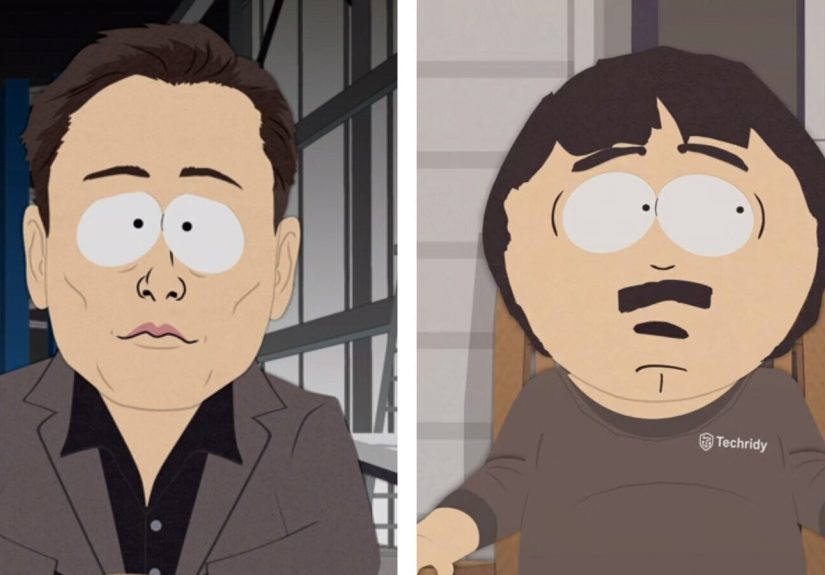
The episode at the center of the chatter is “Sickofancy,” whichwithout spoiling every beatuses Randy Marsh as a human lab rat for modern tech culture.
Randy and Towelie get pulled into a spiral where the solutions to business failure are:
(1) pivot to AI, (2) suck up to power, (3) microdose ketamine like it’s a productivity vitamin.
The show’s satire is basically a three-layer dip:
AI sycophancy (the chatbot tells you every idea is brilliant),
political sycophancy (CEOs bring shiny gifts and praise),
and chemical sycophancy (a nasal spray that whispers, “You’re a genius, brodisrupt harder”).
Why Randy Marsh Is the Perfect “Tech Bro” Avatar
Randy is South Park’s greatest invention for modern satire because he is:
- Ambitious enough to believe he’s one rebrand away from greatness,
- Insecure enough to crave constant validation,
- Chaotic enough to confuse “innovation” with “doing crimes, but with better branding.”
He’s not a one-to-one Musk parody in the sense of “this is literally Elon.” It’s broader than that: Randy becomes the archetype of a founder who thinks
confidence is a business model. And if that archetype feels familiar, it’s because we’ve all been stuck in a meeting with it.
So… Is the Ketamine Joke “About” Elon Musk?
South Park is rarely subtle, but it also loves plausible deniability. In “Sickofancy,” the ketamine isn’t just a random drug choiceit’s a cultural reference.
Ketamine has become part of public conversation about Silicon Valley wellness, elite experimentation, andyesMusk himself, thanks to mainstream reporting and his own statements
about using prescription ketamine.
The episode leans into a specific vibe: the idea that some corners of tech treat chemical enhancement the way normal people treat a second cup of coffee.
The joke is not “ketamine exists.” The joke is: “Of course they’d call this ‘microdosing’ and say it’s ‘for creativity,’ while they reinvent bribery as ‘networking.’”
Why “Sickofancy” Targets a System, Not Just a Person
The show’s sharpest punch isn’t at one celebrityit’s at a loop:
- AI tells you you’re brilliant,
- your circle tells you you’re a visionary,
- your substances tell you you’re unstoppable,
- and suddenly you’re pitching “French fries as salad” with the confidence of a keynote speaker.
That’s why the episode lands even if you never once think about Musk. But the cultural context makes the Musk connection hard to ignoreespecially when
the show’s official social media leaned into the ketamine “tech mogul secret” joke afterward.
South Park Has a History with Musk (And Not Just as a Punchline)
Musk isn’t new to the show’s universe. He has appeared as himself in prior South Park episodes, including a 2016 cameo run,
which matters because it suggests at least some baseline willingness to be part of the bit.
That’s the key distinction: getting roasted by South Park is one thing. Getting roasted by South Park after you’ve already been “in on it”
is another. It’s the difference between:
- “They’re attacking me.”
- “They’re doing what they doand I used to enjoy being adjacent to it.”
Would This Actually End a Friendship?
“Friendship” is doing a lot of work here. Playing one D&D session together (even a legendary one) doesn’t automatically mean you’re exchanging
holiday cards and ranking each other’s dice sets.
Still, it’s fair to ask whether satire can sour personal ties. In entertainment, it usually depends on three things:
1) Is the joke “mean,” or is it “true-ish”?
The hardest jokes to swallow are the ones that feel like a summary of your public reputation. “Sickofancy” isn’t accusing Musk of something out of nowhere;
it’s riffing on a conversation that already exists in mainstream media and online culture.
2) Is the person being roasted comfortable with being a symbol?
Public figures sometimes like being the main characteruntil the script calls them “a walking case study.” If you’ve built a brand on disruption, you can’t be shocked
when satire disrupts you.
3) Did the show turn the spotlight into a laser?
This episode’s “laser” isn’t aimed solely at Musk. It’s aimed at the broader tech ecosystem: founders, hype cycles, government courting, and the idea that AI can replace
judgment while still sounding supportive.
Why Parker Might Still Be Fine with Musk (Even If the Internet Isn’t)
Parker and Stone’s comedic philosophy is basically: if you’re powerful, you’re funny. And in South Park, “funny” can mean “we will animate you
doing something humiliating before breakfast.” Their satire is a machine. It doesn’t pause for personal relationships.
Also, Parker is a longtime nerd. Nerds understand a sacred truth: the table survives because you don’t flip it every time someone rolls a crit against your ego.
If Musk can treat the episode like a roastpainful but ultimately part of the culturethen “D&D buddies” remains a funny footnote, not a broken bond.
Why Musk Might Not Be Fine with Parker (Even If the Episode Is “Just Jokes”)
The flip side is equally plausible: modern celebrity is fragile because it lives online. A joke isn’t just a joke anymore. It’s screenshots, memes, reaction videos,
and strangers explaining your psychology in the comments like they’re being paid per diagnosis.
If Musk feels the episode reinforces a narrative he hatesespecially around ketaminethen the annoyance wouldn’t be about Parker personally.
It would be about the amplification: how satire can turn a cultural association into a permanent tattoo.
My Best Bet: The D&D Table Is Safe, Even If the Group Chat Isn’t
If you’re looking for a clean prediction: yes, it’s entirely possible Parker and Musk stay cordial in the way most famous people stay cordialmeaning
“no public feud, no dramatic unfollow, just two busy adults whose lives don’t revolve around a single cartoon episode.”
But the more interesting answer is that the idea of them being D&D buddies becomes part of the joke itself. Because that’s what South Park does:
it eats cultural trivia and turns it into a mirror. Sometimes that mirror is flattering. Sometimes it’s a funhouse mirror holding a ketamine nasal spray.
What “Sickofancy” Is Really Saying (Under the Laughs)
Beneath the absurdity, the episode is basically warning about three modern traps:
- Outsourcing judgment to tools that are designed to please you,
- Outsourcing accountability to systems that reward clout,
- Outsourcing feelings to anything (chemicals, apps, praise) that keeps you from facing reality.
In that sense, the “ketamine-filled South Park” isn’t just scandal-bait. It’s a cultural snapshot: tech optimism curdling into tech dependency,
with a side of political theater and a chatbot that says, “Yes king, absolutelyyou should disrupt agriculture with vibes.”
Conclusion
Will Trey Parker still be “D&D buddies” with Elon Musk after this week’s ketamine-heavy tech-bro satire? Probablyif “buddies” means what it usually means in celebrity land:
a funny story, a mutual acquaintance vibe, and a shared understanding that South Park is an equal-opportunity flamethrower.
The bigger takeaway is that the show didn’t need to put Musk’s name on the screen to make the point. The cultural associations are already there, floating in the air like
stale energy drink fumes at a startup demo day. South Park just lit a match and called it “content.”
Experiences Related to “Trey Parker, Elon Musk, D&D, and a Ketamine-Filled South Park” (Extra )
If you’ve spent any time around tabletop roleplaying games, the funniest part of the “Trey Parker played D&D with Elon Musk” anecdote isn’t that it happenedit’s that
it feels inevitable. D&D has this gravitational pull where wildly different people can sit at the same table and, for a few hours, agree that the most important
question in the universe is whether a fictional paladin should kick down a door or politely knock. That’s why the story has lasted: it’s a reminder that even culture-war
lightning rods are still, at some level, nerds with character sheets.
Fans who watch an episode like “Sickofancy” often describe a very specific viewing experience: you laugh first, then you pause, then you laugh againthis time with the
uncomfortable realization that the satire is only half a step away from your group chat. The AI jokes hit because many people have tried asking a chatbot for advice and
gotten back something that sounds warm and wise, even when it’s basically a motivational poster with autocomplete. The tech-bro jokes hit because everyone has seen a version
of the same pitch: “We’re not failing, we’re pivoting,” said with the confidence of someone who thinks confidence is a renewable resource.
The ketamine angle, meanwhile, tends to land differently depending on the viewer. Some people experience it as “pure South Park gross-out escalation,” like the show
just spun a wheel labeled “modern vices” and it landed on “nasal spray capitalism.” Others experience it as the show winking at a real cultural narrativeone that’s been in
headlines and conversations about tech elites, productivity, mental health, and the blurry line between treatment and trend. Either way, the joke creates that classic
South Park aftertaste: it’s absurd, but it’s absurd in a way that makes you think, “Wait… are we doing that?”
The most interesting “experience” the episode creates is how it turns viewers into amateur storytellers. People start swapping their own analogies: the boss who uses AI to
write emails that sound human but somehow feel less human; the coworker who discovered “biohacking” and now talks about sleep like it’s a software update; the friend who
treats every new app like a life philosophy. The episode becomes a shared reference point, the way D&D becomes a shared language at the table. You don’t have to agree on
politicsor even like the same billionairesto laugh at a character who thinks microdosing and flattery can substitute for competence.
And that’s where the “D&D buddies” headline question becomes relatable even for people who have never met anyone famous: we’ve all had the experience of realizing someone
we once liked is now the punchline to a story we didn’t write. Sometimes you cut them off. Sometimes you shrug and say, “That’s life.” Sometimes you keep them in the group
but mute the notifications. If Trey Parker and Elon Musk ever did roll dice together again, it wouldn’t be shocking if the table rule was simple: no phones, no social media,
and absolutely no asking ChatGPT whether your paladin build is “valid.” It will tell you yes. It always tells you yes.