Table of Contents >> Show >> Hide
- Today’s Wordle Answer for November 5, 2025
- Hints for Anyone Who Wanted One More Chance
- Why “SHORT” Was a Sneaky Wordle Answer
- What Does “SHORT” Mean?
- How to Play Wordle, in Case You’re New Here
- Best Strategy for Solving Words Like “SHORT”
- Why Wordle Still Works So Well
- November 5, 2025: A Good Wordle, Not a Cheap One
- 500 More Words From the Daily Wordle Trenches
- Final Thoughts
Some Wordle days feel like a gentle nudge from a friendly crossword. Other days feel like the puzzle looked you in the eye, sipped your coffee, and said, “Good luck, champ.” The November 5, 2025 puzzle lands right in that sweet spot: fair, solvable, and just slippery enough to make you question every five-letter word you have ever known.
If you came here for the Wordle answer for today, November 5, 2025, you are in the right place. If you want a little suspense before the spoiler drops, stick around. This guide walks through the answer, spoiler-light hints, what made the puzzle sneaky, how the word works in everyday English, and a few practical tips to help you handle the next tricky NYT Wordle without dramatically staring at your keyboard like it has betrayed you.
Today’s Wordle Answer for November 5, 2025
Let’s not drag this out like a bad game show reveal.
The Wordle answer for today, November 5, 2025, is: SHORT.
There it is. Five letters. One very ordinary word. One very effective little brain teaser. “Short” is the kind of answer that looks obvious after you see it, which is classic Wordle behavior. Before the reveal, though, it can hide in plain sight because it uses a familiar pattern, common letters, and a meaning broad enough to send your brain wandering through half the dictionary.
Hints for Anyone Who Wanted One More Chance
If you tried to solve Wordle #1600 without going straight to the spoiler, the hints for this puzzle pointed in a pretty clean direction:
Quick clue recap
The answer starts with S, contains one vowel, and has no repeated letters. Its meaning relates to something that is small in height, brief in length, or simply not long.
That sounds generous now, of course. But in the moment? That clue set still leaves a chunky pile of possibilities. Wordle players know the pain: one vowel, common consonants, lots of everyday words, and suddenly your sixth guess is approaching like a thunderstorm in loafers.
Why “SHORT” Was a Sneaky Wordle Answer
On paper, SHORT does not look like a brutal answer. It is not obscure. It is not packed with weird letters. It is not one of those words that makes you say, “Come on, nobody says that.” Instead, it is tricky for a subtler reason: it lives in the dangerous zone of being too normal.
That matters in Wordle. Really common words can be hard because your brain keeps drifting toward dozens of similarly structured choices. Once you know the word begins with S and only has one vowel, you still have to wrestle with a crowd of plausible candidates. The puzzle is not trying to defeat your vocabulary so much as your decision-making.
There is also a structural reason the word works well as a daily puzzle answer. It contains a compact cluster of dependable consonants: S, H, R, T. Those are letters many players meet early in their solving process, but not always in the right combination. If you uncover one or two of them, your confidence rises. Then Wordle politely reminds you that confidence and accuracy are not the same thing.
The single vowel is another source of mischief. A one-vowel answer can narrow things quickly, but only after you confirm which vowel you are working with. Until then, solvers can waste guesses exploring the wrong lane. You think you are being methodical. Wordle thinks you are entertaining.
What Does “SHORT” Mean?
One reason this answer is satisfying is that it is a flexible, everyday English word. Short can describe length, height, duration, quantity, tone, or style. A person can be short. A meeting can be short. A fuse can be short. A story can be short. A cashier can tell you that your wallet is sadly short on cash, which is less poetic but still grammatically correct.
That range makes the word feel natural inside the NYT Wordle ecosystem. It is common without being boring, simple without being flimsy, and recognizable without being one of those guess-it-in-two softball answers that make everyone on social media suddenly act humble while posting a perfect grid.
How to Play Wordle, in Case You’re New Here
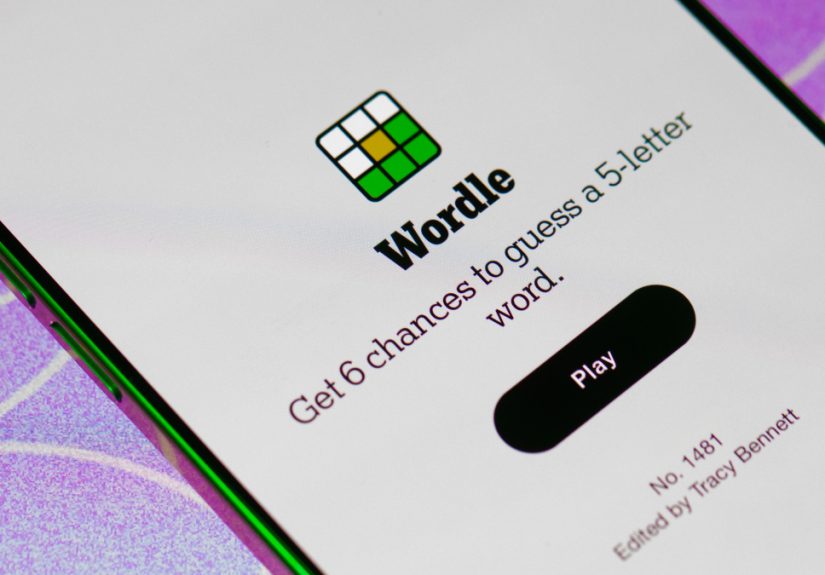
Wordle is beautifully simple. You get six chances to guess a five-letter word. After each guess, the game gives color feedback:
Wordle tile colors explained
Green means a letter is correct and in the right position. Yellow means the letter is in the word, but in the wrong position. Gray means the letter is not in the answer at all, or at least not in the way you guessed it.
That is the whole magic trick. A few letters, a few colors, one puzzle a day, and suddenly millions of people are negotiating with their own brains before breakfast.
Part of the game’s appeal is its built-in restraint. You do not binge 14 rounds in a row. You get one puzzle, one shot at the daily challenge, and one opportunity to either feel clever or mutter, “I absolutely knew that word,” after the reveal. That limited format is a huge part of why the game still feels fresh.
Best Strategy for Solving Words Like “SHORT”
If today’s answer taught anything, it is that ordinary words can still trip you up. Here are a few smart ways to improve your odds the next time Wordle serves up a familiar-looking trap.
1. Start with a balanced opener
Your first guess should test common vowels and common consonants. A strong opening word gives you information, not just optimism. Words that mix high-frequency letters are useful because they help you discover whether you are dealing with a broad, vowel-heavy answer or a tighter consonant-driven one.
For a word like SHORT, a balanced opener can reveal enough structure early to prevent panic-guessing later. Panic-guessing, for the record, is when you convince yourself that a terrible idea is actually “playing the percentages.”
2. Watch for one-vowel traps
When an answer has only one vowel, the puzzle can feel roomy at first and suffocating later. If your first guess does not uncover a vowel, do not keep blindly slamming consonants into the board. Spend your next move confirming the vowel situation.
Once you identify the vowel, the puzzle often stops feeling like a fog machine and starts feeling like a filing cabinet.
3. Think in chunks, not just letters
Skilled solvers do not only look for individual letters. They look for patterns. With a word like SHORT, consonant clusters and common English shapes matter. If you know a word starts with S and contains T, ask yourself what natural combinations fit in the middle. This is where pattern recognition beats random inspiration.
4. Don’t ignore obvious words just because they seem too obvious
This may be the biggest lesson from today’s answer. Many players talk themselves out of common words because they assume the puzzle must be trickier than that. Sometimes it is. Sometimes the answer is just a very normal word wearing sunglasses.
When you have the right letters, trust the plain option before you go hunting for something exotic. Wordle loves making players overcomplicate what should have been a simple landing.
Why Wordle Still Works So Well
The reason people keep searching for phrases like today’s Wordle answer and Wordle hints for November 5, 2025 is not just because they want the solution. It is because Wordle sits in a rare sweet spot between ritual and challenge.
It is short enough to fit into a morning routine, clever enough to feel rewarding, and social enough to create tiny daily conversations. You do not need a gaming console, a tutorial, or an entire free afternoon. You just need five letters, a little patience, and enough humility to survive the occasional embarrassing miss.
That is also why spoiler etiquette matters so much in Wordle culture. The game is communal, but the solving experience is personal. We all want the same answer eventually; we just do not want it dropped on our heads while we are still brushing our teeth.
November 5, 2025: A Good Wordle, Not a Cheap One
That distinction matters. A good Wordle makes you think, nudges your logic, and rewards smart guesses. A cheap Wordle feels arbitrary or annoyingly obscure. SHORT belongs to the first category.
It is compact, clean, and fair. The clue trail makes sense. The answer is a real everyday word. And once you see it, you can understand exactly why the puzzle worked. It may have ruined a few streaks, but it did so honestly, which is about all you can ask from a daily word game and considerably more than you can ask from most group chats.
500 More Words From the Daily Wordle Trenches
A puzzle like SHORT captures the oddly specific feeling of a modern Wordle morning. You open the game with the quiet confidence of someone who has done this many times before. Maybe you have a favorite starting word. Maybe you have three. Maybe you tell people you do not care about your streak while protecting it like a Victorian heirloom. Either way, the ritual begins the same way: one guess, one flash of color, one immediate attempt to read emotional meaning into a row of squares.
The first guess rarely settles anything. It just changes the mood. A green tile makes you feel like a genius. Two gray tiles make you feel like a person who has never seen the alphabet before. That is part of the charm. Wordle compresses a tiny emotional roller coaster into about three minutes. You are not merely solving a word puzzle; you are experiencing a brief identity crisis in a clean little grid.
With a word like SHORT, the experience is especially relatable because the answer feels so ordinary. That is what makes the search satisfying. You are not chasing some dusty museum word nobody has used since 1894. You are chasing a word you have said a thousand times. Maybe that is why these puzzles linger in the brain after the solve. They are not only tests of vocabulary. They are tests of access. Can you reach the right everyday word quickly, under just enough pressure to make your thoughts clumsy?
There is also a social side to this particular kind of Wordle. Somebody solves it in two and posts their neat little block of green and yellow squares like a magician revealing nothing and everything at once. Somebody else takes five tries and immediately begins a defense brief. “In my defense, there were several viable options.” Another person refuses to look at hints on principle, as if Wordle were a frontier code of honor. By lunchtime, a completely normal five-letter word has become a topic of debate, comedy, and low-stakes self-evaluation.
That daily rhythm is part of what keeps the game sticky. It creates a small shared moment without demanding much from anyone. You can care deeply or casually. You can optimize your strategy or choose chaotic guesses based on instinct, vibes, and whatever coffee strength you are operating under. The puzzle makes room for all of it.
And then there is the tiny afterglow that comes when the answer finally clicks. Not because the word is world-changing, but because your brain assembled the path correctly. You saw the pattern. You resisted at least one terrible guess. You landed the plane. Even on days when the answer is SHORT, the pleasure is not short-lived. It carries into the next message you send, the next screenshot you post, or the next time a friend says, “That one got me today,” and you get to nod with the solemn gravity of someone who has seen things.
That is the long and short of it, pun absolutely intended. November 5, 2025 was not just another Wordle date on the calendar. It was one of those neatly designed puzzle days that reminded players why a simple five-letter game still has so much staying power. You show up for the answer, but you stay for the ritual, the banter, the miniature suspense, and the odd little thrill of knowing that tomorrow another five-letter troublemaker will be waiting.
Final Thoughts
If you searched for the Wordle answer for today, November 5, 2025, the mystery is solved: SHORT. More importantly, this was the kind of NYT Wordle puzzle that shows how the game stays interesting without resorting to nonsense. The word was common, fair, and deceptively tough in exactly the way good daily puzzles should be.
So whether you solved it cleanly, needed a hint, or arrived here after Wordle humbled you in public and private, do not worry. That is the game. One day you are a language wizard. The next day you are staring at five squares like they owe you money. Tomorrow, mercifully, the board resets.