Table of Contents >> Show >> Hide
- Who Is David Aguilar, the Teen Engineer Behind the LEGO Prosthesis?
- How a LEGO Toy Became a Functional Prosthetic Arm
- Why LEGO Technic Worked So Well for This Prosthesis
- The Engineering Challenge: Comfort Versus Function
- What Makes This Story So Inspiring?
- From Personal Project to Helping Other Kids
- The Bigger Issue: Prosthetics Can Be Expensive
- LEGO Prosthetics and the Future of DIY Assistive Technology
- Lessons for Students, Parents, and Young Inventors
- Experience Section: What This LEGO Prosthesis Story Feels Like in Real Life
Some teenagers build gaming PCs. Some build model airplanes. David Aguilar built himself a working prosthetic arm out of LEGO bricks, which is either the most wholesome engineering flex ever or the moment every spare brick in the house officially became “medical research.”
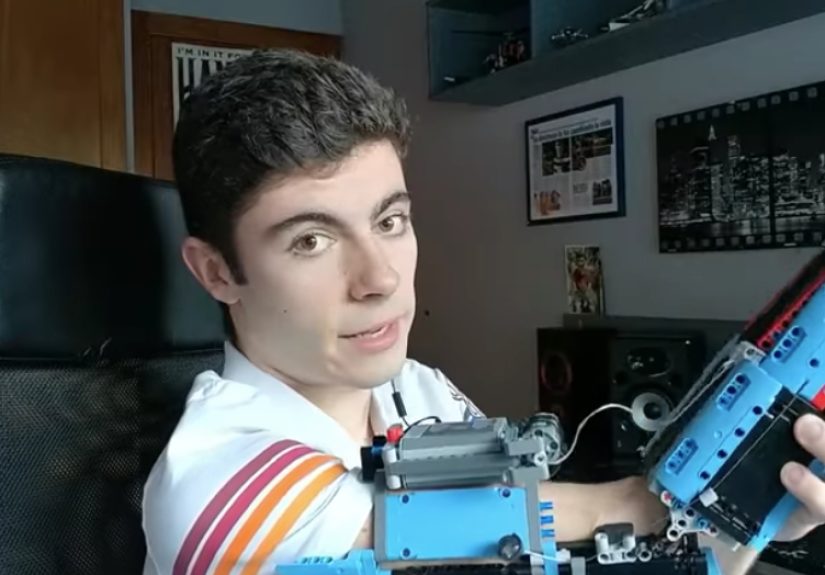
Aguilar, an inventor from Andorra known online as “Hand Solo,” was born without a right forearm. Instead of treating that as the end of the story, he turned it into the beginning of a remarkable design journey. What started as childhood tinkering with LEGO Technic became a series of increasingly advanced prosthetic arms, including mechanical and motorized models that could bend, grip, and help him interact with the world in his own style.
The story of this LEGO prosthesis is not just about clever parts snapping together. It is about accessible engineering, confidence, problem-solving, disability inclusion, and the beautiful chaos that happens when imagination refuses to stay inside the toy box.
Who Is David Aguilar, the Teen Engineer Behind the LEGO Prosthesis?
David Aguilar grew up fascinated by LEGO bricks, especially LEGO Technic, the system designed for more complex builds with gears, axles, motors, beams, and connectors. While many children used those parts to make cranes, cars, and helicopters, Aguilar saw something else: a way to build a tool that matched his own body and needs.
Born with a limb difference associated with Poland syndrome, Aguilar did not have a right forearm. As a child, he sometimes felt self-conscious around other kids. That part of the story matters because the invention was not created in a cold laboratory by someone chasing a patent before lunch. It came from a real person trying to solve a real problem while also figuring out how to feel comfortable in his own skin.
By the time he was a teenager, Aguilar had already been experimenting with LEGO-based arms for years. His early designs were simple, but each version taught him something. A joint needed to move more smoothly. A grip needed more strength. The structure needed to be comfortable enough to wear. In engineering terms, he was prototyping. In everyday terms, he was learning by building, breaking, rebuilding, and probably hunting under the couch for that one missing connector piece.
How a LEGO Toy Became a Functional Prosthetic Arm
The most famous version of Aguilar’s LEGO prosthetic arm, the MK-I, was built using parts from a LEGO Technic helicopter set. The name “MK-I” was inspired by Iron Man’s Mark I suit, and honestly, if you are going to build a robotic-looking arm as a teenager, you might as well give it superhero branding. The MK-I was mechanical, meaning it did not rely on advanced electronics to function. It used motion from Aguilar’s own arm and body to operate a movable elbow and gripping mechanism.
That basic idea is similar to body-powered prosthetic design. In traditional prosthetics, some upper-limb devices use cables, harnesses, or body movements to open, close, bend, or stabilize a prosthetic hand or hook. Aguilar’s LEGO version followed the same broad engineering logic: use available movement, transfer it through a structure, and create a useful action at the end.
Later models became more advanced. Aguilar continued refining the design through MK-II, MK-III, MK-IV, and beyond. Some versions used motors and sensors, allowing more controlled movement. The evolution showed something important: innovation rarely arrives fully formed. It usually shows up wearing mismatched socks, holding a prototype, and saying, “Okay, this version is less terrible.”
Why LEGO Technic Worked So Well for This Prosthesis
LEGO Technic is not ordinary stack-and-smile brick play. It is closer to a beginner-friendly engineering kit. The pieces are built for movement, rotation, structure, and force transfer. Axles can spin. Gears can change torque and speed. Beams can form lightweight frames. Pins allow parts to connect in flexible ways. Motors can add motion. Sensors and programmable hubs can introduce automation.
For a young inventor, this is a powerful playground. LEGO Technic lets builders test mechanical ideas quickly without needing a machine shop, welding equipment, or a frighteningly expensive drawer full of aerospace-grade components. If one design fails, the parts can be reused. If a joint does not line up, it can be repositioned. If the grip is weak, the gear arrangement can be changed. The system rewards iteration, which is exactly how engineering works.
That flexibility made LEGO a surprisingly effective material for Aguilar’s early prosthetic experiments. It was not a replacement for professionally fitted medical prostheses in every situation, but it gave him a way to explore function, comfort, control, and personal expression on his own terms.
The Engineering Challenge: Comfort Versus Function
A prosthetic arm is not useful simply because it moves. It also has to fit the person wearing it. That is where the hard part begins. A device can have impressive grip strength, cool motors, and a design that looks ready for a superhero movie, but if it is painful, heavy, unstable, or awkward, it may end up sitting on a shelf like a very expensive conversation starter.
Aguilar has spoken about the balance between comfort and function. This is a major issue in prosthetic design. The socket or attachment point must work with the user’s residual limb. The weight must be manageable. The controls must feel natural enough to use repeatedly. Materials that seem fine on a desk may feel completely different against skin after an hour of wear.
This is where the LEGO prosthesis becomes more than a viral story. It highlights the same design tensions that professional prosthetists, biomedical engineers, and rehabilitation specialists deal with every day. Good assistive technology is not just about what a device can do in a demonstration video. It is about what a real person can comfortably use during real life.
What Makes This Story So Inspiring?
The most inspiring part of Aguilar’s invention is not that LEGO bricks can be used in a prosthetic arm. It is that he refused to wait passively for the perfect solution to arrive. He studied his own needs, used the tools available to him, and built something that helped him express independence and creativity.
That kind of problem-solving has a powerful message for young engineers, students with disabilities, parents, teachers, and anyone who has ever looked at a challenge and thought, “Well, this is inconvenient.” Aguilar’s story says that constraints do not always block creativity. Sometimes they shape it.
It also challenges the way people think about disability. Too often, stories about disabled inventors are told as simple “overcoming” tales. But Aguilar’s work is richer than that. He is not impressive because he “beat” disability. He is impressive because he used engineering to design around his own experience, then turned that knowledge outward to help others.
From Personal Project to Helping Other Kids
Aguilar’s work did not stop with his own arm. He later built LEGO prosthetic devices for an eight-year-old boy named Beknur, who had underdeveloped limbs. That project showed how personal invention can become community impact.
For children, prosthetics come with special challenges. Kids grow quickly, which means a device that fits today may not fit tomorrow. Comfort, weight, appearance, and playfulness matter a lot. A child may reject a device that feels too clinical, too heavy, or too boring. A colorful, playful design can make assistive technology feel less intimidating and more personal.
This is one reason 3D-printed prosthetics, open-source designs, and experimental low-cost devices have attracted attention over the years. They may not replace advanced clinical prosthetics, but they can expand the conversation around affordability, customization, and access.
The Bigger Issue: Prosthetics Can Be Expensive
Modern prosthetic limbs can be life-changing, but they can also be expensive, especially when they involve advanced materials, custom sockets, sensors, batteries, microprocessors, or myoelectric controls. Maintenance, fitting, therapy, and replacement parts add more complexity. For children and teenagers, growth makes the cost problem even more difficult because devices may need frequent adjustment or replacement.
That is why Aguilar’s LEGO prosthesis captured global attention. It represented a different way of thinking. Instead of assuming useful devices must always be costly and inaccessible, his project asked: What can be built with modular parts, imagination, and persistence?
Of course, a homemade LEGO prosthetic arm is not the same as a medically prescribed prosthesis designed and fitted by professionals. Safety, durability, skin health, biomechanics, and long-term use all matter. Still, the project opens an important door. It encourages engineers to think more creatively about affordable assistive technology and encourages users to be active participants in design.
LEGO Prosthetics and the Future of DIY Assistive Technology
Aguilar’s invention belongs to a larger movement in maker culture. Around the world, students, engineers, hobbyists, clinicians, and volunteers have experimented with 3D printing, modular parts, open-source prosthetic hands, and custom adaptive tools. The goal is not to replace medical expertise. The goal is to create more options.
DIY assistive technology is especially powerful when it solves a specific problem. Maybe a child needs a device to hold a tablet stylus. Maybe an athlete needs a custom grip for a sport. Maybe someone wants a low-cost prototype before moving toward a professional device. Small, personalized solutions can make daily life easier in ways that large commercial systems sometimes overlook.
Aguilar’s LEGO prosthetic arm shows that invention does not always begin with a massive grant or a corporate research lab. Sometimes it begins with a kid, a box of bricks, and a stubborn refusal to accept “that’s just how it is.”
Lessons for Students, Parents, and Young Inventors
1. Start With the Problem, Not the Perfect Tool
Aguilar did not begin with perfect materials. He began with a problem he understood deeply. That is one of the best lessons in engineering. Fancy tools help, but clear observation matters more. When inventors understand the user’s real needs, they can create smarter solutions.
2. Prototype Early and Often
Every version of Aguilar’s arm improved on the last. This is the heart of design thinking. Build a rough model, test it, notice what fails, and improve it. Repeat until the thing stops embarrassing itself in public.
3. Make Technology Personal
Assistive devices do not have to look cold or medical. They can be colorful, expressive, playful, and deeply personal. A prosthetic arm inspired by Iron Man may not be subtle, but subtle was never the point. The point was ownership.
4. Respect Professional Care
DIY invention can be inspiring, but prosthetics affect the body. Long-term wear, pressure points, muscle movement, skin condition, and safe function should involve qualified professionals when a device is intended for daily use. Creativity and clinical care are not enemies. They work best as teammates.
Experience Section: What This LEGO Prosthesis Story Feels Like in Real Life
Imagine being a teenager with an idea that sounds a little ridiculous when said out loud: “I’m going to build a prosthetic arm from LEGO.” Most people would probably smile politely, the way adults smile when a kid announces plans to become an astronaut-chef-dinosaur trainer. But then the pieces start clicking together. A frame forms. A joint bends. A grip moves. Suddenly, the idea is no longer ridiculous. It is sitting on the table, bright and mechanical, looking like it escaped from a robotics club and brought snacks.
The emotional experience behind a project like this is easy to underestimate. For someone with a limb difference, the world is full of tiny design assumptions. Door handles, school desks, backpacks, sports equipment, musical instruments, video game controllers, and even clothing are often made with a “standard” body in mind. Most people never notice that standard because it fits them. But when it does not fit, daily life becomes a series of little negotiations.
That is why Aguilar’s LEGO prosthesis feels so meaningful. It is not only a device; it is a response. It says, “If the world was not built with me in mind, I can still build something for myself.” That mindset can change how a person sees challenges. A problem becomes a design brief. A limitation becomes a starting point. A childhood toy becomes a toolkit.
There is also a confidence-building experience here that many young makers will recognize. The first prototype of anything is usually awkward. It may pinch, wobble, jam, or fall apart at the worst possible moment. But each failure gives information. A weak connection teaches structure. A stiff joint teaches motion. A heavy build teaches material choice. In a classroom, failure can feel like a red mark. In a workshop, failure is more like a slightly annoying teacher who actually knows what they are talking about.
For families, educators, and mentors, this story is a reminder to take young people’s experiments seriously. A messy desk covered in parts may look like chaos, but it can also be a laboratory. Encouraging safe tinkering, asking thoughtful questions, and giving students room to test ideas can lead to surprising growth. Not every kid will build a prosthetic arm from LEGO, of course. Some will build robots, apps, art projects, furniture, or small inventions that solve problems only they noticed. That still counts.
For readers with disabilities or limb differences, Aguilar’s story can be especially powerful because it presents technology as something personal rather than distant. Assistive devices are often discussed as products people receive. This story reframes them as designs people can help shape. The user is not just a patient, customer, or case number. The user can be the expert, the tester, the critic, and sometimes the inventor.
The most human lesson is this: useful innovation does not always look polished at first. Sometimes it looks like a pile of plastic bricks, a teenager with a wild idea, and a family willing to let the living room become an engineering zone. Then, piece by piece, it becomes something stronger. Not perfect. Not magic. But real, functional, and full of possibility.
Note: This article is for informational and editorial purposes. Homemade prosthetic concepts can be inspiring educational projects, but any device intended for regular physical use should be evaluated with qualified medical, prosthetic, or rehabilitation professionals for safety, fit, and long-term comfort.